Communication between devices, applications and centralized systems is paramount to modern computing. Whether that individual visits a website, sends an email, uses an online database or accesses an enterprise application, a variety of computer and software-based components might be working in the background. Client/Server architecture is one of the most significant architectures that enables this interaction to occur.
In the client-server paradigm, there are two major components: the client that issues a request for a service or resource and the server that receives the request, processes it, and returns the required response. This architecture is especially significant for net-centric systems where networked systems rely on the ability to communicate and share resources. Clients can rely on specialist servers to store and process applications, files, databases, authentication, websites, email and more; rather than all computers keeping copies of each other’s data and processing all of it.
What is a Client-server Model
In computing, the client-server model is a technique that allows client devices or applications to communicate with servers via a network to request and receive service. A client can be a web application, software application, web browser, tablet, smartphone, laptop or desktop computer. A computer or software system that makes resources and services available to clients. Typically, the communication is initiated by an incoming request to a server. The server accepts a request, carries out the requested operation, retrieves data or accesses another service if needed, and returns data to the client.
Such a set up ensures clear separation of responsibilities. The client typically provides data and controls the user interactions and is responsible for presenting the data and accepting the input from the user, while the server contains shared resources, business logic, data management, security, or other centralized aspects. This separation enables many clients to share the resources of a server but not necessarily have to store full copies of those resources.
How Client-server Communication Works
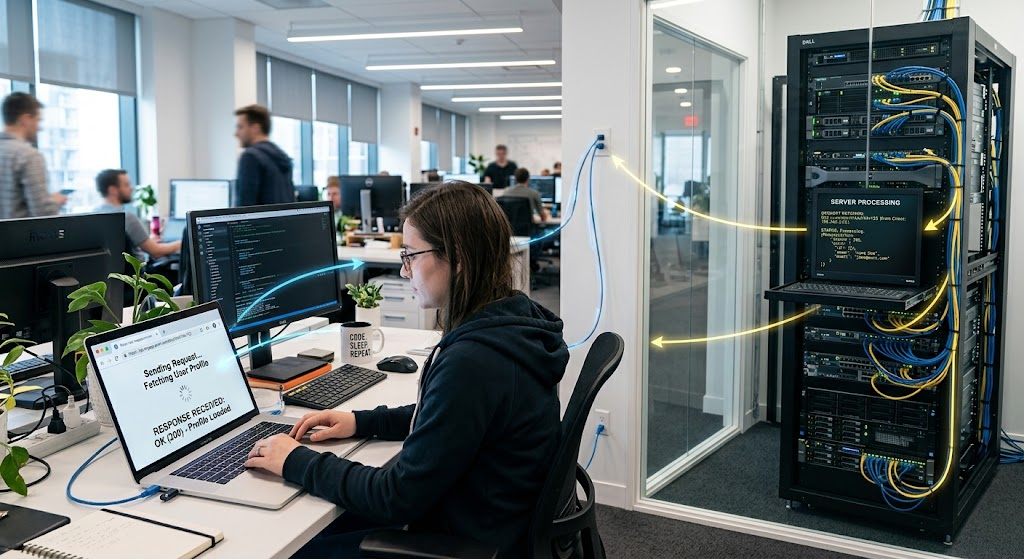
Client-server communication is a series of requests and responses. The web browser, for instance, when the user types a URL into the browser, is the client and will start communicating with the servers responsible for serving the requested website. Clients may need to resolve the server address using the Domain Name System (DNS) first before making a network connection. It then makes a request by means of an appropriate communication protocol, such as HTTP or HTTPS.
The server receives the request and identifies what information or operation it needs to provide. It could call data from a database, run some application logic, get data from a file, or call a different service before generating a response. This reply is then sent back over the network to the client who then interprets the reply and displays the answer to the user. This process may take seconds or less, but may involve multiple network or software components in doing a single request.
The Role of the Client
A client is the component in your system that sends a request for a resource or service. One example is a simple browser-client that fetches a Web page from a Web server. Another example is an e-mail application asking for e-mail from a mail server. The capabilities and complexity of clients can range widely. A simple application might just present information it is given by a server, whereas a more sophisticated application might compute, check for user input, perform temporary data management, and communicate with multiple servers.
The client also offers the user interface that enables people to interact with networked systems. In many modern uses, the client is a smartphone or computer, and the critical processing and data storage are done remotely. This means that the same services are available on various devices, and vital resources and information can be controlled by the organization.
The Role of the Server
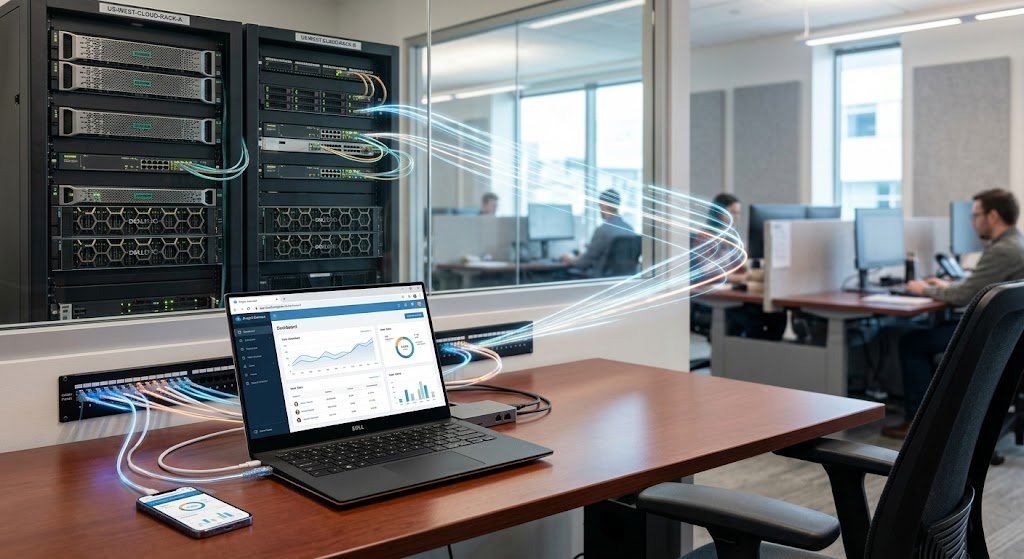
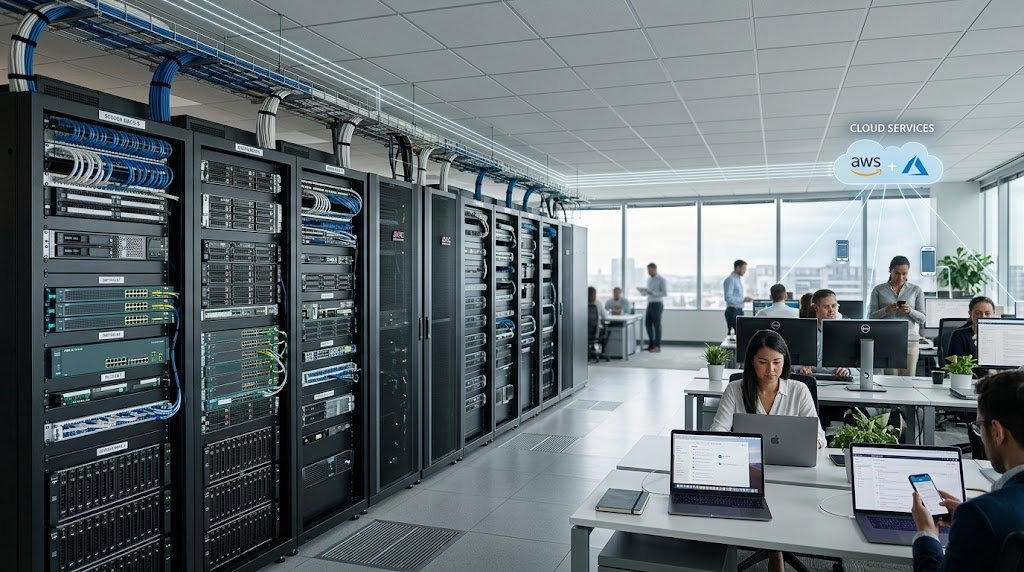
A server is used to deliver services or resources to a client. Typically, servers must be able to serve requests for long periods and can serve a large number of users at the same time. A server can be used to store files, operate a database, serve web pages, handle application requests, authenticate users, send email, or execute any special computing jobs. These servers can be physical servers in an organization’s data center, virtual machines on shared hardware or cloud-based computing services.
Their software determines the services they provide and how they respond to client requests. Servers are frequently essential for business operations and may store vital business information, so they are frequently susceptible to security measures, monitoring, backup, access management, and routine maintenance. With a well-designed server environment, thousands or millions of client requests can be served without it going down or experiencing unpredictable performance.
Types of Servers in Net-Centric Environments.
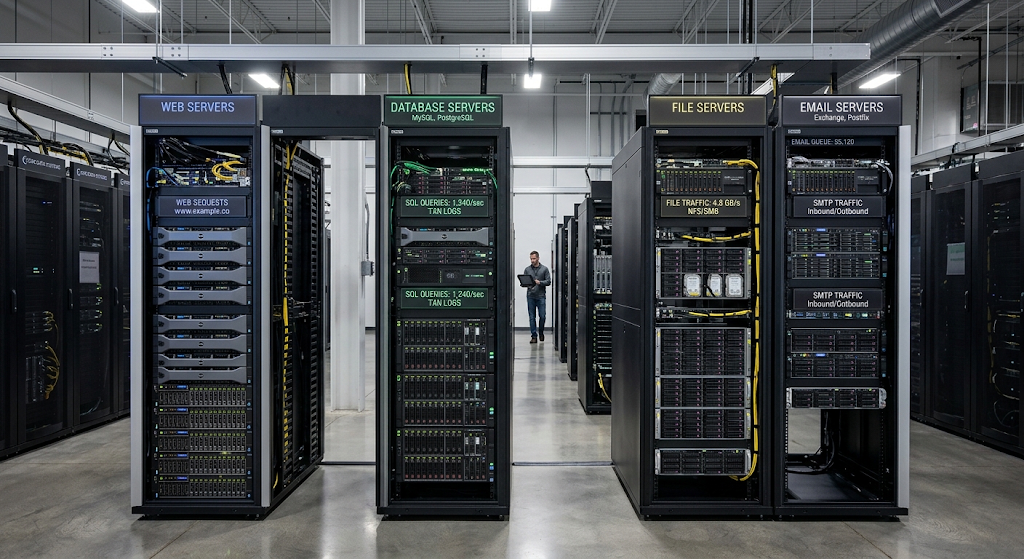
There are multiple types of servers due to the different requirements of networked systems. An important function can be spread over a number of servers in larger environments, though it is possible to get several services running on a single physical machine. This isolation can provide benefits in the areas of performance, security, reliability and management.
For instance, an organisation might have different servers for websites, different ones for databases and different systems for email. The specific design will vary based on the size of the organization, the types of applications, the amount of traffic, the security policies, and the resources available. The client-server model is easier to understand with knowledge of the types of servers, as each server can provide a specific service and communicate with other servers if needed.
Web Servers
Web servers are the ones that deliver Web pages and other Web resources to the Web clients, typically via the Web protocols HTTP or HTTPS. When an individual clicks on a website, their browser will communicate with the web server, which will then return resources like HTML pages, style sheets, JavaScript files, images, and more. Popular web server applications are Apache HTTP Server, Nginx and Microsoft’s Internet Information Services.
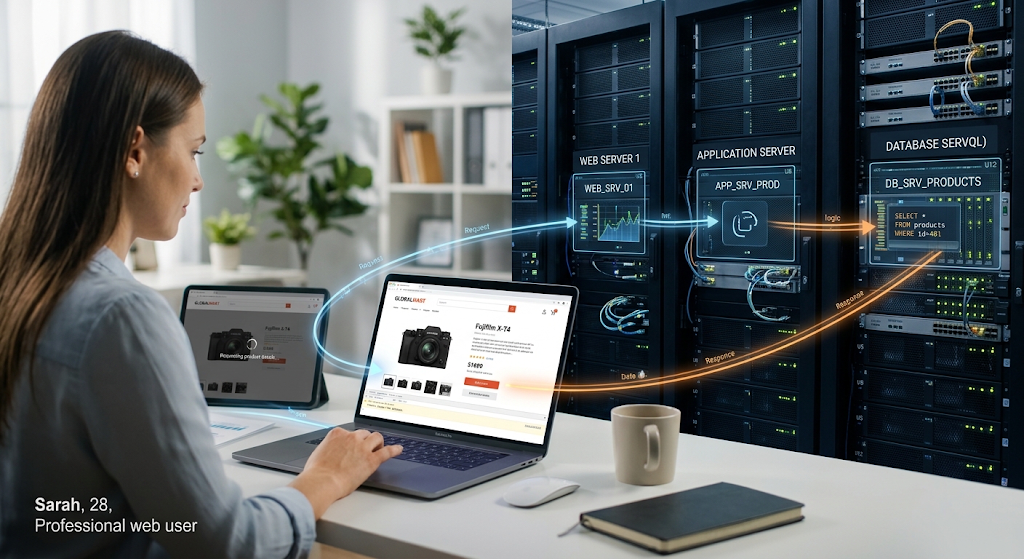
To support the load of high traffic applications, modern websites may be composed of more than one server. A Web server can also be used in conjunction with the application servers and the database servers. These could be one or more web servers that receive requests from web browsers, an application server that executes shopping-carts and payment logic, and a database server that stores information about products and customers. These components cooperate to deliver a complete service to the client.
Database Servers
Database servers are responsible for storing, organizing, retrieving, and managing structured information. They are critical in applications that require data access beyond the current session, such as banking, school management, online stores, social network, and business applications. The application can communicate with a database server to retrieve data when a client wants information, instead of keeping the entire database on the client’s machine.
The database server executes the query, secures it and returns the necessary records to the application that sent the request. Database servers can also offer facilities for transactions, data consistency, backup and recovery and concurrent access. By collecting key information in one place, organizations can retain more control over the information and use authorized applications and users to access the information only through controlled connections to the network.
File Servers
File servers store files, such as documents, images, spreadsheets, videos, software packages, and other files, in a centralized location. Employees are not required to store and access organizational documents on individual computers but can use a network for this purpose. The client computer makes a request to the file server, and the server validates access restrictions and decides whether or not the requested action is permitted.
If it is allowed, the server may return the requested file or carry out an operation, like creating, editing, or deleting a file. File servers are especially useful in an office, school or other organization where many people need to have access to shared resources in a controlled manner. Centralized storage also simplifies the implementation of backup policies and permissions, but in conjunction with this, the organisation still needs to ensure that file servers are protected from unauthorized access, malicious software, hardware failures and accidental data loss.
Email Servers
Another large application of client-server computing is email systems. Emails are sent by a user and the email application then communicates with the mail servers. Email systems have multiple protocols that are utilized for various purposes. Generally, emails are sent and sent via SMTP, and retrieved via protocols like IMAP or POP. A mail server may receive messages, store messages in mailboxes of users, deliver messages to other mail servers, and enforce security or spam-filtering policies.
When a user starts an email application, the client contacts the appropriate mail server and requests to retrieve messages. This setup enables individuals to retrieve their mailboxes from various devices as the messages will stay on the servers and not be fixed to a single computer.
Client-Server Computing in Websites
One of the most common applications of client-server architecture is websites. Modern web sites often have multiple server-side pieces that communicate with the users’ browsers. Imagine, a virtual shopping mall. The user’s browser sends a request to the website when the customer searches for a product. The web or application servers execute the request and can call a database server to obtain product names, prices, descriptions, stocks and images.
The server makes a suitable response and sends it to the browser. When the customer has added something to a shopping cart, another request is made to the server to update the session or account information for the user. This approach allows the businesses to host critical information and business logic at a central location and enables the customer to access the service through standard web browsers on various devices.
Client-Server Computing in Enterprise Applications.
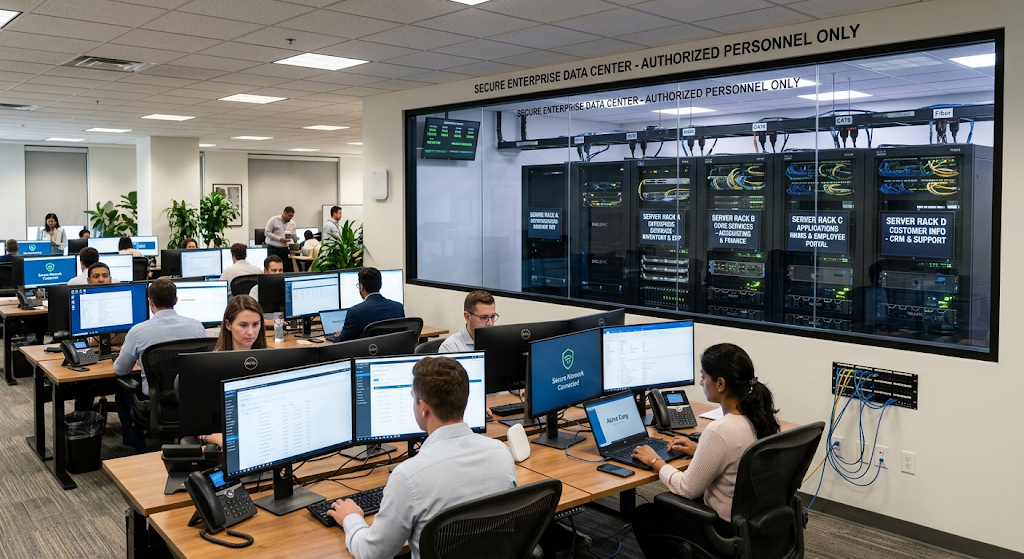
Client server architecture is used in enterprise applications to cater to various organizational requirements like accounting, human resources, inventory management, customer relationship management, communication, and supply-chain management. A worker can access data from an application server via a desktop app. The application server executes the business rules and can interact with one or more database servers to get or modify organizational records. For instance, staff working with an inventory management software could ask for the level of a product.
The client transmits a request to the application, the application server checks user permissions and forwards the request to the application, a database server fetches inventory information from the application server and returns the information to the application. The client is then returned to the result. By having all business logic centralized, organizations can ensure that they have the same rules in place and don’t need to install and maintain complex processing systems on each employee’s device.
Advantages of Client-Server Architecture
Centralized Management is one of the advantages of client-server architecture. Important applications, databases, and shared resources can be hosted on servers that can be managed more effectively by the organization’s administrator. Changes in server-side software can sometimes be made without having to have all administrators manually update each individual client. Security controls may also be focused around critical services and data. Another benefit is resource sharing, in that a number of clients can access the same server—without having to store a full copy of the resource on its own.
The model can also enhance the scalability due to the fact that organizations can add more servers or expand the capacity of existing servers as their demand grows. In addition, different types of servers can be configured to perform specific functions, so that the operation of database, web, e-mail, and application services can be optimized. These benefits make client-server computing applicable to a variety of settings, from small offices to a large global organization.
Challenges of Client-Server Computing
Though client-server architecture offers lots of advantages, it also comes with problems. Clients rely on the servers to provide services, so if one server is critical, the user may not be able to use a service if that server fails. Network failures can cause the same issue as well, as clients can be unable to communicate with servers even if they are both working properly. Servers may also be vulnerable to cyberattacks because they might contain sensitive data and access to critical services.
Organizations need robust authentication, authorization, encryption, monitoring, patch management, backups and more security measures. However, the performance can be an issue if a server has too many requests to handle. Often, poorly designed systems may slow down or experience service disruptions as demand grows. To mitigate these issues, redundant, load-balancing, caching, virtualization, cloud-based, and distributed architectures are often employed in the modern environments to minimise reliance on a single server.
Net-centric computing takes the concept of client-server to increasingly-interconnected environments. Modern applications seldom rely on a single server. Rather, a client request can traverse several services such as web servers, authentication, application servers, databases, content delivery network, and external application programming interfaces. The deployment and management of servers have also undergone a transformation with cloud computing.
Computing resources can be leased from a cloud provider instead of buying and running all the physical resources. Virtual machines, containers, serverless platforms, and managed database services offer alternative flexible solutions to traditional physical servers. While this has changed, the basic concept is still present: a client makes a request for a service and one or more systems on the server side perform the service and return a result. Modern technologies, on the other hand, do not dismiss the client-server model concept, but rather extend it.
Examples of Client-Server Systems in Everyday Life
Client-server systems are used by people everyday without even realizing it. A student using a client to interact with servers who deliver course content, account information, assignments, and grades to the client via an online learning platform. A person operating a banking program is interacting with servers which verify the user and handle account requests. Clients (on TVs, computers, tablets and smartphones) are used on the streaming platforms and the server-side systems handle content, user accounts, recommendations and delivery.
Client applications make requests to the search engine and the search engine uses a large server infrastructure to process the requests and return results. Social networking applications also rely on servers to store account details, posts, messages, images and more. These are reasons why client-server computing still plays a vital role: users run simple client applications and more complex storage and processing, communication and management functions are performed on networked server infrastructure.
Conclusion
One of the basic architectures of networked and net-centric systems is client-server computing. This fundamental idea is simple: clients ask for services and/or resources and then servers accept the requests, execute the services and return a response. The division can be used in websites, databases, e-mail systems, file sharing, enterprise applications, online banking, education, streaming services, and many other technologies that are used on a day-to-day basis. Each type of server has a specific role to serve and together they make it easy for organizations to create systems which are simpler to manage, scale, secure, and maintain.
While new technologies like cloud computing, containers, distributed systems, and serverless platforms have increased the avenues by which services are delivered, the request and response model plays an important role. Having an understanding of client-server architecture thus gives a solid platform for comprehending how current networked computing systems share resources, communicate and provide digital services to customers.