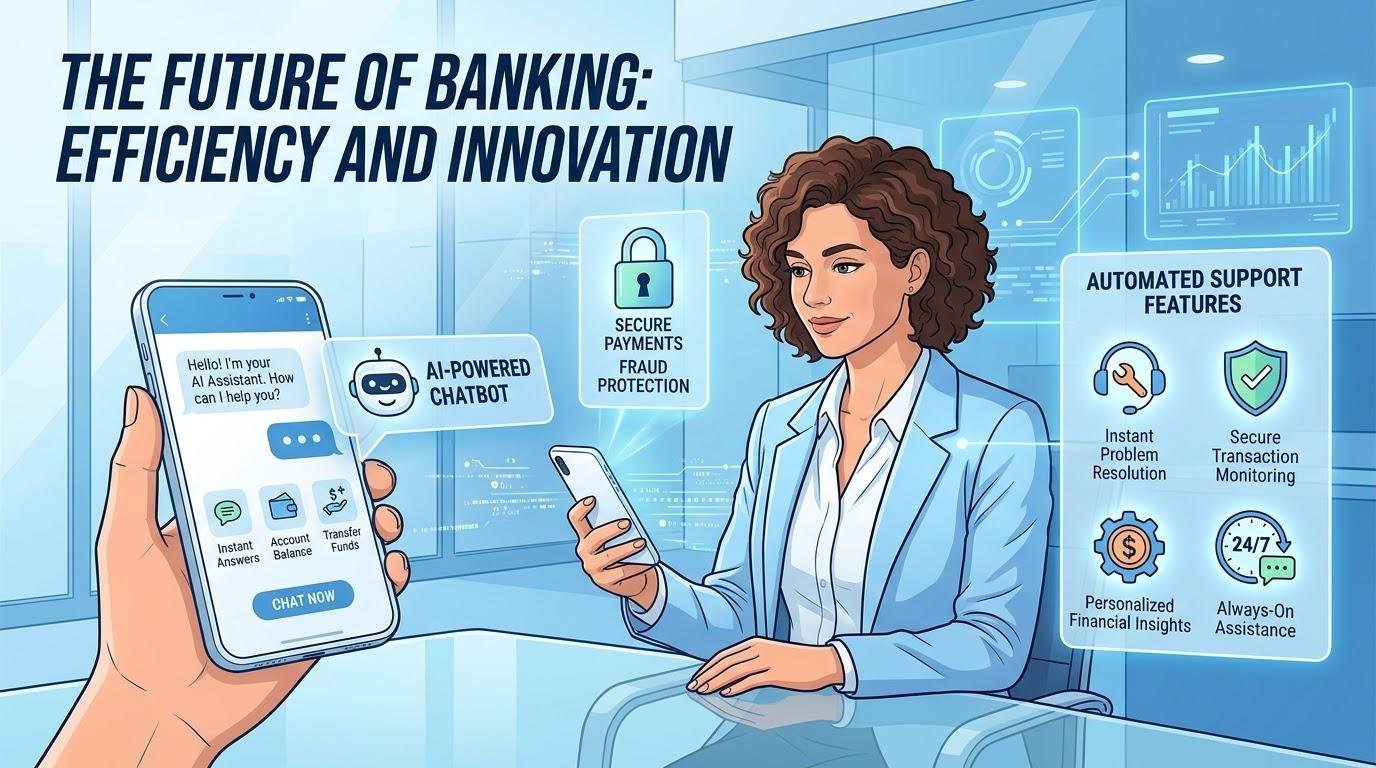
AI chatbots vs traditional chatbots differ in how they understand questions, deliver support, and handle customer requests. Traditional chatbots, also known as rule-based chatbots, operate based on rules and scripts, while AI chatbots use artificial intelligence to interpret questions and produce more flexible answers. Understanding these differences helps businesses choose a solution that suits their needs, budget, and customer expectations.
Whereas simple, predictable questions work well with traditional chatbots, AI chatbots can manage more diverse questions and intricate conversations. Each has their merits and drawbacks, and the decision of which to use will largely depend on the service that a business would like to offer.
AI chatbots vs traditional chatbots: key differences
The traditional chatbots are based on a set of rules, keywords, decision trees, and scripted responses. They are written by developers, and lead the users through specific tasks. For instance, an online store chatbot might be able to assist customers with order tracking, opening hours, or information regarding delivery policies.
These chatbots are best suited for predictable questions and answers. But they can have a problem when users ask questions in ways they weren’t expecting or for something they are unable to do. Rules and responses can be added to them to enhance them, however this will need regular updating.
How Traditional Chatbots Work
The classic chatbots are programmed to trigger responses that are based on a rigid set of keywords or dialog flows. Once a customer clicks on an option or spells out a known word or phrase, the chatbot gives the associated answer. For instance, if a customer asks about return policies, they can be given a scripted response that outlines the company’s return policy.
These systems are simple and reliable but have restricted flexibility. A chatbot that can respond to “Where is my order?” may not be able to respond to “Has my package arrived?” because the latter is not contained in its rules. However, traditional chatbots work best for specific tasks.
How AI-Powered Chatbots Work
Chatbots powered by AI rely on technologies like natural language processing (NLP), machine learning algorithms, and large language models to understand the context of queries and provide relevant responses. They can sometimes interpret multiple variations of the same request without having to create a new rule for each instance.They are also capable of recognizing variations in language requests—whereas conventional chatbots would have to have a new rule for each one.
For instance, an AI chatbot could recognize the phrase “I want to change my delivery date” as equivalent to “Can my package arrive another day?”. It can fetch relevant information, answer follow-up questions, and direct the customer to take the next steps, depending on the integrations it has.
How AI Chatbots grasp questions.
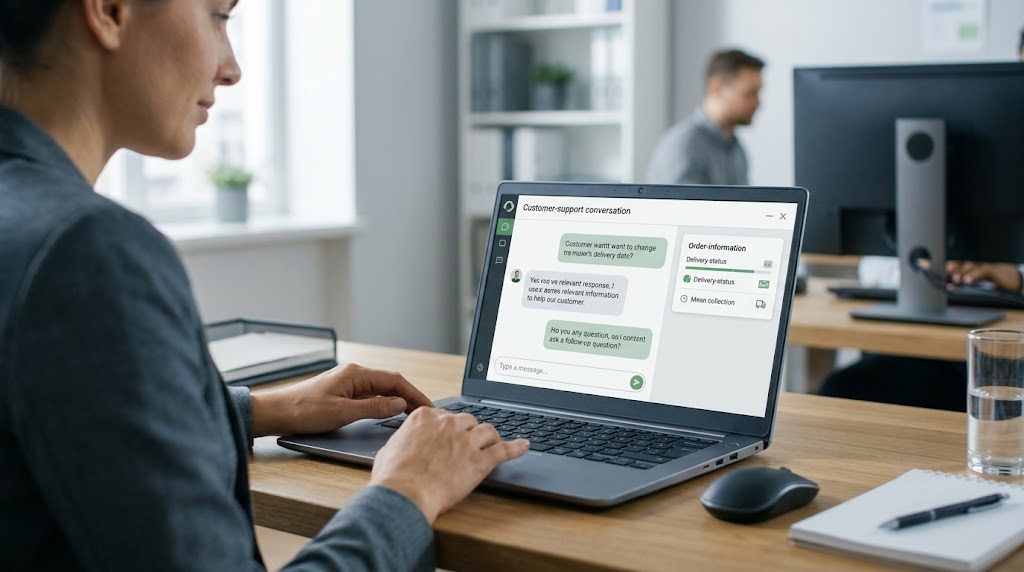
AI chatbots can understand the sentiment and context behind messages and respond appropriately. They may be able to continue the conversation without restating all of the information, and they will often be able to follow through with what they have said. For example, if someone talks about a laptop, they can ask him if he has a laptop in another color; the chatbot might be able to understand what product he is inquiring about.
But AI chatbots aren’t always correct. Can misinterpret questions and/or provide inaccurate information, especially when the knowledge sources are not reliable. Businesses can link them with reliable information, review their reactions, and offer personal assistance if required.
Advantages of AI Chatbots over their Traditional Counterparts.
1. Flexibility and Understanding
The traditional chatbots are based on specific conversation flows, and they are effective when customers ask the right kinds of questions. If the language is awkward, they must read the prompts and options and may even have to clarify their orders.
AI chatbots can extract a wider variety of information from a question and provide a more natural response. They are more effective for discussion with several requirements, but they will depend on the quality of the configuration and the information they are provided.
2. Personalization and Context Awareness
Customer information, account details, and predefined conditions can be used to customize responses with traditional chatbots. For instance, a delivery status tracker bot can show a customer his delivery status when linked with the relevant system.
AI chatbots can tailor content to user preferences and leverage previous dialogue to provide further answers. But personalization should be done in a way that respects privacy, and the chatbot shouldn’t make assumptions about the customer. When comparing AI chatbots vs traditional chatbots, businesses should also consider data privacy and user consent so customers understand what information is collected, how it is used, and what control they have over it.
3. Response Accuracy
The old-fashioned chatbots give a uniform response if the right rule is applied. This is helpful for communicating approved information such as Business Hours, Booking Information, and Standard Policies. But if a script or the rules are out-of-date or incorrect, they can still result in incorrect answers.
With access to credible knowledge sources, AI chatbots can deliver more pertinent responses to complex queries. However, they can produce false data. Regularly test for their correctness and share complicated or sensitive ones with human staff.
4. Implementation costs and maintenance.
When it comes to basic tasks, traditional chatbots are usually simpler and more affordable to execute. They might just need pre-defined answers, decision trees, and simple integrations. The number of rules and conversation paths, though, can cause costs to rise.
There may be additional investments needed in AI services, integrations, knowledge bases, testing, and monitoring when using AI chatbots. They can process a wider range of enquiries but businesses will need to take into account usage fees and on-going maintenance before they determine if the extra features are worth the price.
Practical applications of Chatbots.
1. Online Retail
Many shoppers can use traditional chatbots to check the status of their orders, learn about delivery policies, and get return information. There are tasks that are predictable, and often these can be automated by providing a predefined response.
AI chatbots are more suitable for product comparisons and personalized recommendations. For instance, a user searching a store for a laptop for university purposes can outline the user’s needs and get suggestions based on the available product information. A mix of both can offer flexibility without loss of the control of transactions related to order.
2. Technical Support
Instead of traditional chatbots that handle mundane inquiries like resetting passwords or setting up basic configurations, AI-driven bots can handle these tasks automatically.AI-powered chatbots can automatically complete these tasks, whereas traditional chatbots can guide users through repeating troubleshooting processes, like resetting passwords or setting up basic configurations. They are effective if the solution is a series of steps.
AI chatbots can understand more complex problem statements, ask questions for clarification, and fetch appropriate troubleshooting steps. Even with technical obstacles, however, human skills are sometimes needed, especially in the event of security or vital systems in the business.
3. Appointment Scheduling
A built-in calendar enables traditional chatbots to take customer information, present appointment choices, and verify booking by the customer. They have a well organized workflow, which means they are good for simple scheduling.
The AI chatbots can interpret requests in conversation, like book an appointment for the afternoon, but not on these days. They can then help to determine appropriate options when plugged into a scheduling system, as availability is established and confirmed by the customer.
4. Business Websites
Old-fashioned chatbots can navigate users to service pages, respond to common questions and gather contact details. They’re helpful for companies that have straightforward websites and regular customer questions.
AI chatbots can provide more general product and service information, simplify complex details, and provide insight for prospective customers. When comparing AI chatbots vs traditional chatbots, businesses should also consider human-computer interaction design, because clear interfaces help users understand responses, choose next steps, and know when to contact a person. The chatbot needs to have accurate data and not make any false promises on pricing or services.
The pros and cons of each approach.
Traditional Chatbots are simple, play predictable responses and provide more control of the predefined interactions. They can be beneficial for companies that want to automate repetitive tasks without investing in sophisticated AI technology. The biggest restriction they have is that they are not very good at dealing with requests that are different from the ones they are used to, or with situations that fall outside their rules and conditions.
AI Chatbots are more flexible, possess more advanced conversational skills and are able to answer a variety of questions. But they must be handled with extra caution and may yield false results or add extra expenses. They require trustworthy information, suitable integrations, and transparent boundaries of operation.
Steps to Consider when Selecting your Chatbot

The first step in businesses implementing automation is to recognize the various tasks that are automated. If the majority of inquiries from customers are similar, and the processes are consistent, a standard chatbot can work. However, if customers often ask detailed questions or require assistance to decipher lengthy information, an AI chatbot could offer more value.
Budget, data privacy, response accuracy, maintenance needs and integration requirements are also factors to consider. Running a test of a chatbot on authentic customer inquiries can identify its strengths and weaknesses and give businesses a measure of how effective it will be with a wider audience.
When to Choose a Traditional Chatbot
If the task is simple, the number of questions to answer is limited, and identical answers are required, choose a traditional chatbot. These can include things like showing your business hours, gathering contact information, explaining your standard policies, and helping users navigate simple booking processes.
When to Choose an AI Chatbot
Use an AI chatbot when customers make their needs known in various ways, ask in-depth questions, or need customized assistance. When dealing with large knowledge bases, the company can leverage AI for product discovery, technical support, and information retrieval, but at a cost and with certain risks.
Conclusion
AI Chatbots and Traditional Chatbots are not the same. AI chatbots can engage in more complex conversations, whereas traditional chatbots are better suited for repetitive tasks that follow a set of workflows and provide consistent responses.
The answer is dependent on the company’s objectives, budget, clients and a tolerance for risk. For some organizations, it might make sense to mix and match, with structured transactions following a set of rules and AI for more flexible conversations. Choosing appropriate technology for every job helps avoid repetitive tasks, optimizes resources and enhances customer service.