Introduction
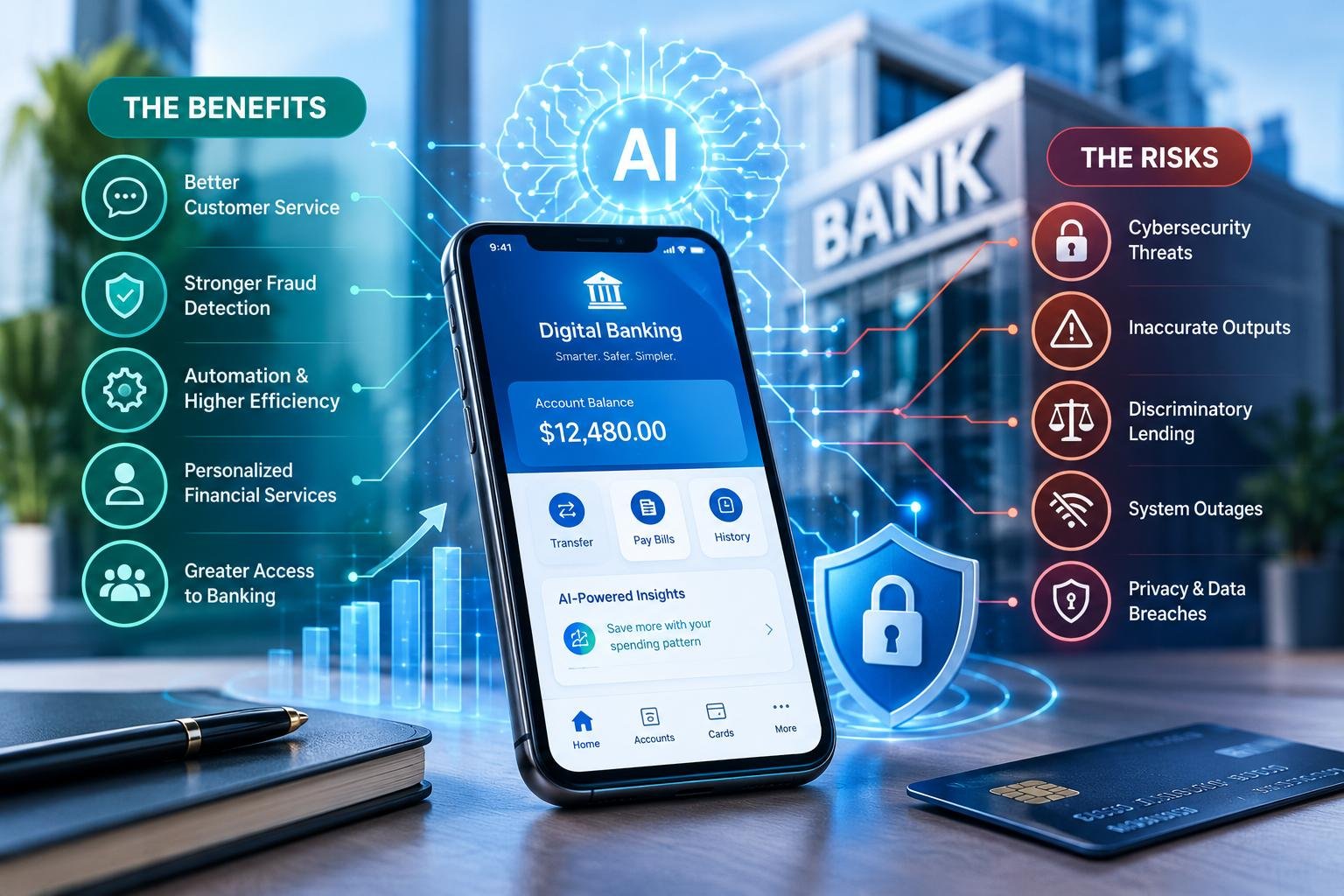
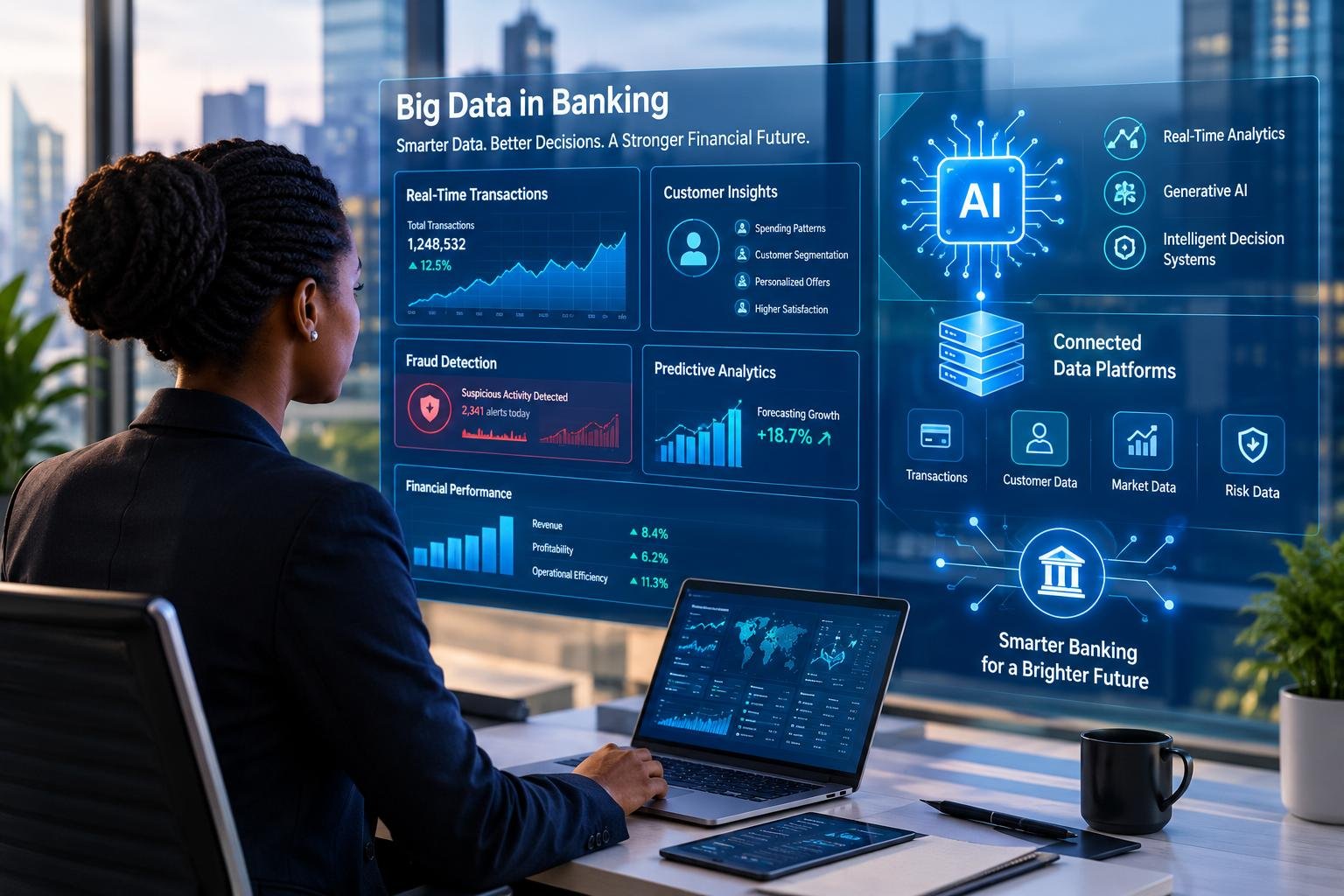
The present is a time of great change in the banking industry as we see more and more of a shift to data use by financial institutions which is in the core of what they do from customer analysis to risk management, fraud prevention and improved operational efficiency. In past we saw that traditional banking was very much report based dependent on manual assessment and what different departments put out. While these methods still have their use, they do not scale well enough for today’s financial services. Now we see emerging data technologies coming into play which allow banks to look at huge amounts of info from digital transactions, mobile apps, customer care, payment systems and financial markets. Also we are seeing the role of AI in all of this which helps in the identification of trends, prediction of changes and in overall better decision making. In the future we will see banking to be very much a real time analytics game which also includes generative AI, intelligent agents and connected data platforms. But for that to play out successfully it is not just about the tech. Banks also have to deal with data quality, privacy, transparency, regulatory compliance and human accountability issues to make sure that the automated decisions are not only efficient but also fair.
Big Data’s Role in Today’s Banking Sector
Big data is what we call extensive, varied, and very fast growing sets of information which in turn traditional tools have difficulty in handling. In the banking sector, such data sets are transaction reports, customer profiles, credit reports, digital payment actions, market trends, and reports of developing fraud patterns. Upon proper analysis this info helps financial institutions study customer behavior, improve financial performance, and put a stop to issues before they get out of hand. For instance a bank may look at spending trends to put forward proper financial products or review repayment reports to determine a potential borrower’s credit score. Also as businesses play with new data tech, they can see into the digital infrastructure behind data based operations and decisions. As the banking industry goes more digital the value of big data is in how well institutions are able to transform raw material into valuable intelligence. It goes without saying that which info is collected is not enough; banks also have to see to it that the data is correct, relevant, secure, and accessible to those who are to use it in making decisions.
Real-Time Analytics and Faster Banking Decisions
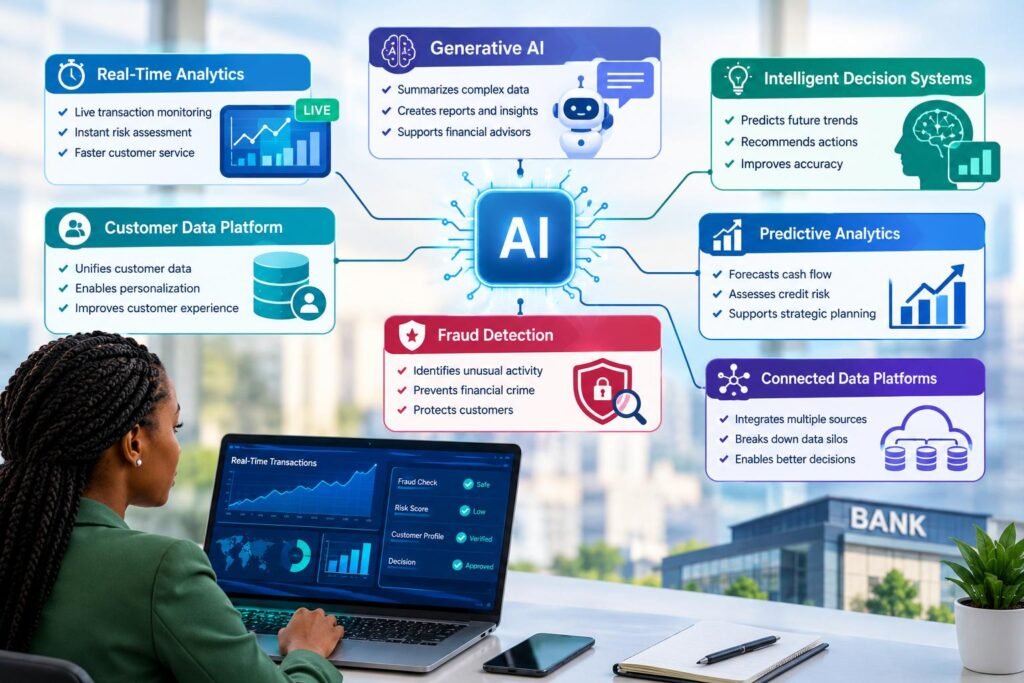
Real time analytics that banks use to process in coming info and present insights within seconds in some cases even milliseconds, we see this as opposed to conventional reporting which is report on info that is collected and looked at, post transaction. Real time systems on the other hand play catch as the events are happening. This is very useful in digital payments, fraud detection, liquidity management and customer service. For example when a customer does an electronic transfer the analytic system looks at trans action value, account history, device info, and abnormal behavior before it determines if more verification is needed. Also we see in treasury teams’ ability to track cash positions and to identify sudden changes in funding requirements. That said speed should not take precedent over accuracy. We require reliable data pipelines, appropriate processing infrastructure and we must have in place against false alerts. Also banks must put in place procedures for outages and conflicting info which in turn will support sound decision making instead of creating2 which may cause transaction delays or operational disruptions.
Generative AI and Intelligent Decision Systems
Generative AI is transforming what AI does in the field of banking by which it produces sums, details, reports and responses from complex info. Instead of just recognizing number patterns these models put forth in to play a role in which they help staff out with financial docs, they sum up customer interactions, they prepare compliance reports, and they get at relevant info from within our knowledge bases. For example a relationship manager may use a go to which is an AI assistant to present a customer’s financial history prior to a meeting which in turn gives more room for personal advice. Also we see that these systems are used by analysts looking into odd account activities which they do by putting together relevant records into a better picture. But what we also see is that these systems put out inaccurate info at times and present uncertain info as if it is certain. To that end banks should tie up AI to vetted data sources, they should limit access to sensitive info, and they should require proof for large outputs. Generative AI should support professional judgment instead of in which it makes each lending, compliance, or customer eligibility decision alone without proper safety measures.
AI in the Transformation of Banking Operations
AI agents are a step forward in what we see of intelligent decision making as they are charged with achievement of set goals which they accomplish via sets of tasks which they carry out with the use of authorized tools and info sources. In the field of banking for instance an agent may go in and out of transaction reports, run them against our rules, put together an investigation report, and pass along which cases are suspicious to a specialist. Also we see this in record reconciliation, operation exception monitoring, or in the support of staff with routine service requests. This is as opposed to a standard Chabot which is mainly out to answer single questions. An agent is able to tie together many related actions which at the same time must have their scope of action very much defined. Banks must put in place limited permissions, transaction thresholds, approval requirements, and full activity logs for these systems. Very large scale actions like account freezing, large payment approvals, or loan application rejections require very close watch. Thus the value we will get from AI agents in the future is not only in what they do to reduce our work load but in also in which their actions are predictable, open to audit, secure, and in alignment with our institutions’ policies.
Unified Customer Platforms and Personalized Services.
Unified customer data platforms put together info from various banking channels into a fuller picture of each customer. In many institutions account info, payment history, loan data, customer service logs, and digital interaction info is kept in separate systems. That approach can prevent staff from seeing the whole financial picture of a customer’s relationship with the bank. By which we mean to say that through the integration of what is relevant info, these platforms can help institutions to put out more relevant recommendations, identify service issues, and reduce the request for the same info over and over again. For ex if a customer is having issues with payments we may see that they have been over extending themselves and put them in touch with a budgeting support team instead of pushing them generic products. Also unified data can better the report across teams and support a more consistent customer experience. But at the same time integration brings up privacy and security issues. Banks must put in place clear access controls, keep accurate customer info, respect what the customer consents to, and make sure info isn’t used for improper purposes. Personalization should be for the benefit of the customer but also not cross the line into intrusive monitoring or unfair treatment.
Automated Risk Analysis and Smart Fraud Detection
Big data and machine learning are transforming what banks do in terms of credit risk assessment, operational exposure, and detection of abnormal financial activity. We see that in the use of automated risk assessment tools which look at payment history, income reports, present debts, and other legal in scope variables to determine default risk. When these are well designed they do the job of analysts’ time better and put to notice which applications require more in depth look at. Also we see in intelligent fraud monitoring which looks at transaction frequency, account locations, device info, purchase trends and relationships between accounts. A transaction that is very out of line with what is the customer’s norm may set off extra authentication or investigation. As compared to stand alone fixed rules, machine learning models are able to recognize more complex trends and to change as new data comes in. But also it is true that these systems may produce false results, may over look new types of fraud, or may reproduce past discrimination present in the data they were trained on. Banks have to put in place regular performance testing, look into issues of bias, update their detection methods and also put in place what is fair for customers to appeal large scale decisions.
Advanced Financial Forecasting and Business Intelligence
Advanced in financial forecasting we see the use of past performance data, present market telltales, statistical tools and machine learning to project future financial states. Banks use these to determine cash needs, to size out loan requests, to project what customers will withdrawal, to study interest rate play out and to improve capital planning. Also more frequent forecast issue allows institutions to update their projections as new info comes in instead of to heavy on fixed periodic projections. Also Gen AI may play a role in that of putting forward assumptions, to sum up economic events, and to present what if scenarios for analysts to look at. This builds on traditional business intelligence which mostly present history in dashboards, reports and performance indicators. Also we see automated decision systems which not only report info current info pre-determined goals but also put forth action recommendations. Also it is important to note that no approach is without its issues. We have economic shocks, customer behavior change, incomplete data sets and unexpected market events which can break down forecasts. For that reason banks should put in place which predict and actual performance are compared, which run through different what if scenarios, document assumptions and have contingency plans for what models can’t predict reliably.
Opportunities, Limitations, and Responsible Governance
Although we see great value in what intelligent data systems have to offer, their success is tied to strong governance. We put forward that explainability is key which is that customers, auditors, and regulators may require of us that we present to them the reason for a credit application’s rejection, the issue which caused a transaction to be flagged, or the input which resulted in a certain risk assessment. Also it is the case that some of the more advanced models are hard to interpret which is why we must apply the right explanation techniques, document decision criteria and also have independent testing. In terms of governance we must detail who is in charge of development, approval, monitoring and updating each system also keeping a record of model versions, training data, performance changes and known issues. Also we must not lose human oversight which is very much a must in cases which affect access to credit, financial security, or customer rights. Also employees must have enough expertise and authority to question automated recommendations as they go out of the process. Also we must comply with all financial, privacy, cyber security and consumer protection requirements which apply to us. It also must be very much the bank’s responsibility even when we outsource the technology to external vendors or the automated tools take over large parts of a process.
Conclusion
In the coming years we will see the growth of big data in banking which is to be powered by real time analytics, generative AI, intelligent agents, unified customer platforms, automatic risk assessment, fraud monitoring, and advanced forecasting. These techs will allow financial institutions to react faster, better understand their customers, improve operation’s efficiency, and base decisions on a wider range of data. We are moving from traditional business intelligence to automated decision systems which also brings in new responsibilities as recommendations put forth may have great financial impact. Thus banks must balance innovation with reliable data management, explainability, security, model governance, human supervision, and regulatory accountability. Those which put in place these bases will be in the best position to responsibility use of intelligent technologies and to maintain customer trust. In the end the best banks will not be the ones which automate every decision but which combine tech skill with professional judgment, transparent processes, and a clear dedication to fair and dependable financial services.
Get more well researched information about Big Data in Banking here.