
What Is Machine Learning? A Beginner’s Guide to How It Works
Introduction Technology has transformed the way we communicate, work, shop, learn and solve day to day issues. We see in…
Well-Researched Information You Can Trust
Introduction Technology has transformed the way we communicate, work, shop, learn and solve day to day issues. We see in…

Learning a new language can feel overwhelming at first. There are new words to memorize, unfamiliar sounds to pronounce, grammar…

If you ask a developer to calculate “90 days within any 180-day period,” most people reach for something that looks…

Introduction Algorithms are a core discipline in computer science that deals with the design, analysis and optimization of step-by-step procedures…

Introduction Discrete mathematics is a field concerned with countable structures, such as integers, sets, logical statements, graphs, relations, and sequences,…

Introduction to Discrete Probability Probability is a basic branch of mathematics that enables individuals to comprehend uncertainty and foresee the…

Recurrence Relations Recurrence relations are an essential tool in the study of discrete mathematics and are used to describe the…
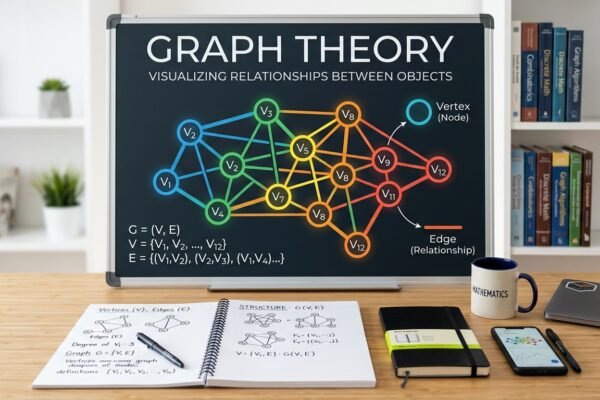
Introduction to Graph Theory Graph theory is one of the key areas of discrete mathematics, concerned with the relationships and…

Introduction to Combinatorics Counting, arranging, selecting and organizing objects based on certain rules is an important area of discrete mathematics…

The coaching profession has reached a critical turning point. As the industry matures, the standard for what constitutes “good coaching” is shifting from loose personal style toward rigorous, observable competency. At the center of this evolution is the mentor coach—a seasoned practitioner tasked with guiding emerging coaches toward credentialing and true mastery. Yet, many experienced coaches discover a surprising reality when they first step into the mentor role: being a great coach does not automatically make you a great mentor coach. Coaching a client through a personal or professional transformation relies on presence, curiosity, and co-creation. Mentoring another coach, however, requires an entirely different skill set: objective evaluation, behavioral analysis, and the ability to deliver feedback that elevates someone else’s craft without imposing your own style. To bridge this gap, dedicated education like an ICF Mentor Coach Specialization Training becomes essential for any practitioner serious about developing coaches at the highest level. The Pitfall of Intuitive Mentoring When experienced coaches begin mentoring based solely on their own intuition and years of field experience, a few common challenges quickly surface: Moving past these hurdles requires learning how to separate objective observation from personal preference. Decoding the ACC to PCC Evolution One of the primary responsibilities of a mentor coach is helping candidate coaches navigate key credentialing milestones—specifically the shift from an Associate Certified Coach (ACC) level of practice to a Professional Certified Coach (PCC) level. At the ACC level, coaching is often structural. The coach is focused on establishing the agreement, asking clear open-ended questions, and keeping the session moving forward. Moving to the PCC level, however, demands a major shift in psychological depth. The coach must move from managing the process to partnering with the person. Through structured ICF Mentor Coach Specialization Training, mentors learn to spot the precise behavioral markers that signal this growth—such as when a coach stops trying to fix the client’s problem and begins holding space for deeper self-discovery. The Art of Delivering Transformational Feedback Evaluation is only half of the mentor coach’s job; the other half is feedback delivery. Constructive critique can easily trigger defensiveness if it isn’t anchored in psychological safety and deep empathy. An effective mentor coach uses tools like the ACC Behaviorally Anchored Rating Scales (BARS) and official PCC Markers to ground every observation in standardized criteria. This transforms the conversation from a subjective critique into a collaborative review of evidence, preserving the candidate coach’s autonomy while showing them exactly where to sharpen their skills. Furthermore, mentor coaches must cultivate cultural humility—recognizing that tone, silence, directness, and communication styles vary widely across cultures and backgrounds. Differentiating between a coach’s unique cultural voice and an actual competency gap is vital to fair and inclusive evaluation. Elevating Your Practice and the Profession Stepping into mentor coaching is one of the most rewarding ways to expand your impact, build a high-leverage revenue stream, and safeguard the integrity of the coaching profession. By completing formal ICF Mentor Coach Specialization Training, you gain the framework, practice hours, and evaluative confidence needed to guide coaches through credentialing with clarity and authority. If you are an experienced coach ready to step into leadership, evaluate coaching sessions with precision, and mentor the next generation of credentialed professionals, having a structured framework makes all the difference.

Introduction Sets, relations, and functions are basic concepts in discrete mathematics used to understand the organisation of information, connections between…

Introduction While programming languages, software applications, artificial intelligence, websites, mobile applications, and super-charged computer hardware are often the focus of…

Introduction A common way of presenting algorithms to new computer programmers is as a set of instructions for solving a…

The area of mathematics dealing with the counting, arranging, selecting and analysis of finite sets of objects is called combinatorics….

Introduction Three of the most important building blocks in discrete mathematics and computer science are set, relation, and function. They…
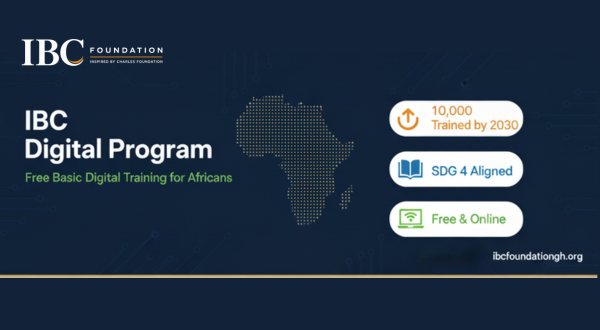
For millions of people, sending an email or uploading a document takes seconds. For others, these ordinary digital tasks can…

Introduction Technical instructions are one of the most significant parts of contemporary technology as they enable individuals to accomplish tasks…

An education website can help learners find reliable guidance, give teachers a place to share expertise, and make a school…

Introduction The way technology is changing education worldwide is one of its most significant impacts. The traditional education system relied…

Before the land banking schemes, before Bali, before LUX, there was 21st Century Academy. It sold the promise of becoming…

Introduction In today’s digital economy, software engineering is among the most valuable and sought-after technology careers. Software engineers are essential…

The rapid evolution and growth in technology, societal expectations, diplomacy, business, and the environment results in continuous development and change…

From smart phones and laptops, to cloud servers and sophisticated artificial intelligence systems, computers have become ubiquitous in today’s life….

Introduction to Computer Hardware Architecture Computers are complex processing systems that accept data, perform instructions, store information and generate readable…