Introduction
The banking sector is changing rapidly as banking institutions are adopting various technologies to improve efficiency, security and provide a better customer experience. One of the main technologies being used in the banking industry is Cloud Computing and Artificial Intelligence. Artificial Intelligence within banking can be used to analyze data, find patterns, improve automation and make smart decisions. Cloud Computing is used to help develop, deploy and scale smart applications. The use of Cloud Computing and Artificial Intelligence are having a big impact on the way banks are processing transactions, assessing credit, identifying fraud and interacting with customers. The growing adoption of AI within the financial industry. Smart technologies can help banking institutions by providing intelligent solutions to help with modern banking. Providing opportunities to innovate, increase efficiency and provide tailored financial solutions.
Cloud Computing and Artificial Intelligence go hand in hand as advanced AI requires a lot of resources. Traditionally banks would have relied on physical servers and managing their own IT systems. This can cause issues when trying to scale as it can become expensive. Using cloud platforms banking institutions can provide computing, storage, databases and tools specific to AI. This means they will have everything they need to develop intelligent applications without having to purchase everything. Understanding the relationship between the two is key if banks wish to move away from small scale AI solutions and provide reliable, secure solutions.
Relationship between Cloud Computing and Artificial Intelligence
Cloud Computing provides the basis for AI to work efficiently. It provides flexibility around computing resources to scale up or down depending on the needs of the business. Developing AI requires large volumes of data, machine learning models, testing and continual updates. This requires a lot of processing which can be achieved using Cloud Computing. This reduces the reliance on investing in expensive physical resources. Also, using Cloud Computing can help collaboration between data scientists, software engineers, cyber security and banking. Using Cloud Computing you can develop intelligent applications by experimenting with new AI applications. This means that you can test the application and deploy the successful ones.
Using data analytics, machine learning and generative AI can help banking institutions. Data analytics can help banks by analyzing data to help organize. This can help identify trends and patterns. Machine learning uses past and real time data to train algorithms. This can help identify patterns and make predictions, such as identifying suspicious transactions or predicting loan defaults. Generative AI can help by providing natural language responses and summarizing data. Using Cloud Computing you can store your data, process, develop models and deploy applications. This means banks can take raw financial data and turn it into useful insights. It also means they can improve their AI solutions.

Major Applications of Cloud Computing and Artificial Intelligence
1. AI Enabled Fraud Detection
One of the main applications of AI within banking is Fraud Detection. Banks can have huge volumes of transactions going through mobile applications, payment platforms, ATMs and online banking. It is not realistic to check every transaction manually. Using AI powered solutions, machine learning can be used. This looks at the transaction details, customer behaviors, spending patterns, device details and location of the transaction. If there is a large difference in the activity compared to usual then the system can raise a flag, request further verification or stop the suspicious transaction. Using Cloud Computing can help reduce processing times by providing the processing power. This also means that the banks can update their fraud detection models as criminals develop new techniques. Overall this can improve the speed and accuracy.
2. Transaction Monitoring
This can help banks identify any suspicious activity. This could be money laundering, identity theft or other financial crime. Using AI you can look at transaction history, relationships, how frequently payments are made and unusual payments. Cloud Computing can help by combining data from multiple banking systems. This can help compliance to look at any suspicious activity more efficiently. However, just because an alert is raised doesn’t mean there is anything wrong. Important cases should be investigated by individuals. Also, models should be regularly reviewed to reduce false alerts.
3. AI Enabled Credit Scoring
AI is improving how banks look at loan applications. Traditionally banks will look at credit history, income, current debts and other factors. Whilst these are still important they may not give a full picture of the individual, especially those with little credit history. Using machine learning models, banks can look at a wider range of allowed financial data to identify credit risk factors. Using Cloud Computing you can store data and process it. This makes it easier for banks to process loan applications. This can help improve consistency. Also, by using Cloud Computing it means banks can provide suitable financial products to those who aren’t getting them. However, banks should ensure their models are not biased against individuals.
4. Customer Support Chatbots
Cloud Computing and Artificial Intelligence are transforming the way banks provide customer support. Traditionally customer service teams can become very busy as customers can have queries around their account balance, card issues, transfers, password resets etc. Using AI enabled chatbots can help answer many of these queries. Using generative AI makes the chatbots very natural. This means the chatbot can understand natural language questions and provide relevant answers. Using Cloud Computing can help by providing the computing power, language models, databases and integration. These can help provide support to many customers. This can help provide support outside of normal banking hours and reduce wait times. However, clear escalation should be put into place so that customers can speak to the right people.
5. Personalized Banking
This is providing tailored financial products, recommendations and services. Using AI can help banks understand what their customers like. This can be done by looking at allowed data such as spending patterns, saving patterns, transaction history and how they interact with the banking platform. This can help banks provide recommendations around suitable savings products. It can also help identify opportunities for financial planning, provide spending alerts and recommend services. Using Cloud Computing makes it easier to process and analyze customer data. For example, an AI system may identify that the customer regularly spends a lot on a certain category. This could provide budgeting suggestions. However, banks should ensure they have the correct permissions in place. They should also protect personal data. They shouldn’t use customer data in ways that could breach their privacy.
6. Financial Forecasting
This allows banks to predict their future financial status. Using AI you can look at past financial data, interest rate changes, how customers repay loans, market data and economic factors. This can help provide predictions. Using machine learning models can help banks estimate loan demand, cash flow, liquidity and identify any changes to credit risk. Using Cloud Computing provides computing power to analyze large volumes of data. Also, this can help update predictions. This can help with treasury, investment planning, budgeting and risk. However, predictions aren’t guaranteed and unexpected economic changes, incomplete data and changes in customer behavior can affect accuracy. Therefore predictions should be combined with professional judgment and scenarios should be analyzed regularly.
Advantages of using Cloud Computing and AI
A major advantage of using Cloud Computing and AI is increased efficiency. AI can help automate repetitive tasks such as categorizing transactions, dealing with customer queries, processing documents and initial risk assessment. Using Cloud Computing ensures that applications have enough resources to run efficiently. This can help reduce processing times and reduce manual tasks. Another major advantage is scalability. If a financial institution is growing rapidly they can easily scale up their Cloud Computing resources. This can be useful when there are high volumes of transactions during festive times, promotions or unexpected increases. Using AI within the Cloud can help with innovation. This means banks can try new applications and scale up successful projects without having to invest in much infrastructure initially.
Another advantage is cost. Managing physical data centres can be very costly. Using Cloud Computing can provide flexible payment options. This can help reduce some costs. It can also help smaller financial institutions gain access to advanced AI. However, using Cloud Computing could be costly. Processing data all the time, storing data, software licenses and specialized AI can become expensive if resources aren’t managed. Banks should monitor their usage, set budgets, remove unused resources and compare the long term costs. Having good financial planning ensures that investing in Cloud Computing and AI will provide value.
Disadvantages and Risks of using AI and Cloud
1. Data Privacy and Cyber Security
Banks will have very sensitive data such as personal identification, account details, transaction history and credit. Moving resources to the Cloud means that there are responsibilities around data protection. Whilst using a reputable Cloud provider will provide security technology, you should understand how your data is being stored, accessed, processed and protected. If you don’t have good security around your access, storage, application and employee logins then confidential data could be exposed. You should therefore use encryption, multi factor authentication, limit access, constantly monitor security and regularly test for vulnerabilities. You should also carefully choose your Cloud provider to ensure they meet financial regulations. If data is being processed in different countries then you should consider data residency. It’s important to protect your customer’s data.
2. Model Governance
AI models can be used for important decisions such as approving loans, investigating fraud, assessing customer risk and giving access to banking services. If models are not well designed or monitored they may provide inaccurate results, continue historical bias or make decisions that are hard for customers to understand. Using model governance can help reduce these risks. Banks should document how models are developed, what data has been used to train them, test accuracy and monitor performance. If you are using AI to influence decisions that impact your customers you should ensure you can explain why important decisions have been made using automation. You should also have processes in place for customers requesting a review. Important decisions should still have human oversight.
3. Operational Costs, Integration and Reliability
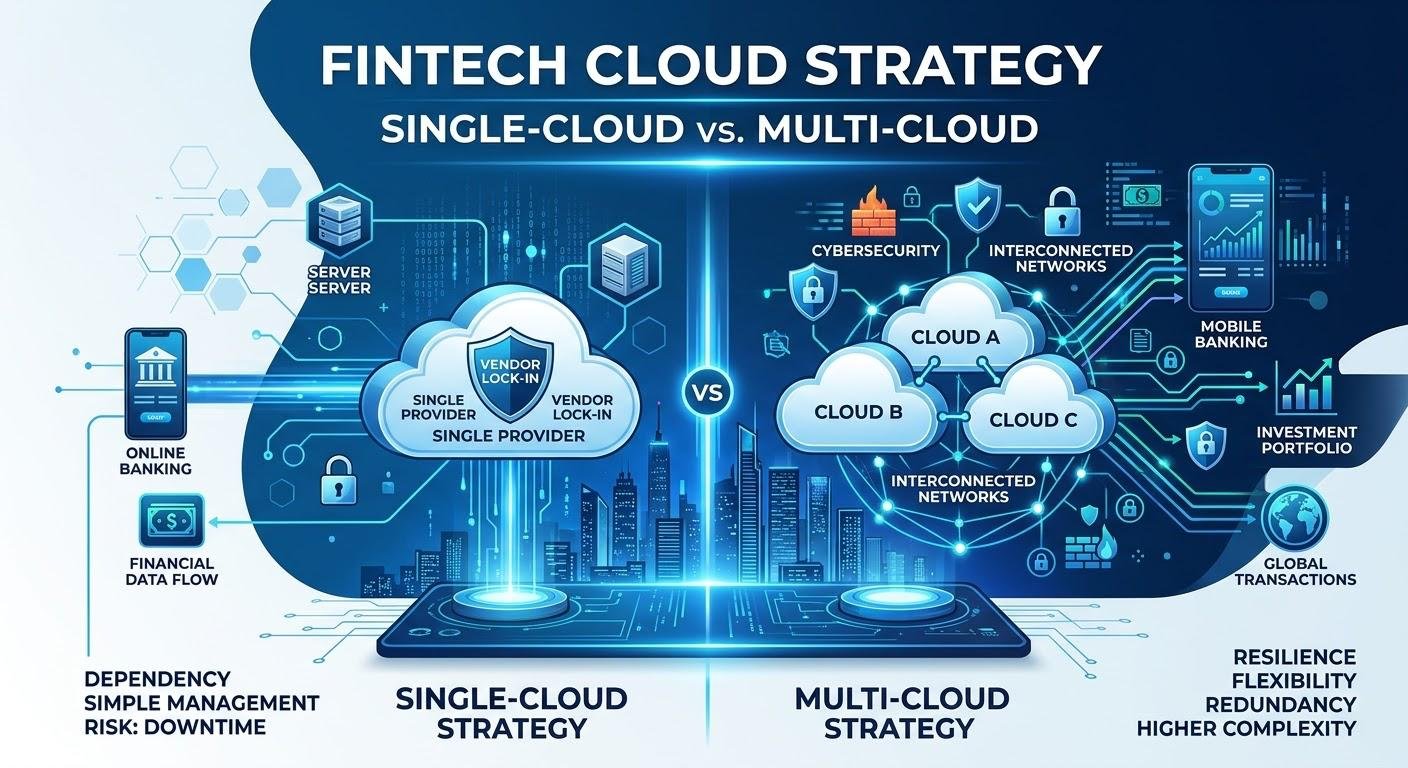
Whilst there are many advantages to using AI within the Cloud there can be some issues. Banks may have to integrate new applications with old core systems. This can require specialist staff, extra software, training and careful planning. There may also be issues with becoming locked into a certain Cloud provider. This can make it difficult and expensive to move in the future. There can also be issues with service outages, network issues and unexpected price changes. You should therefore have disaster recovery plans in place, appropriate back up, monitor performance and assess risks with your technology providers. A well planned hybrid or multi cloud solution may be appropriate to ensure you meet regulations, have resilience and continuity.
Strategies for taking AI from Experimentation to Large Scale
Banks should have a structured approach when taking AI from experimentation to full implementation. Firstly, they should identify what issues they have within the business that AI can help solve. Don’t just invest in AI as it’s becoming a growing technology. Focus on areas that provide clear benefits such as reducing fraud loss, increasing loan processing times and reducing workload in customer services. Next, banks should look at their current data. Is it good quality, easy to access and secure? If it isn’t reliable then the AI won’t be reliable. Choose the right Cloud infrastructure. Ensure you have considered your computing needs, integration, regulations, security and long term costs. Start with a pilot project to test the performance. This can help identify any issues and improvements.
To successfully take AI to large scale you should work with your technology team, bank staff, compliance, cyber security and management. AI should have clear roles, clear approval processes, performance measures and regular monitoring. Train staff to understand how automation works and when they should intervene. You should also have processes in place for when models fail, security issues, customer complaints and unexpected performance changes. It’s important to measure results to ensure your investment in AI is providing value. This could include measuring accuracy in fraud detection, false positives, loan processing times, chatbot resolution rates, system uptime and operational costs. If you have the right infrastructure in place, good governance and regularly measuring performance you can scale your AI applications responsibly. This will help keep customers confident. Cloud Computing and Artificial Intelligence in Banking: Use Cases and Benefits
Conclusion
Cloud and AI technologies are becoming a crucial part of the banking industry. This is due to the ability to process information more efficiently, automate key functions plus provide smarter services. Using cloud technology will allow banks to store their information, provide computing resources, adaptability and deployment for their AI applications. This will help them provide better detection methods for fraud, improved transaction monitoring, credit scoring, customer service, personalization and forecasting using data analytics, machine learning and generative AI. However, there are several factors financial institutions must consider when implementing these technologies. They need to ensure they are protecting data, securing their systems, providing good governance around their models, keeping costs down, ensuring systems are reliable and reducing the risk of making decisions based on automation. By having clear strategies in place, keeping humans involved and constantly reviewing how well they are doing they can move beyond just experimenting and create secure, scalable and responsible AI financial services.
Get more well researched information about Cloud Computing and Artificial Intelligence in Banking here.