Introduction
The process of opening a bank account online has revolutionized the way people and companies open accounts in their bank. Customers can now apply online on official websites and mobile applications without having to visit a physical location and fill out paper applications, and await manual approval. These digital procedures enable banks to obtain customer data, confirm identities, evaluate eligibility and approve applications via digital means. One of the key components of this is electronic Know Your Customer (e-KYC), allowing financial institutions to identify and verify a customer’s identity using electronic means. Banks can leverage the technology of identity documents, biometric technology, electronic signatures and automated checks to open an account in less time and with greater convenience while maintaining critical security and regulatory requirements.
Online Bank Account Opening
Online bank account opening is an online procedure that enables customers to apply for and open bank accounts without having to go to a bank’s branch. There are several types of accounts that can be opened through an internet banking portal/mobile banking application, such as savings account, current account, student account, and business account. Usually, the application is held electronically and requests for personal details, contact information, house address, work information and the type of account that is wanted. Then the bank would employ verification systems to establish that the applicant is who he or she says he or she is and if the application meets the bank’s requirements. Opening some accounts can take a matter of minutes, other accounts can take a bit longer and require more documents and/or a manual review. While it’s a digital process, it is still regulated by banking laws, criteria, and security protocols that aim to fight fraud and safeguard bank users.
The Procedure of Electronic Know Your Customer (e-KYC)
A digital solution to know and verify customers before giving them access to financial services is known as Electronic Know Your Customer (eKYC). While traditional KYC refers to the process of verifying identity through physical documents and in-person interactions, e-KYC relies on electronic records, identity databases, document recognition and other technologies to verify an individual’s identity as they apply online. Depending on their jurisdiction, banks may check this information against trusted government records, approved identity providers or other sources as may be legally permitted. Additional checks they can carry out include checking against sanctions lists and relevant financial crime databases. Such checks are useful for institutions to meet anti-money laundering and anti-terrorist financing obligations. But, e-KYC doesn’t ensure instant approvals. Banks have to make further checks on the reliability of the evidence, look for inconsistencies and verify the evidence at the level deemed appropriate for the account and the risk level.
The Typical Procedure in Opening a Bank Account Online
Make your selection of a Bank and fill the Application.
The first step is to select a bank and then visit its official website or mobile application. Applicants are advised to ensure that the institution provides an online account opening and check whether they meet the eligibility criteria, what fees they must pay, the minimum deposit amount and account features. An applicant is directed to an account, then is required to fill out a digital application form with their complete legal name, date of birth, phone number, email address, residential address and work. To open the account, some banks might ask for tax identification information or details of how the account will be used. Candidates are required to provide correct and relevant details that should be in accordance with the supporting documents. Address, date, and/or names can be mis-entered, which will prompt more checks and put a delay in the process. Upon completion of the form the application is submitted electronically for verification of identity and qualification.
Uploading Identification Documents
Applicants will be required to provide personal details and then upload images and/or scanned copies of identification documents. Examples include a national ID card, international passport, driver’s licence or any other document issued by the government. Additional documents such as proof of address (utility bill or bank statement) and required information as per the regulations may be requested by the bank. For instance, a Bank Verification Number (BVN) or National Identification Number (NIN) may be required by a bank in Nigeria depending on the type of bank account and the applicable requirements. Applicants are required carefully to make sure that documents are valid, legible and accurate with the information provided in their application. Optical character recognition can be used to identify the information from uploaded files automatically and allow the data to be stored as digital information. If an image is blurred, cropped, has expired or is altered in any way, the bank may ask for another image to be submitted or may require manual review of the application.
Biometric Verification and Facial Recognition
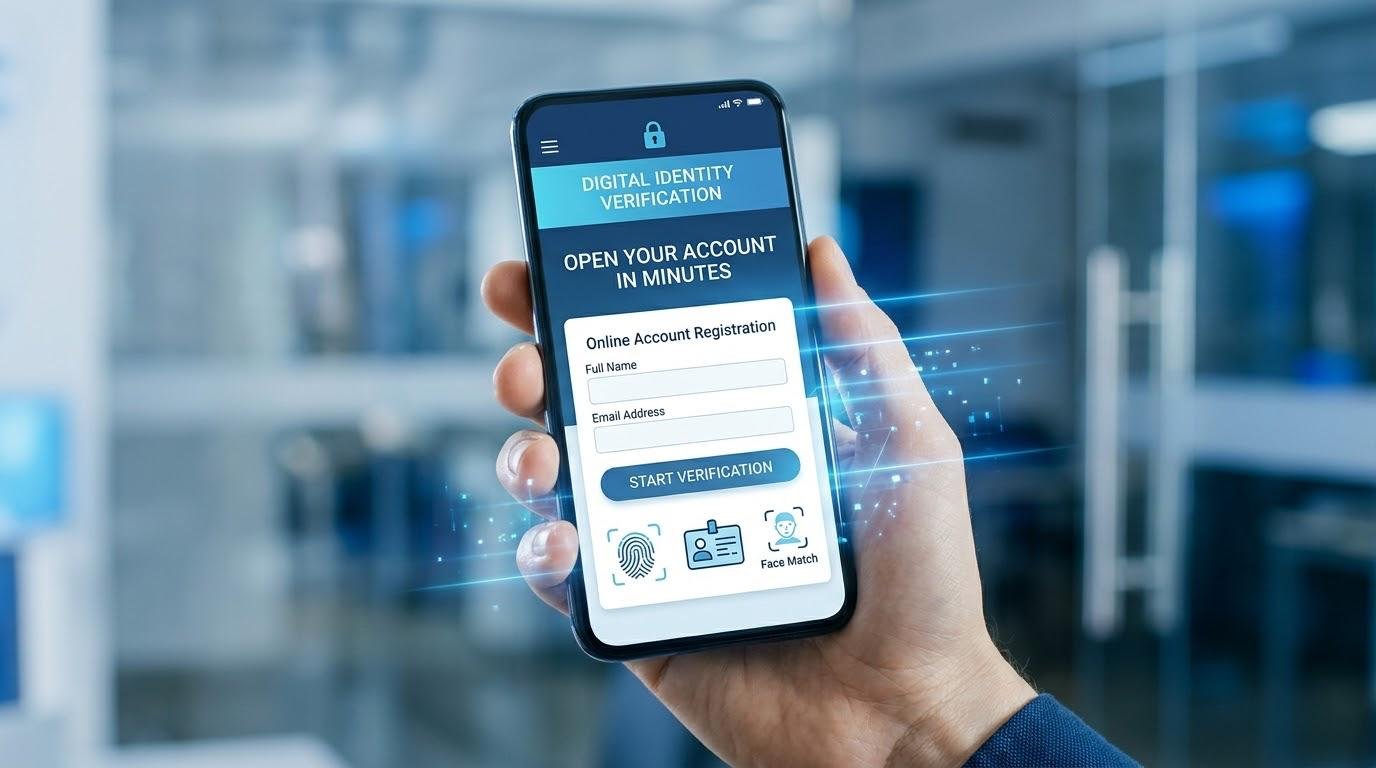
By using biometric verification, banks can be sure that the individual who fills out an application to open an account is actually linked to the identity they are applying for. This can be through a fingerprint, facial recognition or following a claimed biometric method as dictated by local regulations and the banks system. Facial recognition software is used to identify facial features and match them with an image on a face document, such as a photo on a passport or driver’s license. Some systems also involve a liveness check that could involve the applicant making an action on the screen, like turning the head, blinks, or following an instruction. These measures can help identify any representation that is fraudulent or involves photographs or recorded videos, or using a mask. Biometric systems, however, can give false rejections due to the lighting, the quality of the camera, accessibility requirements or discrepancies between the pictures. If the automated verification fails, a bank may want to verify again and/or provide a different method of verification.
Electronic Signatures and Automated Eligibility checks
After obtaining the identity of the applicant, the bank may require the applicant to agree to the bank’s terms and conditions, privacy notice and other account agreements. With electronic signatures, customers can sign a document electronically rather than on paper. This can be done by clicking an acceptance box, typing in a verification code or by providing a well-known electronic signature service, depending on the applicable law and the bank’s electronic signature procedures. The bank may also conduct automated eligibility checks to see if the applicant is eligible. These can be used to determine whether a person is old enough, has lived in the area, has the necessary account types, has the proper paperwork, etc. Extra screening could be necessary for compliance and/or to prevent fraud. If all the above is true and the information is consistent, the bank can approve the account and give information about the account. At certain institutions, there will be an upfront deposit or verification required in order to access the entire account.

Documents needed to Open a Bank Account Online.
Digital account opening documents are different based on the country, bank, account type. However, applicants will need to be able to give evidence of identity and if required, evidence of address and other information. A government-issued ID is usually needed and some may ask for a recent utility bill or bank statement to verify the residence. Applicants might additionally want to have a valid cellphone number, email, tax identification number, or national banking identifier. There may be other records required for business accounts such as business registration documents, tax information, details of directors and information about beneficial owners. Depending on the student or minor, supporting documents and/or parent/guardian involvement may be necessary. Applying with the bank will result in unnecessary paperwork to be submitted that can lead to the disclosure of personal information, without enhancing the application, so bank requirements should be reviewed prior to application.
Reasons why Online Applications for Bank Accounts are Slow or Refuse to be Accepted
While digital verification can speed up the account opening process, not all applications will be approved immediately. Applications may be delayed if documents are out of date, unclear photos, information is not consistent with official records, or if there is incomplete information. Other issues such as technical problems, verification database inaccessibility, biometric verification failures and address discrepancies can also necessitate further investigation. In other cases, the reason for the request could be that a bank suspects fraud signs or requires other information to meet its regulatory requirements. A defect in the age and/or residency criteria, false information, or mandatory verification checks may result in an application being denied. There may also be certain restrictions on certain accounts and jurisdictions. Applicants need to acknowledge on time any clarifications requested and communicate with the bank via the proper communication channels if they do not get a decision on time. A letter of request may not be an indicator of fraud.
Privacy and Security in Digital Identity Verification
When opening an online account, users are required to provide personal sensitive data, such as ID documents, contact information and, at times, even biometric data. Banks are responsible for ensuring that access to and disclosure of this information is not authorized. Encryption can help safeguard information when it is sent from an applicant’s device to the bank’s systems and when it is stored. Additional security measures include access controls, secure authentication systems, surveillance measures, and data protection policies. Banks are also required to comply with the privacy and data protection laws applicable to personal information, including the collection, retention and use of biometric information as applicable. Users are advised to read the privacy notices to learn how their information might be used and stored. They also must refrain from sending ID documents via unsecured links, public computers or unofficial messaging accounts in order to steer clear of criminals having access to their information.
Importance of Maintaining Identity, Avoiding Online Scams, and Complying with Regulations
Digital account opening is one of the methods that cybercriminals can use to exploit using phishing websites, stolen identity documents, synthetic identity, social engineering or compromised email accounts. For instance, a fake web page can simulate a bank’s application webpage to obtain passport information, security codes, or passwords. Criminals also can try to use another person’s personal information to open accounts without permission. When suspicious activity is detected, banks react with identity verification, fraud detection, transaction monitoring and more verification. Regulatory compliance is also essential as financial institutions are subject to compliance with existing customer identification, recordkeeping, anti-money laundering and counter-terrorist financing regulations. These obligations cut down on the use of the financial system for unlawful purposes and bolster the integrity of the financial system. Customers can help by keeping their identity papers safe, not providing one-time passwords and notifying authorities immediately of any suspicious messages requesting that they open an account or any apps they did not expect.
Best Practices to Safely Open an Online Bank Account.
There are some practical tips that customers can take to minimize the dangers of opening an online account. Firstly they should log in to the bank via its legitimate website, or download the app from the trusted app stores making sure to check the publisher before installation. Secondly, they should always have a secure Internet connection, have their devices updated, and never enter information on shared or public computers. Once an account is created, there are more ways of protecting it with strong passwords and multifactor authentication. The applicant/ candidate must also verify that all the details provided are correct and also ensure that all the documents uploaded are correct and updated. They should never give their passwords, PINs or codes that they provide for one-time verification to anyone claiming to be from the bank. Customers should not reply to unsolicited messages asking for sensitive data or payment for the release of an account.
Conclusion
Online bank account opening expands access to financial services for customers in that it enables them to apply, confirm identities and finish necessary paperwork without having to go to a bank branch. All these digital applications, along with e-KYC, biometric verification, electronic signatures, and automation of eligibility checks, contribute to a more efficient process, helping banks combat fraud and adhere to their regulatory responsibilities. But successful DAB will rely on the accuracy of the data, the reliability of verification mechanisms, the protection of the data, and the responsible customer behavior. Even if a person’s application is submitted, it may need to be reviewed by a person or the application may be denied if the identity information on the application is not consistent or eligibility requirements are not satisfied. Customers can navigate the account opening process with confidence and security in the digital landscape of financial services by understanding the process, creating the appropriate documentation, safeguarding personal data and transacting through official banking channels.
Get more well researched information about Online Bank Account Opening here.