
Introduction
The banking sector is seeing great advances to improve the customer experience by providing an easy and efficient service. In the past banks have tended to offer similar products and services to customers however with the increased availability of information about customers, banks can now learn more about their customers and provide a personal experience. Financial institutions can use big data analytics to gain knowledge from the transaction history, spending habits, mobile banking, account activity and feedback from customers. By taking this information banks can learn what customers want and help them get what they expect by creating services that improve customer satisfaction. Big data analytics has helped financial institutions understand their customers better by turning huge amounts of information into usable intelligence. This has helped improve customer relationship management, engagement, retention and competition.
1. Personalized Recommendations
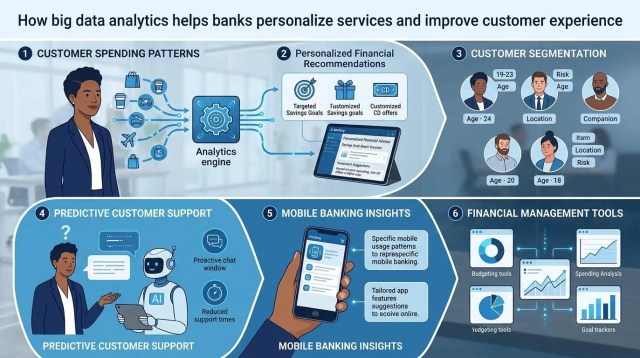
One of the key ways big data analytics helps improve the customer experience is by helping banks provide customers with recommendations. Financial institutions can look at a customer’s transaction history, income, saving habits and spending habits. If customers are frequently adding money to their savings account they may be interested in investment opportunities or better return savings. Customers who frequently spend on transport, food shopping and entertainment can be given recommendations to help them manage their budgets. Banks can give customers tailored recommendations by using the insight to provide the right products and services for them. This gives customers a more relevant experience as they are receiving information to help them achieve their financial goals.
2. Customer Segmentation
Big data analytics can help identify different groups of customers. This is known as customer segmentation. Financial institutions can look at their customers to see what different needs they have. For example younger professionals will be more interested in mobile banking, digital payments and affordable credit. On the other hand older customers will be more interested in saving for retirement, investment opportunities and good customer support. Banks can identify different customers based on their spending habits, income, saving habits and how frequently they use their bank account. This allows financial institutions to provide a more relevant experience and communicate with their customers better. This helps overcome the issues of generic marketing.
3. Tailored Products and Services
Banks can use big data analytics to identify customers who may benefit from certain products and services. Financial institutions can look at the balance in their account, transaction history, loan repayments and savings to identify what products would best fit their needs. If a customer is regularly saving and has a steady income they may be interested in a fixed deposit account or investment opportunity. If they are frequently making international transactions they may benefit from a package with low foreign transaction fees. This allows banks to provide relevant offers. It also increases the chances of successfully engaging with customers as they will be provided with products that are related to their financial activity. However banks should ensure they are providing the right recommendations and are being transparent with the information.
4. Predictive Customer Support
Big data analytics can help banks identify situations which may need attention before customers complain. Financial institutions can look at customer support, mobile banking, transaction activity and previous complaints to identify patterns. If customers are having frequent issues with failed transactions, difficulty logging in and frequently asking about a certain service it may indicate they are having difficulties. Predictive analytics can help identify these situations so banks can provide help before the customer becomes increasingly frustrated. Banks may use automation to give customers the correct support resources or contact them with the right customer support. This reduces any unnecessary delays and helps provide a more efficient service. It also shows they are listening to their customers.
5. Reduce Churn
Churn refers to when customers stop using a bank’s services or move their account elsewhere. Big data analytics can help banks identify customers who may be looking to leave. If a customer is no longer performing many transactions, has less activity on their mobile banking, frequently complains or moves money to other financial institutions it indicates they are not engaging with the bank as much. By identifying this banks can find customers who may need extra attention and provide them with the right strategies to retain them. This could be providing better account services, fixing any complaints, offering relevant financial advantages or contacting them directly. By identifying any potential churn early banks can fix the issue before they make any permanent decisions. This helps financial institutions retain loyal customers as they use data driven strategies to keep them.
6. Improve Customer Relationship Management
Big data analytics can help banks improve their customer relationship management. They can gather information from customers who visit their branch, use customer support, mobile apps, website and transaction activity. This gives employees a clearer understanding of previous queries and helps them identify any common issues. Customer relationship management is very important as you need to keep in consistent contact with your customers, provide reliable support and understand their expectations. By using data driven insights banks can provide a more personal experience, identify areas to improve and provide a more consistent experience.
7. Improve Mobile Banking
Mobile banking apps are an important way to communicate with customers. Big data analytics can help banks understand how customers are interacting with their mobile apps. By identifying how frequently customers log in, what features they use the most, transaction activity, how they navigate the app and any feedback they have given. This helps banks identify what services customers value the most and what areas of the app could be improved. If customers frequently use the app to send money but rarely use the budgeting tools banks can make financial management tools easier to find. Big data analytics can also help identify any issues with the app. If customers are struggling to navigate, having frequent failed transactions or abandoning payments. By understanding how customers are interacting with their app banks can make it easier to use, improve digital services and provide a more convenient experience for customers.
8. Provide Relevant Financial Insights
Big data analytics can help banks provide customers with more clarity on their financial activity. By looking at transaction history, payments, regular spending and account balance banks can categorize their information. This will help customers understand what they spend their money on. For example they can see how much they spend on food shopping, transport, subscriptions and home expenses each month. Banks can also identify any regular payments and let them know when they have bills due or if they have seen an unusual increase in spending. This helps individuals understand where their money is going and make more informed financial decisions. Some banks will also provide budgeting suggestions based on previous transactions and saving habits. By providing these services it helps improve the customer experience as banks become a helpful tool in managing your finances.
9. Understand Customer Feedback
Customer feedback can provide valuable information about what customers expect from their bank and what areas are lacking. However financial institutions often receive feedback from many sources such as online reviews, surveys, social media, emails and customer support. Big data analytics can help banks understand what issues are being raised frequently, what they like and what suggestions they have. If many customers are complaining about slow transfers it may indicate they need to improve their payment processing. If they have received positive feedback about a certain feature on their mobile app it may indicate they value the convenience. Sentiment analysis can also be used to understand if people are becoming more positive or negative about their services. This helps financial institutions make informed improvements and provide services which meet their expectations.
10. Provide a Consistent Experience
Customers now expect to receive consistent services from their bank whether they use the mobile app, website, phone support, ATM or branch. Big data analytics can help financial institutions collate information so customers have a more consistent experience. For example if a customer contacts their bank via the mobile app to ask about an issue with a transaction they shouldn’t have to explain the whole situation again when contacting customer services. By providing relevant information about their interactions with customers on all authorized channels banks can provide a quicker and more informed service. Analytics can also help financial institutions understand what channels customers use most and how they move between different channels to complete their financial tasks. This helps provide a more consistent service, reducing any repetition and providing a more convenient experience.
Challenges of Using Big Data Analytics for Personalization
Big data analytics provides many opportunities to improve the customer experience however financial institutions must overcome some important challenges. Privacy and security are a large concern for banks as they hold sensitive financial information. Financial institutions must implement strong security measures, correct access controls and follow the relevant data protection regulations. Ensuring the data is accurate is also important as incorrect, incomplete or outdated information can provide misleading information and inappropriate recommendations. Banks must also ensure they aren’t disadvantaging certain customers by using biased analytics. Customers should also understand how their information is being used. Overcoming these challenges will help banks keep their customers happy whilst providing responsible and effective personalization strategies.
Conclusion
Big data analytics is changing the way banks understand their customers and provide financial services. By providing personal recommendations, customer segmentation, targeted products, predictive customer support, reducing churn and improving customer relationship management financial institutions can provide experiences that better meet customers’ financial needs. Big data analytics also helps banks improve their mobile apps, provide useful spending insights, understand customer feedback and provide a consistent experience across multiple channels. This can help increase engagement, improve relationships, encourage loyalty and improve long term retention. However banks must ensure they provide responsible personalization strategies by keeping customers happy with their data management, privacy and transparency. As digital banking continues to develop financial institutions will be in a better position to understand evolving customer expectations by Using Big Data Analytics effectively.
Get more well researched information about Big Data Analytics in Banking here.