
Introduction
As we rely more and more on digital systems to store information and communicate with others, Cybersecurity has become a crucial aspect of modern technology. It is not just about implementing anti-virus software or passwords. Security engineers must have an understanding of how digital systems make decisions, who can access information, authenticate users and mitigate threats.
Using Mathematics and Logic will help with this as there are many ways to structure information and make sure certain conditions are met. By using logic, developers can see how parts of a system interact and where any flaws may occur. This is especially useful for Cybersecurity as it can help implement secure access, authentication, encryption and verification.

Mathematical Logic in Cybersecurity
Mathematical logic is a branch of mathematics that involves reasoning using logic. It helps structure information and identify if conditions are true or false. By using logic in Computer Science, computers can make decisions depending on conditions. For example, only giving an employee access to a document if they are logged in with the correct account details and permission. Logical operators can be used to create conditions. Security Engineers can use these conditions to define what should happen in a system, making sure that certain security conditions are met. This can be done by turning the security conditions into mathematical conditions meaning developers can easily look at complex scenarios and avoid any errors.
Security Professionals can use Mathematical logic to make sure they are not making assumptions. For example, a security system can be designed with the assumption that only authorised employees can access confidential records. However, this assumption must be backed up with conditions. There are many mathematical conditions that can be used for this; Propositional Logic, Predicate Logic, Boolean Algebra and Temporal Logic. Propositional logic looks at statements that are either true or false. Predicate logic can include more detailed conditions. Boolean Algebra is used to look at logical conditions and Temporal Logic can be used to show how security conditions should behave. This can help engineers define security conditions clearly and look at how a system will behave.
Access Control Logic
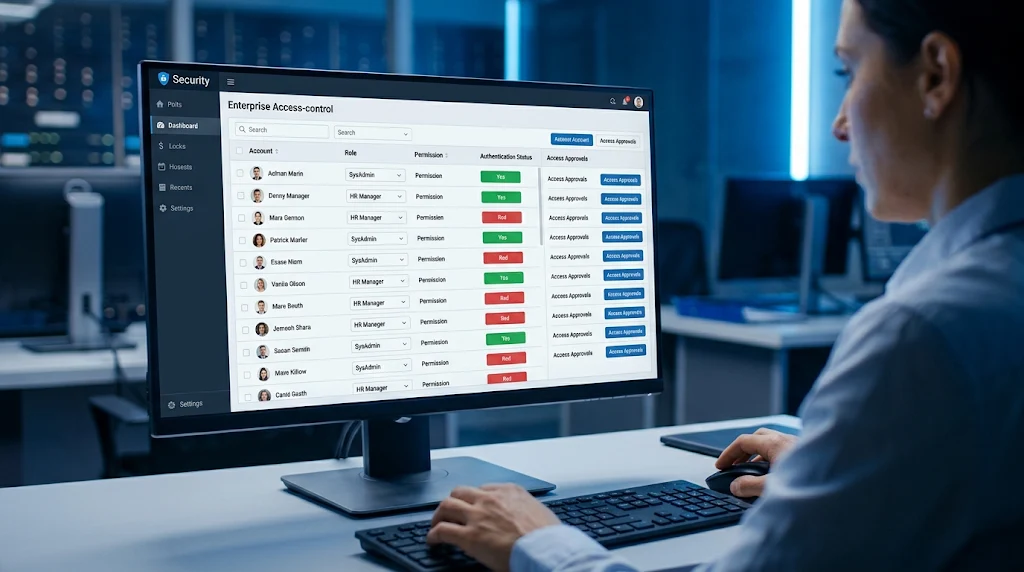
One of the main uses of Mathematical logic in Cybersecurity is access control. Within a digital system there will be many different types of information. However, not everyone should have access to all the information. Access control logic can help define conditions to decide if a user should have access or not. Conditions can be set for users based on who they are, what role they have, what department they are in, what security clearance they have and what resource they want to access. For example, an employee within a bank may have access to customer information but not have permission to approve large financial transactions. Logical conditions can be used to define these access rules.
Multiple conditions can be used to create more detailed access conditions. For example, a user may need to have an active account, be authenticated and have the correct permissions. This can be shown using Boolean conditions. AND means all the conditions will need to be met whilst OR means at least one condition will need to be met. NOT can also be used to exclude certain conditions. For example, users with suspended accounts will not have access. Understanding access control logic will help security professionals see how the conditions work. By defining clear access conditions, organisations can avoid unauthorised access to resources. This can help prevent confidential records being exposed unnecessarily.
Authentication Rules
Authentication is the process of verifying that a person or system is who/what they claim to be. Mathematical logic can help developers define conditions to make sure that a user can be authenticated. Many traditional authentication systems will use username and password conditions. However, modern systems now use multiple authentication conditions. For example, multi-factor authentication can require a password and temporary verification code. Conditions can be created to define what needs to be done. For example, only allowing a user to login if their password is correct AND they have completed the extra verification. Logical conditions can make it easier to understand, implement and test.
Logical reasoning can help design authentication systems. For example, a financial platform may wish to ask for extra verification of the user’s identity if they are trying to log in from an unknown device or doing something very sensitive. Security Engineers can create conditions for this. Conditional statements can be created to define what should happen if certain events happen. For example, if a user meets the normal authentication conditions then they may be given access. If there are suspicious conditions then extra verification may be required. Formal reasoning can help developers see if conditions are being applied consistently. Authentication systems can also have issues such as timed out sessions, multiple failed logins and changing user permissions. Using logical verification can help engineers see how these situations are handled.
Mathematical Logic in Cryptographic Protocols
Cryptography is used to protect digital information by using mathematics to scramble data so it is not easy for unauthorized people to understand. This can help with secure communications, protecting data and verifying the authenticity of messages. However, the security of a cryptography system depends on the protocols. Security researchers can use mathematical logic to define how a protocol should work and see if conditions are being met. For example, a secure communication protocol may need both parties to create an authenticated connection. Logical reasoning can be used to define this.
By analysing protocols formally, researchers can look at important conditions such as confidentiality, authentication, integrity and replay attacks. Confidentiality means that information should only be accessible by authorised parties. Authentication can help create confidence between the two communicating entities. Integrity can help identify if unauthorised changes have been made to the information. Replay attacks can help prevent messages from being used inappropriately. Security Researchers can create mathematical models to define what the participants, messages, assumptions and expected outcomes are. This can help them analyse if an unauthorised party could interfere with the communication process. This is important for protocols used within online banking, secure websites, enterprise communication platforms and cloud services as weaknesses in the communication process could expose sensitive information.

Security Policies
Security policies are formal guidelines that define how an organisation will protect their digital resources and what they can do. This can include account management, password rules, data access, network usage, information sharing and incident management. Mathematical logic can help organisations create conditions for these policies. For example, an organisation may create a policy that only authorised members of the finance department can view confidential payment records. This can be defined using logical conditions. Formal conditions can be created to avoid any ambiguity and make it easier for developers to see if the security system is following organisational conditions. This can help create consistent decisions across applications, databases, internal networks and cloud environments.
Logical reasoning can help when there are multiple conditions or exceptions within the security policy. For example, an organisation may give employees access to certain records during working hours but restrict access to very sensitive information unless extra approval has been given. These can be defined using multiple logical statements and conditions. Engineers can look at how the conditions interact with each other and see if any conditions are overriding others by mistake. This can help avoid any conflicting policies giving un-intended permissions. Security policies will also need to be reviewed when employees have a change in role, leave the organisation or have new responsibilities. Formal logical models can help with this as it will be easier to see what impact changing a rule would have. This means that mathematical logic can help create predictable, manageable and enforceable Cybersecurity policies.
Formal Specifications
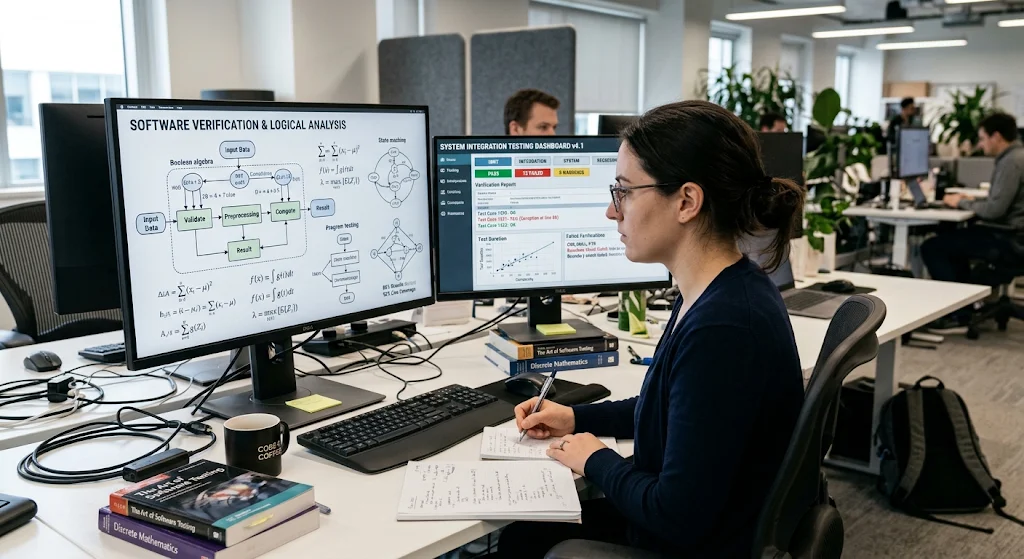
Formal specifications are detailed mathematical definitions of how an application, computer system or security mechanism should work. Rather than using natural language to define what conditions the system should meet, developers can use mathematical conditions. This is important in Cybersecurity as there can be small errors in the coding or ambiguous conditions that can create opportunities for unauthorised access. For example, a formal specification may define that a transaction cannot be completed unless the requesting account has enough funds and the user has passed the authentication checks. Developers can look at this specification to see if the application is following the correct rules. This can help create a base for testing.
An important technique that can be used is model checking. This looks at mathematical conditions of a system to see if certain properties can be met. This can help look at different conditions of the system rather than just a few examples using natural language. Security Engineers may use this to see if a user can access a restricted part of an application without having the correct permissions. This can highlight any breaches of the security properties. How useful model checking is depends on how accurate and complete the model is. If used carefully it can be a powerful tool to find any design issues.
Finding Logical Vulnerabilities
Not all vulnerabilities will be due to complex technical issues. Some can occur because an application is not following the correct conditions, poor exception handling or making decisions based on incomplete assumptions. Logical vulnerabilities occur when the system does not follow the intended conditions. For example, an online application may have the correct conditions to verify the user’s identity but may not have conditions to check if they have permission to do something. Another application may allow a transaction to continue if an important approval condition has not been met. This shows that Cybersecurity testing needs to look at the logic behind the application. Mathematical logic can help engineers create conditions for what should happen and see where there are any inconsistencies.
Formal reasoning can help look at paths within the application that may not be covered by normal testing. Applications often have many conditions, roles, exception handling and interactions between services. The application may behave correctly under normal conditions but may behave unexpectedly if multiple unusual conditions occur. Logical analysis can be used to see if important restrictions are still in place. Static analysis, symbolic execution, theorem proving and model checking can be used to look at different aspects of the program. Symbolic execution looks at paths within the program using symbolic inputs. This can help developers identify conditions causing unexpected behaviour. Using these techniques alongside Cybersecurity testing can help identify any issues with permissions, authentication, transactions and handling of sensitive information.
Formal Methods in Cloud Security
Cloud computing allows individuals and organisations to store information, run applications and use computing resources using internet based platforms. These often involve many users, applications, servers and services. Security within these complex systems must have well defined conditions for identities, permissions, communication and resources. Mathematical logic and formal methods can help Cloud Security Engineers define what conditions should be met. For example, an organisation may want employees to only have access to the storage resources in their department. Administrators may have extra permissions to maintain the system. Formal access control models can be used to define these relationships. This can help engineers see if the correct permissions have been applied. This can be very useful in cloud environments as incorrect configurations could expose information.
Formal reasoning can help verify conditions relating to confidentiality, availability and communication between applications. Cloud platforms often use application programming interfaces, identity management, databases and automation. Formal specifications can be created to define how these should interact. This can help identify if any security conditions are not being maintained. For example, seeing if sensitive information is being kept safe whilst moving between cloud services. Or if any restrictions are still in place if a user changes role. Whilst formal methods cannot remove all risks, they can help create a structured way to look at important conditions. Using encryption, constant monitoring, secure configurations and regular assessments can help increase the security of cloud based infrastructure using logical verification.
Mathematical Logic in Financial Systems
Financial systems must be accurate and secure as they deal with sensitive customer information, account details, payments and large amounts of money. A small logical error could cause incorrect transactions, unauthorised access to accounts or exposure of confidential financial information. Mathematical logic can help Financial Technology developers create conditions for important actions. For example, an online banking application may require the user to be in a valid session, have enough funds in their account and have successfully verified their transaction. These conditions can be created as formal conditions and analysed. Logical reasoning can help keep things consistent when dealing with account balances, transaction records and payment confirmations from different services.
Formal methods can be very useful in financial environments. A banking application must make sure that completed transactions are recorded accurately and that account information is consistent. Engineers can define properties for how the conditions should behave and use formal verification techniques. Logical analysis can also help with looking at authentication, permissions and transaction approvals. These techniques may be used by financial organisations when creating payment platforms, online banking, trading applications and digital financial infrastructure. However, mathematical verification must be supported by other security measures. This can include independent audits, encryption, fraud monitoring and correct controls. This can help financial organisations keep their services reliable.
Increasing Enterprise Network Security using Logical Reasoning
Enterprise networks are used to connect computers, servers, applications, databases and other digital resources within an organisation. As employees often have different roles, requirements and authority, security policies must be managed carefully. Mathematical logic can help Network Administrators create conditions to decide what devices and users can communicate with resources. For example, a company may want employees to have access to internal communication services but only allow authorised IT staff to have access to administration systems. Logical conditions can be created to decide if users have the correct identity, permissions, network location etc. This can help keep conditions consistent across the network and prevent un-necessary access to important resources. This can also make it easier to analyse if current restrictions are providing the correct level of protection.
Logical analysis can be useful when there are many systems connected to the enterprise network with different security requirements. Organisations may have internal databases, remote access, cloud applications, employee devices and specialist business applications. All of these must communicate correctly without exposing others unnecessarily. Security Engineers can create formal models to define what communication should be allowed. This can help identify if the network setup is meeting the organisation’s security goals. For example, ensuring confidential databases cannot be accessed directly by unauthorised external users or ensuring administration requires the correct authentication. Logical reasoning can also help create zero-trust security models. This requires conditions to be checked for any access requests rather than trusting they are coming from an internal network. This can help organisations keep their security tight and manage access to increasingly complex digital environments.
Issues with using Mathematical Logic in Cybersecurity
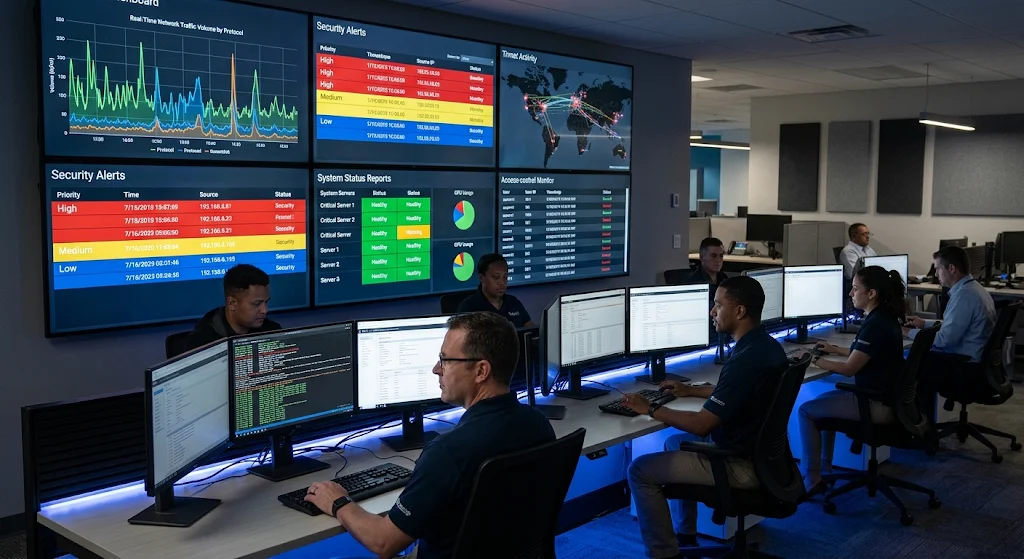
Despite having many advantages, there are some issues with using mathematical logic in cybersecurity. Modern software can be very complicated meaning it can take quite a long time to create mathematical models of all the components. An engineer may not have sufficient knowledge or time to create an accurate mathematical model. Also there are many assumptions made when using formal verification. If an engineer misses a key aspect of how the system works or if there are incomplete specifications then some weaknesses may not be picked up by the formal verification. Some security aspects can vary due to external factors such as human interaction, variable network conditions, third party services and hardware limitations. It can be difficult to fully capture these aspects in a mathematical model. Therefore it is important to use formal methods alongside other security practices.
Another limitation is that just because something has been formally verified, it does not mean there are no security issues within the whole system. There may be parts of the programme that meet the mathematical specifications but do not meet a key security requirement. There may be risks such as poor configurations, password theft, social engineering and third-party service issues within a formally verified application. Formal methods can sometimes need specialist knowledge, so it can be more difficult for smaller organisations to incorporate them into all their software. However, cybersecurity teams should use formal reasoning for aspects that are critical for correctness and security. Alongside this, there should also be penetration testing, code reviews, monitoring, vulnerability assessments and updates. This allows organisations to take advantage of mathematical verification.
Future of Mathematical Logic in Cybersecurity
With increasingly interconnected digital systems, mathematical logic will continue to play an important role in cybersecurity. New technologies such as artificial intelligence, internet of things, autonomous systems and advanced cloud computing mean there are new security requirements to consider. These technologies often involve automated decisions, large volumes of information and can often involve systems which have varying levels of permission. Mathematical logic can be used to define the conditions upon which the systems should work and can be used to determine whether they are behaving correctly. Formal methods can be used to verify the access permissions of the interconnected devices or can be used to analyse whether the automated decision making system adheres to the security constraints. As these technologies develop, it will become increasingly useful to have detailed logical specifications.
Artificial intelligence may be used to develop tools to help security engineers with formal verification. Development tools powered by artificial intelligence can help find potential weaknesses, create test cases and analyse how the software behaves. Formal methods can be used to mathematically verify whether the properties are met. This can increase the efficiency of the security analysis. However, caution should be taken when looking at the results from artificial intelligence as they can produce incorrect or incomplete conclusions. Researchers are also looking into how to make formal verification easier for software developers who may lack mathematical knowledge. This can encourage logical reasoning to be used more in everyday software development. Overall the continued use of mathematical logic, automation and established cybersecurity will help organisations create more reliable digital infrastructure.
Conclusion
Mathematical logic plays an important role in improving cyber security. It can be used to accurately define security requirements, check access conditions, verify authentication processes and analyse software. It can be used in access control systems, cryptography, security policies, formal specifications, cloud systems, finance applications and enterprise networks. Techniques such as boolean algebra, predicate logic, model checking, symbolic execution and formal verification can be used by security engineers to determine whether digital systems adhere to their rules and identify any weaknesses.
Whilst there are some limitations with formal methods, it can provide a good base for creating reliable and predictable security systems. As organisations continue to rely on digital technology, mathematical reasoning will be an important part of designing, analysing and maintaining systems to protect information.