Introduction
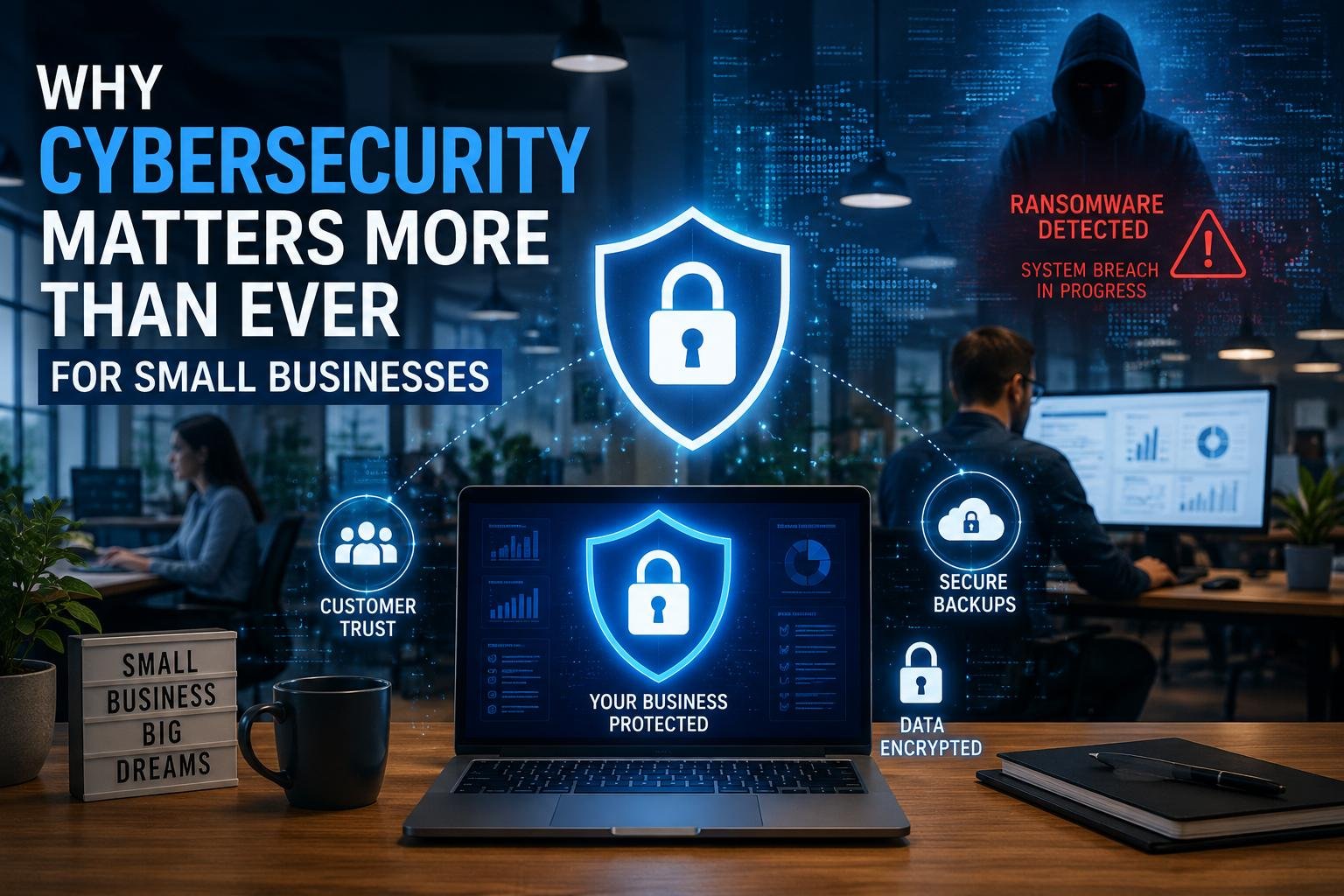
In the present digital we see why cybersecurity matters more than ever for small businesses, to run their day to day operations, put out to customers, process payments, and store sensitive info. While these tools do improve efficiency and growth options for small businesses they also present to them large scale cyber issues. Also it has come to notice that which may in the past been the domain of large companies is now the issue of the small and medium sized businesses (SMBs) which we see as prime targets because many do not have in place the advanced security systems and dedicated IT teams that larger companies have.
Cyber security is a must for small businesses. We see that which one time cyber-attack may bring in financial loss, operation disruption, legal action, and also the loss of customer trust. As we note the increase in ransom ware attacks, phishing and data breaches worldwide, it is the responsibility of all size businesses to put in place digital protection.
This article looks at why we see an increase in the importance of cybersecurity for small businesses today, the common cyber threats which companies face, the results of cyber incidents, and we also look at what measures organizations can put in place to improve their security postures through employee training, proactive monitoring, and managed IT services.
The Growing Cyber Threat Landscape
Technology has changed what businesses do. We see cloud computing, online banking, remote work, and digital communication as everyday business tools. But also this greater use of technology has made we larger target for cybercrime.
Small businesses think that they are not of interest to hackers which in turn target mainly large companies with great financial resources at their disposal. In fact what we see is that small businesses are easier targets for cyber criminals which are a result of poor security practices in them. They use weak passwords, have out of date software, and also do not train their employees enough which in turn present easy in roads for attack.
Cyber-attacks are growing in complexity each year. We see the use of AI, social engineering and automated tools in the hacker’s toolkit which they use to get past traditional security. Any business no matter how small which has customer data is a target for cyber-crime.
Businesses which do not put into practice cybersecurity measures are at great risk of serious operational and financial issues. That is why cybersecurity matters more than ever for small businesses through managed IT and cybersecurity services.
Why Small Businesses Are Prime Targets
Many cyber criminals go after small businesses which in turn they think are better targets that is to say small companies do not have the resources put toward security which large corporations do. Also small businesses may not have in house cybersecurity experts or the advanced tracking systems large companies use.
Many reasons which make SMBs a target for hackers:
Limited Security Budgets
Small business owners tend to put more focus on sales, operations and growth which in turn sees them invest less in cybersecurity. This in turn produces out of date software, weak firewalls, and poor data protection practices.
Lack of Employee Awareness
In the front lines of defense against cyber threats is the employee. Also without proper cybersecurity training staff members may end up clicking on malicious links, downloading infected files, or giving out sensitive info.
Valuable Customer Data
Even at a small scale businesses house very important info including customer names, payment details, employee records, and financial documents. Cyber criminals put this data up for sale on the dark web or use it for fraud.
Remote Work Vulnerabilities
Remote and in home work settings have seen to an increase in cyber security issues. We see that employees are using unsecure home networks and personal devices which in turn put company systems at risk.
Understanding Common Cyber Threats
To see why cybersecurity matters more than ever for small businesses we first have to identify what the main cyber threats which affect organizations today.
Ransomware Attacks
Ransomware is a very large issue for small companies. In an incident of ransomware we see hackers that they encrypt firm information and they request payment as a tradeoff for which to revert access. These attacks may bring business operations to a standstill. Companies may not have access to customer information, financial reports, and key systems for days in some cases even weeks.
Paying out the ransom is not a solution. Some companies that pay attackers report they still can’t access their files. Also we see repeated attacks on organizations which have a history of paying. Ransomware attacks also put at risk a company’s image when they do not secure customer data.
Phishing Scams
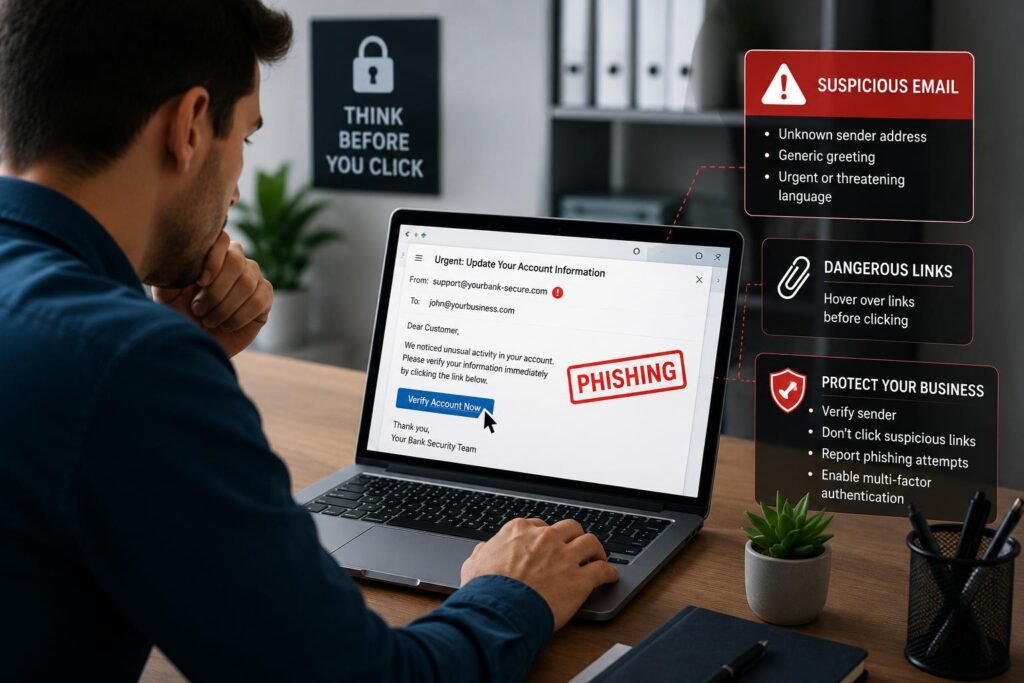
Phishing is an online tactic which sees individuals targeted by criminals that are out to obtain private info like passwords and bank info. Phishing attacks tend to present as legitimate emails from companies that we trust. We may see emails that look as though they are from our bank, delivery company, or even a message from a senior in the company.
These emails also include links and attachments which in turn may infect your computer with malware or that will steal your login info. Small businesses are affected the most as attackers play into human error as opposed to technical flaws, this is why cybersecurity matters more than ever for small businesses. A single careless click may bring down an entire network.
Data Breaches
A data breach is what happens when non authorized people get into a system. We see also see this in cases of customer records, employee info, financial reports, or intellectual property being accessed. Data breach is a result of weak passwords, stolen credentials, malware infections, or software vulnerabilities.
For small businesses we see that which is to be very damaging. Trust of the customer may be lost, legal action may be brought forth and recovery may prove too costly. In sectors which handle sensitive info we also see that companies may face compliance issues and take legal action after a breach.
Malware and Spyware
Malicious software which is what we term malware is used to penetrate and destroy systems. Also there is spyware which covertly collects user information without permission. These issues may cause systems to perform slowly, to have private data stolen, or to develop access points which give attackers into continuous access to business networks. Malicious software is also a common result of unsafe downloads, which also includes opening suspicious emails with attachments, and also from visiting infected websites.
Financial Losses Caused by Cyberattacks
Cybersecurity measures and financial recovery efforts from a cyberattack are extensive for small businesses. Also they can incur large economic losses which do not always include the price tag of repair and restoration of computers or networks. Also small businesses may see a drop in revenue when dealing with the aftermath of a cyber issue.
Direct Financial Costs
Businesses may face expenses related to:
- System restoration
- Data recovery
- Legal fees
- Regulatory fines
- Cybersecurity consultants
- Hardware replacement
Lost Productivity
When we see system compromises employees are unable to do their jobs. Also there is a drop in productivity which in turn delays customer service.
Reputation Damage
Trust is essential to a successful business. Firms see loss of customer trust in case they fail to secure sensitive data. Negative press which follows a cyberattack can hurt a company’s reputation for years.
Customer Compensation
In the wake of a data breach companies may have to issue compensation to affected customers. This may take the form of credit monitoring, refunds, or legal settlements.
The Importance of Proactive Cybersecurity
Cybersecurity is a matter of which proactive measures should be put in place before an incident happens. Proactive security approaches help businesses to identify risks which lead up to an attack. Preventative cybersecurity actions which in turn reduce vulnerabilities, strengthen defenses, and improve over all resilience. Organizations which put cybersecurity at the fore are better at detecting early signs of suspicious activity and responding to incidents at speed.
Employee Training as a Critical Defense
Employees are a key component in the security of business systems. Also at times even the best security tools do not prevent human error. Regular cyber security training for employees identifies threats and appropriate responses.
Training programs should educate staff on:
- Identifying phishing emails
- Creating strong passwords
- Avoiding suspicious downloads
- Protecting sensitive information
- Reporting unusual activity
- Using secure communication methods
Businesses also should run through phishing simulations to test out employee awareness and improve preparedness. A large pool of trained employees reduces the chance of cyber incidents which are a result of human error.
Strengthening Password Security
Weak passcodes still are the leading cause of cyber-attacks. Companies should put in place strong password policies for all systems and accounts.
Strong passwords typically include:
- Uppercase and lowercase letters
- Numbers
- Special characters
- Long character lengths
Employees must not reuse the same password for different accounts. Multi factor authentication (MFA) we see also as a second layer of security which users must present in addition to that which they normally use for example out of a phone app or a text to their mobile.
Keeping Software Updated
Out of date software often has security issues which hackers exploit.
Businesses should regularly update:
- Operating systems
- Antivirus programs
- Firewalls
- Web browsers
- Business applications
Automatic updates are in place to see that systems get the latest security patches as soon as they are available. Disregarding software updates makes your system a target for cyber-attacks.
The Role of Managed IT Services
Managed IT services typically include:
Many small business don’t have the in house know how or resources for cybersecurity which is where Managed IT service providers come in they provide professional support which in turn improves digital security, through this why cybersecurity matters more than ever for small businesses. Businesses looking for professional cybersecurity and IT support solutions can explore https://secure-tangerine.ca/ for managed IT and cybersecurity services such as:
- Network monitoring
- Threat detection
- Data backup solutions
- Security updates
- Firewall management
- Incident response
- Cloud security support
These services which in turn do the technical protective measures for security issues which in turn free up the business to focus on its core operations. Working with expert providers will better our security and also in reduce the chance of large scale breaks.
The Value of Proactive Monitoring
Cyber-attacks are a constant. Proactive monitoring allows companies to see into the suspicious activity which in turn prevents major damage.
Continuous monitoring systems can detect:
- Unauthorized access attempts
- Malware infections
- Network anomalies
- Data transfer irregularities
- Suspicious login behavior
Early identification enables quick response to and resolution of attacks. Businesses that react instead of act may only find out about threats after the fact of serious damage.
Data Backup and Recovery Planning
Data backup is a key component of business continuity. In the case of ransomware attacks or hardware failure we see that backups are what allow companies to restore that which is critical to them and not pay off the attackers.
Businesses should maintain:
- Regular automated backups
- Secure offsite storage
- Cloud-based backup solutions
- Backup testing procedures
A robust disaster recovery plan is which businesses put in place for to get back to normal fast after cyber-attacks. Without having in place sufficient backup systems, companies run the risk of permanent data loss.
Securing Remote Work Environments
Remote work has introduced new security issues for companies. Employees at home may use unsecured Wi-Fi networks and personal devices that do not have proper security.
Businesses need to put in place remote work security policies which:
- Virtual private networks (VPNs)
- Multi-factor authentication
- Secure file-sharing platforms
- Device encryption
- Endpoint protection software
Remote teams also have a need for tailored cybersecurity training.
Compliance and Legal Responsibilities
In many fields business is required to protect customer info. Failure of compliance with cyber security standards may result in legal action and damage to reputation.
Businesses which deal with sensitive information should be aware of related compliance issues in:
- Data privacy
- Financial records
- Customer protection
- Information security
Maintaining robust cybersecurity measures has also seen as a way to meet regulatory requirements and to avoid legal issues.
Building Customer Trust through Cybersecurity
Customers look to businesses to secure their personal info. We see strong cyber security measures as a sign of professional and responsible practice. Companies who focus on security can see the benefit of greater customer trust and credibility.
Visible security features like secure payment systems, encrypted websites, and privacy policies which put at ease our customers that their information is protected. Also in that regard which is to say that companies which experience repeated breaches may have a hard time with customer confidence.
Future Cybersecurity Challenges
Cyber-attacks will go on to grow as tech advances. Artificial intelligence, connected devices, and cloud computing present new frontiers for cyber criminals. Small businesses have to be flexible and proact in facing out of the blue issues.
In the coming years we will see more of:
- AI-driven threat detection
- Enhanced cloud security
- Zero-trust security frameworks
- Advanced endpoint protection
- Improved employee awareness programs
Businesses that stay on top of things and put effort into cybersecurity preparation will do better at weathering future risks.
Conclusion
Cyber security is a key element in today’s business world. Also we see why cybersecurity matters more than ever for small businesses, small businesses are seeing a greater attention from cyber criminals which is for financial gain, of sensitive info, and system access. Ransom attacks, phishing which is to trick you into giving out info or clicking on bad links, large scale theft of data, and systems getting infected by malware may cause you to lose a fortune, see your business come to a standstill, and also damage your image for a very long time.
Cybersecurity in the past has been a choice issue for small businesses but not anymore. We see that they must put in place proactive measures which include training of staff, strong password policies, regular software updates, proactive monitoring, secure backup solutions, and managed IT services. Today investment in cybersecurity is key for companies to reduce risk, protect customer trust, maintain operational continuity and support long term success in the ever growing digital world.
Get more well researched information about Why Cybersecurity Matters More Than Ever for Small Businesses here.