
Introduction
With modern banking becoming increasingly digital, we are seeing fraud become one of the biggest issues faced by banks. Fraudsters have become more sophisticated with their methods of stealing money and accessing customer information. This means that fraud detection systems need to become more advanced. By using big data analytics banks can collect, process and analyze vast amounts of financial data. This will help them understand if something looks suspicious, identify unusual patterns and react to any threats. Knowing how big data analytics works will help us understand why data driven technology is becoming so vital within modern banking. Now they can detect any fraud quicker, improve investigations, reduce losses and protect customers from more sophisticated financial crime.
1. Real-Time Monitoring
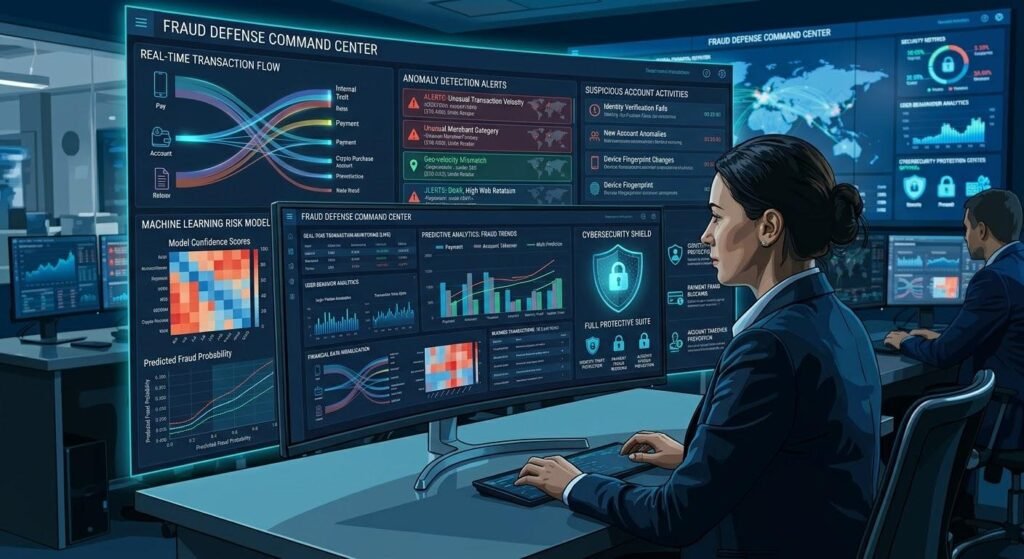
Real time monitoring will allow banks to monitor their customers’ transactions. Using big data analytics banks will be able to analyze how much money they are sending, where they are sending the money, their history, how many transactions they are making and who they are sending money to. This will help identify any unusual patterns. For example, if a customer regularly sends small amounts of money locally, but suddenly tries to send several large amounts internationally it will recognize there is an unusual pattern. Depending on how risky these transactions are, the bank can stop the transaction from going through, ask for extra verification or alert the customer. This means they can stop unauthorized payments from going through.
2. Behavioral Analysis
This will help banks understand how each customer interacts with their financial accounts. By looking at historical data such as login times, spending habits, how many transactions they are making, what payment methods they use, what device they use and how they navigate the system it will create behavioral profiles. If a customer tries to log in or make transactions in a way that does not match their profile it will understand there is something suspicious, for example if a customer usually logs into their account from one location during the day, but suddenly receives login attempts from an unknown device in another country. This will help banks look into the issue and add extra security.
3. Machine Learning
Using machine learning will help improve fraud detection. The banking systems will be able to identify patterns from historical and new data. Instead of banks using manually created security rules, they can use machine learning algorithms to detect patterns from past fraudulent transactions and genuine customer activity. This means they can improve their accuracy in detecting suspicious transactions. They can identify combinations of unusual amounts, unknown devices, unusual locations and multiple payment attempts. This is useful as fraudsters are constantly changing how they create fraud. Using machine learning will help banks improve their security.
4. Anomaly Detection
Anomaly detection helps identify any unusual activity. By using big data analytics banks can look at historical data to understand what is usual for different accounts. This includes looking at transaction history, account activity, how many payments they are making and what they usually spend. If they notice anything unusual this can be flagged up. For example, if a customer usually sends small amounts of money but suddenly sends multiple large transfers to unknown people. Whilst this does not mean they are fraudulent, it can help identify if their account has been compromised or there is suspicious activity. This will help financial institutions detect any threats.
5. Credit Card Fraud
Credit card fraud is a huge issue as more customers use electronic payments. Fraudsters can gain access to their card details through methods such as phishing, data breaches, compromised payment devices and hacking into their online account. Using big data analytics banks can detect this. They can look at where they have sent the money, which they have sent it to, how much they have spent, how often they have spent and their history. If they have made several purchases in a short amount of time from different locations it can identify this may be an issue. They can identify discrepancies and verify the transaction or put restrictions on the card. Monitoring card activity will help reduce unauthorized payments.
6. Identity Theft
Identity theft happens when criminals gain access to someone else’s personal information. This can be used to access financial services, open accounts and make unauthorized transactions. Using big data analytics banks can look at identity information across different areas. This includes looking at account applications, customer information, transaction history and verification. This can help identify any discrepancies. For example, if someone tries to open multiple accounts with similar personal details it can identify there is a connection between them. This will help financial institutions look into any suspicious sign ups and improve their verification systems. This will help reduce the chances of criminals using someone’s personal information to commit financial fraud.
7. Account Takeover
Account takeover happens when fraudsters gain unauthorized access to legitimate accounts. This can happen through stolen passwords, phishing, compromised devices and other security issues. Once they have access they can change contact details, reset verification, make payments and make unauthorized purchases. Using big data analytics banks can identify if someone is trying to take over their account. They can look at login activity, devices used, IP address, password changes and transaction activity. If someone suddenly logs in using an unknown device and tries to make a large payment straight away it can identify this may be suspicious. This will help banks identify potential account takeovers and ask for extra verification. This will help keep customer funds safe.
8. Improve Money Laundering Detection
Money laundering is when criminals try to hide money they have gained from illegal activity. They can do this by transferring money between multiple accounts, financial institutions, businesses and countries. Using big data analytics will help banks investigate this. They can look at transaction networks, payment relationships, account connections and unusual money movement. This can help identify any patterns, for example if there are regular transfers between related accounts, unusually complicated transactions and any unusual financial activity. This can help compliance teams identify any transactions that need to be investigated. Whilst analytics cannot confirm money laundering has happened, it will give some useful information which will help improve suspicious activity monitoring and help them investigate financial crime.
9. Payment Fraud
Payment fraud can happen through unauthorized payments, altered payments, stolen payment details and fraudulent online payments. With more electronic payment systems, banks need to identify any suspicious activity. Using big data analytics will help financial institutions look at payment amounts, which they have paid, when they have paid, what device they have used and their payment history. If they notice they are suddenly paying a different person and making a large payment they can ask for extra verification. They can use analytics to identify if there are multiple failed payments or unusual activity across multiple accounts. Monitoring payment activity will help reduce unauthorized payments.
10. Predictive Analytics
Using predictive analytics will help banks identify potential fraud risks. By looking at historical data, past fraud, customer activity and new criminal trends they can predict how likely it is a transaction or activity is fraudulent. For example, if a payment was made using an unknown device, from an unusual location and to a high risk recipient it may receive a high risk score. This can help banks identify when extra verification is needed. This will help financial institutions move away from reacting to fraudulent activity and focus on preventing it.
11. Reduce False Positives
A common issue with fraud detection is having lots of false positives. This can cause issues for customers, delays with payments, increased investigation costs and put pressure on fraud prevention teams. Using big data analytics will help reduce this issue. Instead of just looking at individual transaction details they can look at multiple factors. Using machine learning banks can look at customer spending, transaction history, payment locations and devices used. For example, if a customer has made an expensive purchase it may seem like an unusual payment but could be in line with their spending history. This will help banks accurately identify risk and focus on genuine suspicious activity.
12. Improve Fraud Investigations
To effectively investigate fraud banks often need to look at information from different areas. This can include different departments, payment methods, banking methods and customer information. If these are not linked together it can be difficult to identify any connections between suspicious transactions and understand the bigger picture. Using big data analytics will help banks look at relevant information. They can look at transaction history, customer profiles, devices used, payment information and account connections. For example, they may see multiple seemingly unrelated fraudulent transactions are coming from the same device, recipient account or suspicious network. This will help with investigations and help financial institutions understand how fraudulent activity has been organized, which accounts are affected and respond better.
13. Detect Fraud from Multiple Banking Methods
Customers now use multiple methods to interact with their financial institution. This can include mobile apps, online banking, ATMs, payment devices and physical branches. Fraudsters can exploit weaknesses in one area or move between multiple areas. Using big data analytics will help banks identify any suspicious connections between customers. For example, if a customer has an unusual password reset on their mobile app and then withdraws money from an ATM using an unknown device it can identify their account may have been compromised. By looking at data from multiple areas banks can better understand their customers and identify any threats. This will help improve security.
14. Automate Fraud Prevention
Big data analytics will help automate fraud prevention. This will help banks make quicker decisions if they identify any suspicious activity. Instead of employees having to look into every suspicious transaction they can create automated processes. This will help assign risk scores and decide what security actions should be taken. Depending on the threat identified they can ask for extra verification, put restrictions on the transaction, send a security alert or pass it onto a fraud investigation team. For example, if there are multiple unauthorized payment attempts they can automatically put security restrictions in place. This will help improve response times, reduce pressure on employees and help banks handle large volumes of transactions. However, complex cases will still need to be looked at by humans.
15. Increase Customer Confidence
Customer confidence is key to growing digital banking. People will be more likely to use mobile apps, online transfers, digital wallets and electronic payments if they are confident their information and money are protected. Using big data analytics will help increase confidence. They can help identify suspicious activity, stop unauthorized payments and respond to any potential threats quickly. It can also help improve customer communications. However, financial institutions must ensure customer information is protected throughout the analytics process. They can do this by having strong data management, good security, encryption and following relevant privacy regulations. If they have effective security systems and treat customer information well they can build better relationships with customers.
Conclusion
Big data analytics is helping to improve fraud detection. It gives banks more effective ways to identify suspicious activity, investigate financial crime and prevent unauthorized transactions. By using real time monitoring, behavioral analysis, machine learning, anomaly detection and predictive modeling financial institutions can identify potential threats quicker and make informed decisions. This will help identify credit card fraud, identity theft, account takeover, money laundering and payment fraud. It will also help reduce false positives and interruptions to transactions. However, banks must invest in secure data management, good infrastructure, skilled staff and follow relevant regulations. As fraudsters become more sophisticated it will be important to use big data analytics alongside humans to help keep customer funds safe, improve security and build long term relationships.
Get more well researched information about Big Data Analytics in Fraud Detection here.