Introduction
Robotics and autonomous systems are becoming an important part of our working, travelling, manufacturing and interacting lives. Many robots today have the ability to understand their environment and know how to move on their own. Examples would include autonomous vehicles, industrial robots and delivery robots using UAVs. To know how to move around safely there needs to be mathematical methods in place that can help them understand the distances, locations, shapes, directions and spatial relationships.
Computational geometry provides some great algorithms and mathematical methods to help robots understand their environments, recognise objects, plan their movement and avoid obstacles. With the growing importance of Computational Geometry in Robotics we can see that geometric algorithms can provide great solutions for mobile robots to navigate their environments, plan their movement and operate autonomously. Using computational geometry along with sensors, computer vision and artificial intelligence we can create smart robots.
What is Computational Geometry in Robotics?
Computational geometry is a field of computer science and mathematics that provides algorithms to solve problems involving points, lines, curves, polygons, surfaces and 3D objects. In robotics it helps robots understand where objects are located, how much space they take up, distances between objects and potential paths. For example if a mobile robot was inside a warehouse it would need to recognise the shelves, walls, workers and other robots. Using geometric algorithms we can describe objects using mathematical methods and calculate potential movements without causing any unnecessary collisions. Some of the techniques used include convex hulls, Voronoi Diagrams, Delaunay Triangulation, Visibility Graphs and collision detection.
Sensors can help provide the information needed by robots. Along with computer vision and machine learning, computational geometry can help robots understand spatial relationships. For example using a depth camera we can find out how far away objects are. The robot can then map out its environment and find a suitable path. Using a combination of mathematical geometry, sensors and artificial intelligence we can create autonomous robots that can interact with their environments more intelligently. As robotics continues to develop, computational geometry is becoming a very important part of physical AI. Using smart software systems with robots.
15 Practical Uses of Computational Geometry in Robotics
1. Robot Navigation
Robot navigation is one of the most important uses of computational geometry. Autonomous robots will need to know how they can navigate from their current location to their destination. Without knowing how they can get there safely, robots will not be able to move towards their target due to walls, furniture, machinery, people and other obstacles. Computational geometry provides mathematical methods to help robots understand their environment and find potential paths between locations.
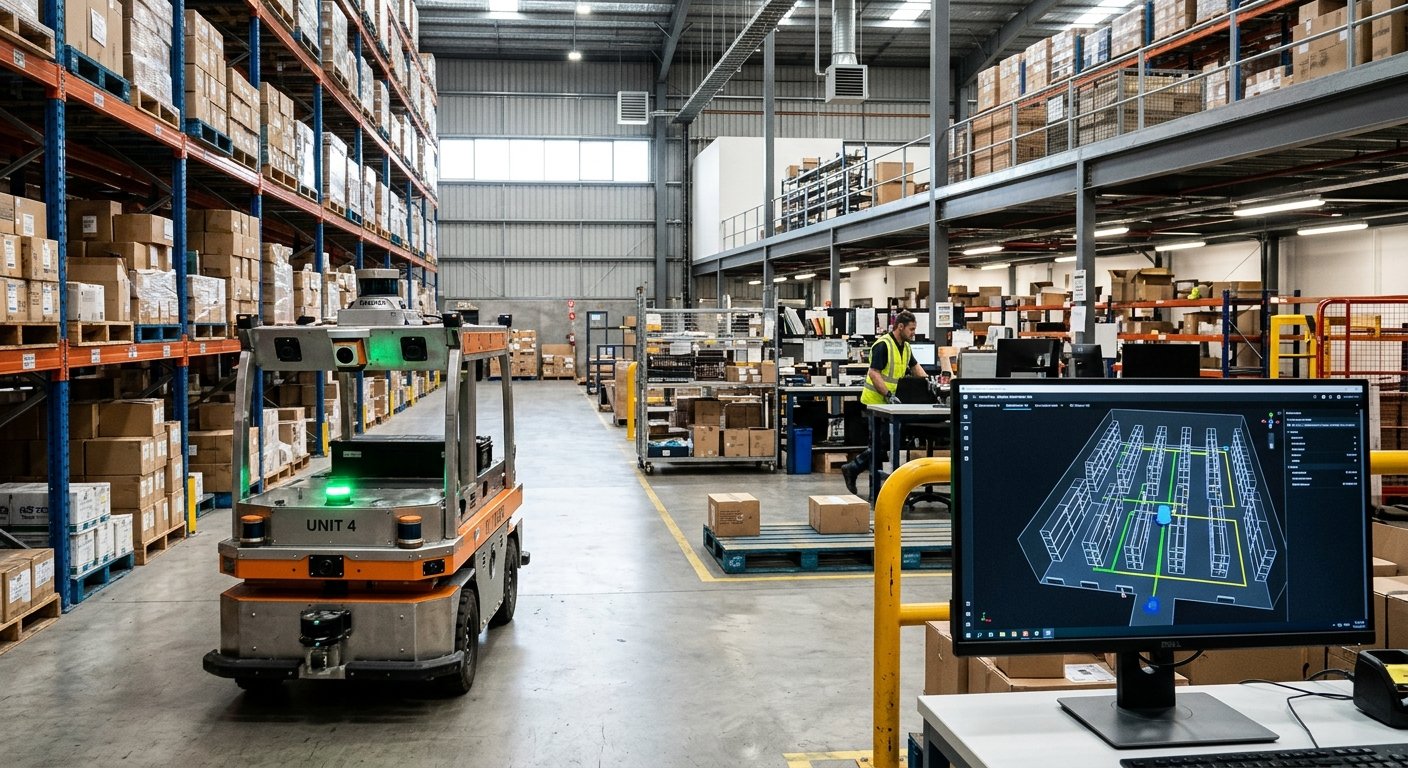
Algorithms like A search, Visibility Graphs and Geometric Roadmaps can help robots understand their available paths. For example if a robot was delivering packages inside a warehouse it would need to find a path through the aisles. Using geometric algorithms the robot can understand where the shelves, workers and other robots are. It can then calculate the distances and spatial relationships to find an efficient path.
2. Obstacle Detection
Obstacle detection helps robots to recognise objects that are in their way. Computational geometry can help robots calculate where objects are, how big they are and their boundaries. For example if an autonomous delivery robot comes across a pedestrian it needs to know where they approximately are in relation to itself. It will also need to know how much space is required to move around them.
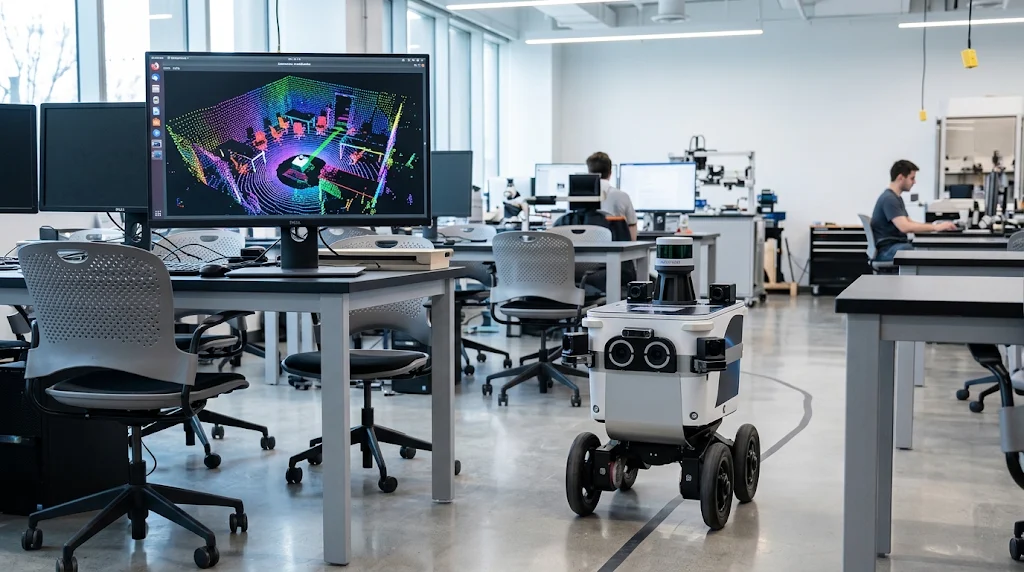
Using geometric algorithms to describe the objects, such as bounding boxes, polygons and 3D points, the robot can compare to its planned path to see if there is an obstacle. If there is an object in the way the robot can use the spatial information to consider alternative movements.
3. Collision Detection
Collision detection is an important aspect for robots that are working around people, machinery, vehicles and other moving objects. Computational geometry provides some great algorithms to help robots understand if two objects are overlapping. This helps autonomous robots to calculate if they will potentially collide with another object. For example if an industrial robotic arm was moving its joints it would need to know the shape and location of the surrounding machinery.
Using geometric collision detection the robot can compare its spatial model to its environment to see if it will cause any unsafe movements. Collision avoidance helps robots to find alternative movements if there is a possible collision. This is important in environments where robots are constantly working.
4. Environment Mapping
Autonomous robots can use environment mapping to create mathematical models of their environment. Instead of just using floorplans provided they can use cameras, LiDAR, depth sensors and other technologies to gather information about objects in their environment. Computational geometry can help organise this information to create maps of walls, boundaries, surfaces, openings and other important elements. Using 3D reconstruction techniques we can combine measurements from multiple viewpoints to create more detailed models.
For example if an autonomous robot was exploring an unknown building it can slowly create a map of corridors, rooms, furniture and obstacles. This can help with navigation, localisation and movement planning. Environment reconstruction can prove very useful in warehouses, construction sites, disaster assessments and other environments where robots need to work in unknown environments.
5. Simultaneous Localisation and Mapping (SLAM)
SLAM stands for Simultaneous Localisation and Mapping. It helps autonomous robots to estimate where they are and create/update maps of their environment. This is useful when robots enter an environment where there is no accurate map available. Computational geometry can help systems recognise spatial features, compare measurements and find relationships between observations.
For example if a mobile robot was travelling through a building it can recognise the same corners, walls or other features. The system can then compare the measurements to estimate how far it has travelled. SLAM is often a combination of geometric calculations and sensor measurements. It can be used in autonomous vehicles, robotic vacuums, warehouse robots and drones where accurate spatial awareness is required.
6. Autonomous Vehicle Navigation
Autonomous vehicles will need accurate geometric calculations to understand roads, recognise surrounding vehicles, understand lane boundaries and calculate movements. Sensors such as cameras, radar, LiDAR and others can help gather information. Computational geometry can help organise this information. For example if an autonomous car was approaching an intersection it would need to calculate where other vehicles were, how much space there was on the road and find a suitable path.
Geometric algorithms can help with lane detection, distance calculations, road boundary detection and collision detection. This can help autonomous vehicles to calculate if there is enough space to turn, change lanes and stop safely. Calculations will need to be constantly updated due to fast changes in traffic. Using geometric models along with artificial intelligence and movement prediction can help autonomous vehicles make more informed navigation decisions.
7. Industrial Robotic Arm Movement
Industrial robotic arms can perform many tasks such as welding, assembling, packing, painting and handling materials. Accurate geometric calculations are required as there are multiple joints that need to move in a specific area. Using computational geometry can help find out where robotic components are and their orientation. It can also help to recognise if the robotic arm can reach an object without interfering with surrounding machinery.
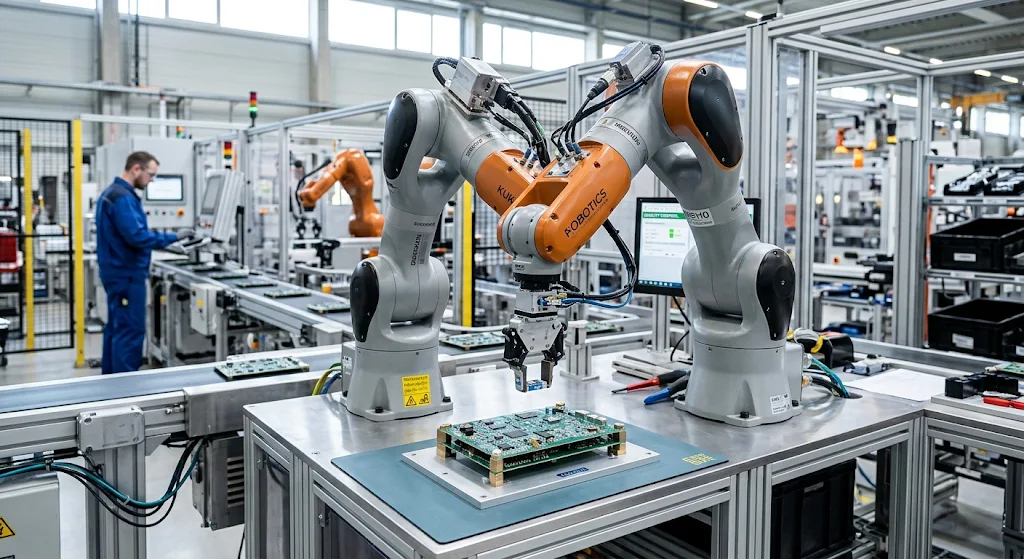
For example if a robotic arm was assembling electronic components it will need to know the exact location of its gripper. Using geometric models can help calculate the relationship between the joints, end effector and target object. Collision checking can also help find movements that may cause the robotic arm to hit surrounding machinery. This can help improve accuracy when moving and complete tasks efficiently.
8. Autonomous Drone Navigation
Drones can use computational geometry to understand their 3D environment and find suitable flight paths. Unlike ground robots, drones need to be aware of obstacles in the air such as buildings, trees, electrical infrastructure and other aircraft. Using geometric algorithms can help create 3D models of the objects and find out where they can fly. For example if a drone was mapping a construction site it will need to be aware of surrounding structures.
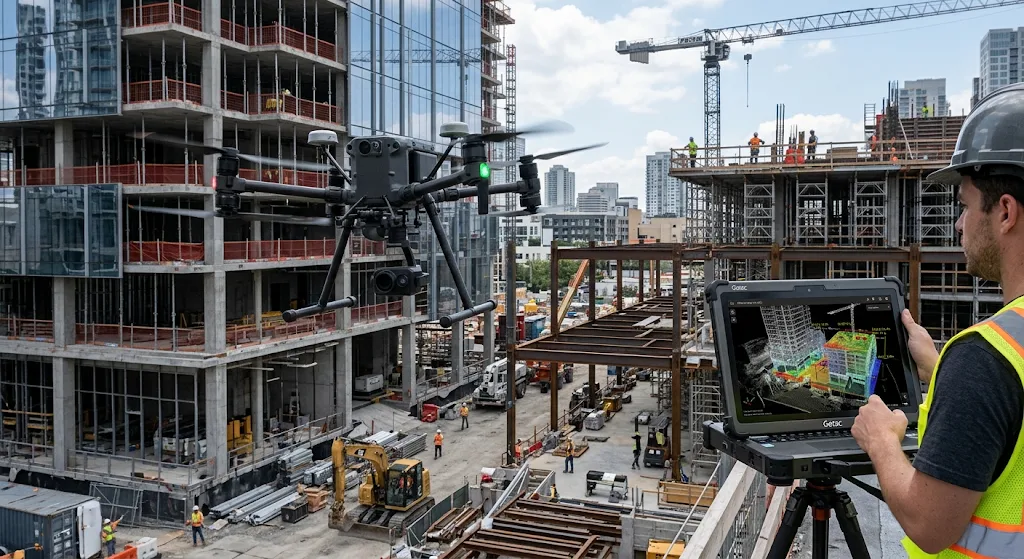
Using computational geometry can help estimate the height, map the space, recognise obstacles and find suitable paths. Using 3D point clouds created from LiDAR sensors or depth cameras can give detailed information about surrounding structures. This can help autonomous drones understand their environment and adjust their navigation decisions.
9. Object Recognition
Object recognition helps robots to recognise objects in their environment. Computational geometry can help robots to analyse the shapes, size, surface and spatial relationship of recognised objects. For example a robot working in a warehouse may need to recognise different sized packages. Using 3D scanning we can gain surface information about the object.
Using geometric algorithms we can analyse the structure of the object and compare it to previous models. Using convex hulls, surface reconstruction and geometric feature extraction can help describe the shape of objects. This is important when objects come from different angles or are partially hidden. Using computer vision and machine learning along with geometric shape analysis can help robots recognise objects more accurately.
10. Robotic Gripping
Robotic gripping helps robots to understand how to grip, lift and manipulate objects. Computational geometry can help find out where objects are, their orientation, size and potential contact points. For example if a robot was working in a packaging facility it may come across boxes, bottles, containers and oddly shaped products. The system will need to calculate the geometry of the object and find a suitable grip.
Using geometric calculations can help find out if the gripper can reach the object, if there is enough space and how to position it. This can help with manipulating objects accurately. Using geometric models along with tactile sensors, depth cameras and machine learning can help robotic systems be more adaptable.
11. Multi Robot Collaboration
Many modern warehouses, manufacturing facilities and logistics systems use multiple robots to complete tasks. Using computational geometry can help robots understand where they are in relation to each other and split the available space. For example multiple autonomous robots may need to deliver different packages through the same aisles in a warehouse.
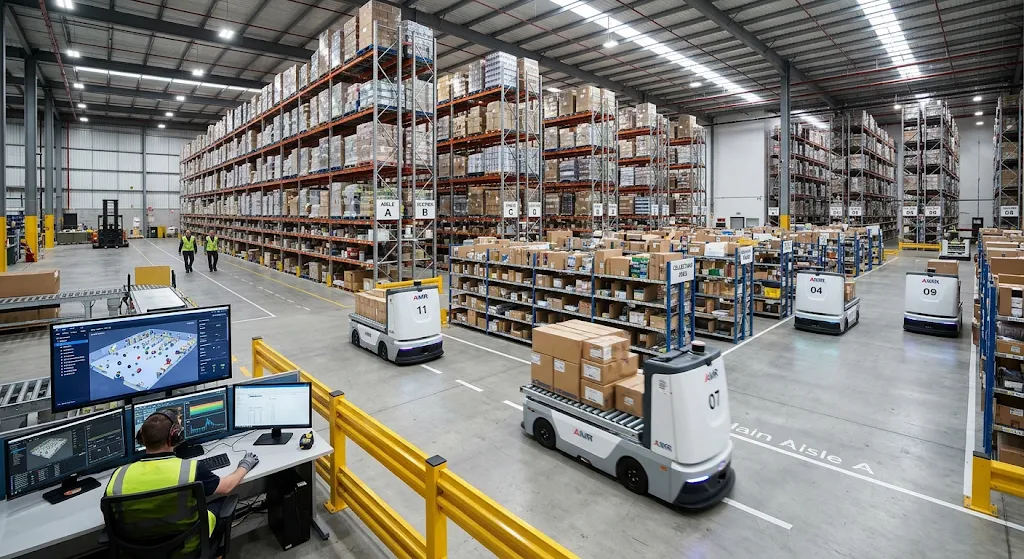
Using Voronoi diagrams can help split the environment up based on where the robots are. Geometric path planning can help with planning paths. Visibility graphs and collision detection can help find any limitations to movement. It is important that robots can work together as one robot’s movement can affect the available paths for others. Using spatial calculations along with communication and planning can help multiple robots complete tasks more efficiently.
12. Delivery Robots
Autonomous delivery robots are becoming more popular. These robots will need to navigate sidewalks, walkways, building entrances and other public areas. They will need to know how far away things are, recognise boundaries, recognise obstacles and calculate available paths. For example if a delivery robot was travelling through a residential area it will need to recognise walkable surfaces, buildings, parked vehicles and temporary obstacles.
Using geometric mapping can help create models of these features and find suitable paths. The robot may also need to know if there is enough space to fit through narrow gaps. Constantly updating the spatial information can help the delivery system adapt to changes in the environment.
13. Warehouse Automation
Warehouses can be very complex with lots of shelving, storage containers, packages and transport. Computational geometry can help with automation by helping robots understand the physical layout of the objects and calculate efficient movements. For example if an autonomous mobile robot was collecting a package it would need to know where the package was stored, if its path was clear and position itself correctly. Using geometric algorithms can help calculate the size of the shelves, estimate how much space there is and find suitable places to put different packages.
In facilities with multiple robots working at once spatial planning can help avoid congestion. Using these capabilities along with warehouse management systems, computer vision and artificial intelligence can help with handling inventory, reducing delays and keeping things organised.
14. Search, Inspection and Disaster Response Robotics
Robots are becoming more popular for inspecting hard to reach areas, assessing infrastructure and helping with emergency situations. These can include damaged buildings, industrial facilities, underground areas and areas affected by natural disasters. Computational geometry can help robots understand new environments, recognise boundaries and find potential paths.
For example if an inspection robot was inspecting an industrial facility it may need to navigate around pipes, machinery, narrow gaps and support structures. Using geometric mapping can help create models of these areas and find areas that need inspecting. Robots used for disaster assessment can use spatial information from cameras and depth sensors to understand the layout of damaged buildings.
15. Human Robot Interaction
With robots becoming more common in workplaces, hospitals, warehouses and public areas they will need to work around humans. Computational geometry can help autonomous systems understand the spatial relationship between humans, robots and surrounding objects. For example if a collaborative industrial robot was working around a human it would need to constantly calculate the distance between the moving parts and the estimated location of the human.
Using geometric models can help define boundaries, find restricted areas and estimate if a movement could cause any unsafe situations. Using computer vision and depth sensors can help understand where humans are. Using geometric algorithms can help with spatial analysis and adjusting movements. This can also be used in service robots in hospitals, educational facilities and public buildings. Using spatial awareness along with the right safety systems can create an environment where humans and robots can work together more efficiently.
How Computational Geometry Works with Sensors and Computer Vision
Sensor Technology
Sensors can provide autonomous robots with a lot of the information they need. Different technologies can provide different spatial information. For example LiDAR sensors can use laser measurements to create point clouds to show where objects are. Cameras can provide visual information.
Depth sensors can help estimate how far away objects are. Radar can help provide information about the location and movement of surrounding objects – particularly with vehicles. Computational geometry can help organise this information. Geometric algorithms can help calculate distances, find boundaries and analyse the relationship between objects.
Relationship Between Computational Geometry and Computer Vision
Computer vision can help robots understand images and videos taken from cameras and other visual sensors. It can help robots recognise objects, find patterns, find boundaries and understand visual scenes. Computational geometry can complement computer vision by providing mathematical methods to analyse the shape, location, size and spatial relationship of recognised objects.
For example a robot could use computer vision to recognise a package on a table. Using geometric algorithms can help estimate the size of the package and where it is in relation to the robotic gripper. Autonomous vehicles can use visual recognition to find road markings and surrounding vehicles. Using geometric calculations can help estimate distances and movement paths. This is important when working in 3D.
Computational Geometry and Physical AI
Physical AI is a type of AI that interacts with the physical world using machines such as robots, autonomous vehicles and intelligent machines. This means many considerations must be made compared to digital systems. Computational Geometry can help with this as it helps provide mathematical calculations. For example, an intelligent robot can use Machine Learning to identify a chair, Computer Vision to locate where it is and then use Computational Geometry to find a good path to go around it. The technologies compliment each other and allow the machine to move from just identifying objects to actually making decisions.
Computational Geometry has helped improve how robots learn by using the technologies together. Artificial Intelligence can process lots of data from sensors and identify patterns that would be hard to do with traditional programming methods. However, the Intelligent Predictions need to be converted to actual movement and consider how the robot can move. This is where Computational Geometry comes in to help show the constraints the robot has. This is important to create robots that can adapt to new environments. As the Physical AI develops, Computational Geometry will help bridge the gap between the digital intelligence and physical movement.
Issues With Computational Geometry in Robotics
Computational Geometry can bring many benefits; however there are issues when trying to apply it to real life robotics. Firstly, there can be issues with the computational complexity. If the robot has to process a lot of data in 3D environments with thousands or millions of geometric measurements, it needs efficient algorithms and enough processing power. There can also be issues with dynamic environments meaning objects and people can move whilst the robot is trying to calculate its next movement. This means any clear paths can become blocked suddenly. There can also be issues with inaccurate sensors, causing unreliable geometric calculations. Depending on lighting, surfaces, sensor placement and environmental factors the data captured can change. Efficient algorithms in Computational Geometry will need to be used along with reliable sensors, adequate processing hardware and constant monitoring of the environment.
Another key issue is the limitations of the robot. Sometimes the most mathematically correct path may not be able to be followed by the machine itself. An autonomous vehicle cannot make instant turns and robotic arms can have limits on how much they can rotate their joints, how far they can reach and how fast they can move. Drones will also have to consider how much they can fly. Computational Geometry will need to work in conjunction with Kinematics and Dynamics to ensure the path can be followed. There can also be issues with safety, privacy, reliability and communication. This means working together with mathematicians, computer scientists, robotics engineers and AI experts to create reliable intelligent systems.
Future of Computational Geometry in Robotics
Computational Geometry in Robotics will be impacted by improvements in Artificial Intelligence, sensor technology, processing hardware and autonomous decisions. As robots become more intelligent and can adapt to new environments, they will need more advanced ways to understand complex spatial data. Improvements in 3D perception, mapping and optimisation will be seen. This will allow more adaptable autonomous systems. For example, warehouse robots could work together more efficiently in large warehouses, autonomous vehicles could understand complex road environments better and drones could have better spatial reconstruction and navigation. This will be due to Computational Geometry being used alongside Machine Learning and advanced perception systems.
Multi-robot systems are also a key area to look into. Engineers are looking more into systems where multiple autonomous machines can work together. Computational Geometry can help with dividing up the available space, finding paths, estimating distances and preventing the robots from getting in each other’s way. Improvements in Edge Computing could mean robots can process key geometric data locally. This means less reliance on remote processing systems. Improvements in AI assisted perception can help robots understand complex shapes and structures. There will still be issues with computational complexity, sensor accuracy and physical movement. However research will continue to improve the role of Computational Geometry in creating intelligent machines.
Conclusion
Computational Geometry plays a key role in the development of modern robotics. It helps provide mathematical methods to allow the machine to understand the physical environment they are in and make spatial decisions. It can be used in robot navigation, obstacle detection, collision prevention, mapping environments, object detection, robotic manipulation, autonomous vehicle navigation, drone navigation and multi-robot systems. This allows the machines to calculate distances, understand spatial relations, identify geometric structures and decide on appropriate movements. Computational Geometry can help convert the environmental data into decisions by using sensors, computer vision, machine learning and Physical AI.
As robotics continues to develop, spatial reasoning will become more important. Autonomous vehicles will need to understand complex traffic environments, Industrial robots will need more accurate movements and Delivery Robots will need to navigate public environments more autonomously. Computational Geometry can provide key tools to help with these requirements. Whilst there can be issues with computational complexity, sensor accuracy and physical movement there will be continual research and improvements. This will mean autonomous systems can achieve more. Overall, Computational Geometry will play a key role in creating intelligent robots that can understand their environment, spatial relations and effectively interact with the physical world.