Introduction
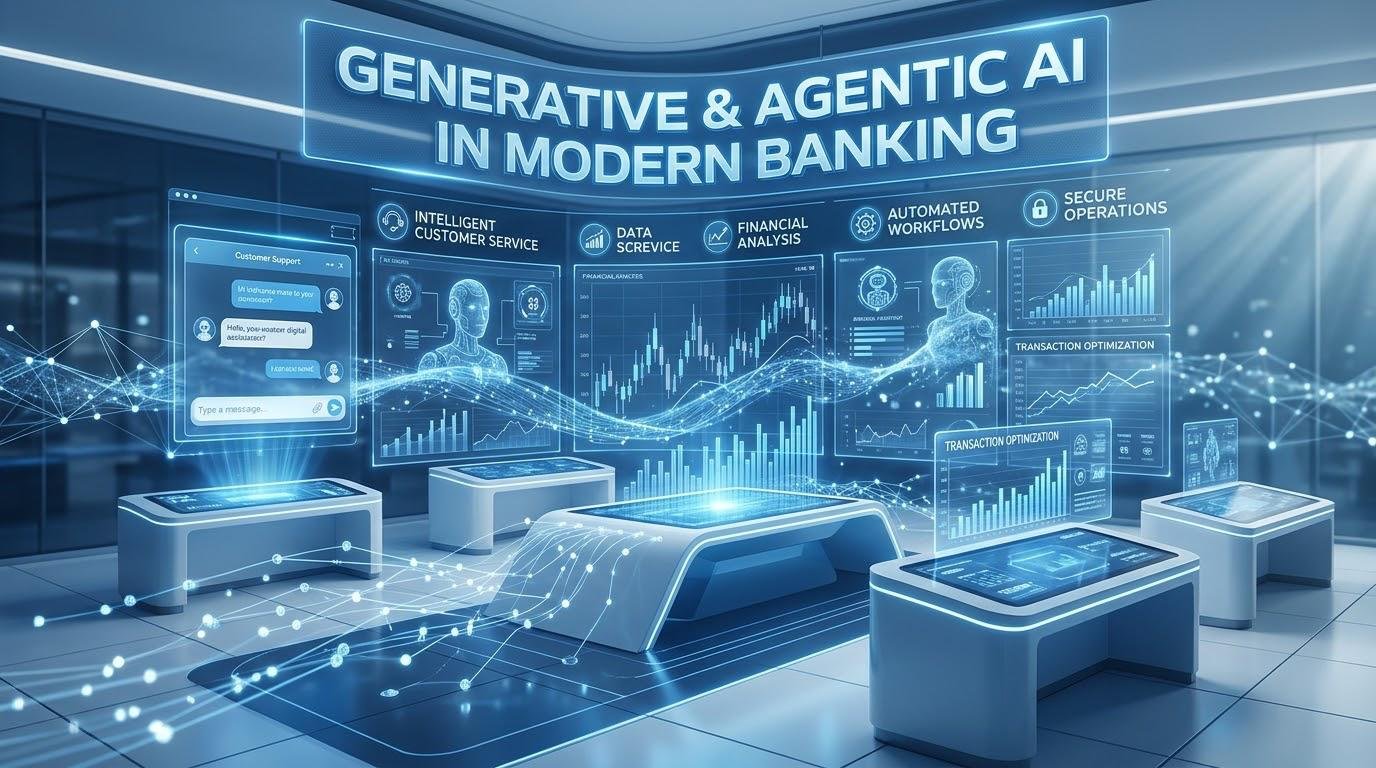
Machine learning in banking is reshaping the business and financial landscape, changing how organizations analyze data, understand customers, manage risks, and make decisions. Machine learning models can process vast amounts of data, identify patterns, and make predictions that help organizations forecast demand, deliver personalized experiences, evaluate credit risk, prevent fraud, and automate customer support. These capabilities enable companies to make informed decisions and identify issues that might be difficult to spot through manual evaluation.
But, again, this machine learning is not a guarantee of accuracy. Data quality, fitting the right model for the appropriate data, ongoing surveillance and human oversight are required to be effective. However, organizations are also facing a burden of responsibly using the technology – privacy, algorithmic bias, false positives, and regulatory requirements must all be taken into account.
Business Applications of Machine Learning.
Machine learning is a subset of AI in which a computer system learns patterns—from data that it can then make predictions or classifications from. It is used in businesses for the analysis of sales and customer data, financial transaction data, information about the operations of the businesses, and other data. Retailers will be able to predict product demand, banks will be able to detect unusual account activity.
Machine learning models can detect complex relationships in data whereas conventional systems have pre-defined rules. But predictions they make are based on what information was used for training and on conditions under which they are employed. It is important for businesses to analyse and understand their outcomes before relying on them for making key decisions.
There are several important applications of a machine learning in business:
- Forecasting and predicting demand for sales.
By analyzing historical sales, seasonal trends, pricing patterns, promotions, and customer behavior, machine learning can assist businesses in predicting future sales. The retailers can use these predictions in deciding the inventory levels, organizing manpower, and lessening of stock outages. The manufacturers also have the ability to anticipate their production needs and streamline their supply chains.
However, unforeseen events and shifting customer tastes can cause errors in the forecasts. For businesses, the predictions must be reviewed against actual sales; errors highlighted and models adjusted for changing circumstances. The forecasts must supplement, and not supplant, sound business judgment.
- Predicting and keeping customers from churning.
Customer churn prediction efficiently predicts if customers are likely to be lost. Dealing with a drop in engagement, purchase frequency, complaints, and subscription activity, models can highlight subscribed customers and trace back to find out who they are.
In this section, businesses can delve into the specifics of customer churn prediction and how predictive analytics plays a role in customer retention. But a high churn score does not necessarily mean that a customer is going to terminate the relationship. Industries must make the predictions with the intention of enhancing the services and offer appropriately all the help needed in this regard, instead of mere presumptions on the individual customers.
- Provide an overview of how people’s behavior
Machine learning in banking and other industries can help organizations understand customer preferences and identify patterns that support better decisions. By analyzing customer behaviour data, businesses can improve product recommendations, personalize services, and identify opportunities to strengthen customer relationships. However, organizations should protect personal information, evaluate the accuracy of their predictions, and avoid making assumptions about individual customers based on incomplete data.
Recommendations can yield accurate results in improving customer experience and the sales process, but they can be incorrect when they are personalized. Systems can have a general preference for the popular product or may even ignore customers that have limited data in the system. Recommendation quality should be evaluated, information about customers should be protected and customers must have control over their preferences.
- Automated Customer Service
Machine learning can be used to help power chatbots and virtual assistants that can handle routine customer inquiries, categorize them, and escalate to the appropriate department. These allow for employees to spend more time on complex issues and fewer on time spent in the waiting room.
Automated systems can, however, misinterpret questions, or provide incorrect information. The quality of responses received should be tracked and businesses must ensure that there are easily available human resources to handle financial disagreements as well as other issues that may involve a customer’s personal information, heightening issues that will complicate.
Machine Learning in Banking and the Finance Industry
- Credit Risk Assessment
Machine learning is employed by banks to interpret data that justifies credit risk and other authorized information that indicate loan repayments, existing debts, and more. These models can guide them in determining risk and selecting applications for the subsequent review.
But historical data could include data on discrimination or access to credit. Financial institutions should experiment with models for the review of decisions to avoid bias, apply relevant lending laws, and have suitable human review and appeal processes. Nevertheless, automation should not be used as a substitute for decision-making accountability for the fallout of consequential lending.
- Improving Banking Operations
Machine learning can support banks in predicting service requirements, financial data categorisation, error in processing and application of resources. These applications can boost efficiency and have the ability to help staff more aptly discover issues in operations at an early stage.
Achievement of this depends on availability of dependable data, secure systems, responsible persons and continual monitoring. Banks also need to have reliable automated processes, and staff members capable of taking over in the event of errors or system failures.
- Transaction Monitoring

Machine learning in banking helps financial institutions identify unusual transaction patterns, assess potential risks, and determine when additional verification may be necessary. These capabilities work best alongside established security practices, including digital banking security, secure authentication, transaction monitoring, and human investigation. By combining these safeguards, banks can improve fraud detection while reducing unnecessary disruptions to legitimate customers.
Cases prioritization can be aided by the use of machine learning combined with the usage of classical security rules. But, not all strange rundowns are fraudulent. Before action is taken which may unnecessarily limit legitimate users of an institution, institutions are subject to a review of relevant evidence.
- Identifying new fraud schemes
Fraudsters are continually adapting their tactics and approaches and fraud detection is a constant challenge. Using machine learning, alerts can be triggered to detect unusual accounts being used in a coordinated fashion, or unusual transactions occurring through different accounts, devices, or payments, which may signal coordinated activity.
They need to be continually updated and monitored as the fraud techniques become new ones that are not as similar to the old ones. Strengthening financial institutions’ detection and authentication mechanisms, investigating fraud, and taking the proper security actions should be integrated within automated detection.
- Reducing False Positives
False Positives: when actual transactions are mistakenly identified as suspicious activities. Too much alerting can delay payments, inconvenience customers and can drive up investigation costs.
Businesses should assess fraud detection by looking at the precision, recall, false positive, and missed fraud. The aim is to identify the meaningful risks and to limit the disturbance of legitimate financial activities to the minimum.
Supporting Trustworthy Machine Learning Outcomes.

Machine learning is based on accuracy, relevance, and representative data. Unreliable predictions are likely to be the result of missing information, incorrect records or unrepresentative examples. Before creating models, businesses need to consider and put in place suitable data preparation and privacy protocols.
To test if models are correct, data not used during training must be used. Evaluation should mimic actual operating conditions as well as care of misdirected predictions. perfection in the overall accuracy measure can be deceptive, especially if transactions that could be fraudulent or other important events are relatively low-frequency.
As with other models, performance of the model can suffer if customer conduct, market conditions or methods of fraud change. Organizations should check their predictions against real results, make inquiries into their performance variation, and improve their models as needed.
To date, human supervision is still necessary if the decisions might impact users or companies. Staff need to be aware of the limitations of the model, examine unclear instances, and have the authority to disagree with automated suggestions. An organization cannot function without supervision, which enables it to detect mistakes and keep them accountable.
Business Applications of Machine Learning in Banks
Machine learning systems could handle sensitive information regarding customers, financial data, and business data. However, this information needs to be safeguarded by the implementation of suitable access controls, secure storage, encryption and data minimisation.
They need to also know how third party provided systems approach data and understand pertinent privacy rules. The value of responsible information management in reducing security risks and maintaining customer trust in today’s business environment.
Improperly collected or flawed design of the training data can lead to unfair results, especially in credit decisions and other important situations. Key and significant groups should be assessed for performance, limitations should be documented, and complaints should be explored.
Financial institutions are also subject to relevant consumer protection, data privacy, fraud prevention and automated decision-making requirements. Properly-documented and clearly-defined roles show an organization’s accountability and risk management.
How Businesses Can Implement Machine Learning Successfully
The first step for businesses is to figure out a problem that they want to solve, like how to better sales forecasts or cut fraud losses or boost customer retention, etc. They should set clear goals as well and assess the usefulness of machine learning when compared to the other options and methods available.
Additionally, proper data, staff training, technology and monitoring are essential to successful implementation. A small pilot program can be used to test performance and costs before the scale up of a project. For businesses, it is crucial to evaluate long-term value as it pertains to the maintenance, security, compliance, and human review.
The Future of Machine Learning in Finance and Banking.
In the fields of business analytics, financial services, customer support, and fraud prevention, machine learning is poised to remain a key contributor. With improved predictive capabilities, organizations can better meet varying demands, detect suspicious activity, and deliver meaningful customer experience.
But progress will require responsible implementation. Bias, privacy, model reliability and regulation remain key concerns that must be addressed going forward. Machine learning and the input from professionals and good governance will aid enterprises in better leveraging these systems in a safer, more competent way.
Conclusion
Machine learning is reshaping the business world, the banking sector and fraud prevention and detection by offering tools to analyze data, predict demand, tailor services, analyze credit risk and identify fraud. These applications can help make decisions and be more efficient.
However, good results rely on data reliability, correct evaluation, ongoing monitoring, and oversight by human entities. Responsible machine learning requires organizations to work with it in ways that respect privacy, and don’t fall prey to the pitfalls of bias, false positives or regulatory demands, as it is intended to assist in making decisions, not winning them outright.