Introduction
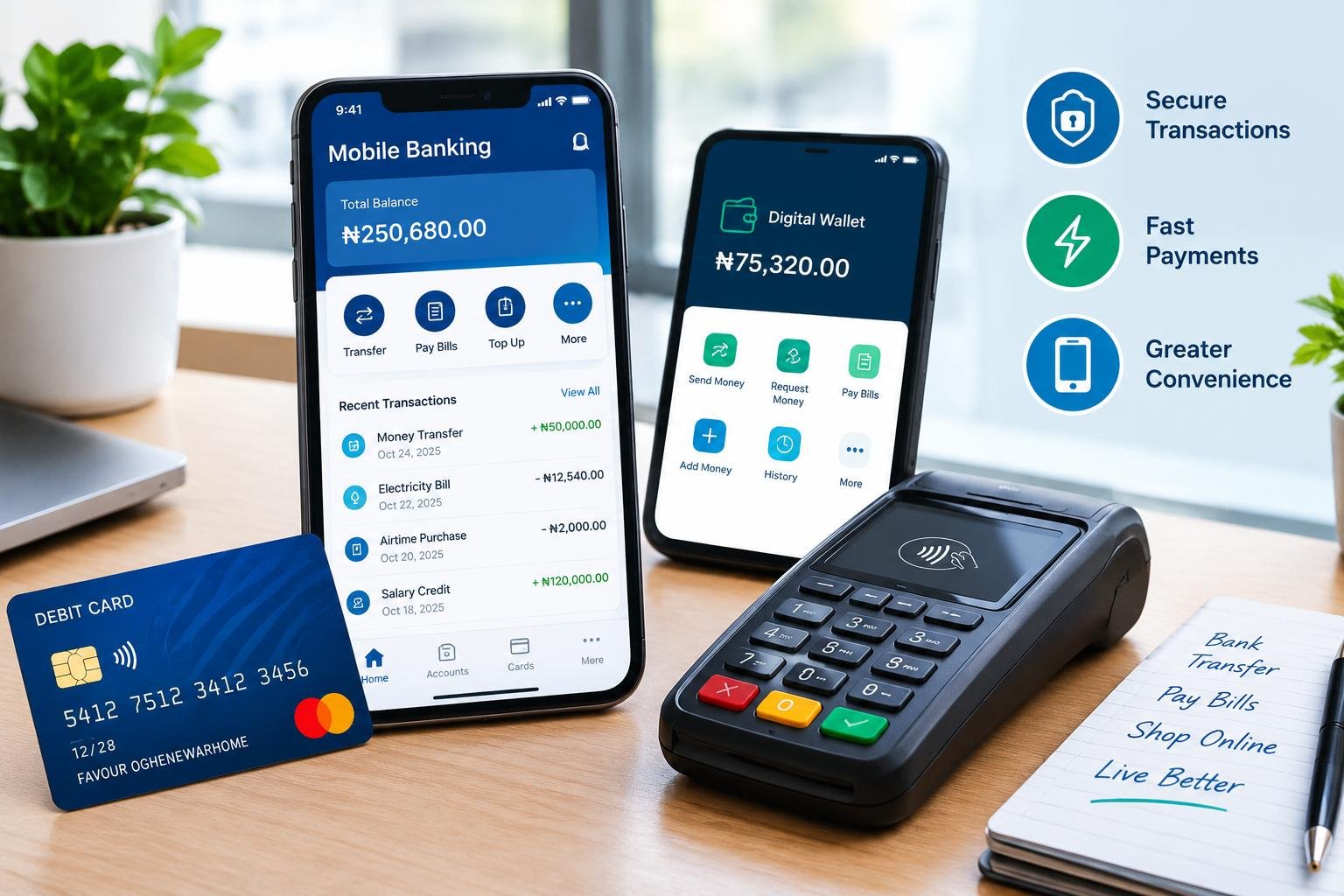
Digital banking has revolutionized the way people handle their money, allowing them to transfer funds, pay their bills, check their balances and even buy goods without ever making it to their bank. While these digital customizations are convenient and fast, they leave customers vulnerable to cyber threats too like the internet banking, mobile banking apps, debit cards and digital wallets. The methods used to access banking information illegally, mimic bank websites and trick users into providing their financial information are constantly evolving. With the dawn of new technological advancements, fraud attempts are becoming more convincing and harder to spot with the emerging of AI-powered scams. But these developments have raised the need for more robust security and awareness. To safeguard their finances, personal data, and financial identities, it is crucial for individuals and businesses to understand the potential risks associated with digital banking. This report on new scams targeting businesses using AI is a great resource for readers to find out more about the threats in the sector, and the significance of sharing intelligence to fight financial crimes.
Cybersecurity Threats in Digital Banking.
Digital banking fraud is when criminals employ deceptive methods, stolen data, malicious software and/or impersonation to access financial accounts. One of the most popular means of doing so is called “phishing,” which means a fraudulent email, text message, phone call or website that looks like a legitimate bank. Urgent warnings may be issued to the victims saying that their accounts will be deactivated if they don’t confirm their information by clicking on a link provided in the message. If criminals trick users into entering their passwords, card details or verification codes on these fake sites, they may be able to get straight into their accounts. Some messages may have spelling errors or even addresses that could be suspicious, but more complex scams may be very similar to a legitimate bank message. Customers are best advised to not click on any unsolicited links and to confirm any urgent requests through their own Bank communication channels (app, website, Customer Service phone number).
Accounts Being Hijacked.
Identity theft happens when criminals get and use personal information including identification numbers, dates of birth, account numbers, or identity documents to pretend to be someone else. They may use this information to open fraudulent accounts, get financial services, or go around security measures. This is closely related, but specifically refers to account takeover, which occurs when someone is able to take over an existing banking account. This can be accomplished through stealing of passwords, buying of leaked passwords, malicious software installation or any other means of phishing. They can update the information about the account, move funds or block access to the account once inside. These risks can be minimized by using unique passwords, keeping personal information from being shared in public places, and setting up multifactor authentication. It is also crucial for customers to check their account regularly and to notify of any discrepancies as soon as they occur.
SIM-Swap Fraud and Social Engineering
SIM-swap Fraud: It is a fraud in which the criminals convince the mobile network provider to switch the victim’s phone number to a SIM card of their own. If they are successful, they can get calls and SMS messages from the bank to the wrong number, such as banking verification numbers (BVN). This can be used to help them reset their passwords and authorize fraudulent transactions. Social engineering is the general term used to describe all off the above types of manipulation. The person may pretend to be a bank official, cop, delivery person or a family member to instill fear or urgency. An account may be compromised and criminals may request that you cooperate immediately. A customer’s password, PIN or one time password should never be given to callers. Loss of mobile network service especially coupled with banking alert messages must raise the red flag and encourage prompt contact with mobile operator and bank via their verified channels.
AI-Driven Scams and Fake Banking Apps
Fake banking applications are those programs that appear to be a legitimate banking service, but are actually fraudulent. May come across unofficial download sites, on ads or bogus e-mails and can steal login details, track activity or add malicious software. Some apps mimic familiar logos and interfaces so well that it may not be apparent to the user. Financial scams are also getting more sophisticated with the help of AI. AI can create messages, clone your voice, manipulate videos, and customize communications to trick criminals into posing as a bank representative, business executive, friend or family member. An urgent call from a respectable sounding voice doesn’t necessarily mean that the call is being placed by a legitimate recipient. It is best to download applications from official app stores and to check the publisher prior to installation. Even if the sender’s voice, look or writing style seems familiar, unexpected financial requests should be confirmed using an alternate trusted communication.
Critical Security Protocols to Protect Digital Banking
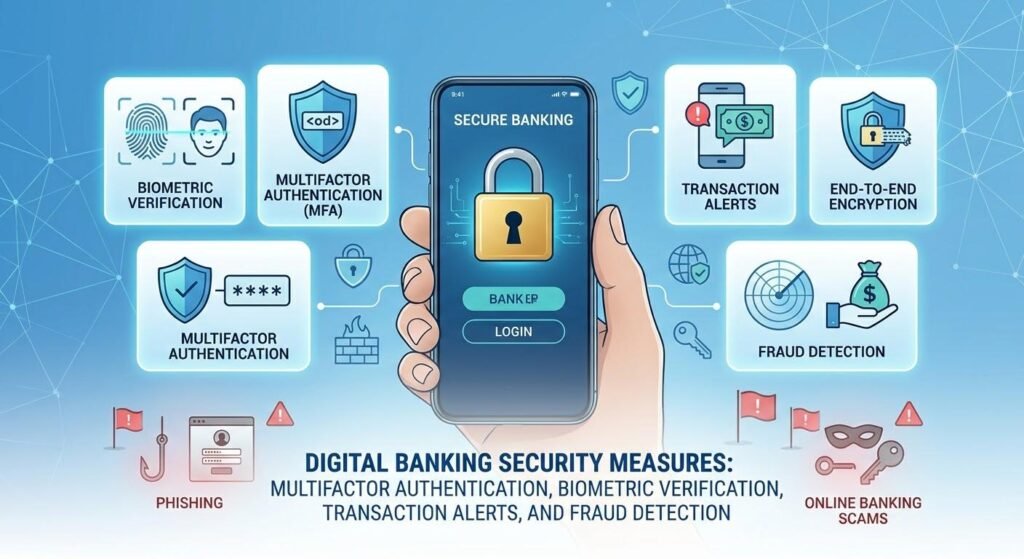
Banks use different technologies to safeguard their customers, identify fraudulent transactions and prevent unauthorized access by customers. But no single security solution out there can solve all the risks. Multifactor authentication helps secure user accounts by using two or more factors of authentication, such as a user name and password, or a user name, a password, and an authentication code, and/or a biometric device. Biometric verification is used to verify information like fingerprints or facial recognition, which assist in determining that an authorized user is accessing an account. Transaction Alerts alert customers when money is moved, transactions are withdrawn, or key account parameters are changed. Banking systems can recognize devices that are familiar to them or unusual devices and flag them. Encryption is the process of converting sensitive data to a form that is unreadable to those who don’t have the proper keys. These measures provide several layers of security, making it more difficult for criminals to access accounts even if one security control is compromised.
Real-time fraud detection enables banks to detect potentially fraudulent activities as they happen. They are designed to look at metrics like the volume of transactions, trends, device information, logon locations and frequency of transactions and detect irregularities. A transfer that is vastly inconsistent with a customer’s regular transactions can result in more verification or a temporary security review, for instance. Some systems incorporate AI and machine learning to identify suspicious transactions and enhance detection capabilities as it happens. The bank can also set limits on transactions and/or temporarily suspend high-risk transactions, as well as request extra authentication for certain transfers. However, there are times when automated systems can miss legitimate transactions or may detect what is actually a legitimate transaction but not be able to identify fraud that is sophisticated. Customers should act quickly if they receive a request for verification, and notify their banks if the payment is wrongly blocked or made by an entity they don’t recognize. Technology coupled with responsible customer practices and communication between financial institution and customers is critical for effective protection.
Tips to Help Protect your Banking Accounts from Fraud
Consistent practices can make a big difference in ensuring security for digital banking activity by customers. First of all, make complex and memorable passwords for banking and never repeat passwords on other sites, like email, social media and shopping platforms. An excellent password manager can be used to create and keep strong passwords. Second, use multi-factor and biometric authentication, if available. Thirdly, ensure that phones and computers are secured by screen locks, up-to-date operating systems and trusted security software. Don’t use public Wi-Fi for financial transactions or other sensitive activity, and only use unfamiliar devices with a secure connection. Finally, don’t install banking applications from unknown sources and ensure that they’re regularly updated. Fifth, enable notification of transactions and check account statements regularly. Customers should never share their 1-time passwords, pin numbers, card security code or passwords with anyone. These practices decrease the chances for criminal use of weak credentials and compromised devices and negligent disclosure of confidential information.
Take Note of Suspicious Transactions and Act Fast in Responding to them
Early warning signs can help avoid a potentially large financial loss from a small security incident. Signs of trouble are when the transfer was not initiated by the customer, when the beneficiary is someone other than the customer, when the customer receives a password reset, when the customer does not log in and receives alerts about the account, or when the customer loses their mobile network service. In the event of any of these, customers should not engage with any suspicious messages, but log into their banking application or site directly. They should check their recent transactions and notify the bank right away of any unauthorized activities. The bank might cancel the card, limit electronic usage, suspend some transactions or launch an investigation, depending on the situation. Customers should ask for this number and keep all transactions, screen captures, timing and messages, etc. as evidence. They should also change any compromised passwords (with a safe device), secure the email account and contact their mobile operator if they think their SIM-card might have been changed. The best way to minimize further losses is to take immediate action.
Using Verified Methods to Contact Your Bank.
If you are suspecting fraud to have occurred, it’s important to use trusted communication methods as criminals will often set up fake numbers for customer service and fake accounts. Bank’s contact information should be visible on the official website, or on the back of a payment card and on the official account paperwork. They should not give out their numbers in response to unsolicited text messages, social media posts or online ads. If a customer receives a request for a password, PIN or one-time password from a person claiming to be from the bank, the customer should discontinue the conversation and independently reach out to the bank. Customers are asked to identify the suspicious activity, report any affected transactions, request immediate protective action and provide the bank with instructions on how they can report fraud. They also should report this to the appropriate law enforcement or financial regulatory agencies, if applicable. Maintaining records of communications and complaint reference numbers can assist in future investigations and for the customer to follow up the resolution process.
Shared Responsibility of Banks and Customers
To safeguard digital banking, it is essential for financial institutions, telecoms, tech companies, regulators, and customers to collaborate. Banks need to have robust systems in place, be able to track down any suspicious transactions, alert their customers, investigate complaints and be ready to quickly address new threats. Telecom companies can improve the system when replacing SIMs and transferring them to other customers, ensuring that there is less chance for criminals to intercept authentication messages. Regulators can help establish cybersecurity guidelines, promote ethical data management practices, and establish and communicate reporting protocols, and intelligence sharing can enable institutions to recognize fraud trends across the financial community. Customers also have a key role to play, safeguarding their credentials, installing legitimate software, verifying of any unusual requests and reporting any unusual activities immediately. Financial institutions need to communicate financial security advice in a way that is easily understood and accessible to all levels of digital literacy. As all the parties involved take security seriously, criminals have more difficulties to exploit the weaknesses in the digital payment ecosystem.
Conclusion
Digital banking provides a lot of benefits such as convenience, speedy transactions, access to finance and management of accounts. Phishing and identity theft, SIM-swap fraud, account takeover, fake apps, social engineering, and AI-driven scams are still potent risks, though. Consumers can minimize exposure by setting strong passwords, activating multifactor authentication, securing their devices, watching for transactions, and verifying communications before providing information, sending money. These practices need to be supplemented by banks’ own practices of encryption, biometric verification, detection of devices, alerts on transactions, and real-time fraud detection. Regular reporting of suspicious activity via trusted channels can help to minimize the damage and help investigations. Digital banking security really is a continuous process and not a one-off job. By keeping up-to-date, asking questions about requests that seem unusual and reacting promptly to red flags, individuals and businesses can help keep their finances safe and still reap the benefits of today’s banking technology.
Get more well researched information about Digital Banking Security here.