Introduction
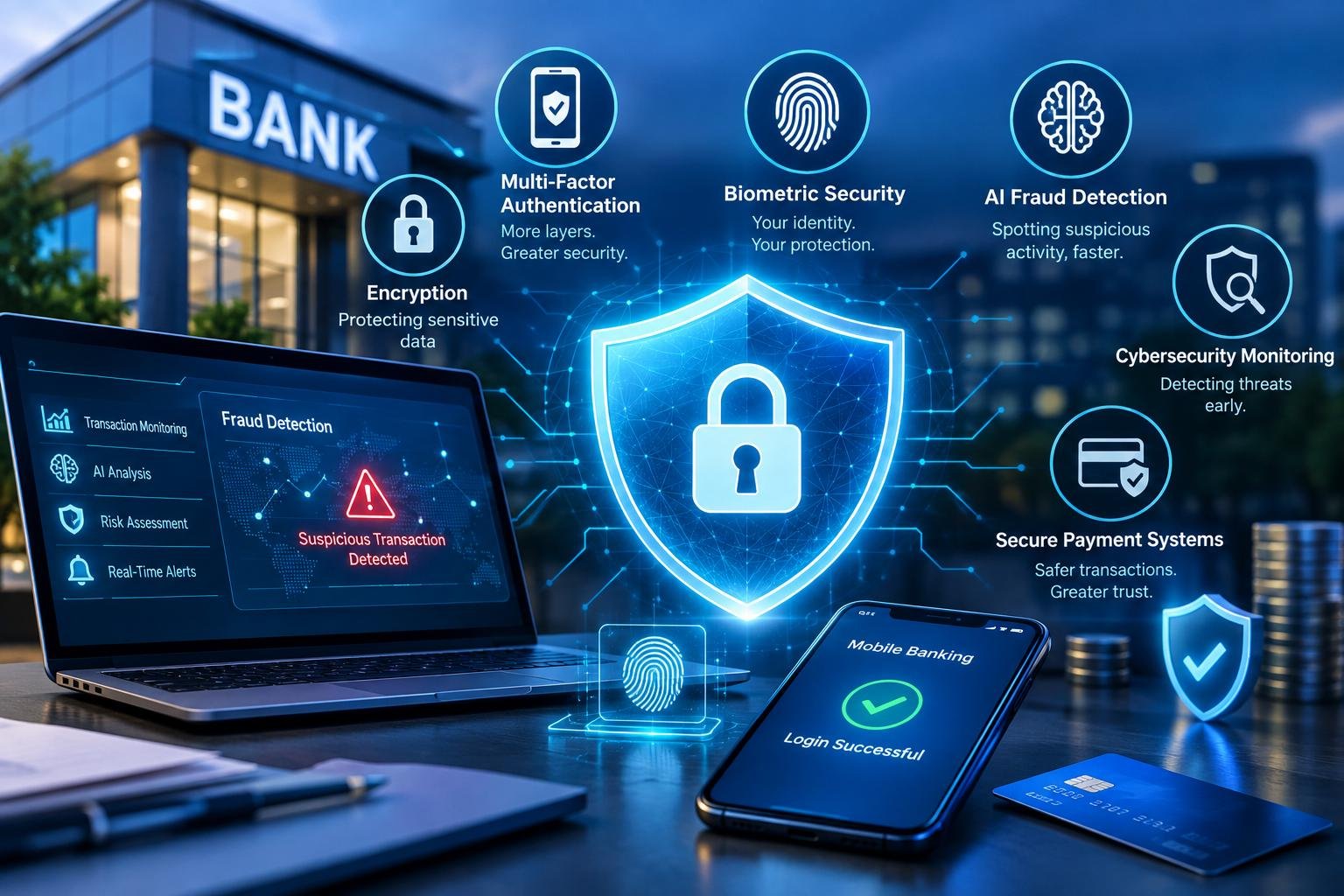
Financial institutions are increasingly relying on digital technology to provide financial services such as banking, payment, investment, lending and insurance services. Customers can now deposit and withdraw funds, pay their bills, take out loans, open an account and make investment decisions without going to a physical branch. While this digital transformation has made things easier and more efficient, it has also opened up avenues for fraudsters and cybercriminals. Criminals can exploit financial institutions and their customers through the theft of credentials, malicious software, social engineering, fake websites and more. Consequently, institutions need to continually enhance their security measures. Today, there are technologies like encryption, multi-factor authentication, biometric security, AI, cybersecurity monitoring, and secure payment systems that are important when it comes to protecting sensitive financial information. Customer awareness is also crucial as even the best security systems can be compromised if the customer enters their account without realizing it.
Cybersecurity Threat in Financial Services
Financial institutions are a tempting target for cybercriminals, as they possess valuable information and lots of cash. Customer identities, account information, transaction history, payment information and more sensitive data are stored by banks, fintech companies, insurance, investment companies, and even payment platforms. Cyber-attacks can then result in financial losses, fraud, operational disruption, regulatory fines and penalties, and loss of customer trust. It can also be done through legitimate channels, where the criminals acquire someone’s log-in information, alter transactions or trick customers into authorizing payments. The adoption of mobile banking and electronic payments has introduced a whole new set of challenges for financial organizations, with the need to safeguard systems which are running around-the-clock on various devices and networks. Cybersecurity is now a far more than an IT issue, however. It has become a key element of financial risk management, business continuity, customer protection, and the reputation of financial institutions in the long run.
Securing Financial Data using Encryption.
Encryption is among one of the most vital technologies employed to guarantee economic details from unapproved access. Among the most essential technologies employed to secure financial information from unapproved access is encryption. This is done by encoding the information that can be understood with the help of a decryption key. Encryption is used by financial institutions to secure data while it is in transit between the financial institution, the application, the server and other systems. They can also encrypt the information in databases and other digital environments that contain sensitive information. In an online banking scenario, for instance, a customer logging in to banking service can help reduce the risk of criminals intercepting sensitive information as it is transmitted from the customer’s computer to the financial institution’s banking system. With strong encryption, stolen information is not as valuable as it might be because an attacker could receive encrypted information without being able to use it. However, it’s important for financial organizations to ensure that encryption keys are handled securely and regularly audit their encryption procedures to detect weak encryption configurations and inadequate key protection, as it could create more security issues.
Multi-Factor Authentication Creates Additional Layers of Security and Provides Extra Security
Many financial accounts are no longer secure with just a password as criminals have found a plethora of methods to steal and guess passwords. Customer credentials can be made vulnerable through the use of phishing, malware, data breaches, reusing passwords or social engineering. By having multiple factors of authentication, this can be mitigated by forcing the user to enter more than one layer of authentication before he or she can log in to an account, or perform a certain type of sensitive operation. Depending on the financial institution, the extra security can be a one-time code, an authentication application, a physical security key or any other trusted method. If a criminal does get a user’s password they will then NOT be able to log in to the account without the other authentication factor. To further enhance customer authentication, financial institutions can also do more to identify transactions that seem out of the ordinary, such as a customer making a large transfer from a device that they don’t normally use. This multi-layered system makes accessing the system much more challenging when unauthorized.
Biometric Security Identification Verification.
Another way for a financial service to confirm that a person trying to access a financial service is the rightful owner of the financial service account is through biometric technology. Biometric systems can verify physical or behavioral traits (fingerprints, facial features, voice pattern, etc.) rather than relying solely on information that a person knows. This may make authentication easier as customers won’t need to remember complex passwords for each service they use. Financial institutions may implement the use of biometric verification in the process of login to mobile applications, authorizing transactions or conducting the identity check during registration of financial accounts. However, the implementation of biometric systems needs to be carefully done as biometric information is very sensitive and can’t be replaced in the same manner as a lost password. It is therefore important that institutions have robust encryption, secure storage, access controls and privacy measures for biometric information. Biometrics can be used to provide an additional secure layer in identity verification when done properly and minimize reliance on passwords.
AI-Based Fraud Detection for Suspicious Activity
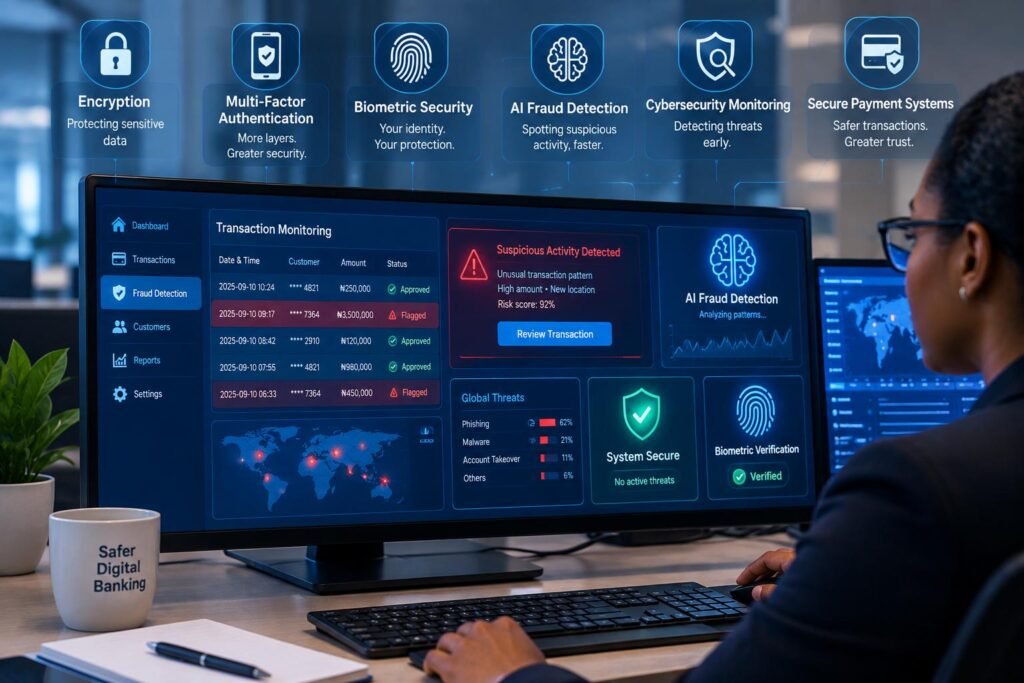
AI has increasingly been a valuable help to spot potentially fraudulent financial transactions. The traditional systems for detecting fraud rely on rules that are pre-programmed, such as high dollar and location rules. Rules may be beneficial, but criminals can work out how to change their behavior to evade known controls. The ability of AI-driven systems to review vast amounts of transaction and customer information to spot patterns that can signal fraud. Machine learning models can scrutinize the characteristics of transactions, for example, spending practices, device data, location, account information, and sequence of transactions. Any activity that differs substantially from a customer’s normal activity can be given a higher risk score and be subjected to further verification or investigation. AI can also enhance institutions process vast quantities of transactions quicker than human groups would be able to cope with in any kind of physical way. This technology does not replace the need for human intervention, but it can assist security teams in prioritizing their responses to suspicious activity and respond more efficiently.
Cybersecurity Monitoring to Identify Attacks Early.
Financial institutions must employ constant cybersecurity surveillance, as they can’t rely on protective measures to keep their systems secure. Monitoring technologies can keep track of networks, servers, applications, devices and user activities for suspicious activity. Security teams can leverage security information and event management systems, endpoint protection solutions, intrusion detection technologies, and other monitoring technologies to detect unusual events. For instance, if a user keeps trying to log in, or unexpected changes to permissions, abnormal data transfers, or abnormal activity from a compromised device, etc., may be a sign of an attempted attack. Automated alerts can alert security teams to a risk situation if a set of risk conditions are met, which can alert the security team to investigate and respond. Advanced monitoring can also bring together events from multiple systems to identify an attack that may not be apparent from each individual event on its own. The importance of early detection, especially in finance, is that if it goes too long the criminals will be able to move money, steal information, or disrupt critical services.
Secure Payment Systems to Minimize transaction Risks
With the increasing adoption of digital payments, financial institutions should make sure that the payment system is designed to withstand fraud and cyberattacks. Payment information can be protected through a variety of security measures, such as tokenization, encryption, transaction monitoring, authentication, and others, employed by secure payment technologies. Tokenization, for instance, could be used to obscure sensitive payment data with a token that can be used outside of the authorized transaction context. This cuts down on the amount of beneficial payment data that is exposed should the system be compromised. There are also tools like transaction limits, real-time risk analysis, device recognition, and more verification that can be used to detect fraudulent transactions at the institutions. Design of secure payment systems should focus on providing security while minimizing inconvenience for the consumer, as too many security hindrances can make it difficult for customers to use the service. The aim is not just to block all unusual transactions, but to ensure that legitimate transactions from customers are not confused with irregular ones, and to implement greater controls as the level of risk rises.
How Cybersecurity Technologies Collaborate.
Not all security technologies can guard against all types of fraud and cybercrime. Encryption will keep your information safe, but won’t stop you from handing a password over to a criminal. While multi-factor authentication will render stolen passwords less useful, it’s also possible to fool users by using advanced social engineering techniques. While AI can detect suspicious transaction patterns, criminals are constantly finding new ways to conduct transactions, making it hard to detect them. Even though organizations can use cybersecurity monitoring to spot abnormal activity, they need to have trained personnel and adequate response strategies to respond to alerts. Therefore, financial institutions should have a multi-layered security strategy that reinforces each other with various technologies. They need to implement preventive controls, detection mechanisms, authentication, secure infrastructure, employee training, incident response strategies, and periodic security testing. This makes it harder for criminals to evade measures – rather than depending on one protection – rather than having one protection.
Customer Awareness
While technology plays a significant role in cybersecurity, customers are also crucial to the cybersecurity process. Most financial crimes don’t attack a bank’s technical infrastructure, they deceive the bank. Phishing messages can be very convincing; criminals might pretend to be bank staff, fake investment offers or even coerce customers to divulge verification codes. Financial institutions should, therefore, raise awareness among their customers about some common warning signs, and safe digital banking practices. It is important to encourage customers to have strong and unique passwords, use multi factor authentication, refrain from clicking on suspicious links, check out any unexpected requests to send money, and communicate with their financial institution in official channels if something sounds strange. Awareness can be reinforced by sending out reminders about security of the institution, informing the public about security education campaigns, notifying transactions, and communicating about legitimate procedures. If customers know how scams work, then they will be more likely to know if a request is a scam before criminals can capture their credentials or convince them to authorize fraudulent transactions.
Upcoming Developments of Financial Cybersecurity
Financial services are becoming increasingly digital, and criminals are increasingly using more advanced methods: the cybersecurity landscape will continue to evolve. To ensure the safety of customers and systems, financial institutions will have to rely on advanced analytics, AI, behavioral analysis, automated threat detection, more robust authentication and privacy focused technologies. Meanwhile, security organizations need to constantly monitor and test their defenses, keep software updated, deal with third-party risks and get ready for fresh attack strategies. The way that an organization collects, stores, processes and protects information that is held about customers will also be affected by regulations and industry standards. The future of cybersecurity strategies will likely include more than just defenses, but also swift and effective detection, containment, and recovery. Those financial services that approach cybersecurity as a continuous initiative as opposed to a single project will be better equipped to safeguard digital services and ensure customer trust.
Conclusion
The way financial institutions safeguard their money, information and digital services against fraud and cybercrime has been transformed by technology. Encryption secures sensitive data and multi-factor authentication and biometric verification add to identity protection. AI can perform transaction analysis to flag unusual activity, while real-time cybersecurity monitoring can alert security personnel of potential threats early on. Customer education mitigates risks that are generated via phishing, social engineering and other deceptive practices, while secure payment technologies offer extra protection for electronic transactions. But these technologies need to be paired with robust policies, trained staff, responsible data handling and quick response to incidents for effective cybersecurity. With the continued shift towards digital platforms in the financial services industry, cybersecurity will continue to play a vital role in the industry’s processes. With a focus on layered security and continuous updates to customers, financial institutions can minimize fraud risks, stay ahead of the curve of new threats and enable safer digital environments for all.
Get more well researched information about Financial cybersecurity here.