Introduction
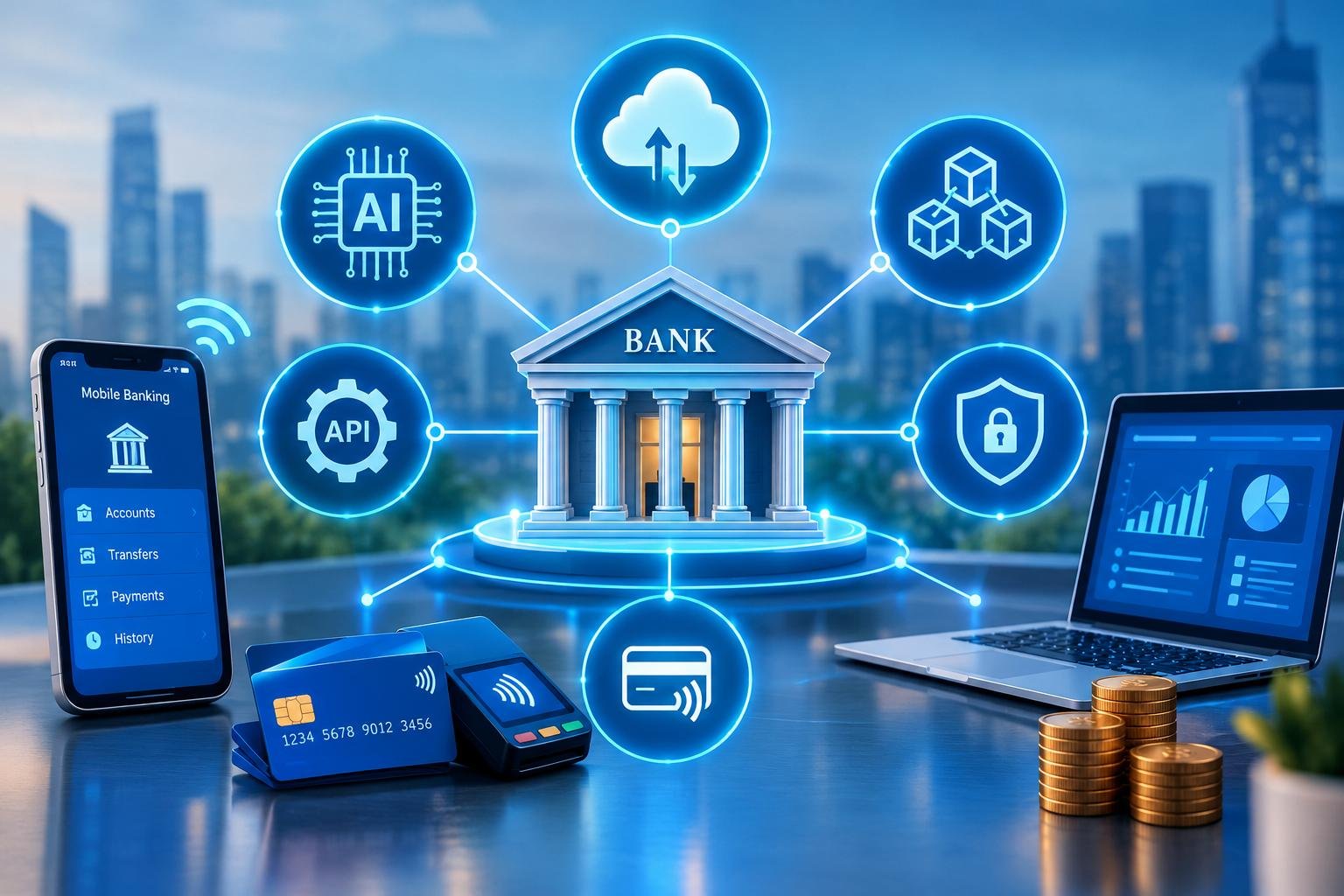
Financial technology (FinTech) is a term that describes digital technologies, software, infrastructure and systems that provide and enhance financial services. Today, many financial institutions are relying on technology to enable transactions, manage customer accounts and make financial risk assessments, as well as to provide services in an efficient and timely manner. An integral component of this change is the digital systems powering today’s banks, linking the front-end applications with back-end account management, payment processing, security and reporting systems. Besides allowing customers to move funds, buy insurance, invest and oversee their savings without using only physical branches, it also allows them to buy and sell cryptocurrencies. What’s more, FinTech will help customers transfer funds, buy insurance, access investment products and manage their savings without having to make many and frequent trips to financial institutions’ physical offices. In this rapidly changing environment, with more sophisticated customers and even greater competition, financial institutions are implementing integrated technical solutions to make the services more available, secure and cost-effective, as well as to create new products.
FinTech and its Significance
FinTech is merging the financial sector with technology to make financial activities quicker, easier and more efficient. It can be used in mobile banking and electronic payments, automated insurance settlement, digital lending, investment platform, and financial analytics. These technologies are helping traditional financial institutions modernize their existing services, and are being leveraged by new financial technology companies to create digital solutions. These advancements can have benefits for customers, including easy access to their accounts, quicker customer transactions, customized service, and better insight into their spending. Technology can be used to streamline repetitive tasks, enhance decision making and provide services to various markets for financial institutions. But, the introduction of applications is not the only aspect of adopting FinTech. Institutions need to be integrated, sensitive data need to be protected, and they must adhere to regulations and ensure reliable operations. The successful implementation requires innovation and good governance, cyber security and proper human supervision.
Technologies that Power Today’s FinTech Businesses
Application Programming Interfaces (APIs).
An application programming interface (API) enables different software systems to communicate and share information in a manner that is agreed upon by the systems. In the financial services sector, APIs help integrate various banking applications, payment processors, accounting software, customer management systems, and third-party services. An authorized budgeting application, for instance, can leverage on the banking API to get account details and classify the transactions. Payment APIs can also assist online companies to acquire electronic payments, without erecting their own payment facilitation. The links help minimize the need for manual data entry and enable institutions to add new services at a faster pace. Financial APIs, however, need to be properly authenticated, managed, encrypted, monitored and consented. Implementing them securely can assist banks in integrating with existing infrastructure with newer applications and also helps to collaborate with fintech companies and other service providers.
Cloud Computing and Digital Infrastructure
Cloud computing gives users access to computing infrastructure, databases, storage and software remotely managed infrastructure. Financial institutions can leverage cloud services to power their applications, analyze their data and scale their computing power when they need it, but don’t have to rely on equipment in their own facilities. This can be useful when there are lots of payments in and out or when new digital products are launched. Backup, disaster recovery and geographically distributed services are other use cases where cloud infrastructure can be used. However, financial institutions need to conduct a thorough security assessment, availability, regulatory compliance, data residency, and reliance on third-party vendors evaluation. Many have a hybrid cloud setup which includes the use of private infrastructure along with specific public cloud services. It enables institutions to modernize incrementally, while maintaining ownership of some workloads that are more sensitive to the cloud, but accessing the flexibility and scalability of the cloud.
Mobile Applications and Digital Banking
The role of mobile apps in the financial industry has revolutionized. Using the smartphone, users can view balances, transaction histories, transfer funds, pay bills, use the financial cards and apply for certain financial products. Other applications come with budgeting as well as saving options, investment details as well as customer support. These user-friendly interfaces operate behind the scenes to verify credentials, fetch account information, interface with payment systems and log transactions. Banks need to maintain the reliability, availability and security of these applications on various devices and network environments. Biometric authentication, transaction notifications, device verification and secure session management are some of the features that can help mitigate some risks. Mobile banking is also an advantage to customers who are a long way from the physical branches. Institutions, however, have to take into account the digital literacy, disability accessibility, connectivity restrictions and service channels if they do not want to rule out their customers.
Distributed Ledger Technology (DLT) and Blockchain.
Distributed ledger technology (DLT) is one implementation of blockchain that is used to record transactions using cryptography and consensus rules on a network. The nature of the ledger varies, depending on its design, records may be hard to change after they have been created and the authorized participants of the ledger may be able to confirm the history of transactions. Financial institutions research the potential use of blockchain for applications like cross-border payments, asset tokenization, trade finance and some settlement procedures. Smart contracts can be programmed to do specific things when certain conditions are fulfilled, which could be used to streamline aspects of financial contracts. But as far as blockchain is not always faster, cheaper or secure as traditional databases. Volatility, privacy and scalability concerns, as well as regulations, are potential challenges to public networks, and governance between participating organizations is required for permissioned networks. Before considering the use of distributed ledgers for production services, financial firms should determine if distributed ledgers offer any valuable benefits over the current infrastructure.
Implementing AI/Machine Learning for Automation and Decision-Making
Artificial intelligence (AI) can be used to automate tasks that require human thinking skills, such as interpreting language, recognizing patterns, and creating content. A subcategory of AI is machine learning: this enables models to detect the relationships in the data and learn from it to make better predictions. The technologies are employed by banks to identify suspicious transactions, to help with credit evaluations, to automate customer service and to detect unusual activity of their accounts. AI can be utilized for categorizing claims and detecting fraudulent ones by insurance companies, and for market research and portfolio analysis by investment companies. Generative AI can summarize documents, enable employees to find information and provide support for repetitive customer queries. Notwithstanding these advantages, AI systems can mislead or output bias and/or launch privacy infringing revelations when they are not properly managed. This means financial institutions must be appropriately tested and protected from the data, reviewed and monitored for performance.
The Concept of Digital Identity and Biometric Authentication
Digital identity systems facilitate financial institutions to confirm a customer’s identity. At account opening, the organizations can check the identity documents, check the information against trusted documents and provide electronic checks to meet customer identification requirements. Properly verifying the identity of a user can help prevent certain activities when accessing a user’s account (e.g., fingerprint and/or facial recognition). These technologies assist in the remote onboarding process, and can help to minimize reliance on paper-based tasks. Biometric data is, however, sensitive data that demands adequate protection such as secure storage, limited access and consent. Businesses need to take into account spoof attacks, identity theft, customer impossibility of utilizing a specific biometric technique, and deepfake attacks. Identity verification and device intelligence, transaction monitoring, and risk-based authentication is a more robust solution than using any one method.
Currency Converter
Payment gateways are used to safely relay payment details from customers to the merchants and the appropriate financial service provider. The gateway is used when a customer is making an online purchase, to convey the order information to the payment processor or acquiring institution which then arranges the order to be authorized via the appropriate payment network. The payment process can be with a card issuer, bank, digital wallet or another party depending on the type of payment. Multifactor authentication, fraud screening, encryption and tokenization are some of the extra security measures. Digital payment infrastructure can also be used to make bank transfers, contactless payments, mobile wallets and some instant payments. These systems streamline processes at the checkout for businesses and enable them to access various payment methods. However, financial institutions need to take into account transaction failures, chargebacks, fraud, service availability, and applicable payment regulations to ensure customers’ trust.
Financial Data Analytics
Financial data analytics is a process of gathering, analyzing and understanding financial information for making financial decisions. The analysis of transaction history, customer actions, market prices, credit history, and operational data can reveal patterns and assess performance, as institutions gain insights from these data. The banks can leverage the analytics to detect fraud, assess credit risk, understand customers’ needs and monitor liquidity. Both insurers can look at claims and the pricing of risks, and pension managers and investment companies can evaluate portfolios and costs, as well as market movements. Real-time analytics can be used to identify unusual activities in a timely manner, while historical analysis can be used to identify trends over a longer period of time. These insights will only be useful if data is accurate, appropriate analytical techniques are used and a responsible interpretation is employed. Issues of privacy, data quality, access rights and possible biases also need to be taken up by institutions. While analytics can be a valuable resource for making better decisions, it can’t remove uncertainty or supersede professional judgment.
Financial Institutions Adoption of FinTech
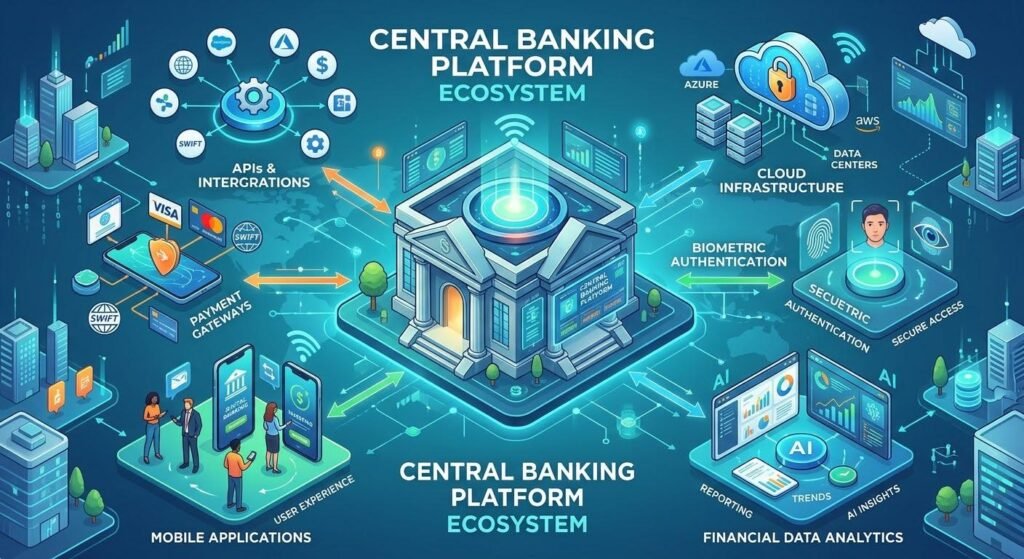
Careful planning is needed to integrate new technology into the existing financial systems. Core Banking Platforms, Payment Systems, Customer Database Management Systems, Reporting Applications are all legacy systems that have been developed over the years in many traditional institutions. Going all the way at once can cost a lot, disrupt operations and be dangerous. Rather, organizations tend to modernize their systems over time, linking older systems to new ones via APIs, middleware and integration services. They can migrate specific workloads to the cloud, streamline manual workflows and add new cloud-based channels while continuing to support vital legacy applications.
Maintaining consistent data standards, cybersecurity controls, employee training and technology/business department coordination are key elements to a successful integration. Institutions should pre-deploy test the following features of the system: compatibility, transaction accuracy, system performance, and recovery procedures. Both regulatory and compliance teams need to evaluate the requirements, such as data protection, customer verification, financial reporting, outsourcing requirements and so on. Continuous monitoring can be used to detect technical failures and security vulnerability following the launch. Modernization and risk management can work hand in hand to enhance services to a financial institution without causing undue disruption to current operations.
Advantages of Fintech to Financial Services
The financial sector has a number of benefits from FinTech. With automation, repetitive administrative tasks are eliminated, and digital channels enable customers to use services outside of business hours. APIs and cloud infrastructure can help to accelerate development cycles, while analytics can offer more information for planning operations. It is easier to accept transactions by providing digital payment systems and to onboard customers with remote identity verification. Utilizing tools that leverage AI can assist workers in analyzing information and detecting any suspicious activities. The advances could result in reduced costs, financial inclusion and new products and business models.
The benefits, however, will depend on the quality of implementation. Digital services bring cybersecurity risks and concerns, technology failures, reliance on third parties and more. Ineffective automation can also have a detrimental impact on some customers. Financial institutions have to be able to be convenient and efficient while also being resilient, fair, compliant with regulations and serviceable to their customers.
The Future of Financial Technology
As institutions venture into more robust AI systems, payment networks that are interoperable, digital identity solutions, embedded finance, and tokenized financial assets, FinTech will continue to develop. Embedded finance enables the financial journey to be integrated into non-financial applications, like shopping apps or enterprise software. Open banking can also be used to facilitate authorized services that are built on secure sharing of financial data, which have to comply with relevant rules and customer consent. At the same time, automation and analytics can provide institutions with the ability to provide more personalized services and to recognize operational risks sooner.
Technology will not be the only means by which the future will be determined. There will be a need for financial institutions to have skilled personnel, trusted information, a reliable infrastructure, sound governance and accountability. They also need to not only ensure that innovation is in line with any real customer need, it needs to be in line with customer value as well. Those which are responsible about introducing new tools responsibly alongside existing financial systems will have a greater ability to meet evolving expectations, regulatory developments and competitive pressures.
Conclusion
Recently, FinTech has been playing a pivotal role in the financial landscape by integrating digital applications, secure infrastructure, payment systems, identity verification, AI and financial analytics into more complex systems. The technologies aid banks, insurers and pension managers, payment providers and investment firms in better service delivery, better processes, and new financial products. The importance of their value is dependent upon the ability of institutions to integrate them with the platforms already in use, manage the risks, safeguard customer information and comply with regulatory standards. With secure integration, responsible innovation and customer accessibility as top priorities in digital finance, financial organizations that are able to do these things will be more competitive and more able to meet the needs of their customer base in the ever connected economy.
Get more well researched information about FinTech technologies here.