Artificial Intelligence (AI) is quickly gaining momentum in changing industries around the world, automating processes that previously used to be handled by human beings. Automating these functions poses both opportunities and threats to the workforce especially within such areas as data entry, customer care, content development, and scheduling. In this article, we would discuss ten potent AI tools that are transforming the nature of traditional jobs, discuss their characteristics, benefits, and drawbacks, and the overall impact on the workforce.
2. Data Mining: UiPath
Overview:
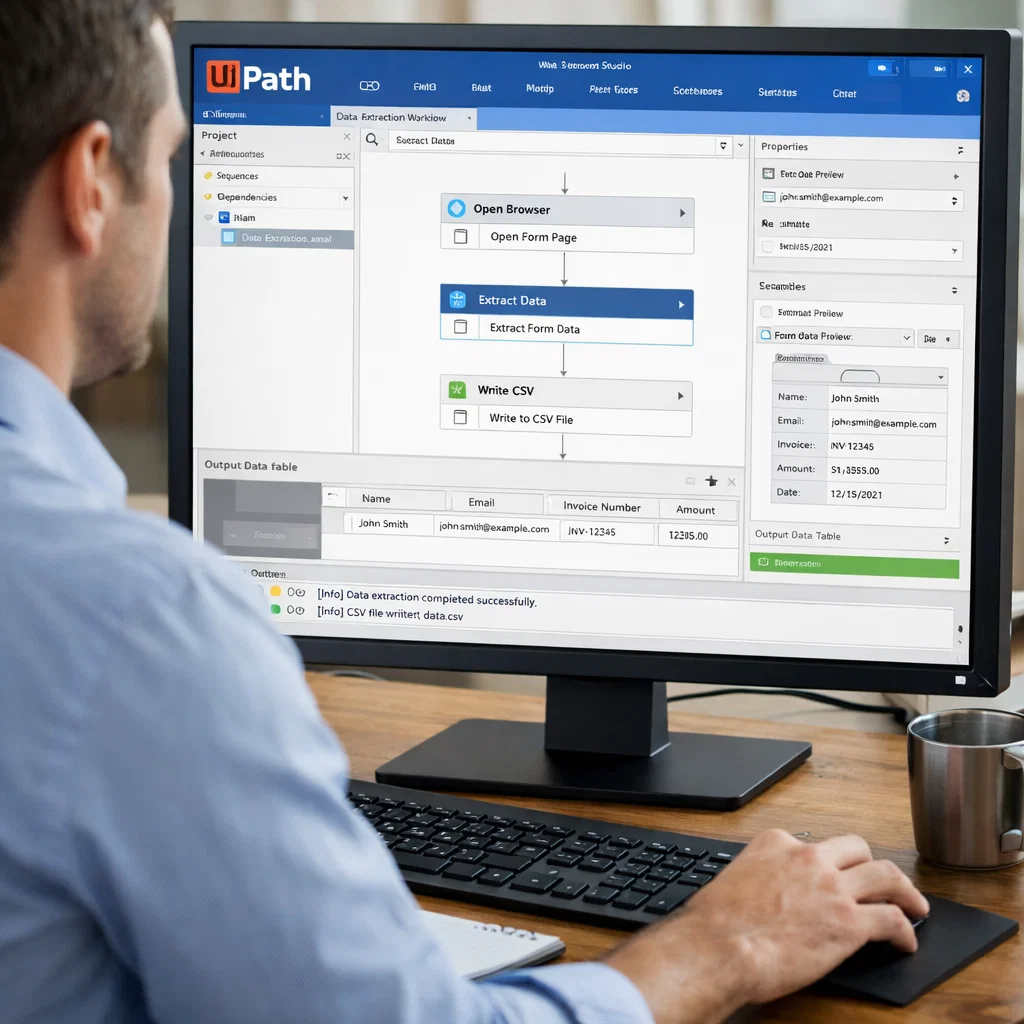
UiPath is a robotic process automation (RPA) leader that aims at automating repetitive processes, including data entry, data extraction, and form-filling. It is able to replicate human behavior using machine learning and AI, which helps it to perform tasks related to data in an efficient and accurate way.
Features:
- Visual designer to make easy workflow automation.
- Interoperability with other software and systems.
- AI-driven decision-making capabilities.
Advantages:
- Reduces human error and increases accuracy.
- Reduces overhead expenses and time wastage on routine activities.
- Scalable for businesses of all sizes.
Limitations:
- Takes a lot of set up and configuration.
- Small businesses can be costly to start up.
- May have problems in tasks involving complex judgment.
Broader Implications:
RPA tools such as UiPath are automating manual data entry, which previously required employees to spend hours on. Although this automation enhances efficiency, it also brings up concerns of job displacement in data entry jobs.
2. Customer Support: Zendesk
Overview:
Zendesk, a customer support automation software, uses AI to automate customer support tasks, including the creation and processing of tickets. Its AI applications apply the natural language processing (NLP) technology to comprehend customer inquiries and provide smart responses.
Features:
- Automated ticket routing.
- Quick service chatbots to respond to customer questions.
- Tight integration with CRM systems to support.
Advantages:
- Increases customer satisfaction through quicker response time.
- Eliminates the human involvement in processing routine queries.
- Enhances efficiency in operations through automation of customer support processes.
Limitations:
- AI might not be able to cope with complicated problems in customers which involve empathy and critical thinking.
- The excessive use of automation can also have a detrimental impact on the human touch in customer service.
Broader Implications:
Customers are revolutionizing the way businesses interact with customers due to the emergence of AI-based customer service platforms such as Zendesk. Although it will cut the human support agent requirement in certain sections, it will also displace the human employee to more advanced customer care and problem-solving.

3. Content Creation: Copy.ai
Overview:
Copy.ai is artificial intelligence that creates marketing copy, blog content, product descriptions, and other marketing content. It assists companies and advertisers in the simplification of the content production that will save time and effort.
Features:
- Due to the automatic generation of blog posts, emails, and social media content.
- Ability to generate content in multiple languages.
- Individual tone and style to customize the content.
Advantages:
- Accelerates the production of content.
- Economical to businesses that do not have a dedicated content team.
- Lessens the workload on the human copywriters on routine tasks.
Limitations:
- The content that is generated by AI might not be innovative or creative.
- Needs human control to achieve quality and accuracy.
Broader Implications:
AI applications such as Copy.ai are transferring the manual writing process to the automated process. Although this may aid businesses to produce high volumes of content at a very fast pace, it presents a challenge to writers and content creators to ensure that the content is of high quality and authentic.
4. Scheduling and Calendar Management: x.ai
Overview:
x.ai is a personal assistant powered by AI to schedule and manage calendars. It is synchronous with Google Calendar and Microsoft Outlook among other scheduling programs to facilitate appointments and meetings.
Features:
- Meeting scheduling/rescheduling at an automated level.
- Capacity to organize the availability of various parties.
- Calendar and email integration.
Advantages:
- Conserves time and saves the hassle of going back and forth.
- Make sure that meetings are arranged at the most convenient time for everyone.
- Brings higher productivity through automation of scheduling.
Limitations:
- May experiences difficulties in making appointments with complicated or urgent meetings.
- Weak in its capacity to deal with complex calendar situations.
Broader Implications:
Manual calendar management has been supplanted by AI-powered scheduling software such as x.ai, which allows more strategic work to be done. Such tools enhance efficiency at workplaces, as well as decreasing the need to hire personal assistants and administration personnel.
5. Recruitment and Hiring: HireVue
Overview:
HireVue is an AI-based tool that automates the hiring process. It relies on video interviews and AI-based tests to understand the qualification, experience, and suitability of candidates to a position.
Features:
- Candidate screening and ranking with AI.
- Ability to hold a video interview as well as analysis of response in real-time.
- Customizable interview questions.
Advantages:
- Automates the preliminary screening of candidates, making the hiring process faster.
- Reduces bias in the recruitment process.
- Helps companies locate the most suitable candidates more effectively.
Limitations:
- AI can miss out on human factors that might influence the suitability of a candidate.
- May exclude those who fail to achieve in tests of AI.
Broader Implications:
Artificial intelligence (AI) solutions such as HireVue are changing the face of recruitment by making the hiring process less manual. Although they streamline the recruitment process, they also cast doubts on the fairness and the possibility of algorithm bias in the assessment of applicants.
6. Project Management: Monday.com
Overview:
Monday.com is an AI-powered project management tool that automates workflows, monitors progress, and manages tasks. It might streamline the project management process and enhance cooperation within teams.
Features:
- Automated notification and assignment of tasks.
- AI-assisted schedule forecasts of project deadlines.
- Graphical progress tracking.
Advantages:
- Enhances group co-operation and openness.
- Eliminates manual tracking and updates of tasks.
- Removes repetitive work in the administration, enabling teams to concentrate on strategic work.
Limitations:
- May be complicated when it comes to installation by novices.
- Depends on the quality of the information input in order to make the correct forecasts.
Broader Implications:
Monday.com is an AI-powered project management tool that is minimizing the manual effort required in managing and coordinating projects. Although the tools will result in increased productivity of the team, they may also cause job reassignments in the areas of project coordination and administration.

7. Marketing Automation: HubSpot
Overview:
HubSpot is an AI-driven marketing software with automation of various functions, such as email marketing, posting on social media, and lead generation.
Features:
- AI-driven content personalization.
- Auto email marketing and social media.
- High-tech analytics and reporting solutions.
Advantages:
- Increases the effectiveness of marketing through automation.
- Individualizes customer engagements to enhance interaction.
- Lessons the manual work to handle campaigns.
Limitations:
- May takes a lot of preparation to tailor-made campaigns.
- The excessive use of automation can make the marketing efforts less human.
Broader Implications:
Most of the activities performed by marketers are being automated by AI-based marketing tools such as HubSpot. They make them more efficient, but also move marketing functions to strategy and analytics, so professionals will have to be able to adjust to the shifting environment.
8. Finance and Accounting: QuickBooks AI
Overview:
QuickBooks applies AI to automate accounting and financial processes including bookkeeping, invoices generation, and expenses.
Features:
- Automatic classification of costs.
- Financial reporting and insights in real-time.
- Connection with payment systems and banking.
Advantages:
- Eliminates manual data entry and error.
- Offers real-time financial information to make decisions.
- Streamlines reporting and filing of tax.
Limitations:
- AI will not be able to cope with complex financial situations that involve professional knowledge.
- Depends on user data input to be accurate.
Broader Implications:
The accounting profession is also changing with the assistance of AI technologies such as QuickBooks, which automate most of the processes and minimize the usage of manual accounting. Although they make processes easier to the small businesses, they could replace the traditional accounting jobs.
9. Cybersecurity: Darktrace
Overview:
Darktrace is an AI-based solution that identifies and prevents cybersecurity threats in real-time. It examines network traffic to detect anomalies and react to possible security breaches.
Features:
- Real-time detection and response to threats.
- Anomaly detection using machine learning.
- Automated security incident response.
Advantages:
- Improves security by offering real-time threat detection.
- Lessens the human effort in performing routine security operations.
- Flexible to changing threats of security.
Limitations:
- Needs constant monitoring and fine tuning to achieve maximum performance.
- Expensive to implement in large companies.
Broader Implications:
Traditional security is being replaced by AI-based cybersecurity systems, such as Darktrace. Although they provide a strong security, companies will have to adjust to the dynamic nature of cybersecurity and redefine the contributions of human security practitioners.
10. Supply Chain Management: Llamasoft AI
Overview:
Llamasoft is an AI-based software that streamlines the supply chain by predicting demand, discovering inefficiencies, and enhancing logistics.
Features:
- Artificial intelligence (AI) based demand forecasting and inventory optimization.
- Integration with logistics and ERP.
- Live supply chain analytics.
Advantages:
- Enhances productivity through optimization of the supply chain.
- Minimizes wastage and stock outs through better inventory management.
- Offers a solution to make decisions on logistics.
Limitations:
- Needs quality data to get the right forecasts.
- Large supply chains can be complicated to implement.
Broader Implications:
The use of AI such as Llamasoft is transforming supply chain management, as it substitutes manual inventory management and demand forecasting. These tools render the supply chain more effective, however, they also change the priorities of supply chain professionals to data analysis and strategic planning.
Conclusion: Future of work in the AI-driven world
The use of AI tools is clearly changing how we work, automating work processes that previously required human intervention. This is because although these innovations introduce efficiency and cost-saving, they also cause drastic changes in job dynamics. The employees will have to evolve and learn the skills that will supplement AI technologies, including creativity, strategic thinking, and emotional intelligence.
It is probable that the future of work will be the combination of human and AI, each with their own strengths on the table. With the increasing automation of manual labor, it is crucial that workers remain on the forefront and understand how to utilize the AI tools and put their efforts on jobs that demand human adaptability and emotional intelligence.