
Once the only time that the term Artificial Intelligence was used was in the imagination of science fiction novels and cinematic masterpieces. Today, however, it has become a part of our physical world and has profoundly changed the way we communicate, work, learn and transact internationally. Whether it’s the personalized algorithmic feeds in our mobile phones, or the complex analytical engines optimising global supply chains, AI is a paradigm shift. This technological revolution is more than just about creating smarter machines; it’s about extending the capabilities of humans. The knowledge of how AI functions, its key subfields and the various uses of AI in critical industries are becoming a civic and professional necessity to navigate the modern world as we enter this transformative age.
The essence of AI is a field of computer science that involves developing intelligent systems capable of tasks that traditionally needed human intelligence, which is a broad and multidisciplinary domain. They range from natural language understanding to visual perception, complex decision making and emotional sentiment analysis, to structural problem solving. Unlike traditional, rule-based AI systems, which are built with specific pre-programmed rules by human software engineers, modern AI systems access massive libraries of mathematical equations and use statistical processing power to discover patterns and correlations. One of the most impressive features of modern AI is its ability to adapt. These engines, which simulate structures of the brain that processes information, can easily be made to process vast quantities of unstructured data, draw business-relevant conclusions and constantly refine these results with minimal human input, making computers more of an analytical ally than a passive document processor.
The Core Pillars of Artificial Intelligence
Understanding AI, Machine Learning, Deep Learning, and Automation
There are three core pillars that are crucial in the field of AI and machine learning. In the world of AI and machine learning, there are three core pillars that are crucial.
To understand the scope of the current digital transformation, it is important to have a clear understanding of the key terms that are often used in the public discourse, but which are used in ways that are not appropriate. AI is the all-encompassing name for any system that exhibits intelligent behavior. Under this conceptual umbrella lies machine learning, a branch of artificial intelligence dedicated to the creation of statistical algorithms that can automatically be trained with past data and make incredibly precise predictions about the future data that they are exposed to. Deep learning is a subset of machine learning that uses multi-layered artificial neural networks, similar to the neural networks in the human brain, to mimic the human brain’s workflow.
Automation is more about executing operations, whereas machine learning has a major emphasis on predictive analysis and pattern recognition. Automation is the use of technology, programs, and robotic systems to perform repetitive, highly structured tasks without any human intervention. The conventional approach to automation was to implement all the rules and if a variable was not handled in the hard-coded rules, the system would fail. When paired with machine learning algorithms—often called intelligent automation—the systems can overcome dynamic changes, learn from operational anomalies and perform complex workflows with high cognitive flexibility and analytical accuracy.

Transforming Diagnostics and Patient Care with AI in Healthcare

The healthcare industry is one sector that could truly benefit from the power of AI, as the speed at which computers can operate and the predictive accuracy that they can deliver can make all the difference. Imagine using a machine learning algorithm to analyze millions of medical images, including X-rays, MRIs, and mammograms, with a level of accuracy comparable to – or even surpassing – human radiologists. In diagnostic medicine, this capability is arguably the most significant application of machine learning in practice. These smart systems can detect tiny abnormalities and early mutations in a cell that may not be visible to the naked eye. As a very powerful second pair of eyes, AI is able to significantly reduce the rate of human diagnostic mistakes, decrease oversight, and ensure that crucial life-saving interventions are made long before the disease has reached an unassailable level.
AI diagnostic tools can complement medical practitioners to achieve up to an 85% decrease in diagnostic error rates, as supported by peer-reviewed clinical studies.
Artificial intelligence isn’t only changing the face of clinical diagnostics, it’s also dramatically speeding up the long and costly process of developing pharmaceutical drugs. Traditionally, it has been more than a decade of research and billions of dollars of investment to develop a single therapeutic drug that was capable of saving lives from the laboratory bench to the commercial market, much of it because of the trial and error process of discovering viable molecular compounds. Today, deep learning models can simulate millions of molecular interactions within just a few hours, forecasting how molecules behave within the body, and even discovering molecules with great potential for clinical trials almost instantly. At the same time, healthcare administrators are using predictive models that power AI to predict patient admissions, schedule staffing levels in hospitals, and manage vital pharmaceutical supplies, cutting down on operational costs and allowing doctors and nurses to focus more of their time on patient care.
Using Data and Technology to Transform the Classroom: Personalization and Administrative Support
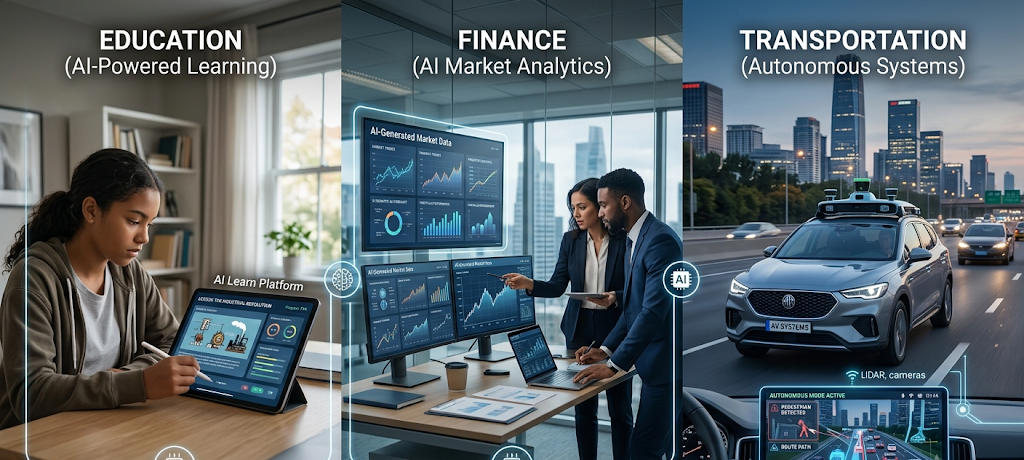
The education system that has been in place for generations, based on the industrial model, has been a “one size fits all” model that has consistently resulted in the loss of lower-achieving students and the lack of a challenge for higher-achieving students. AI is taking the entire educational system model apart, and creating an environment in which learning is highly customized, adaptive, and tailored directly to the needs of the individual learner. Intelligent tutoring platforms use sophisticated machine learning algorithms to automatically monitor and evaluate a student’s level of understanding, reading rate, cognitive abilities and gaps every minute of the learning process. The software uses this ongoing string of performance data to dynamically vary difficulty, pacing and format of the educational content, providing targeted remedial exercises or advanced supplemental materials to ensure that all students learn the basic concepts before advancing.
The process of generating AI-driven content adjustments is initiated by the Student Performance Data, which is then sent to the AI Analytics Engine, which then passes the results on to the Dynamic Content Adjustment.
High Comprehension is a section of Advanced Material.
└── Learning Gaps ➔ Targeted Remedial Exercises
Artificial intelligence is not just reshaping the educational landscape for students, but it’s also proving to be a powerful ally for teachers burdened with excessive non-teaching duties. Examining tests, keeping attendance, writing lesson plans and arranging classes take up a huge portion of a teacher’s week. AI can save valuable time for instructors by handling repetitive administrative tasks with intelligent grading systems and lesson planning assistants, allowing them to focus on what they’re best at – the empathetic and human connection with their students. Moreover, natural language processing is eliminating the barriers of geography and physical access, enabling real-time translation for foreign language speakers and converting instructional content into easily-accessible audio or visual formats for students with various learning disabilities.
AI in Finance: Security, Trading, and Personal Banking, All Maximized
Financial services are a domain where large amounts of numerical data are collected, analysed and used for transactions—an environment ripe for the use of artificial intelligence. As one of the most critical sectors in the fight against fraud, traditional security solutions cannot keep up with the sophisticated techniques of today’s cybercriminals. But machine learning algorithms can continually track millions of credit card purchases in real time to set up a unique behavioral baseline for each consumer.
Even if a transaction slightly deviates from the baseline, e.g. if a user is in a country he or she did not expect to spend money in, this can be noticed by the AI system, which can immediately block the transaction and the funds and avert the loss of millions of dollars in fraudulent transactions, without causing unnecessary trouble for the bank’s real customers with false positives.
AI Applications in the Financial Sector
| Financial Sector | Core AI Application | Key Business Benefit |
| Fraud Detection | Analyse the transactions in real-time. | Avoids false positive and loses in finances |
| Investment Trading | Quantitative predictive modeling | Executes trades at microsecond speeds with processes of macro-datasets |
| Personal Banking | Financial Planning Software Automation. | Changes the game for retail investors by making investing in wealth services more accessible. Empowers common people to participate in wealth management. |
Quantitative and algorithmic trading have transformed traditional investment and wealth management trading desks in today’s investment landscape, and AI has played a pivotal role. They can process millions of data points, from a wide variety of sources, including previous stock movements, company results, foreign political events, and global weather predictions, and make trading decisions in mere milliseconds, a time too quick for a human trader to react. At the same time, retail banking has also become accessible via robo-advisors, which leverage AI for investment advice. At the same time, retail banking has also been democratized by the advent of robo-advisors, which use AI to provide investment advice. The automated platforms are designed to analyze an individual’s financial objectives, income parameters, and risk tolerance, and then automatically create, rebalance, and manage highly diversified investment portfolios, offering high-quality financial management to the average saver who historically has not been able to afford a personal financial planner.
Next Era of Transportation: Autonomous Vehicles and Smart Logistics
The transport of passengers and commercial goods is in the process of a structural change as computer vision, sensor fusion and autonomous systems evolve quickly. Today, self-driving cars are being driven on public roads, and are equipped with a very complicated system of Light Detection and Ranging (LiDAR) sensors, radar, and deep neural networks, all of which are working together to create a 360 degree, real-time digital map of their road environment. These vehicles can see pedestrians, understand with a millisecond how to handle complex intersections, anticipate unpredictable driving patterns of other vehicles in the vicinity, and respond to unexpected dangers. Self-driving commercial trucks and delivery drones are just inches short of full-scale production, and that will signify a major transformation in the economics of global shipping.
In addition to individual cars, AI is also fine-tuning the macro-level infrastructure of global supply chains and urban transportation systems. Smart traffic management systems, which use real-time data from cameras and GPS signals of commuters, can dynamically optimise the control of traffic flow in metropolitan areas, which can drastically cut urban congestion, vehicle idle periods and greenhouse gas emissions. Predictive machine learning models can accurately predict consumer trends for logistics and distribution companies. This enables companies to manage their stock in distributed warehouses, streamline their delivery schedules to avoid bad weather or traffic jams, and anticipate mechanical issues in vehicle fleets before they occur, promoting seamlessly and efficiently around the globe.
Talk to Your Customers with a Human Voice and Tone: Hyper-Personalization and Conversational Agents
Over the years, the customer service industry was infamous for extended wait times, endless automated phone menus and customers who were unable to get the basic help they needed. However, the advent of highly sophisticated natural language processing based conversational agents has revolutionized this scenario with Artificial Intelligence. As opposed to the old-style keyword-based chatbots, today’s virtual assistants can grasp the complicated context, underlying intent, and emotional sentiment behind a user’s written or spoken query. These witty robots can handle a huge number of repetitive customer queries, like package tracking, return processing, billing updates and more, around-the-clock, without any human assistance.
AI can seamlessly switch to a human customer service agent when a customer problem is too complicated or comes with an emotion that can be resolved by a person. In these real-time conversations, the AI can silently process the conversation, record key points, refer to customer history, and offer possible solutions to address the problem as quickly as possible. Moreover, companies have been leveraging machine learning to study previous buying patterns, browsing histories and demographic data to supply hyper-personalized product suggestions and targeted marketing campaigns. The high degree of individual customization not only increases the sales conversion rate for enterprises, but also enhances customers’ shopping experience by tailoring customers to the most relevant choices according to their personal tastes.
Progress with Caution: Benefits, Limitations and Ethics of Artificial Intelligence
The potential for AI is immense, but it’s crucial to understand that it is not a magic bullet and the headlong rush of its development brings with it many limitations and ethical concerns that society needs to take up. A major technical challenge is the so called black-box problem, in which the human mind can’t understand the mathematical logic used by complex deep learning neural networks in order to arrive at a particular conclusion. High-stakes sectors such as criminal justice, healthcare, and mortgage lending can suffer systemic injustice if decisions are based on an algorithm without people understanding in what way. This lack of transparency can cause systemic injustice in areas such as criminal justice, healthcare and mortgage lending, where errors are bound to occur.
Moreover, AI systems are completely reliant on the past data they have been trained with. AI models will inevitably reflect and reinforce human biases, historical inequalities or systemic prejudices in the training data it is based on, as it claims to be objective, algorithmic neutral. Consumer data privacy is another area of deep concern, since these models are constantly learning, they need to ingest a tremendous amount of personal information, often without the consumer’s explicit, informed consent. Governments, tech giants and research institutions need to do more than just create stronger laws and policies; they need to champion more transparent algorithms, and make certain that the vast power of AI is created and used safely, equitably and beneficially for everyone.
The Future Impact of Artificial Intelligence on Society
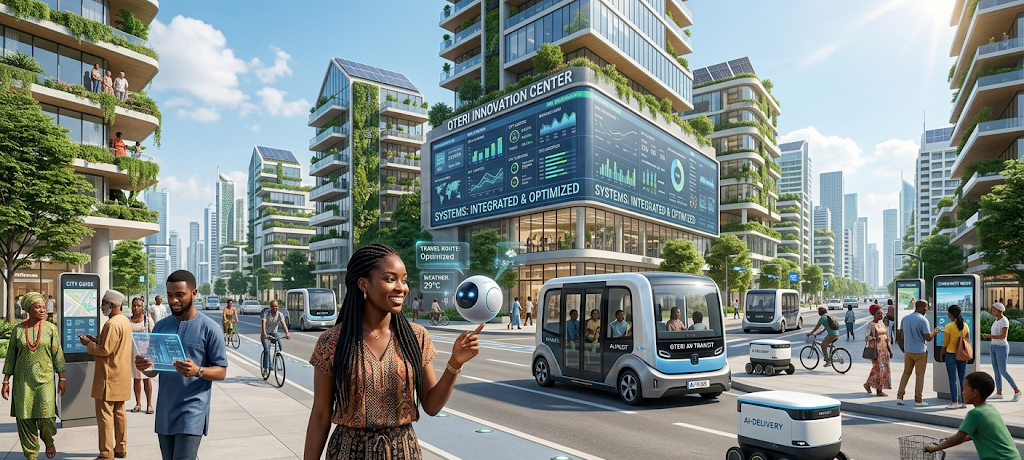
Artificial intelligence is expected to continue expanding its influence across personal, professional, and global environments. As AI systems become more advanced, they will continue supporting industries by improving efficiency, increasing access to information, and helping humans solve increasingly complex challenges. The future of AI is not only focused on creating machines that can perform tasks independently but also on developing systems that can work alongside people to enhance creativity, decision-making, and innovation.
In workplaces, AI is likely to become an essential partner rather than simply a replacement for human workers. Organizations will increasingly rely on AI-powered tools to analyze information, automate repetitive processes, and provide valuable insights that support strategic decisions. Employees who understand how to collaborate with AI technologies will be better prepared for the changing digital economy. Education systems, businesses, and governments will need to invest in digital skills and responsible AI awareness to ensure that people can benefit from technological advancement.
The long-term success of artificial intelligence will depend on maintaining a balance between innovation and responsibility. While AI offers remarkable possibilities, it must be developed with careful consideration for privacy, fairness, transparency, and human values. The goal should not simply be creating more powerful machines but ensuring that these technologies improve human experiences and contribute positively to society.
Conclusion: Artificial Intelligence as a Transformative Force in Modern Life
Artificial Intelligence has moved beyond the boundaries of science fiction and has become a powerful force shaping everyday life and business operations. From healthcare systems that improve medical diagnosis to educational platforms that personalize learning, financial tools that strengthen security, transportation systems that improve efficiency, and customer service solutions that create better experiences, AI is transforming how society functions. Understanding AI, machine learning, deep learning, and automation is becoming increasingly important as these technologies continue influencing personal and professional decisions.
However, the growth of artificial intelligence also requires careful attention to its challenges. Issues such as algorithmic bias, privacy concerns, security risks, and the changing nature of employment demonstrate that technological progress must be accompanied by responsible decision-making. AI systems are powerful tools, but they require human guidance, ethical standards, and continuous evaluation to ensure that they are used effectively.
The future of artificial intelligence will be shaped by how individuals, organizations, and governments choose to develop and apply these technologies. When used responsibly, AI can extend human capabilities, improve productivity, encourage innovation, and create solutions to some of the world’s most complex problems. As society continues entering this new technological era, artificial intelligence will remain a defining force in building a more connected, efficient, and intelligent future.