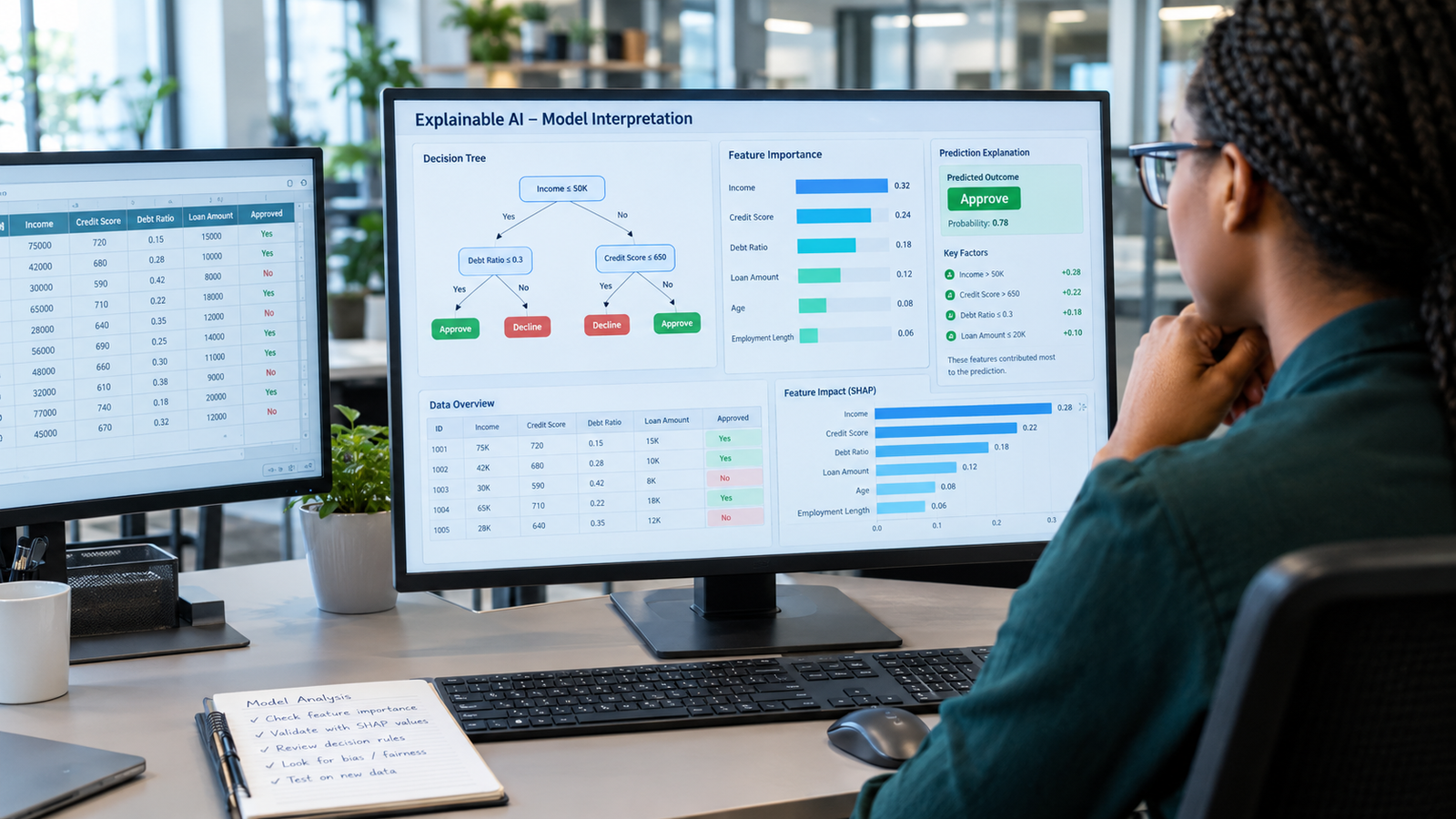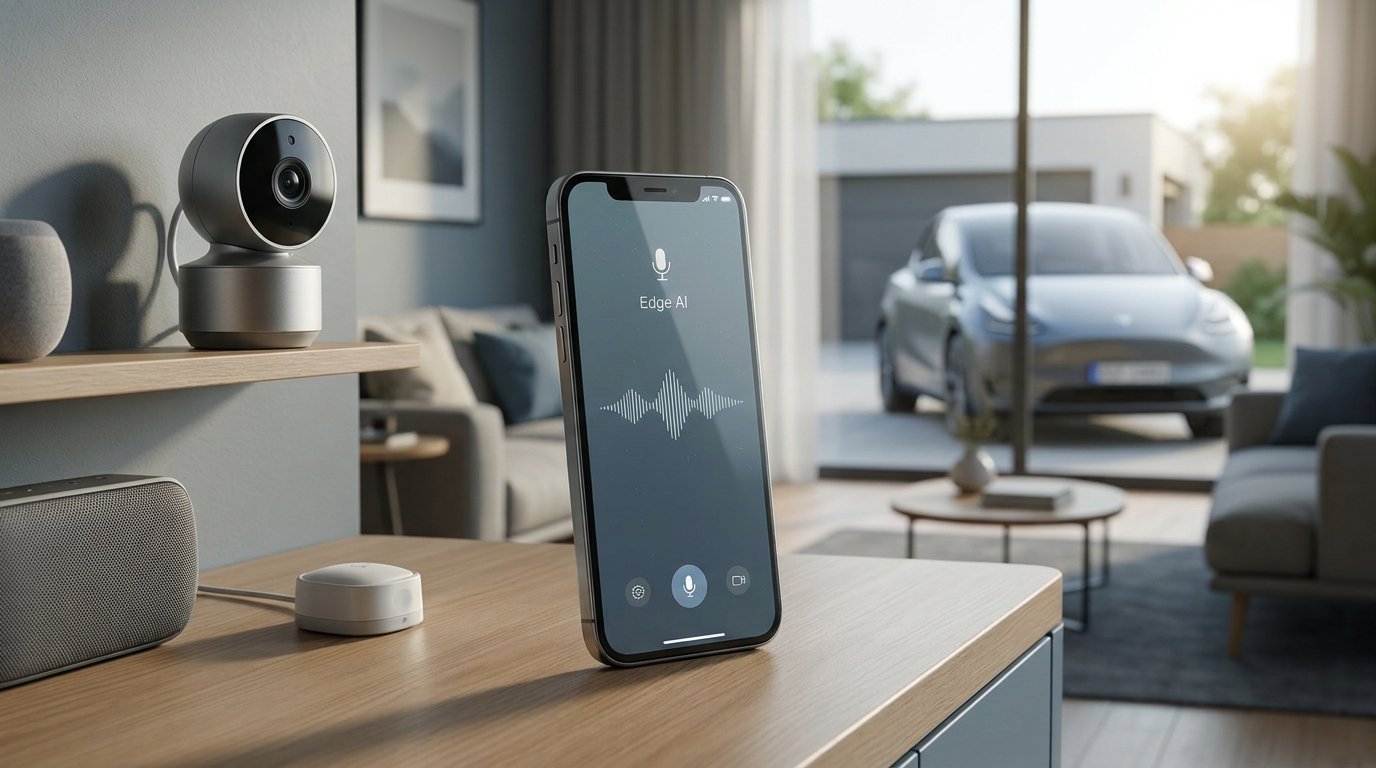
AI is driving the processing of information across a wide range of customers, such as smart devices, cars, security cameras, and smartphones. Many AI applications have been traditionally offered as cloud applications that analyse data and return results from the cloud. This can, however, be time-consuming, need an internet connection and have privacy issues. Edge AI presents an alternative model, enabling machine learning models to process data in real time on, or close to, the machine learning device that is collecting it.
With Edge AI, devices can recognize speech, detect objects, monitor equipment and automate tasks without needing to continually communicate with remote servers. It can provide offline capabilities to handle data processing when users are disconnected from the network, as well as help minimize network congestion and response times. With only limited hardware resources, energy consumption, and model accuracy, however, are important considerations. All this is important to understand to grasp why efficient machine learning is becoming more and more critical to modern-day technology.
What Is Edge AI?
Edge AI is about the fusion of capacity computing and AI. Data is processed near where it’s collected (edge computing), and prediction and pattern recognition capabilities become possible with AI for decisions. These technologies combine to enable any device to process information on its own rather than solely using cloud computing analysis.
For instance, an AI-based security camera may be able to identify a person, and raise an alarm without reporting all images of the person to a remote screen. Likewise, a smartphone can identify compatible voice commands in an offline manner. These are features that help minimize bandwidth usage and enhance responsiveness from devices.
How Edge AI Works
The basic workflow of Edge AI involves collecting data, running a trained machine learning model against the data, and generating an output. Using a model to recognise patterns and make predictions can be preceded by the collection of the image, sound, or a temperature.
A typical approach to deploying ML models to edge devices is to train them on high-performance workstations or cloud systems and then optimize and image them for the devices. The models make inferences once they’re set up; “inferences” involves applying previously learned patterns when new information is presented. This enables devices to predict without having to build a new model with each piece of incoming data.
How Machine Learning Powers Edge AI
Machine learning solutions can train edge devices to identify items, understand what is being said, and detect abnormal data when used for edge pattern recognition. While computer vision models study images, speech recognition models evaluate speech, and predictive models consider the measurements of various sensors.
The majority of edge devices make inferences with models that have been trained on another device. These models are optimized to fit the device memory, processing power and energy limitations. Most systems don’t provide local learning, but local learning is provided in some systems while the remainder are guided to become more capable over time through controlled software updates.
The Operation of Edge AI on Small Devices.
These smartphones, cameras, and industrial sensors have a much more limited amount of computing power. Complex AI models can result in higher memory consumption, longer processing times and energy consumption on these devices. For this reason, model developers adopt optimization methods to reduce the size and efficiency of their models.
The Process of Condensing and Coding a Model’s Data.
However, the model compression method is an approach to lossless reduction of memory usage and computation of machine learning models. Both quantization and pruning involve using lower precision numerical representations and removing model connections with a relatively negligible contribution to the output of the model. Another context in which knowledge distillation may be useful is the generation of smaller models capable of capturing key functionalities of the larger ones.
These techniques can help to make it more efficient, but excessive optimization can jeopardize accuracy. Model development should be conducted under realistic conditions, so that the models are reliable.
Specialized AI Chips

Specialized processors are used to enable AI calculations for devices with efficiency. Machine Learning workloads can be supported by the use of three types of CPUs, GPUs and NPUs.
For instance, recognition of speech or analysing the content of images require an NPU in a smartphone, the processing of which consumes battery power but can be avoided if unnecessary when the NPU operates in conjunction with one or more sensors. The advantages are contingent on the hardware working with the appropriate model and support of software.
Edge AI vs. Cloud Based Machine Learning
Edge AI analyses data locally, cloud machine learning transmits data to a remote server for analysis. For each method of approach there are advantages depending on intended use.
| Feature | Edge AI | Cloud AI |
| Processing | Within the device or in close proximity thereto. | Remote servers |
| Response time | Generally faster on local use, if there is no gameodb.com available. | Relies upon delays in connection of network |
| Internet access | Not always required | Usually required |
| Privacy | Supports storing data on-device. | Requires data transfer – may be required |
| Computing power | Limited by device hardware | Can utilize supercomputers |
| Maintenance | Updates for many devices | Centralized model updates |
| Best suited for | Real-time local decisions | Complex, resource-intensive tasks |
When quick responses, offline functionality, or local data processing matter, Edge AI can be particularly useful. Devices can analyze information close to where it is collected, reducing the need to transmit every piece of raw data to a remote server. In contrast, cloud computing can provide the processing power and storage needed for complex, resource-intensive tasks. Understanding the differences between these approaches helps explain why many modern applications combine local machine learning with cloud-based services.
Some applications use a mixture of these two methods. It allows for local detection by a camera with uploaded events to the cloud for analysis. This hybrid design offers speed, computational capabilities and operation efficiency.
Practical Applications of Edge AI
The use cases of Edge AI include consumer electronics, industrial equipment as well as transportation and smart homes. The key benefit is that it translates the data that can be analysed near source.
- Offline Speech Recognition
Instead of which, smartphones can run on-device speech recognition to interpret and understand voice commands without uploading voice data to a remote server. This enables features like voice typing, accessibility accessories and simple voice commands.
Offline functionality may be dependent on model installed and supported functionality. Occasionally, more complicated requests can still be made requiring Internet access and background noise/familiar speech may impact accuracy.
- Real-Time Object Detection
AI processors for security cameras can recognize people, vehicles, and other objects as the camera’s footage is recorded. They can produce alerts if pertinent activity is detected rather than continually broadcast footage for cloud analysis.
This can decrease network traffic and increase responsiveness. Detection accuracy, however, can be influenced by environmental factors such as poor lighting, obstructions, or out-of-the-normal environments, therefore, it is important to conduct proper testing and human inspections.
- Predictive Maintenance
Measurements taken by the industrial sensors include vibration, temperature and pressure. Predictive anomaly detection for developing equipment issues is possible with Edge AI models.
By analysing the data locally, quicker alerts can be sent and the need for transmitting every single sensor reading is eliminated. Failing to predict this, however, does not mean that equipment will fail; predictions should be used in conjunction with current maintenance practices.
- Smart Home Automation
Edge AI can enable smart home devices to identify the types of activities they detect, evaluate voice commands supported by intelligent automation, and perform settings according to the configured requirements. Quick response from lighting, cameras and other devices can be achieved by light processing locally.
Services will still be required in the cloud, and they require this to operate offline and to ensure privacy, which depends on the design of the device and how it is configured.
- Driver-Assistance Systems
The point is that cars have cameras and other sensors to detect road markings, people, cars in the immediate vicinity, and obstacles. These are problems that Edge AI can help address by processing data locally to provide features such as collision warnings and lane-dragging alerts.
The opportunities for driving conditions to change are numerous and hence, these systems need to be tested to a greater extent and provide reliable protections. Drivers need to be vigilant and understand the restrictions on the driver assistance systems.
Benefits of Edge AI

There are several significant benefits to consider when using Edge AI:
- Rapid responses: Faster response due to local processing instead of dealing with communication in remote servers.
- Better privacy: Data that is sensitive can be left on the device – not sent elsewhere.
- Decreased network traffic: Just the desired outcome information can be sent; not the full amount of raw data.
- Stable internet connection: Your app can function without a stable Internet connection.
- Potential cost savings: In appropriate deployments, operating costs can be reduced with fewer cloud resources in use and fewer data transfers.
These benefits are dependent on the device, application and system design. Some functions still need cloud connectivity and anything that is locally processed will still require the input of energy.
Limitations and Challenges of Edge AI.
An Edge AI device’s memory, processing and battery capacity are constrained. As such, they might not have the rich combinations of models offered in the cloud. In some scenarios, smaller models may yield also less precise answers.
Managing distributed devices introduces additional challenges for Edge AI. Organizations must provide software updates, manage devices, address security vulnerabilities, and ensure compatibility across different hardware versions. Because these devices may process sensitive information locally, appropriate smartphone security practices can help users understand the importance of controlling app permissions, keeping software updated, and protecting personal data. Organizations must also secure connected devices against unauthorized access and tampering.
Developers need to build on models using realistic data and erect boundaries for the predictions that are uncertain. Systems dealing with safety or critical decisions, may need human oversight, and reliable fall-back procedures.
Edge AI and Energy Efficiency
Mobile phones, wearable technology gadgets and remote sensors are just a few specific devices that require extra attention to energy efficiency. Complex models can require significant power use and thus lead to significant operating costs in terms of battery life.
Developers can enhance the efficiency with model compression, quantization, dedicated AI specific processors and event-driven processing. For instance, a sensor may have a low powered controller to gather data routinely, and switch-on a more powerful processor when strange activity is detected.
The optimum solution will be one which is accurate, fast and uses as little energy as possible. Combined testing of these factors ensures that an edge AI system is viable when it is used in day-to-day applications.
The Future of Edge AI
As mobile processors, computers, AI accelerators, and optimizations continue to improve, the capabilities of local machine learning are getting stronger. These enhancements could increase the applications of edge AI in health equipment, farm machinery, electric vehicles and factories, as well as homes.
Cloud computing will continue to play a part in model training, complex analysis and centralized management. Systems that process repetitive parts that are carried out locally and known to the cloud resources for additional computing where needed will be a major part of the future.
It will also be crucial for responsible development in the future. The organizations need to secure devices, create an up to date Device Model, test whether models are accurate, and outline device data collection and processing.
Conclusion
By bringing machine learning models nearer to the data source, Edge AI facilitates smart devices, vehicles, and cameras to act as intelligent sensors and process data in real time. These systems can optimize response times, minimize network bandwidth usage, and serve specific offline capabilities with on-device inference, model compression, and specialized AI hardware.
But, limitations of hardware, use of energy, precision, and maintenance should be taken into account. Even though complex tasks still benefit cloud-based machine learning, hybrid solutions are found suitable for many applications. The evolution of edge AI will be pivotal in creating more responsive, efficient, and intelligent devices, especially as AI hardware technology and optimization practices advance.