Introduction
Traditionally, money market investment has relied on the trading of short term instruments in the established channels by financial institutions, the dealers, the brokers and the professionals. That’s changing with technology, changing what was previously a process for finding opportunities to a process for making transactions, monitoring them, and settling them. One benefit of digital platforms is the speed at which these platforms provide investors with market information and trading services, and automated systems can process orders and basic investment decisions with minimal human involvement. The bedrock of this transformation is made up of money-market instruments like Treasury bills, commercial paper, certificates of deposit and repurchase agreements. Technologies are increasingly evolving these instruments to enhance their monitoring and management, and assist them in reacting rapidly to interest rates changes, liquidity and risk.
This change isn’t just a matter of replacing processes with computers. It’s a matter of establishing a seamless investment environment where market data, trading platforms, analysis tools, risk management and portfolio management systems are integrated. Investors can select the opportunity to invest more effectively, financial institutions can process high volumes of transactions more accurately and market operators can enhance the transparency of trading operations. The delay between the occurrence of a market event and the response of an investor can also be significant in a short term market where yields and prices may fluctuate rapidly, and real time information can help to minimize that lag. These are all changes that are changing the market into a modern framework, without compromising on the value of professional judgment and disciplined risk management.
Digital Platforms are Opening up Access to Money Market Trading.
Digital investment platforms are transforming the way in which the investor looks for and buys short term investment securities. Many investors are able to view instruments, compare yields, look at maturity dates, place orders and track positions in instruments through online systems as opposed to waiting for every instrument to be sent to them via phone call, physical documentation or personal contact with the dealer. These platforms cater to each phase of the investment process and eliminate several hurdles, as well as simplify the initiation and monitoring of transactions. Integrated platforms can bring together the trading desk with the treasury, risk and settlement arms for institutional investors. Short term opportunities may be easier to assess for smaller investors if they have digital access. This wider access facilitates less location-specific investment activity, and less manual communication.
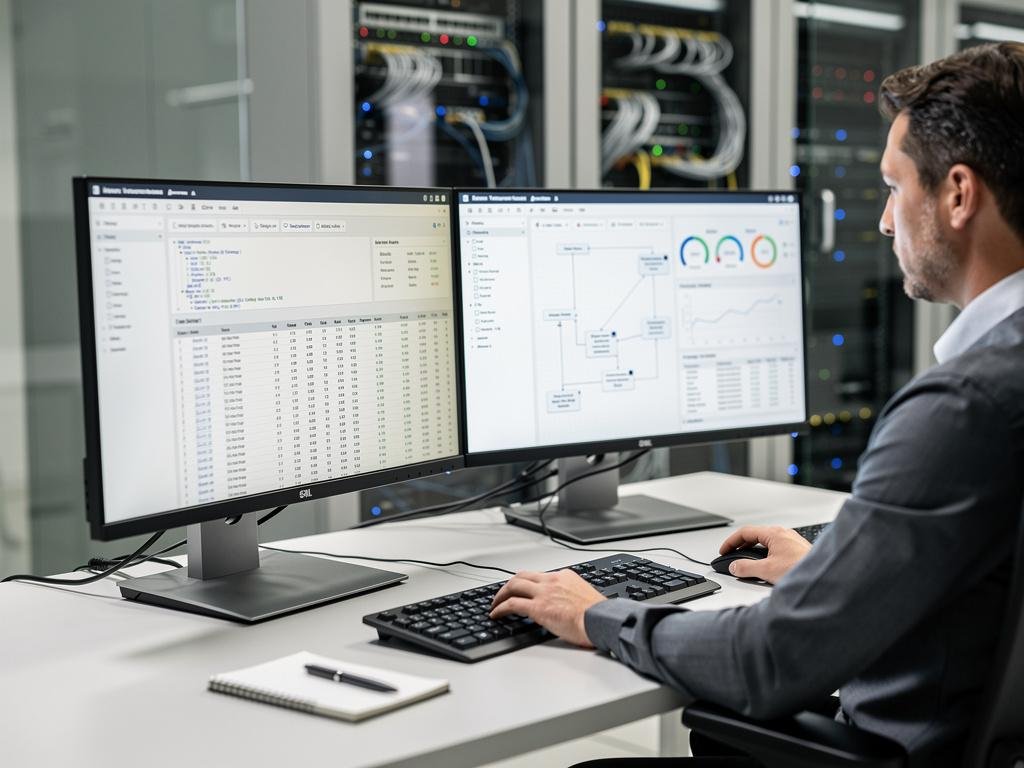
Digital platforms also enhance transparency of the portfolio as investors can access details regarding holdings, transactions, maturity dates and performance metrics in one central place. The notifications can warn the user about the maturity, yield changes or completed order. Some systems offer dashboards, which is a menu of information by maturity, expected return, liquidity or risk. Financial institutions can benefit too from digital platforms, as they can minimize the paperwork, streamline processes and generate electronic documents that are easier to review. A more efficient investment process that uses technology to aid in decision making and administration. Information on assessment of risk and suitability should still be readily available for investors but technology can render information available in a more timely and convenient manner.
The Introduction of the Automated Trading Systems
Another important trend transforming money market trading is automation. Automated trading systems can process orders, implement predetermined rules, analyze for trading opportunities, and execute trades in a much shorter time frame than it would take a human. With investors possibly having to react to interest rates fluctuations or altering liquidity situations in a market, quick execution can increase efficiency. Another benefit of automation is that it can minimize mistakes that happen due to repetitive data entry, arithmetic errors, or missing instructions. Financial institutions can automate the process of order routing, trade confirmation, reconciliation, settlement preparation, reporting and compliance checks and thereby free employees for higher value-added tasks. This can help to reduce operating expenses and increase transaction sizes.
The advantages of automation are not simply about speed – a well-designed system can be used to implement investment rules over a number of transactions. For instance, a treasury department might set limits on maturity, counterparty risk, credit quality or liquidity requirements, and technology can keep track of transactions to ensure they do not exceed the limits. Unusual activity or situations can be detected through automated alerts which trigger human review. But there is no magic involved in automation that removes the risk of investing. They rely on the quality of the rules, data and controls in their systems and can make bad decisions quickly when the algorithms are poorly designed. Human oversight, human testing, security controls and periodic review are the important elements of effective governance. Automated with professional oversight is the best way to approach it, not relying on technology as its own decision maker.

Real Time Market Data Equips Investors with Tools Needed
Real time market data is one of the most valuable technological resources of money market players. The updated rates and yields, prices, liquidity, economic forecasts, and market conditions are critical data investors need to access when assessing short-term investments. Modern data systems can gather data from various sources and provide it to trading screens, applications, dashboards and portfolio management software. Investors do not have to wait for periodic reports to see changes – they can see what happens and make changes as needed. It is of great value if the market is short term as a shift in rates or liquidity can make an instrument very attractive or unattractive in a very short time. The quicker information is available, the quicker informed and timely investment decisions are made.
Technology also enables the easy organization and interpretation of huge quantities of financial information. Historical prices, transaction details, issuer details, maturity schedules, and other market variables can be stored in the advanced databases in a searchable format. Analytical systems can analyze, generate comparisons with historic patterns, and look at relationships among securities. These can be valuable for portfolio managers to consider when evaluating the likely returns, liquidity, concentration risks and refinancing requirements. Financial databases also produce more obvious electronic records of the transaction, which facilitate audit trails, regulatory reporting and internal controls. There is significant value in enhancing confidence when information is accurate and presented consistently, and is made more transparent. Meanwhile, institutions need to safeguard sensitive data by monitoring access, encrypting sensitive information, backing up data, and implementing robust data governance.
Technologies can Enhance the Liquidity of Short Term Markets.
Money market participants are often more concerned with liquidity in money markets due to a need to use short term instruments for cash management, capital preservation and short term funding requirements. Liquidity can be enhanced through technology as it brings together the two parties involved in a transaction more efficiently and makes information about the opportunities available more accessible. Electronic platforms can facilitate order matching, provide market information that is relevant to the trading, and streamline communication among the trading participants. Enhanced connectivity may ease the ability to convert securities into cash and can facilitate institutions’ ability to adjust to altering funding requirements. Treasury systems can also offer a single comprehensive perspective of cash inflows and outflows, maturing securities, available liquidity and more. Managers can find out about any arising weaknesses before they get worse and take better decisions about the transactions.
Technology is Enhancing Portfolio Management.
Post-purchase securities portfolio management is undergoing a transformation due to technology. In real time or near real time, the portfolio management software can monitor maturities, yields, cash positions, investment limits and counterparty exposure. Institutions can avoid having to keep records across several spreadsheets and manual files, and instead have a system that lets them keep track of information as they make a transaction. This saves administration and allows ease of understanding of the impact of each security on the overall portfolio. Sophisticated analytical tools can be used to compare investment scenarios, and understand the impact of changing the maturity structure of investments or interest rates on the investment’s returns and liquidity. These are particularly useful for institutions that have a large number of short term positions, but also require human judgment when establishing targets and analyzing the results.
These Benefits of Technology to Financial Institution or Market Operator.
Modernization of money market technology brings advantages to the investors, financial institutions, and the market operators. Investors can enjoy quicker access to information, hassle-free execution, better portfolio monitoring and convenience. Financial institutions can cut the costs of running the business, process transactions faster, enhance the controls and handle higher transaction volumes while spending fewer manual resources. Market operators can benefit from enhanced data infrastructure, improved transaction monitoring, enhanced reporting and more reliable mechanisms for the market to connect with participants. These benefits can feed into each other as increased information and execution can stimulate participation, and increased participation can drive the liquidity and more competitive pricing. So technology is not just impacting individual transactions, it’s also impacting the overall efficiency of the market.
One additional gain is scalability. Manual processes which work for a few transactions may become inefficient when there is a huge volume of transactions involved. Good design and maintenance of digital systems can process significant information and repetitive tasks more reliably. Technology can also streamline processes, facilitating regulatory adherence and inside control. Yet, with more digital reliance, there are responsibilities. Institutions need to strengthen their cyber security, training, system resilience, data quality and contingency planning. A platform failure, wrong data or a breach of security could cause trading disruptions and financial losses. So in the name of modernization, innovation and risk management are needed, and institutions have to take risks like they take in the markets.
Challenges and the Future of Money Market Technology
While technology has its merits, there are obstacles that market actors must address. Security is essential since trading platforms and financial databases have valuable information and can enable access to sensitive transactions. Outages may occur at critical times and disrupt trading or settlement, or incorrect data can result in poor investment decisions, which can have a significant impact. New technology may also be difficult to incorporate into the institutions’ existing systems that are vital to daily operations. As for the future, there will be increased convergence of digital platforms, real time data, cloud infrastructure, automated decision support and advanced analytics. The integration of AI could enable the processing of vast amounts of data, enhancing risk monitoring, and a more robust system integration may streamline trading and settlement processes.
Conclusion
Overall, technology is helping to revolutionize money market investments and trading by providing quick information, convenient transactions, and easier portfolio management. Digital platforms are making it easier to access, automation is eliminating repetitive manual tasks, financial database is improving the analysis and record keeping, and real-time market data is enabling participants to respond faster to market conditions. These technologies can enhance the liquidity, transparency, efficiency and management of the short term investment markets when used together. The key take-away is that technology must not replace a good financial sense. The speed of execution is only of benefit if it is coupled with effective decision making based on reliable information and effective controls. Money markets are becoming increasingly digital, and those that will benefit from this are those that have a solid technological backbone and a robust governance framework, cybersecurity measures, analytical capabilities, and investment processes.
Get more well researched information about Technology in Money Market Investments here.