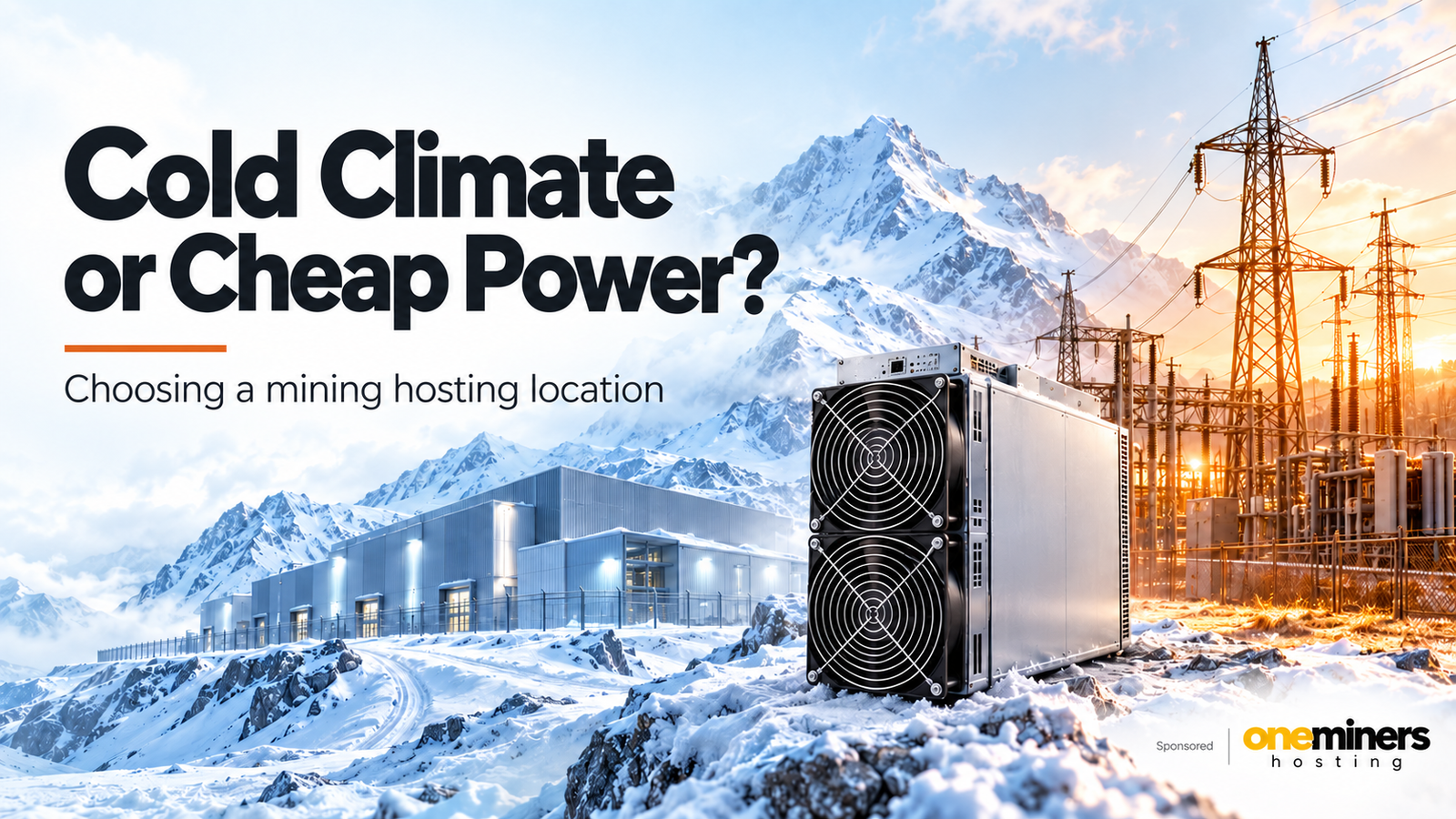
If you own an ASIC miner, or plan to buy one, sooner or later you hit the same question: where should it actually run? Picking a mining hosting location sounds like a small detail. It isn’t. The country and facility you choose shape your power bill, how long your machine lasts, and how fast it gets fixed when something breaks.
Most beginners look at one thing only, the power price. That matters a lot, but it is not the whole picture. This guide walks through the factors that really count, with real examples, so you can choose with your eyes open.
Why your mining hosting location matters
An ASIC miner is a specialised computer that does one job: the calculations that secure a network like Bitcoin. It runs all day, every day. It uses a lot of electricity and it gets very hot.
That means the place it lives affects almost everything:
- Your running cost, because power is the biggest ongoing expense
- Your machine’s lifespan, because heat wears out fans and chips
- Your downtime, because a fragile grid or slow repairs mean hours or weeks offline
- Your peace of mind, because rules and security differ a lot between countries
Factor 1: Power price and how long it stays that way
Cheap power is great. Cheap power that doubles next year is not. When you compare locations, ask two questions: what is the rate today, and how long is it locked in?
A fixed rate for several years makes planning much easier. It also protects you if energy prices rise in that region. Some hosts offer multi-year fixed rates, so always ask.
Factor 2: Climate and cooling
Miners hate heat. In cold places, outside air can do much of the cooling work for free. Fans spin less hard, and parts wear out more slowly.
Hot places can still work well, but they need more serious cooling. That might mean stronger air systems, water cooling, or immersion cooling, where machines sit in a special liquid that carries heat away. Ask what cooling the site uses and how it handles the hottest months.
Factor 3: Energy source and grid stability
Where the power comes from matters too. Hydro power, which comes from moving water, is often low cost and steady. Gas power can be reliable where supply is strong. Wind and other green sources appeal to miners who care about their footprint.
Just as important is the grid itself. Ask whether the site has backup or redundant power, which means a second supply that kicks in if the first one fails.
Factor 4: Repairs close to the machine
Here is the pain point many people only discover later. If your miner breaks and the nearest repair centre is on another continent, you could lose weeks to shipping and customs. Facilities with on-site repair teams can often get a machine back online much sooner.
Factor 5: Rules, taxes and security
Every country treats mining differently. Some welcome it. Others change the rules often. Import taxes on hardware can also add a real chunk to your setup cost. Check the local rules, and ask the host what security they have on site, such as guards, cameras and fire protection.
What this looks like in real locations
To make this concrete, here is how one multi-country host, OneMiners, describes some of its sites. It runs 20 hosting sites with about 2,163 MW of total capacity, so it is a useful example of how different regions trade off against each other.
- Norway (Arctic): cold climate for natural cooling and hydroelectric power. A good fit if hardware lifespan and green energy are high on your list.
- Finland: Nordic cooling, a mix of wind and green energy, and the regulatory stability of an EU country.
- Ethiopia: hydro power, on-site repair centres and armed security.
- Dubai, UAE: a desert climate handled with air cooling, hydro cooling and immersion setups, running on natural gas.
- Nigeria: gas-powered facilities with redundant power and on-site repairs, with a large expansion under construction.
- USA (several states, including South Carolina): gas-powered sites with on-site repairs, for miners who prefer US jurisdiction.
Across its sites, OneMiners lists an average power rate of $0.048 per kWh and energy rates that can be fixed for 7 years. It also lists 0% management fees, a 7-year hardware warranty, and a minimum uptime of 95% (98%+ observed on average). Rates differ by site, so compare them directly on OneMiners’ hosting locations page.
A quick checklist before you choose
Use this list for any host you are considering:
- What is the power rate here, and how long is it fixed?
- Is the climate cold, or what cooling handles the heat?
- Where does the power come from, and is there backup supply?
- Can repairs be done on site?
- What are the local rules and import costs?
- What security does the facility have?
- What minimum uptime does the host commit to?
There is no single right answer. A miner who cares most about long hardware life might lean toward a cold region. Someone focused on a low, fixed power rate might choose differently. Spreading machines across two regions can also reduce the risk of one grid or one set of rules causing trouble.
FAQ
Does the lowest power price make the right mining hosting location?
No. A low rate means little if it rises soon, the grid is unstable, or repairs take weeks. Look at the full picture.
Do cold countries really help miners?
Cold air reduces the cooling load and can slow down wear on fans and chips. Hot regions can still work well with strong cooling systems.
Can I split my miners between locations?
With multi-country hosts, often yes. It can spread out your risk if one site has problems.
Final thoughts
The right mining hosting location is the one that balances power cost, climate, repairs and rules for your goals. Take an hour to compare a few options side by side. Ask every host the same questions, and get the answers in writing. It is one of the simplest ways to avoid expensive surprises later.