Introduction: Understanding the Next Era of Connected Technology
Internet of Things (IoT) has revolutionized the relationship between people, businesses, and industries and technology. The IoT revolution has endowed physical entities with the ability to gather, share and process information in real-time, ranging from smart homes and wearable technology to connected cars, and intelligent factories. But the technology continues to evolve and the next ten years will mark even more transformation, bringing further advances in connectivity, automation and decision-making. To ensure a future for IoT, the devices need to become smarter, faster and able to function independently in addition to being more connected. The evolution of artificial intelligence, smart networks, and cloud technologies will increasingly make IoT systems a part of daily life and key industries.
As IoT continues to grow, the need for automation, efficiency, and real-time data is growing, as well. Incorporating connected technologies into their operations helps organisations become more cost-effective, customer-centric and effective at finding solutions to complex problems. Many technology experts believe the next generation of IoT will feature intelligent systems that learn, adapt and decide without requiring much human interaction. The key to the future of IoT is the convergence of several technologies, such as artificial intelligence (AI), 5G connectivity, edge computing, digital twins and next-generation cybersecurity solutions. These advances will influence the patterns of connected device adoption by people and companies over the next ten years.
1. Artificial Intelligence Will Make IoT Smarter
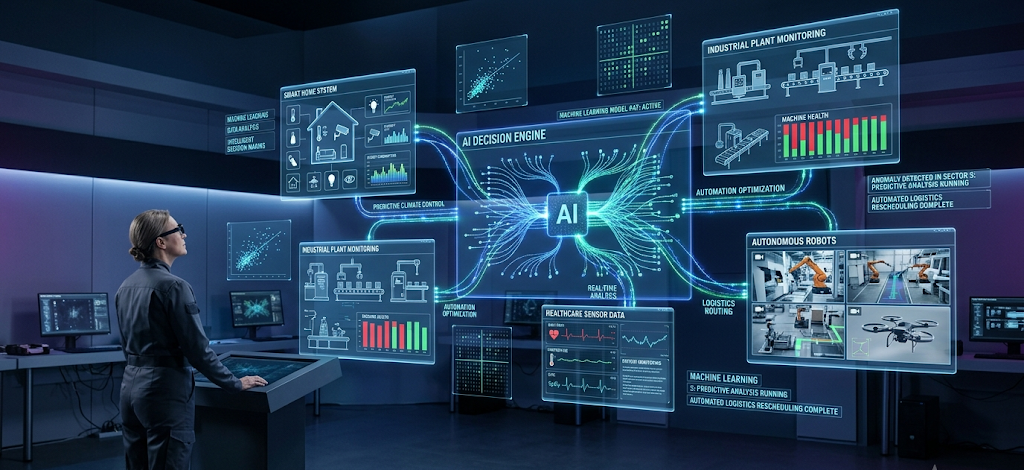
Another trend that’s poised to make an impact in the coming decade is the greater adoption of artificial intelligence and connected devices. The primary role of traditional IoT systems was collection and transmission of data, whereas AI-driven IoT systems will move beyond that, by analyzing data, identifying patterns, and creating intelligent decisions. With AI, devices can interpret the environment and react more effectively even if they are not constantly directed by people. This combination, known as Artificial Intelligence of Things (AIoT), will generate smarter environments where the machines can foresee issues, optimize the performance and enhance the user experience.
The technology of AI and IoT has already found its applications in multiple sectors, such as the healthcare sector, manufacturing, transportation, and agriculture. Smart medical devices might, for instance, gauge patient details and alert healthcare providers to potential health issues before they start. Within factories, AI-powered sensors can track the performance of equipment and identify when maintenance is required before a problem arises. In the agricultural sector, intelligent systems can process soil data, weather conditions, and crop health to assist farmers in decision-making. As AI technology evolves, IoT devices will be even more autonomous and able to act autonomously to solve problems.
2. 5G Connectivity Will Bring 5G Networks to the Internet of Things (IoT) World
One of the major factors that will impact the future growth of IoT will be the rollout of 5G networks. While previous wireless generations could offer basic connectivity, 5G is able to offer much faster speeds, lower delay, and much more devices can be connected at once. The enhancements will enable IoT systems to run more efficiently, particularly in situations that demand immediate communication.
The 5G-powered IoT solutions will be highly beneficial for the industries like transportation, healthcare, smart cities, and others. For instance, the development of connected vehicles will necessitate high-speed exchanges among the vehicles, the traffic system and infrastructure to enhance safety and minimize accidents. 5G could have potential applications in the healthcare sector, such as enabling more sophisticated remote monitoring systems and enhancing the connectivity between medical devices and healthcare providers. The 5G network will also help smart cities control traffic, energy systems, public services and security systems more efficiently. As 5G networks continue to roll out around the world, they will lay the groundwork for billions of connected devices to work flawlessly.

3. Edge Computing Will Enhance IoT Speeds and Efficiency
Another prominent trend with potent impact on the next generation IoT systems is edge computing. In the past, IoT devices gathered and transmitted data to a central cloud server for processing. Cloud computing is still significant but having to transmit huge volumes of information over long-distance connections can cause delays and add to network expenses. This is where edge computing can help, as it enables devices to respond quickly and efficiently by processing data closer to where it is generated.
As more and more IoT devices produce huge amounts of data, the significance of edge computing will keep escalating. Some applications like autonomous driving, industrial robots and smart security systems demand instant responses, which are not always possible with remote cloud servers. Edge computing minimizes latency and enhances reliability by processing data locally. It also reduces the amount of data that moves over networks to protect sensitive data. In the future, many IoT systems will integrate both cloud computing and edge computing to offer a balanced solution with both high computing power for analysis and fast decision making.
4. Virtual Models of Real-World Systems Will Be Developed Using Digital Twins
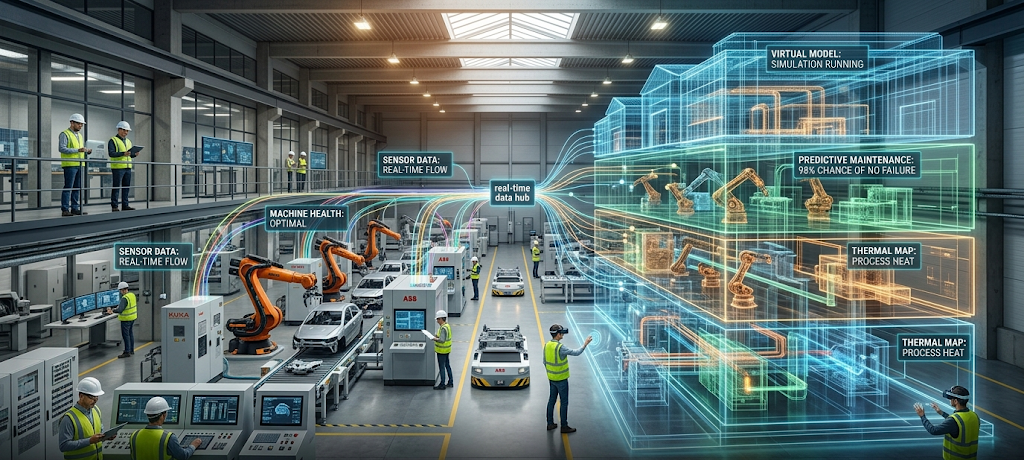
Digital twin technology is emerging as one of the most innovative trends in the Internet of Things (IoT) as it enables the creation of a digital copy of a physical object, machine, or environment. A digital twin is a virtual model that is built from the data stream of IoT sensors and captures the current state and action of a physical system. This technology enables companies to assess performance, evaluate enhancements, and forecast the future results without altering the actual systems.
Other major users of digital twin technology include manufacturing companies, where they can use it to optimize production processes and to minimize equipment failures. Engineers can study a virtual version of a machine to find out its weaknesses, and can test solutions in the virtual world before trying them in the real world. Cities may also leverage digital twins to enhance urban planning by building virtual models of the urban transport, buildings, energy system etc. With the advancement of IoT sensors, the greater the accuracy of the digital twin and the more it can be applied in various industries.
5. The Security of IoT Devices Will Also Be More of a Priority
With increasing connectivity, cybersecurity will be one of the key challenges and opportunities for the IoT industry. Security is vital when protecting personal information, business operations and critical infrastructure as all connected devices provide a way for cyber threats to enter. During the next 10 years, IoT manufacturers and organizations will focus more on security in the design phase and less on security being added on later.
In the future, enhanced encryption, AI systems for threat detection, frequent software updates, and stronger authentication will be part of IoT security solutions. AI can be used to detect abnormal behavior on devices and potentially alert to potential attack, preventing major damage. The government and technology firms are also slated to make more stringent security measures to safeguard users. Secure design will be a crucial element to the success of connected technologies as trust comes into play as an important factor in IoT adoption.
6. Connected Infrastructure Will Grow Its Presence in Smart Cities
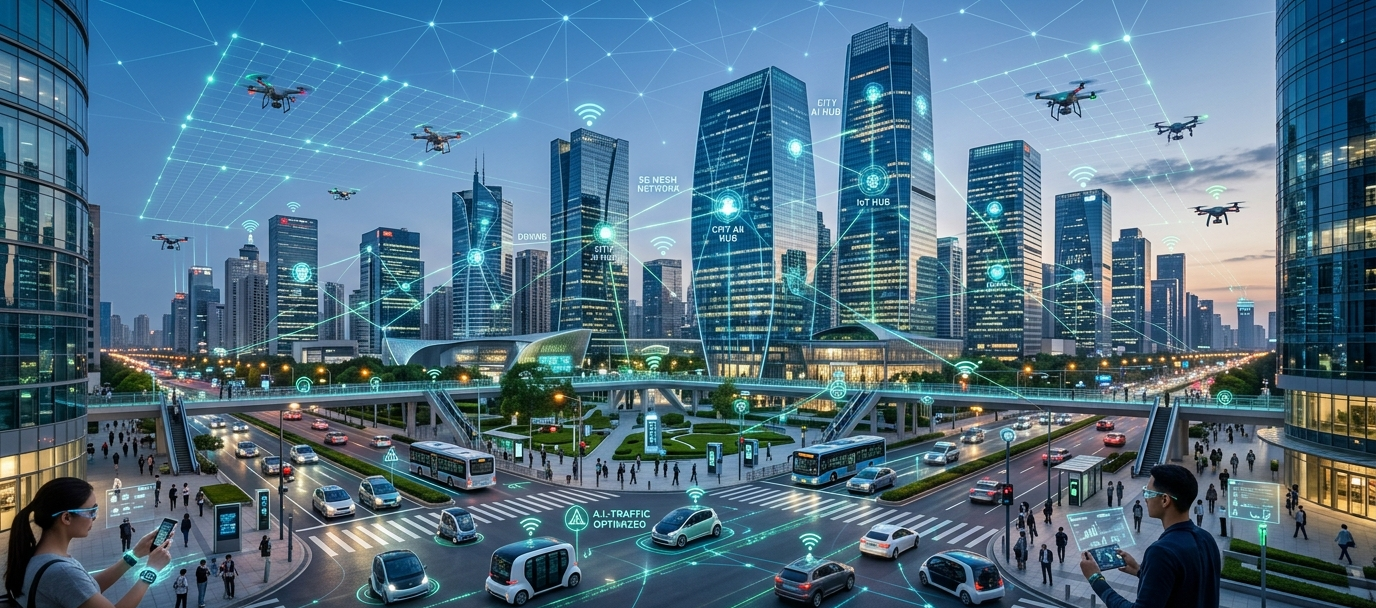
Smart cities are one of the more obvious applications of IoT that can be applicable in communities. Cities can be more efficient and sustainable by tying together the public systems, transportation, energy and environmental monitoring components. In the coming decade, more cities will continue to use IoT to enhance residents’ quality of life.
Smart traffic management can use data on the road to automatically optimize traffic light timing and alleviate congestion. Smart energy systems can track electricity consumption and optimize energy use. Climate, noise, and air quality sensors monitor conditions to help create healthier communities. Increasing urban populations will enable smart solutions to be developed for urban transportation, energy usage, and public services, thanks to IoT.
7. Healthcare IoT Will Improve Patient Care
IoT innovation will bring a lot of changes to healthcare. The Internet of Things will enable healthcare providers to gather and analyze patient data more efficiently, as they will be able to use connected medical devices, wearable technology, and remote monitoring systems. Patients will not only be able to visit hospitals periodically, but will also be able to utilize personalized healthcare solutions that come to them.
Wearables can gather crucial health data and offer insights that assist people make healthier decisions. The remote healthcare systems can help patients who need consistent monitoring who may not be able to attend medical facilities regularly. The integration of IoT with AI and enhanced connectivity allows healthcare professionals to provide more personalized, timely, and efficient services. As healthcare IoT continues to evolve, it will enhance access to healthcare and unlock new opportunities for preventive care.
8. Industrial IoT Will Revolutionize Manufacturing
Industrial IoT (IIoT) will continue to transform the way that factories and businesses operate. The Industrial Internet of Things can enhance efficiency, minimize waste, and create safer working environments for companies by linking machines, sensors, and production systems together. In the coming decade, we will have more intelligent factories with machines communicating with each other and making adjustments in real time based on the data.
Manufacturers will use IoT systems to track equipment performance, enhance supply networks and optimise production. Predictive maintenance will be more common as businesses will be able to detect problems with equipment before they lead to costly failures. Combined with robotics and AI, industrial IoT will help businesses create highly automated and flexible manufacturing environments.
9. Sustainable IoT Solutions Will Help Achieve Environmental Objectives
Future IoT technologies will play an important part in the field of sustainability. In the context of Industry 4.0, connected devices can be used to help organizations cut down on their energy usage, optimize their use of resources, and track environmental changes. With the growing worry for climate change, IoT will offer important tools in the construction of more sustainable systems.
The Internet of Things (IoT) can help achieve sustainability through smart energy meters, connected water management systems, and environmental monitoring sensors. Businesses have the opportunity to waste less and manage their resources better, and governments have the opportunity to create more effective environmental policies with data. Sustainable IoT solutions will play a vital role in achieving a balance between technology and sustainability in the years to come.
10. Autonomous IoT Systems Will Enhance Automation
The autonomous systems are the last major trend that will influence the future of IoT. With the development of AI, robotics and connectivity, many more IoT devices will soon have the ability to function on their own. Autonomous systems will process information, make decisions and perform actions with minimal human intervention.
Technology that will be enhanced by autonomous IoT includes self-driving cars, intelligent robots and automated industrial systems. These systems will be powered by cutting-edge sensors, AI algorithms, and communication networks that deliver fast and efficient operations with safety. As the technology becomes independent, IoT will shift from the vision of simply connecting devices to building smart ecosystems that will manage themselves.
Conclusion: IoT’s Future Will Be Intelligent, Connected, and Transformative
As new technologies emerge and transform the way people and organizations interact with connected systems, the next decade will see large strides in the connected world: Internet of Things. The devices will be smarter – with the help of artificial intelligence, 5G will accelerate communication, edge computing will make things faster, and digital twins will provide new opportunities for understanding the physical environment. These innovations will impact sectors such as healthcare, manufacturing, transportation, and urban development.
There will be no single IoT trend in the future, but instead a combination of trends that will make systems more powerful and intelligent. With billions of devices already connected, businesses and organizations will need to consider innovation and security, privacy and responsible technology development. The future of IoT is one in which technology plays a more significant role in everyday life, enabling individuals to address challenges, enhance productivity, and foster a more interconnected future.