Introduction
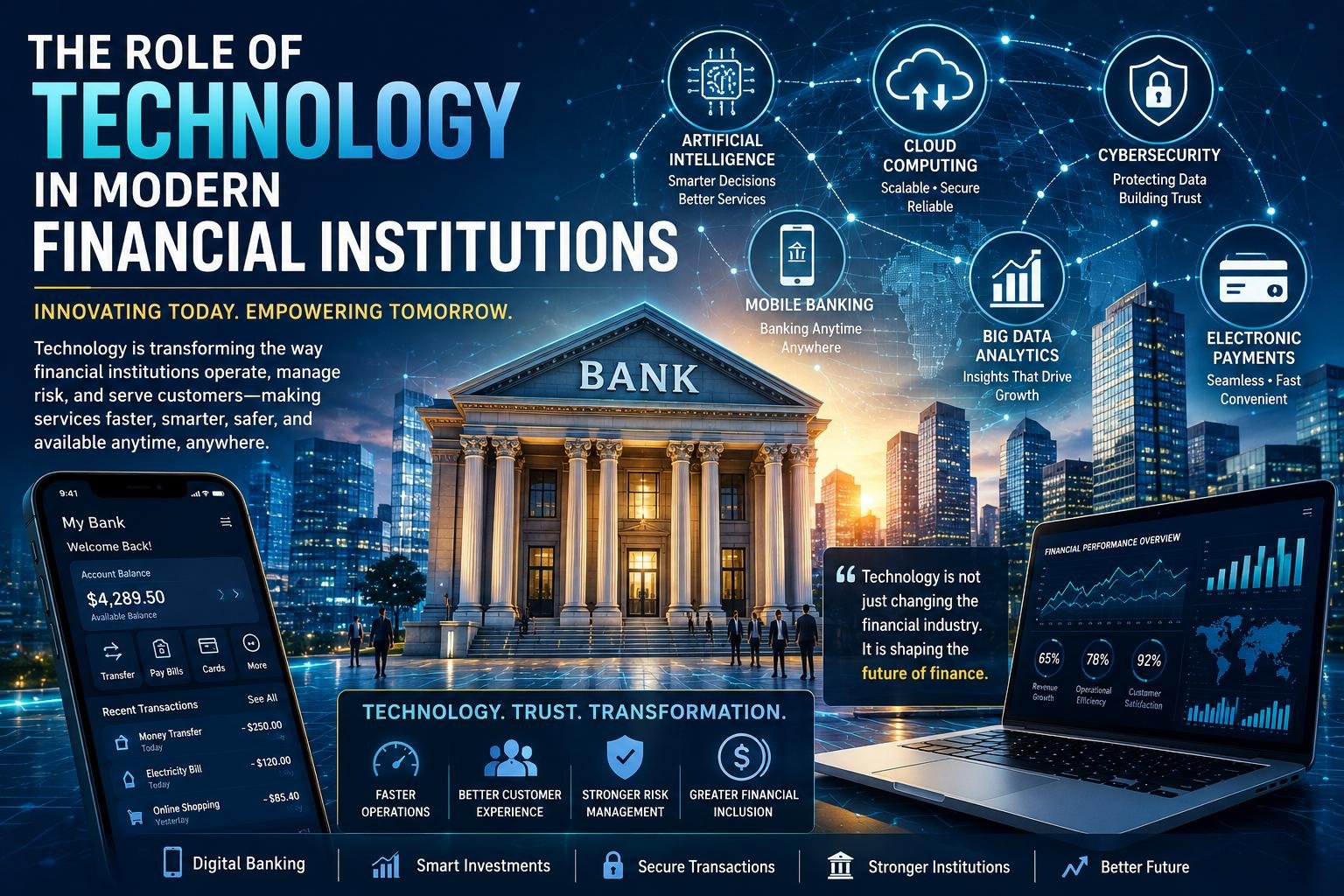
Technology has emerged as one of the biggest drivers of the contemporary financial sector. Now digital systems have become crucial to the operations of banks, insurance companies, investment firms, pension managers and other financial institutions for providing services, handling transactions, managing information, communicating with customers and controlling financial risks. Things that were previously done on paper, in person, by hand or with time-consuming processing can be increasingly done on a computer, mobile device, automated platform and integrated financial networks. The most significant change has been the advancement of electronic payment systems, which have enabled people and organizations to move money and pay for goods and services electronically instead of using cash or the traditional paper-based system entirely. These technologies have brought financial services a step closer to being faster, more accessible, and even increasingly available 24X7.
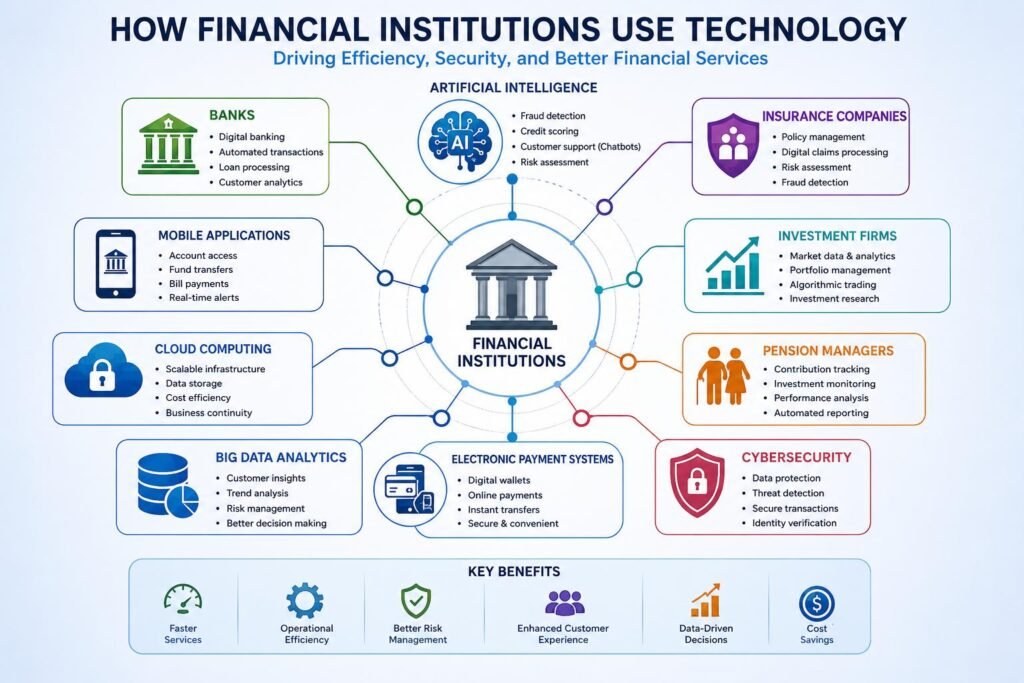
It’s not just about services that customers interact with. Within financial institutions, technology has also impacted the way they function. Automated systems are used by banks to make deposits, withdrawals, transfers, loans, and other transactions to the accounts. As an example, insurance companies take advantage of digital platforms to manage insurance policies and claim, while investment firms make use of advanced software to track the market and make deals. For instance, insurance firms utilize digital platforms to handle insurance policies and insurance claims, while investment firms use complex software to keep track of the marketplace and execute transactions. Managers of pension funds use databases and analytical software to keep records and to assess the performance of their investments. Meanwhile, financial institutions are leveraging artificial Intelligence, cloud computing, big data, cyber security and mobile interfaces to enhance their decision making processes and safeguard sensitive data. It is therefore crucial for anyone wishing to comprehend the working of the present day financial industry that they are knowledgeable about these technologies.
Digital Banking and Online Financial Services
Digital banking has revolutionized the financial institution and customer relationship. In the past, many of the things customers did in a traditional bank involved going to the branch—such as checking their accounts, moving money between accounts, paying their bills, or getting account information. The internet enables banks today to make it easy for customers to do many of these things via a website and digital portal. They can view transactions, move money, add beneficiaries, download banking statements, pay bills and, at times, apply for financial products without having to visit the bank branch. Digital banking can help banks minimize reliance on manual operations and enable services to be available outside of traditional banking hours. It also provides additional avenues for institutions to reach customers via notifications, e-mail, digital statements, and customized offers. While physical branches are useful for some services, many financial activities are now digital with the rise in digital adoption.
Mobile Applications
Mobile apps have propelled digital banking one step ahead and put financial services straight into customers’ mobile devices. Banking apps can give you details about your accounts, make transfers, pay bills, manage your cards, receive alerts about your transactions, get customer support, and so on, from just about anywhere you have an internet connection. Similarly, mobile apps can be used by insurance companies to enable their customers to view policies, file claims, upload documents, and update them. Investment platforms offer investments, transactions, and market information via apps, as well as access to investment accounts. The greatest benefit is convenience as your customers no longer have to rely on computers or brick-and-mortar offices for many of the common financial transactions they undertake. Mobile applications can also enhance communication capabilities to alert users immediately to anything that is suspicious, a payment has been made, an important account change, etc. But financial institutions need to develop these applications carefully as they could be exposing their customers to great risks if they are poorly designed with weak security, authentication and privacy controls.
Automated Transaction Processing
Another significant technology revolution that’s changing financial institutions is automation. Financial organizations have to deal with a huge amount of transactions each day, and manually taking care of every one of these transactions is time-consuming, costly, and susceptible to human mistakes. Automated transaction-processing systems can help check information, document transactions, adjust balances, and send confirmations and payments, with little human assistance. Activation activities in banks that are automated include the transfer of funds, repayment of loans, card payments, and recurring payments etc. Insurers can have policies auto-renew and bill for premiums, pension managers can have contributions automatically deducted from accounts and some account calculations automatically done. Automation boosts operational efficiency, as human resources can dedicate more time to work on complicated cases that demand professional judgment, instead of dealing with repetitive administrative tasks. It also helps to establish standardized processes, allowing institutions to keep track of activities and detect unusual transactions more easily that need to be investigated.
Artificial Intelligence
AI is playing a crucial role in boosting the potential of financial automation, enabling systems to analyze information and detect patterns. Artificial Intelligence can be utilized in various financial applications, such as fraud prevention, customer support, credit evaluation, risk assessment, document processing, and more. An AI-driven system, for instance, could sift through vast amounts of transactions and spot any transactions that aren’t in line with a customer’s typical activity, which could help a bank to identify suspicious transactions. Chatbots are able to answer frequently asked customer questions, walk users through basic processes and provide support outside of office hours. AI-driven tools can help insurance companies review claims and determine if there’s additional information that needs to be looked over. Analytical models can be applied by investment firms to assess the information in the market and assist in research. While AI is no substitute for human professionals, it can assist them to speed up processing and focus on aspects that rely on human judgment more.
Cloud Computing for Financial Services
Cloud computing has revolutionized the financial services industry’s storage, access and management of computing power. Rather than having to use physical servers in their own buildings, institutions can get access to computing power, storage, databases and software on secure networks using cloud infrastructure. This can make it simpler to expand technology assets and resources as the requirement evolves within financial organizations. When the volume of transactions expands (such as in a growing financial platform), this new capacity is needed. Cloud technology can facilitate collaboration as well, too, since authorized staff members can gain access to the appropriate systems and information from various areas. Cloud-based data analytics, CRM, software development, document management and more are available for financial institutions. However, financial organizations need to carefully manage cloud environments as financial data is very sensitive. When financial services rely on the cloud, best practices for access controls, encryption, monitoring, compliance, and managing vendors are critical.
The Use of Big Data in Financial Decision Making
There is a wealth of data generated and collected to modern financial institutions from transactions, customer interactions, applications, market activities, claims, investments, and more. The use of big data technologies enables institutions to structure and analyze the information for better decisions. Transaction analysis can provide banks with insights into customer behavior detect fraud and enhance financial products. The information that can be gathered through the policies and claims can be analyzed by insurance companies, which can help them to better understand and assess the risks involved in their business. The data collected for the policies and claims can be analyzed by insurance companies to help them understand and assess the risks they are facing in their business. The investment firm can use the market and economic data to aid research and investment portfolio making choices. Data can be utilized by pension managers to keep an eye on contributions, investment outcomes, and long-term monetary goals. Big data is not merely about the volume of the data, it has to be analyzed by institutions in a way, which can be associated with the reliable data and give the appropriate interpretation. As a result, along with technological capacity, data quality, privacy, governance and responsible use are similarly vital.
Protection of Cyber Security and Financial Protection
With a shift towards an increasingly digital financial services landscape, cybersecurity has become a non-negotiable necessity and not some add-on. Financial institutions have valuable information, such as information relating to financial accounts, payment information, personal identification information, investment records and insurance information. This information can be stolen, used for disruption, fraud or unauthorized login. Financial institutions employ several security technologies and security procedures to make their systems more secure. They can include access controls, firewalls, endpoint protection, fraud monitoring systems, security monitoring, multi factor authentication, identity verification and encryption. Also, employee training is important for Cybersecurity, as a human oversight failure can lead to vulnerabilities from phishing, weak passwords, or handling of sensitive information inappropriately. It is important to remember that cyber threats are evolving; therefore, continuous monitoring is necessary. Financial institutions need to therefore view cybersecurity as a continuous effort that requires technology, people, policies, testing and risk management.
Electronic Payment Systems
In the digital era, electronic payment technology has completely revolutionized the exchange of money between individuals, companies, governments and financial institutions. The cards, bank transfer, mobile apps, digital wallets, online payment gateways, and more are all available to customers for payment. Electronic payments also offer some advantages to businesses, as they can help to decrease reliance on cash transactions and make it simpler to receive and reconcile customer payments. Automated processing also allows for a more efficient way to record and match financial transactions to their accounts. Electronic payment systems are used in e-commerce to help businesses to reach customers from outside of their physical premises. They can also provide records of transactions which facilitate the financial monitoring and reconciliation. Convenience, however, goes hand-in-hand with security. Authentication, transaction monitoring, encryption, fraud detection, and customer awareness conditions are significant due to the fact that payment systems may be aimed by criminals. As e-commerce continues to grow, safe electronic payment systems will become a growing aspect of financial infrastructure.
Technology in Insurance Companies
Technology plays a role in the entire insurance lifecycle; from customer acquisition to underwriting to claims processing to policy management. Digital platforms enable customers to get information, request quotes, buy policies, pay premiums and manage policy details without having to go through each of these processes in brick-and-mortar offices. Customer information and support for underwriting processes can be organized automatically, supporting the underwriters’ ability to assess the relevant risk factors. Claim documents, photos, forms and other information can be digitized and routed to the proper personnel or automated systems when a claim is filed. Insurers can also use data analytics to find out trends in claims and enhance risk management. Document processing and detecting frauds could be helped by artificial intelligence, but certain claims decisions may require a professional review. Incorporating digital technology with human intelligence can enhance the efficiency of insurance company processes while simultaneously offering customers more rapid and convenient service.
The Evolving Role of Technology in Investment Firms and Pension Management
Technology is a vital part of investment firms’ operations, as finance and investments are always generating information and the analysis of investment information is always required to be done at the speed of light. Authorized market participants can trade and oversee trading on electronic trading systems, and financial databases can contain company, security, economic and market information. Analytical software can assist investment professionals in the analysis of portfolios, comparing investments, assessing risk and monitoring performance. Technology is also employed by pension managers to keep track of pension contributions, beneficiaries, investments and other information pertaining to retirement. In managing pension plans, data is especially critical, as is the reliability of the systems, and long-term financial planning is a frequent part of the work. Automated reporting tools can assist managers in monitoring investment performance and creating information for investment stakeholders. While not a predictor of investment success, technology provides professionals with information and analytical tools that would be very hard to process without it. While modeling is a crucial component of the strategy, human judgment is still necessary in the interpretation of the economic situation, investment risk, regulatory requirements, and long-term goals.
Advantages of Technology to Modern Financial Institutions.
Technology’s ubiquity offers some vital advantages within the financial sector. First, it speeds up by enabling transactions and information processing to happen much quicker than with regular manual processes. Second, it is more efficient as automated systems can perform repetitive tasks, minimizing the need for staff to perform administrative tasks. Third, technology makes it easier to accessing many financial services and products via the web and mobile apps, instead of the traditional time of visiting a physical branch. Fourth, technology can build up the risk management function, allowing institutions to sift through vast quantities of data and screen for unusual transactions. Fifth, with digital records, transactions and activities can be systematically recorded, leading to an improvement in transparency and accountability. Technology can also help lower some of the operating expenses in the long run by eliminating manual tasks that are inefficient and time consuming. The advantages are making technology a key element of most aspects of the financial industry.
Challenges Faced by Financial Technology.
While technology offers many benefits, there are also some challenges that financial institutions need to be aware of and be able to manage. One of the biggest concerns is cybersecurity threats, which could result in financial losses, disruption of services, and damage to reputation and regulatory implications. Another major problem is privacy as institutions have large amounts of personal and financial data, or information. Technology failures also can disrupt the provision of critical services, especially if interconnected digital infrastructure dependence has grown among institutions. Other issues with AI are that it can produce incorrect results, make misinformed choices, lack sufficient regulation, and lack transparency in some of its decisions. The financial sector is also subject to regulations on data protection, electronic payments, financial reporting, ID customer and more. Moreover, not all customers are technologically savvy or have access to digital technology. Thus, the challenge for institutions will be to find the right mix of innovation and security, reliability, regulatory compliance, customer support, and inclusion.
The Future of Technology in Financial Services
Financial technology’s future will most probably include further integration of AI, cloud technologies, data analysis, automation, and mobile applications and digital payment systems. Financial firms will persist in seeking to offer more efficient service at the same time minimizing the complexity in their operations and enhancing the customer experience. AI could be more pervasive in service, fraud and risk analysis, and financial research, and cloud infrastructure could enable increasingly complicated digital services. Data will continue to be a tool that is useful, but there is a need to reinforce its governance to make it accurate, secure and used responsibly. The financial services customers are likely to demand are even more convenient personalized and offered digitally as well. Meanwhile, there will be a need to tackle cybersecurity, privacy, resilience, and responsible technology use by regulators and financial organizations. The most successful institutions will therefore not only take on new technologies, but will also apply them to strategies that are carefully thought out and non-threatening to security and human intervention.
Conclusion
Today’s financial institutions are no more bound to physical offices and manual processes, but instead are digitally connected and can process information and transactions at an astounding pace. Digital banking, mobile apps, automating transactions and electronic payment systems enable banks to enhance their day-to-day operations. Technology is being leveraged by insurance firms to run policies, evaluate risk and process claims, and investment companies and pension managers to inform financial decisions and processes. Technologies that propel these services include artificial intelligence, cloud computing, big data, and cyber security. This creates a more quickly, more easily-accessed, more automated financial industry, and better equipped to deal with vast amounts of information. With technological advancements, responsibilities come with security, privacy, reliability, regulation, and responsible use. Technology is not just a tool in the finance toolbox anymore, it’s a pillar of financial institutions and how they serve their customers for those who are new to the field or just general readers.
Get more well researched information about Technology in modern financial institutions here.