Introduction
Documentation is a key component of technology, as it provides information about the functionality of software, systems, products and processes and how they should be used. But not all documentation is geared toward the same audience or purpose. A software development, engineering, system administration or technical support document may include programming concepts, system architecture, configuration information, programming examples, and terminology that would be hard for a typical software user to comprehend.
In contrast, documentation to regular users typically aims at assisting the user in completing a task, comprehending a feature, resolving an ordinary problem or utilizing a product successfully without the requirement for advanced technical knowledge. It’s vital to the distinction since the same information can serve both audiences, but in very different ways. Technical Documentation is a detailed explanation of the software, system, API, processes, and other technical topics while User Documentation is a translation of the relevant product information to people who interact with the product.

What is Technical Documentation?
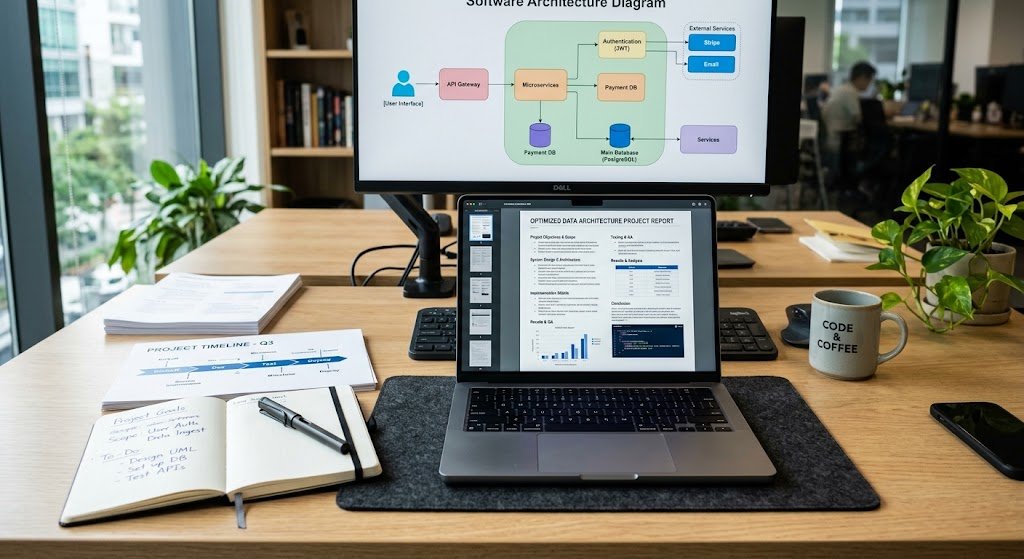
Technical documentation is a written document that provides information about a technology, process, platform, system, application or product. It is typically geared more toward developers, engineers, system administrators, IT professionals, technical support specialists, and others who require a thorough level of information when building, configuring, maintaining, troubleshooting, and integrating technology. Technical documents might contain API reference, software architecture documents, installation guides, software configuration, developer guides, system specifications, database documentation, deployment procedures, and troubleshooting reference. It is generally more detailed than it would be for a typical user as technical users need to not only know what a system does, but how it works and how the various parts of the system work together. Good technical documentation serves as a strong source of information for technical teams to make decisions, carry out complex tasks, maintain systems and develop and modify technology efficiently.

Technical documentation may address many topics depending upon the company and the product documentation. For instance, an API documentation could include information about endpoints, authentication, request parameters, response formats, error codes, rate limits, and code examples. A server deployment guide may describe requirements for a server, environment variables, security settings, backups, network settings and deployment commands. The software developers might also rely on the documentation that outlines functions, classes, libraries, dependency, database schema, and integration needs. The technical knowledge of these readers allows the writer to assume they know what each of these terms means, and that he or she can explain only the concepts he or she knows well. The aim is to make technology as clear and useful as possible to the technical professionals, not as simple as possible.
What is User Documentation?
User documentation is designed for individuals that use a software application, digital service, device, or another technology product, but not necessarily have technical expertise. It is designed to educate the user about a product, and enable them to perform some tasks with success. These can be user manuals, help-center articles, getting started guides, frequently asked questions, feature guides, set up directions, step-by-step troubleshooting articles, and so on. What users can do with the product and how users can get their desired results from it are normally the topics that user documentation focuses on, instead of explaining the internal architecture of the product. An end-user reading a user guide might wish to know how to register an account, change a password, upload a file, set up a basic setting, generate a report or fix a problem that they typically have. The documentation should then clearly highlight and describe the necessary actions, even if the reader does not have a lot of technical expertise.

Accessibility is the most important attribute of user documentation. A good user guide never takes the reader for granted as a programmer, an operating system expert, a database or networking expert, or a software architect. Rather, it describes actions using familiar language and offers concrete instructions which users can follow step-by-step. Using screenshots, diagrams, numbered steps, warnings, tips and examples make information easier to comprehend. For example, a user guide could tell a user what to edit in a configuration file and what to do with it, without requiring the user to restart a service afterwards. This is not to say that there is no technical accuracy in user documentation. Instead, the information provided is pitched to the level of the audience and the task in hand.
Differences Between Technical Documentation and User Documentation
Both technical and user documentation have some commonalities but also some differences.

The Target Audience is Different
One of the key distinctions between technical and user documentation is the intended audience for each. The purpose of technical writing is to provide specific information to individuals who are technically knowledgeable in a field and need to complete specific tasks. Users can rely on the documentation when implementing the API, the engineers can use it to design the system and the administrators when configuring the servers or troubleshooting issues with the infrastructure. These readers may possess a sufficient amount of background information to grasp complex terms, without reading them in detail. However, user documentation is typically written for your customers, employees, students, consumers or others who will interact with the finished product. They may have a wide range of technical experience, making the documentation accessible to a wider audience. To determine who the reader is, before you write a document, is therefore important, because a document that is technically correct may fail if it is more complex than the people expected to use it.
Language and Terminology
Another big difference is the language. The specific terms used in technical documentation should be okay, since readers are assumed to know the terminology in a specific industry. A developer document could be about authentication tokens, REST endpoints, JSON payloads, database queries, SDKs, environment variables, or even asynchronous operations. Very technical words can be used in these terms to communicate complex ideas efficiently when the audience is technically trained. In general, user documentation is free of unnecessary jargon since unfamiliar terms may make simple things seem difficult. Where technical terms cannot be avoided, they should be so defined the first time they are used. Instead of instructing an ordinary user to make a change to a DNS configuration, a user guide could clarify the existing setting in terms of user-friendly language, and tell the user exactly what to do. The goal is not to eliminate all technical jargon, but to only use technical jargon as needed for a reader so that he or she can understand and do what is required.
Difference in Technical Depth
Typically, technical documentation will provide more detail of how a system works, and user documentation will provide more emphasis on what the user needs to do. A developer might need to understand how an application interacts with another service, what parameters an API will take into account, how the authentication process works, and what mistakes might happen throughout the integration process. Typically, an ordinary user has no need to be concerned with how those operations are implemented.
All they need is instructions on how to enable the integration in the application’s settings. This difference in depth makes it possible to not overwhelm readers with documentation that doesn’t help them meet their goals. So, technical writers need to decide on the details to include and not think that more information necessarily equates to better documentation. Helpful documentation gives sufficient information to answer the client’s issue without requiring the reader to work harder than is necessary to understand the information.
Difference in Structure
The organization of a document should also align to its audience and purpose. Technical documentation has sections like system requirements, architecture, installation, configuration, authentication, API reference, integration, deployment, troubleshooting, and maintenance. These sections enable the technical reader to easily find particular information. User documentation typically is structured by tasks and starts with the Getting Started section and then covers subsequent common tasks, features, troubleshooting and often asked questions.
A user doesn’t necessarily want to read through an entire product manual if they want to reset their password. Therefore, headings must be explicit statements of the task or subject to be addressed. While both types of documentation have the advantage of being well-organized, the organization needs to reflect that of the audience to whom it is being presented and how they look for and process information.
Difference in Examples
Examples can be helpful in both types of documentation, but make a big difference in their usefulness. This can be source code, command line instructions, API requests, database queries, configuration files, system diagrams, or sample responses. Examples enable technical specialists to visualize how a system should be put into practice or configured. User documentation will more likely be a mixture of screenshots, simple scenarios, illustrations, and step-by-step examples.
A developer guide could explain how to send an authenticated API request in a programming language, for instance, while a user guide could explain how to enable the same feature in the application’s graphical interface. The best example is, therefore, not always the most detailed example. It’s the example that gives the intended reader the idea and the means to use the information without having to acquire any unnecessary knowledge.
Difference in Objectives
The two types of documentation have similar aims but not the same. Typically, technical documentation assists technical users with the construction, incorporation, configuration, upkeep, troubleshooting, and understanding of technology. We can judge its success by the ability of the developers to get the API right, by the ability of the administrators to deploy a service, or by the ability of the engineers to diagnose a system problem.
The purpose of user documentation is more of a task-oriented approach. It should enable users to use a product, learn its capabilities, perform typical tasks and troubleshoot simple issues autonomously. In all phases of the writing process, there is a distinction in the vocabulary, detail, examples, headings, and organization. The first place to start in a document is to know what the reader must be able to do, for this dictates the information that is in the document and what can be left out.
Adapting the Same Information for Different Groups
One of the problems that technologists often face is to have to describe the same product to both technical audiences and normal people. Removing technical accuracy is not the solution, rather the presentation of the information. Think of a new feature in the software that would necessitate the user to link to another account. The technical document may include OAuth authorization, access tokens, redirect urls, scopes, token expiration, and API requests.
That information might be needed for the developer to implement the integration, but not be necessary for a customer just looking to connect an account. Alternatively, the user facing guide could explain to the user to open the integration settings, select the external service, log in, and read the permissions being requested and click “Connect. The underlying technology is the same, but the explanation is tailored towards the objective and the knowledge level of the reader.
The Technical Teams can Adapt the User Information
The other scenario is when there is a technical expert that requires additional information than the normal user does. A user-guide could include a necessary internet connection requirement and ask users to restart the application if a connection error occurs. A technical troubleshooting document could and should be much more detailed and include information on required ports, DNS resolution, authentication services, server dependencies, log locations, error codes, network requirements and diagnostic commands.
The technical version should present the evidence of the problem and also details of the system at hand that are needed to identify the root cause. Simply expanding the user guide with more words would not necessarily make it useful to technical professionals. The document should rather include the specific technical information that is required to investigate, reproduce, diagnose and solve the issue.
Selecting the Appropriate Type of Documentation
Technical documentation can be used when the reader requires detailed information on how, where and in what ways technology is implemented, configured, integrated, maintained and/or operated internally. API documentation can be needed by development teams when they integrate a service, as well as deploy and configure software packages into the organizational infrastructure. Technical documentation is also beneficial for the internal engineering process as it helps to retain knowledge of a system that can only reside in a person’s mind.
Excellent technical documentation can eliminate the need to ask questions repeatedly, make it easier to get started, help in troubleshooting, and keep complicated systems up and running. It is important that technical documentation be seen not as an add-on product at the end of the development process, but as a piece of technology.
If User Documentation is Appropriate
User documentation is more suitable, when the main purpose is to assist people in using a completed product or service. When customers have to learn how to sign up, log in, modify, complete, or fix a common issue, they typically want step-by-step directions and not a description of the software’s internal processes. Products with lots of features, or with a wide range of users, require user documentation especially, since they can help avoid frustrations and help limit simple support queries.
It can also help to enhance the overall user experience by providing users with the ability to find answers on their own. A quality user guide should make readers feel like they can do things, not like they have to become technology gurus before they can use the product.
Best Practices: Writing Both Types of Documentation
Find the Reader First, then Write
The first step to writing good documentation is to determine who is going to read it. In writing, the writer should take into account the technical background, objective, typical troubles, surroundings and degree of familiarity of the reader with the product. A document geared towards the end user may have less technical detail than one geared towards the more experienced developer.
But even technical people appreciate good structuring and clear explanation. Another common documentation issue is writing one document to suit all the members of the audience. If the information requirements are significantly different, it may be better to have two distinct technical and user documentation. Each document can then include exactly the amount of detail required without having to scour the document for irrelevant information.
Be Sure to Use Clear Headings and a Logical Organization
Clear headings provide multiple ways for a reader to quickly navigate a document, particularly when looking for an answer, not reading from start to finish. Technical documentation should structure the complex information in the following logical sections: installation, configuration, architecture, integration, reference material, and troubleshooting. Information should be arranged around tasks and typical enquiries that a user may have such as how to get started, how to manage an account, how to use features, how to solve problems and how to change settings.
Use headings that relate directly to the content that follows, but not the “title”, which should not be too general or imaginative. When used in the right context, lists, tables, diagrams, numbered instructions, and callout sections can enhance readability. Good structure decreases the time readers spend searching for information and improves the chances that they will be able to use the information they retrieve.
Ensure That Information is Accurate and Up-to-Date
Accuracy is critical whether it’s a website or a written report. Obsolete instructions may lead to a misconfiguration of the systems by the technical team and make it difficult for users to access buttons, menus, and features that are no longer listed in the instructions. Documentation should thus be examined when there is any significant change in the software, hardware, APIs, interfaces, security procedures or workflows.
Version numbers, dependencies, commands, configuration options, and API behavior are important elements to be paid special attention, especially by the technical team. Current screenshots, interface designs, feature names and procedures should also be included in user documentation. Having the documentation as a part of the product development and maintenance process has the advantage of ensuring that readers can trust the information, instead of taking the documentation as an unreliable historical reference.

The Need for Both Types of Documentation in Organizations
They have different information needs and often, organizations developing and managing technology require both technical and user documentation. Advanced information is required by developers and IT teams to build, deploy, configure, maintain and troubleshoot systems. Users and staff of the systems must be provided with practical instructions that enable them to perform work without having to understand the technology. Having only technical documentation can lead to confusion for regular users and having only simplified user documentation can lead to data gaps for technical users when maintaining or extending the system. It is therefore important to have a good documentation strategy that acknowledges that several complementary documents may be needed for one product. If each document has a different purpose, separating audiences does not lead to unnecessary duplication, but rather provides the information in the most helpful format for each audience.
Conclusion
Technical documentation and user documentation are both important to making technology understandable and usable, but they serve different purposes and audiences. Technical documentation offers depth, terminology, implementation details, configuration information, and specialized examples to the developers, engineers, administrators, and other technical professionals. User documentation emphasizes real-world activities, step-by-step directions, plain language and simple explanations for common users to use a product effectively.
The major difference is therefore not so much the amount of information in each document, but its selection and presentation to the needs of the reader. Technology professionals must know who they are writing for before they write, select an acceptable level of technical detail, devise an orderly structure for the information, include appropriate examples, and maintain accurate documents as things change. If technical and user documentation are created together as complementary documents, organizations can help those who create and maintain technology, and those who rely on it daily.