Internet search engines are a way of life. Individuals use Google and other search engines to look for information, products, businesses, services, and answers to questions. However, many beginners still do not know why some websites are displayed at the top of the search results while others are not.
This is where Search Engine Optimization (SEO) becomes useful. SEO is the art of optimizing a website to make it accessible to search engines. With good SEO, websites can become more prominent in search results, leading to higher traffic, engagement, and business growth. Bloggers, business owners, students, marketers, and content creators should consider its importance, as online visibility has become integral to most online activities.
Many people believe that SEO is all about stuffing articles with keywords. That’s no longer the way modern search engine optimization operates. Search engines have become more intelligent, placing greater emphasis on valuable content, user experience, relevance, and trustworthiness. Sites that offer helpful information and meet users’ requirements are more likely to rank highly.
In this guide, you can learn about the basics of SEO without the jargon, including what it is, how search engines work, the importance of keywords, backlinks, user intent, and introductory SEO techniques.
What Is SEO and Why Is It Important?
SEO stands for Search Engine Optimization. It refers to the techniques employed to make a website more visible on a search engine’s results page, otherwise known as the SERP. Google scans billions of pages when users enter a search query to find the most useful and relevant results. SEO’s ultimate goal is to help your website become one of those helpful results.
If you type in “best laptops for students,” Google attempts to display pages that are detailed, relevant, trustworthy, and understandable. Websites that conform to these standards have a better chance of achieving favorable search engine rankings.
SEO is important because the majority of users do not click on anything beyond the first page. Even if a website has good content, it may struggle to perform well without effective SEO. In addition, good SEO can enhance the user experience by optimizing website speed, ensuring mobile responsiveness, and improving content structure.
How Search Engines Work
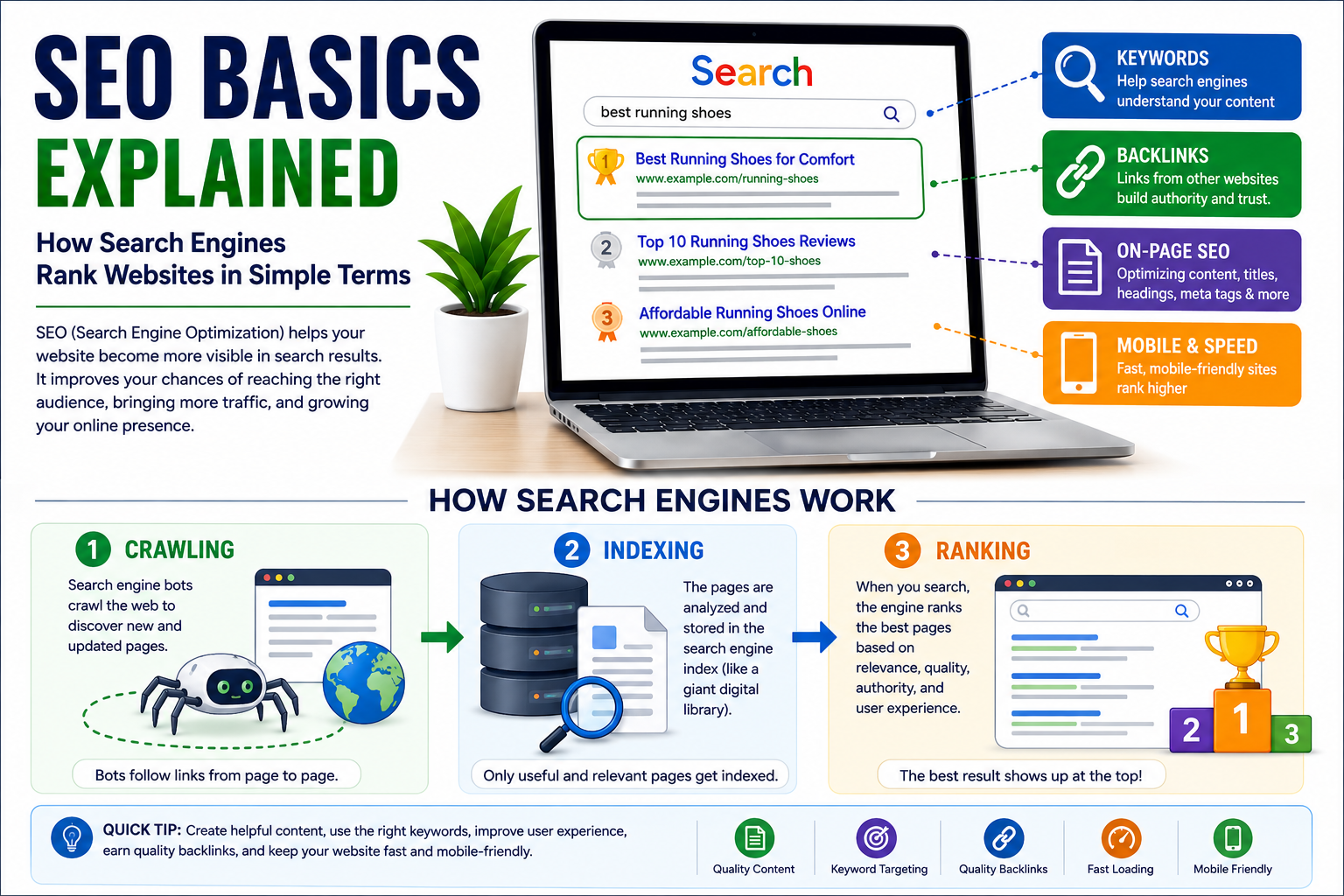
It is essential to understand how search engines work behind the scenes in order to grasp SEO properly. The typical search engine operation consists of three key processes: crawling, indexing, and ranking.
Crawling
Crawling is the discovery process. Crawlers, or spiders, are automated programs used by search engines to explore websites throughout the web. These bots crawl from page to page by following links. When a new page is published, crawlers attempt to discover it through internal links, backlinks, or the website sitemap. If a site contains broken links or poor navigation, search engines may struggle to find important pages.
Indexing
Once a web page is crawled, the search engine analyzes it and stores it in a database called an index. The index is like a massive online library containing billions of web pages. Search engines analyze the page’s content, structure, links, and quality before deciding whether it should appear in search results. If a webpage contains duplicate or low-quality content, it may not be indexed.
Ranking
Ranking is the stage users notice most. When someone enters a search query, the search engine compares indexed pages and determines which ones best match the query.
There are numerous factors involved in search engine rankings, including:
- Content relevance
- Website authority
- User experience
- Mobile friendliness
- Page speed
- Backlinks
- Search intent alignment
Pages that best meet the needs of users tend to rank higher.
Identifying and Optimizing Keywords in SEO
Keywords are words or phrases that users enter into search engines. They provide search engines with information about the content of a webpage.
Examples include:
- “How to write a CV”
- “SEO basics explained”
Keyword research consists of finding the words people are searching for and incorporating them into your content. However, unlike in the past, keyword repetition is no longer the key to modern SEO. Several years ago, websites ranked by stuffing articles with keywords in an artificial way. Today, search engines discourage this practice because it creates poor user experiences. Instead, search engines focus on context, readability, and relevance.
There are several areas where it is important to use keywords effectively:
- Page titles
- Headings
- Meta descriptions
- URLs
- Introductory paragraphs
- Image alt texts
Keywords should always fit naturally into the content.
Understanding Search Intent
Search intent is a user’s reason for performing a search. Search engines attempt to understand the user’s real intent and display results that best match it. There are several types of search intent.
Informational Intent
Users are looking for information or answers.
Examples include:
- “What is SEO?”
- “How Do Search Engines Work?”
Navigational Intent
Users want to visit a specific website.
Examples include:
- “Facebook login”
- “YouTube homepage”
Transactional Intent
Users want to purchase something or take an action.
Examples include:
- “Buy laptop online”
- “Affordable web hosting”
Content that matches search intent will typically outperform content that does not. Search engines prioritize user satisfaction, and content aligned with search intent is more likely to achieve that goal.
What Is On-Page SEO?
On-page SEO refers to the optimizations made directly within a webpage to improve its visibility and user experience.
Title Tags
The title tag is the headline displayed in search results. It should accurately reflect the page content and contain the primary keyword.
Meta Descriptions
Meta descriptions are short summaries of a page’s content displayed in search results. Although they do not directly improve rankings, compelling descriptions can improve click-through rates.
Heading Structure
H1, H2, and H3 headings organize content and make it easier for readers and search engines to understand.
Internal Linking
Internal links connect one page of a website to another. They help users find related content and guide search engines to additional pages on the site.
Content Quality
Content remains one of the most important ranking factors. High-quality content should:
- Clearly answer user questions
- Be easy to understand
- Include accurate information
- Provide depth and context
- Avoid unnecessary filler
Search engines increasingly favor content that is helpful and trustworthy.
Why Backlinks Matter
Backlinks are links from other websites pointing to your site. They act as signals of trust and authority. If reputable websites link to your content, search engines are more likely to view your page as valuable. Pages with high-quality backlinks generally have a better chance of ranking well. However, quality matters more than quantity. One backlink from an authoritative website can be more valuable than numerous links from low-quality or spammy sites.
Websites typically earn backlinks through:
- Helpful guides
- Original research
- Tutorials
- Industry insights
- Useful resources
Spammy backlink practices can result in search engine penalties.
Why User Experience Affects SEO
User experience is a critical ranking factor because search engines are designed to satisfy users.
Mobile Friendliness
The vast majority of internet users browse on smartphones. If a website does not function properly on mobile devices, its rankings may be affected.
Page Speed
Users generally dislike slow websites. Faster pages often perform better in search results.
Readability
Content should be easy to scan and understand. Clear headings and well-structured paragraphs improve readability.
Navigation
Simple menus and organized site structures help visitors and search engines navigate websites more effectively. Search engines also track engagement metrics such as bounce rate, click-through rate, and time on page to measure content value.
What Is Technical SEO?
Technical SEO involves behind-the-scenes elements that help search engines crawl and index websites correctly.
Key technical SEO factors include:
- XML sitemaps
- HTTPS security
- Mobile optimization
- Structured data
- Website architecture
- Robots.txt files
Even excellent content may fail to rank well if technical issues prevent search engines from properly accessing the website.
Common SEO Mistakes Beginners Make
Many beginners unknowingly damage their SEO by following outdated advice. Common mistakes include:
Keyword Stuffing
Overusing keywords can make content difficult to read and may trigger spam signals.
Thin Content
Very short or low-value pages rarely rank well because they fail to satisfy user intent.
Ignoring Mobile Users
A non-responsive website can result in lost opportunities because mobile usability is essential.
Duplicate Content
Copying content from other websites can create indexing problems and hurt rankings.
Neglecting Updates
SEO is not a one-time task. Older articles should be updated regularly to maintain accuracy and competitiveness.
How Long Does SEO Take?
SEO is a long-term strategy rather than a quick solution. Search engines need time to crawl, index, and evaluate your website.
Results vary depending on:
- Competition level
- Content quality
- Website authority
- Backlinks
- Technical performance
Some pages may rank within a few weeks, while competitive industries may require several months. Consistency is one of the most important elements of successful SEO.
Final Thoughts
SEO may seem complicated at first, but its ultimate purpose is simple: helping users find useful and relevant information as quickly as possible. Search engines favor websites that create helpful content, provide positive user experiences, and clearly demonstrate relevance. Understanding how search engines crawl, index, and rank pages gives beginners a strong foundation for improving online visibility.
The first steps in SEO should focus on:
- Helpful content
- Search intent
- Natural keyword usage
- Good user experience
- Quality backlinks
- Organized website structure
SEO is not about manipulating search engines. It is about making content easier for both people and search engines to understand. As search engines continue to evolve, websites that are useful, clear, and trustworthy will continue to perform best in search results.