Across Southeast Asia’s digital commerce ecosystem, a recurring pattern has emerged among brands that achieve consistent growth online. Analysis of campaign structures from mid-market and enterprise companies reveals that top-performing brands rarely rely on a single channel. Instead, they build layered strategies that connect marketplace advertising, search-based product discovery, and visual brand execution into a unified system. Examining these case patterns offers practical insight into what separates high-growth brands from those that plateau.
Pattern 1: Marketplace Advertising as the First-Touch Revenue Engine
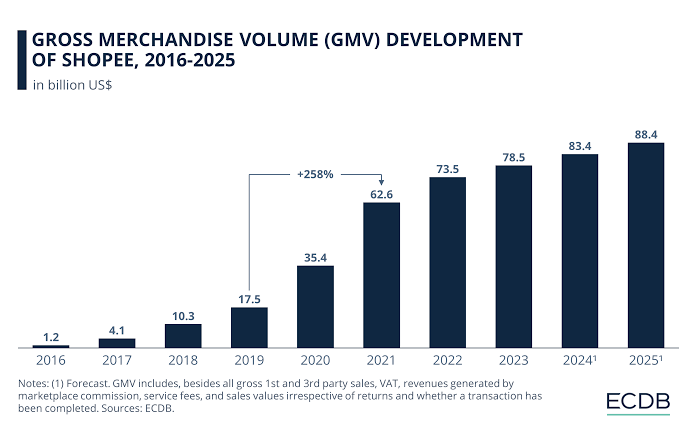
One of the most consistent patterns observed across Thai and Southeast Asian retail brands is the early adoption of shopee ads as a primary acquisition channel. Brands that invested in Shopee’s internal advertising ecosystem — including sponsored product placements and search ads within the platform — demonstrated a notably shorter path from discovery to purchase compared to brands relying solely on organic listing visibility.
The reason is structural. Shopee users enter the platform with purchase intent already formed. Unlike social media advertising, where brands must interrupt a browsing session, marketplace ads reach consumers at the point of active product search. Brands that structured their campaigns with keyword-targeted sponsored listings and homepage banners consistently captured category share at a lower cost-per-acquisition than equivalent Google or Meta campaigns targeting cold audiences.
This pattern held across product categories including beauty, electronics, household goods, and apparel — suggesting that the channel’s effectiveness is not niche-specific but reflects a fundamental behavioral advantage in intent-based marketplace environments.
Pattern 2: Search Shopping as a Mid-Funnel Bridge
A second pattern identified in successful multi-channel strategies is the use of google online shopping as a mid-funnel bridge between brand awareness and purchase conversion. Brands that activated Google Shopping campaigns alongside their marketplace presence captured consumers who were comparing options across platforms — a segment that marketplace-only strategies consistently failed to reach.
Google Shopping’s visual product listing format allowed these brands to present pricing, product imagery, and merchant identity simultaneously — reducing the cognitive load on comparison shoppers. Brands that maintained consistent product imagery, pricing alignment, and title optimization across both Google Shopping and their Shopee listings reported higher overall conversion rates than brands managing each channel in isolation.
The pattern suggests that channel integration, rather than channel-specific optimization alone, drives compounding returns. Consumers encountered on Google Shopping who had already seen the brand on Shopee converted at measurably higher rates, pointing to the reinforcement effect of multi-touchpoint exposure.
Pattern 3: Visual Consistency as a Conversion Multiplier
A third pattern — less frequently discussed but consistently present in high-performing brand cases — is the role of visual identity in scaling paid media efficiency. Brands that worked with a professional graphic design agency bangkok to develop cohesive visual systems across ad creatives, product imagery, and landing pages demonstrated significantly better return on ad spend compared to brands using inconsistent or template-generated visuals.
This pattern manifested in several specific ways. Brands with professionally designed banner ads reported higher click-through rates on Shopee’s homepage placement units. Brands with visually consistent Google Shopping product images showed lower bounce rates on product landing pages. And brands with unified visual identity across channels reported improved brand recall in post-campaign consumer surveys.
The underlying mechanism appears to be trust. Visual consistency signals legitimacy and stability to consumers, particularly in markets where counterfeit goods and low-quality sellers are a known risk. A coherent visual system communicates that a brand is established and credible — reducing hesitation at critical conversion moments.
The Agency Coordination Factor: Where Patterns Converge
Across all three patterns, a common structural element appears in the most successful cases: centralized campaign coordination through a single agency or strategic partner. Brands that managed Shopee advertising, Google Shopping campaigns, and creative production through separate vendors frequently encountered misalignment in messaging, timing, and visual consistency. Brands that consolidated these functions demonstrated faster iteration cycles and more coherent consumer experiences.
Relevant Audience, a Bangkok-based digital marketing agency, operates in this integrated model — coordinating paid media, marketplace advertising, and creative services for clients across multiple sectors. The agency model reflects a broader industry trend in which brands recognize that channel-specific execution without strategic alignment yields diminishing returns over time.
This consolidation pattern is particularly observable among brands entering competitive categories. When product differentiation is limited and pricing parity is high, the quality of strategic coordination — not individual channel tactics — determines which brands gain category authority and which stagnate.
Key Observations for Brand Strategists
Several actionable observations emerge from analyzing these case patterns:
First, the sequence of channel activation matters. Brands that established strong marketplace presence before scaling Google Shopping campaigns reported more efficient budget allocation, as marketplace data informed keyword prioritization and bidding strategy on Google.
Second, creative investment is not optional at scale. As brands increase their media budgets, the marginal return on additional spend diminishes without corresponding improvements in creative quality. The brands that broke through performance plateaus almost universally did so by improving their visual and messaging execution, not by increasing budgets alone.
Third, attribution models must account for cross-channel reinforcement. Brands using last-click attribution consistently undervalued their upper-funnel and mid-funnel channels, leading to budget decisions that optimized short-term conversion at the expense of long-term brand equity.
Conclusion
The patterns analyzed across successful Southeast Asian brand cases converge on a consistent strategic framework: marketplace advertising drives intent-based conversion, search shopping bridges comparison behavior, and professional visual design amplifies the efficiency of both. Brands that recognize these patterns as interconnected — rather than as isolated tactical decisions — are better positioned to compound their digital marketing returns over time.
For brands looking to apply this integrated approach, working with an agency partner that coordinates across these channels provides a structural advantage that single-channel specialists cannot replicate.
Explore integrated digital marketing solutions at https://www.relevantaudience.com/