Introduction
Digital systems are increasingly interconnected and relied upon by the world. Internet platforms enable businesses to reach their target customers, accept payments, manage employees, store information, and provide services to global audiences. Governments use digital infrastructure for public administration, transportation, healthcare, national services and communication and people use their smartphones, social media, online banking, cloud applications and connected devices in their daily life. This connectivity has brought with it vast possibilities for economic activity, innovation and global communication, along with new dangers to security.
If there’s a weakness in one system, it may impact other systems that are linked to it, and cybercriminals can steal information, cause disruption, commit fraud, or inflict harm on critical services. Cybersecurity has thus evolved from a largely information technology problem to a significant economic and social challenge necessitating the collaboration of organizations, governments, technology providers and end-users.
What Is Cybersecurity?
Cybersecurity is the technology, policies, processes, and practices that are implemented to defend computers and networks, applications and devices, and digital information from unauthorized entry, misuse, disruption, damage, and theft. Its main objectives are often linked to confidentiality, integrity and availability of information. Confidentiality guarantees that sensitive information is made available only to those who should have access to it, integrity helps to prevent sensitive information from being improperly altered, and availability ensures that legitimate users can be able to access systems and data when they require access to them.
The modern concept of cyber security encompasses a lot more than just setting up an anti-virus program on a computer. This covers network security, identity management, encryption, access controls, security monitoring, employee awareness, software security, incident response, backups, and digital risk management policies. In recent years, more and more organisations have turned to an online business environment and linked their systems together across national borders, making cybersecurity a must for building trust and continuity in the global digital economy.
Importance of Cybersecurity in the Global Digital Economy
Trust is essential to the digital economy. When customers are shopping online, engaging in banking transactions, interacting with businesses, or accessing digital services, they should have confidence that their personal and financial information will be treated responsibly. Businesses must also be sure that their suppliers, partners, staff and technology vendors are secure with shared information and that systems remain reliable. Trust is lost if a cyber attack occurs and can cause financial loss, operational disruption, legal issues and reputational damage.
A major security event can be especially disruptive to a small business as they may have fewer resources to fall back on in the event of an incident. Big businesses can face serious consequences, too, as their networks can hold vast quantities of sensitive data and can be linked to thousands of employees, customers, and suppliers. Cybersecurity is not only a technical investment, but a key element in safeguarding the economic activity, business continuity, consumer trust, and the systems that enable digital commerce in the modern world to operate.
Common Cyber Threats in a Connected World
In a connected world, these are the common cyber threats they need to be aware of.

Phishing and Social Engineering
Phishing is one of the most prevalent forms of cyber security attack as it is not based solely on technical exploits but is designed to exploit human nature. Typical phishing scams involve deceiving a person into disclosing personal data, opening an attachment, clicking on a link or website that will contain malicious software, or approving an action. The messages can seem to be from banks, employers, delivery services, social sites or other organizations that are familiar to the recipient. Social engineering is more complex than the engineering of a system, and involves interaction with individuals in order to make them do things that weaken security.
Attackers can cause urgency, fear, curiosity or trust to manipulate their victims. Any business, regardless of its technical security measures, can be compromised when a staff member is fooled. The presence of security awareness training, careful verification of unexpected requests, multi-factor authentication and robust organisational procedures can help to lower the risk of being a successful social engineering target.
Malware and Ransomware
Malware are programs that are harmful and disrupt systems, steal data, gain access without permission or do other types of harmful actions. There are various types of malware that impact computers, mobile gadgets, servers and networks. Ransomware can be a very serious type of malware that can deny organizations access to critical systems or data and may force those organizations to pay a ransom to get access to their data or systems back.
When the services that depend on the compromised systems are essential, the consequences can go outside of the affected organization. To minimise exposure, businesses can ensure software is kept up to date, restrict unnecessary access to software, utilise robust security software, monitor networks, educate employees and have secure backups and copies in place. Backups are particularly beneficial because they allow for an additional source of information recovery in the event of an incident, as opposed to relying completely on the attacker.
Data Breaches and Identity Theft
Data breaches are occasions in which unauthorized people enter into protected information. This information can include a name, contact details, account information, business records, authentication credentials or any other sensitive data. After criminals have access to stolen information, it could be exploited in fraud, ID theft, re-attacks or for access to other accounts. It is often worse when users use the same passwords for different services then if they lose one account, attackers can use it to gain access to other accounts.
To minimize such risks, organizations can ensure that only relevant information is collected, sensitive data is encrypted, access is controlled with robust security measures, suspicious activity is monitored and relevant information is securely destroyed when it is no longer needed. People can also boost their security by using unique passwords, setting up multiple-factor authentication and keeping in mind unfamiliar requests for personal information.
International Cybersecurity Challenges
Cybercrime knows no boundaries. An attacker could be physically in one country, have facilities in another, and attack a company that is registered in another country, stealing from customers all over the world. This results in investigation and enforcement being much more challenging than traditional crimes that take place within a single jurisdiction. Variations in national laws and regulations, investigative methods and definitions of cybercrime may pose further hurdles for cooperation between countries.

The international cybersecurity challenges outlined here illustrate the need for some way to share information and coordinate response among countries, businesses, law-enforcement agencies and cyber security professionals. International cooperation can facilitate the mapping, investigation, enhancement of security norms, and coordination of the efforts of various jurisdictions in responding to cybercrime incidents. If there is no cooperation, gaps between national systems could be exploited by the attackers and make it tougher for the authorities to hold the responsible persons to account.
Differences in Laws and Regulations
There are varied approaches to privacy, cybersecurity, evidence and data storage, and online crime in countries. Such variations can cause problems for multinational businesses trying to develop security programs that meet all the legal requirements. It may be necessary to be familiar with different laws that apply to the collection, storage, transfer, and safeguarding of customer information for a company that operates in multiple countries. Governments must also have a means of cooperation when they cross a nation’s border as a result of a cyber incident.
Thus, communication among policy makers, regulators, law-enforcement and private organizations is an important component of effective international cybersecurity, as well as technical solutions. Establishing harmonised standards and procedures to facilitate the exchange of relevant information can be beneficial in terms of limiting uncertainties and safeguarding legitimate privacy and legal rights. International cooperation becomes even more significant when businesses rely on cross-border cloud services, supply chains and software applications across jurisdictions.
Safeguarding Digital Data in the Digital Economy
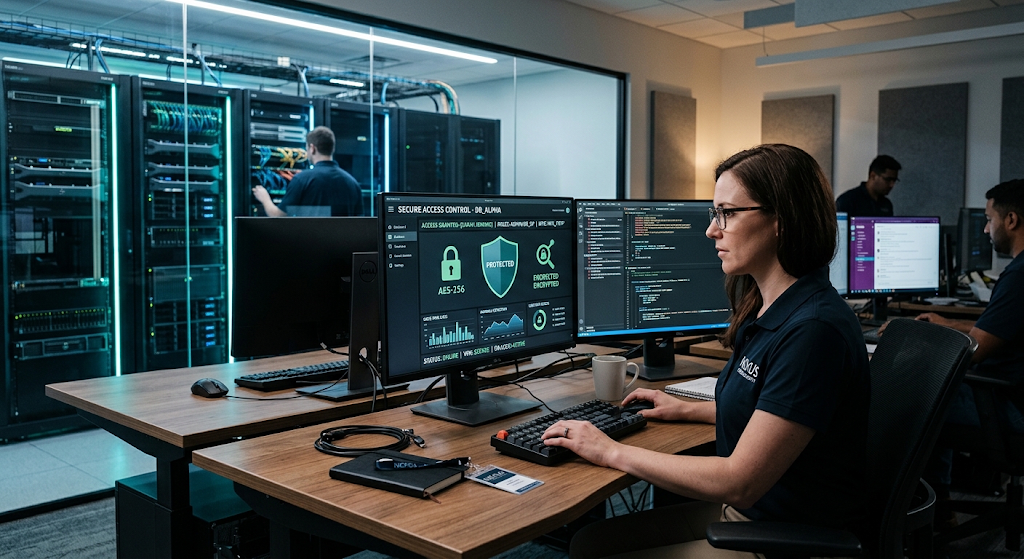
Data is one of the most valuable resources in the modern economy. Information is used by organisations to learn about their customers, to develop their products, to help them run, to make decisions, and for providing personalised services. But, with data becoming more important, cybercriminals are also targeting data for good reason. The first step in Data Protection should therefore be establishing what data an organisation has, where it’s stored, who has access to it and how long it should be retained for.
Encryption can be employed to secure information both while it is stored and while it is in transit, access controls can be used to guard sensitive systems and authentication methods can be used to verify users. Conducting regular security evaluations helps discover vulnerabilities before the crooks do. There are also responsible policies to take into consideration for data protection, as it is easier for a security incident to have a bigger impact the more data that can be collected. By using effective technical measures and data management principles, we can significantly enhance the safeguarding of data in digital form.
Creating a New and Safer Digital State of the Infrastructure

Security by Design
A cybersecurity approach should be taken from the outset of the development process and not after a product or system is finished. Security by design is a concept that developers and organizations must think of potential threats when designing software, networks, devices and digital services. This can include secure coding practices, regular testing, monitoring of user permissions, safeguarding of sensitive data, and ongoing monitoring.
You can find out more about the weaknesses when you are constructing them than when you have already deployed them and they are used by millions of users. Technology vendors also have a crucial role to play in deploying security patching and fixes in a timely manner. Consequently, security by design is going to be more essential to mitigating vulnerabilities as they proliferate across interconnected devices in homes, businesses, transportation systems and industrial facilities.
Employee Education & Security Awareness
Digital systems are used every day and will not solve cyber security issues alone. Employees can be tempted to open unsuspecting links, enter poor passwords, reveal information to a phishing actor, or improperly handle sensitive files. It is critical to a good cybersecurity program to provide regular education on recognizing common threats and responsibilities. Training should be hands-on and not just a lecture on technical terminology.
The employees may be aware of methods of recognizing suspicious messages, confirming unusual requests, reporting potential incidents, safeguarding account credentials and applying organizational systems correctly. There should also be a culture of reporting errors or any suspicious activity in an organization without worry of punishment. Prompt reporting can help security teams be able to limit any damage caused to a security breach. A robust security culture can make cybersecurity a team effort and not just the responsibility of the technical team.
The Importance of Governments and Organizations
Governments are key in establishing the conditions for a safer digital economy. They have the authority to set cybersecurity standards, create cybersecurity laws on critical infrastructure, contribute to cybersecurity education, improve law enforcement skills and work with other nations to tackle cyber crime across borders. Organizations, on the other hand, will have to ensure the security of their systems and safeguard the information delivered to them. This involves security controls, recovery plans, monitoring networks and preparing incident response procedures, as well as conducting risk assessments. It is also important to share information about new threats that are occurring when appropriate, so that other public and private entities can learn from attacks and defend themselves accordingly. There is no single organization that can solve all cyber security issues. Cooperation is necessary to achieve effective protection, which in the digital economy is linked to its interdependence and weaknesses in one sector can lead to risks in other sectors.
The Future of Cybersecurity: Preparing for Next Year’s Challenges
As technology evolves, the cyber security landscape will continue to change. While AI, cloud computing, connected devices, automation, digital payments, and other new technologies have the potential to bring significant advantages, they can also raise new security concerns. There is a need to continuously evaluate the security risk exposure of new technologies and not take for granted that the same security approach will work for all time. Both defenders and attackers could try to use AI to help them with their work, and AI can help defenders by identifying odd patterns and sifting through vast amounts of security data.
This cycle perpetuates itself, forcing cyber security practitioners to continuously evolve their tactics and strategies to keep up with the changing times and technology. It will be important to continue monitoring, regularly update security measures, employ the expertise of trained individuals, enforce sound policies, work cooperatively across the globe, and learn from past security breaches to create future strategies.
Conclusion
The digital world is essential for modern societies, with digital systems used in virtually every aspect of trade, communication, government, education, health, finance, transportation and more. Phishing, malware, ransomware, data breaches, and social engineering pose a risk to individuals and organizations and are impacting the economy. Meanwhile, cybercrime is becoming more global in nature, and international cooperation is vital for prevention, investigation and responding to cybercrime.
Securing the global digital economy involves a mix of secure tech, responsible data management, employee awareness, effective regulation, reliable recovery planning, and government and private sector collaboration. It’s important to realize that cybersecurity is not a one-time technical initiative, and that the dependence on digital technology is only increasing. Said infrastructure investments can help to build a more trustworthy, resilient, and sustainable digital economy for tomorrow.