Introduction
With their reliance on digital systems that handle and store sensitive financial data, cybersecurity is a critical concern for banks, payment service providers, investment firms, and insurance companies. The institutions hold customer IDs, balances, payment information, investments and private business information all of which are desirable by cybercriminals. Attacks result in monetary losses, identity theft, damage to reputation and disruption of services. Account takeovers are one major danger that criminals pose, hijacking of real accounts. Financial institutions work to mitigate these risks by integrating authentication methods, encryption, artificial intelligence, access controls, and real-time security monitoring systems to safeguard their systems and instill trust in their customers.
Overview on Cybersecurity
Cybersecurity are the technologies, policies and procedures for protecting digital systems, networks and information from unauthorized access, damage, theft, and disruption. Financial services can’t afford to be complacent about cybersecurity, as it’s essential for safeguarding the institution’s internal systems as well as its digital platforms and channels that customers use to access the institution’s services. They all involve mobile banking apps, online investment platforms, insurance portals, payment gateways and automated transaction systems. If any of these systems can be attacked, confidential data that could impact a financial process may be compromised. Hence, financial institutions have a layered approach to security and do not rely on one security measure as their sole solution. The purpose of these approaches is to prevent attacks, detect suspicious activity, limit the impact of an attack, and resume normal operations. Regular system updates, employee training, risk assessments, and documentation of cybersecurity procedures are also crucial aspects of effective cybersecurity.
MultiFactor Authentication/Biometric Verification
Multifactor authentication (MFA) helps to make accounts more secure by asking for two or more types of evidence to be submitted before accessing a system. These could be things that the user knows – like a password, things that the user has – like a registered security key or something the user is – like a fingerprint. The more layers of security that are added on the more difficult it can be for a criminal to get a password. New security measures could be required when a customer logs on to his account from an unknown device or alters account information or makes a large withdrawal. Another level of security is added with biometric verification, using the fingerprint, facial features or other attributes of a person to verify their identity. But, biometric systems need to be carefully designed as biometric data can’t be easily replaced as a password can be. MFA, in addition to device recognition and transaction limits and risk-based verification provides greater protection against unauthorized access.
Implementing Encryption and Protecting Sensitive Data.
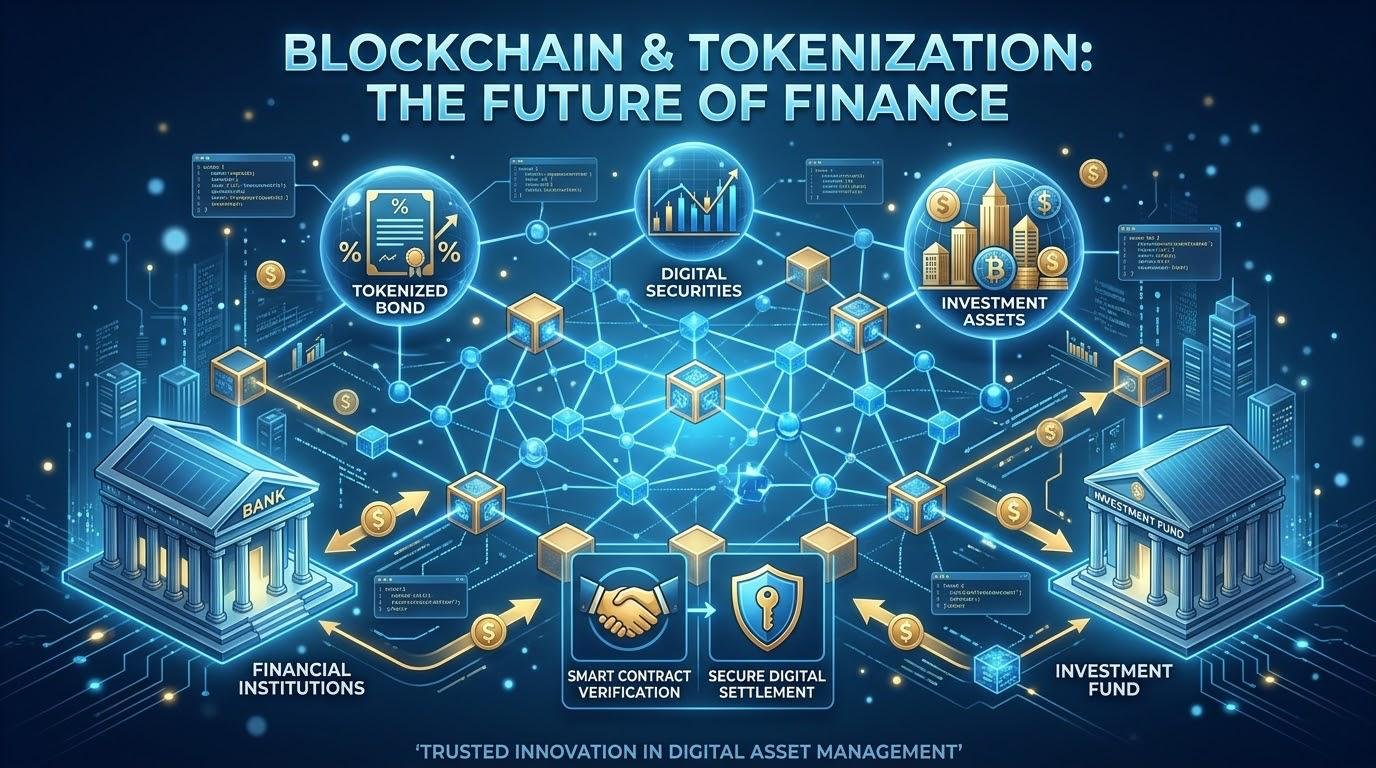
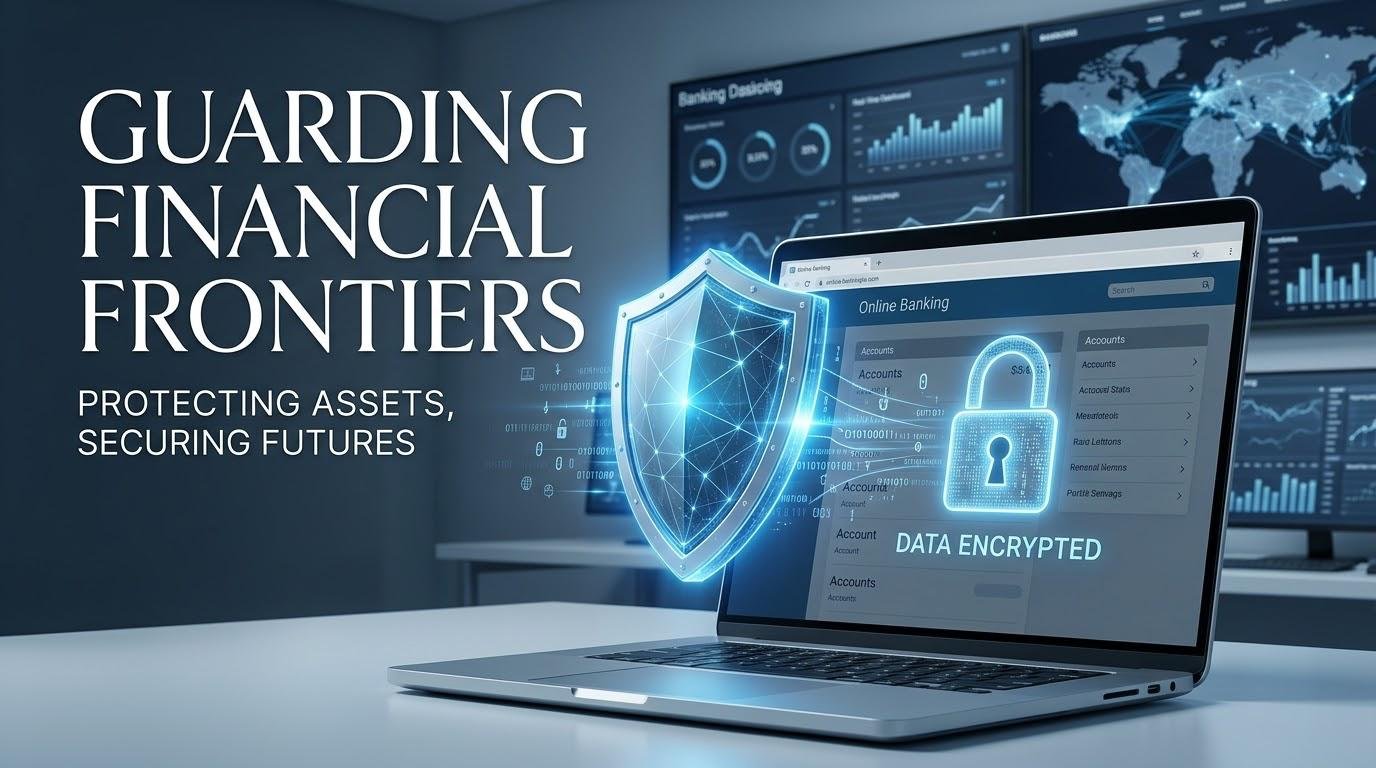
Financial information is protected through encryption, which helps to encode information in a way that’s not easily understood without a decryption key. Encryption is employed by banks and other financial institutions to keep data safe during its transmission from customers to applications, servers and payment networks. They also help to protect sensitive information in databases, backups and other storage systems by encrypting them, which minimizes the impact of unauthorized access. For instance, secure communication protocols help safeguard login information and transaction information from being snooped when a customer accesses an online banking app. But, encryption doesn’t provide 100% security. Institutions also have to safeguard encryption keys, limit access to sensitive information and handle encryption keys across their entire lifecycle. There are further steps that can be taken to further limit exposure, such as data masking and tokenization, which uses a substitute for information rather than systems employing the original data. They help ensure the security of financial transactions and maintain confidentiality.
AI Fraud Detection
Financial intelligence (AI) is the ability to detect unusual transactions and detect patterns that cannot be picked up by typical rule-based methods. AI-powered fraud detection tools can then look at details like transaction amounts, how often they are making transactions, the characteristics of the device, the location of the logins, and customers’ typical spending patterns. If an activity is significantly different from a known activity pattern, the system can identify it as such for further verification/investigation. For example, if the transaction is an unusual transfer and there are a number of quick withdrawals, this can be a sign of possible fraud. Machine learning models also can be utilized to recognize unusual payment requests, detect unusual trading, and assist in insurance claim investigations. The technologies enable institutions to carry out a considerable number of transactions rapidly, thus better equipping them to respond to new threats. However, AI systems have the potential to trigger false alerts, or fail to detect complex attacks. The financial institutions need to revisit their models regularly, stay updated with fraud trends, safeguard data for model training and also make sure that there are qualified security experts who can review decisions if they are significant ones.
Endpoint Security, Identity and Access Management
Endpoint security keeps devices on an institution’s network, such as computers, servers, employee laptops and mobile devices, safe. If not properly protected, these endpoints can serve as a gateway for malware, ransomware and other forms of cyber-attacks. Financial institutions are highly dependent on antivirus software, endpoint detection and response systems, firewalls and security patches for detecting and mitigating malicious activities. EDRs can analyze any unusual device activity and assist security teams to detect compromised machines before a breach is able to gain traction. Together with these controls, identity and access management (IAM) filters access to specific systems and what types of actions they are allowed to take. Institutions restrict employees, based on their responsibilities, from accessing information they need through role-based permissions, strong authentication and the principle of least privilege. Reviewing access to files and accounts and disabling former employee accounts when they leave the company also decreases the chances for improper access.
Continuous Threat Monitoring and Incident Response
The continuous threat monitoring supports financial institutions to detect any suspicious activity that occurs across the networks, apps, databases and user accounts. Security information and event management systems gather and examine logs from various sources to identify any suspicious login attempts, unauthorized alterations, malware infections and other suspicious data transfers. Some also integrate these systems to security orchestration and automated response capabilities to speed up investigation and containment. Once threat is detected, security teams can block malicious connections, suspend compromised accounts, isolate compromised devices, or require re-authentication for customers. Incident response plans also define who will be responsible for investigations, notifying parties, recovering systems and services and gathering evidence. Practicing these procedures through regular security exercises can help employees and technical teams get used to the procedures in case there is a real incident. Monitoring systems and response plans are continually evolving as new threats are identified, new technologies are developed and business operations change.

Common Cybersecurity Threats that Financial Institutions Encounter.
Phishing and Social Engineering
Phishing is a fraudulent email, text, website or other message that attempts to trick people into providing passwords, verification codes or financial information. Social engineering is more general, and involves tricking people into doing things that are harmful to security. Criminals could pretend to be a bank employee, investment adviser, company executive or customer support representative to establish a sense of urgency and acquire victims’ trust. For instance, one customer could receive a message stating that an account will be shut down if a verification link isn’t opened prompt. For instance, one customer could be drawn a message stating that an account will be shut down if a verification link isn’t opened instantaneously. Financial institutions mitigate these risks through educating employees, email filtering systems, secure communication policies and customer education. They also let customers confirm any odd requests in official channels, instead of replying to any suspicious messages. Informed employees and customers are a vital component of a smart cybersecurity plan as technical controls can’t stop all types of manipulations from occurring.
Ransomware and Insider Threats
Ransomware is a threat that involves malicious software that can encrypt file, cause disruptions, or threatens to publish stolen information when a ransom is paid. Attacking a financial institution could disrupt banking services or hold back insurance claims or prevent access to investment platforms. Institutions remain resilient to ransomware by implementing endpoint protection, network segmentation, timely patching, limiting administrative access and regularly testing backups (offline or otherwise). Insider threats are a different problem, as employees, contractors or someone who is authorized to have access to the data can intentionally or unintentionally disclose sensitive data. A staff member may enter information in an unauthorized or inappropriate manner, may send confidential information to an inappropriate person or may respond to a phishing message. To minimize these risks, institutions track privileged activities, have the necessary critical separation of activities, review access and have reporting procedures for suspicious behavior. Effective controls should be implemented that will strike a balance between employee privacy, security, and legal and organizational requirements.
Potential Threat from Third-Party Vulnerabilities and AI-Powered Attacks
Cloud services, payment processors, software vendors and data services are external technologies that financial institutions heavily rely on. If any of these connections is not secure, it opens up the institution to an attack even if the internal systems are very robust. Vendors’ security evaluation, contractual obligations, access control, incident reporting, and regular audits of vendor performance are all a part of third-party risk management. As criminals are now able to leverage the power of AI to craft convincing phishing messages, mimic voices, automate reconnaissance and customize communications for specific targets, the risks only continue to grow. These techniques can render fraudulent requests more challenging to detect. There is also a possibility that attackers can try to influence the AI systems or vulnerabilities in artificial intelligence-based security systems. Financial institutions need to be proactive, enhance identity verification, test AI systems, watch for any unusual activity and educate employees on how to conduct their own identity verification. While AI has the potential to aid cybersecurity, it also presents risks that need to be managed and monitored by humans.
Keeping Customers and Regulators Information Safe
When dealing with customer trust, an institution must ensure that it can keep its information secure and safeguard its transactions, and act responsibly when issues arise. Financial institutions need to develop security policies in accordance with relevant data protection, financial services and cyber security laws and regulations. They may also, depending on their activities and scope of operation, have to make risk assessments, keep audit records, report qualifying incidents and prove that the necessary security measures are working effectively. Obedience should not be considered a paperwork activity. The institution should have a test of its controls, an assessment of vulnerabilities, employee training, and a search for weaknesses before they become big incidents. When customers are seeking advice on transactions that may be suspicious or exposure of their data, communication is crucial. Having safe avenues for reporting, prompt support and clear information about protective measures helps to further build trust in digital financial services.
Conclusion
In today’s financial landscape, cybersecurity is a vital component for stability and reliability in modern day financial institutions. The banking, insurance, investment and payment sectors use several technologies to ensure the security of valuable data, prevent illegal transactions, and keep access to vital services safe. Each of the multifactor authentication, biometrics, encryption, artificial intelligence-based fraud detection, endpoint security, identity management and continuous monitoring solutions focuses on a specific area of the threat landscape. But technology can’t remove all of the risks! Institutions must implement technical security measures and training, sound governance, and proven incident response protocols to mitigate the risks of phishing, insider attacks, third-party vulnerabilities, ransomware, and AI-driven exploits. Financial institutions can minimize cyber risks, safeguard customer data, and ensure a secure and reliable digital financial system by regularly assessing and updating their security protocols and strategies.
Get more well research information about Cybersecurity in Financial Institutions here.