Introduction
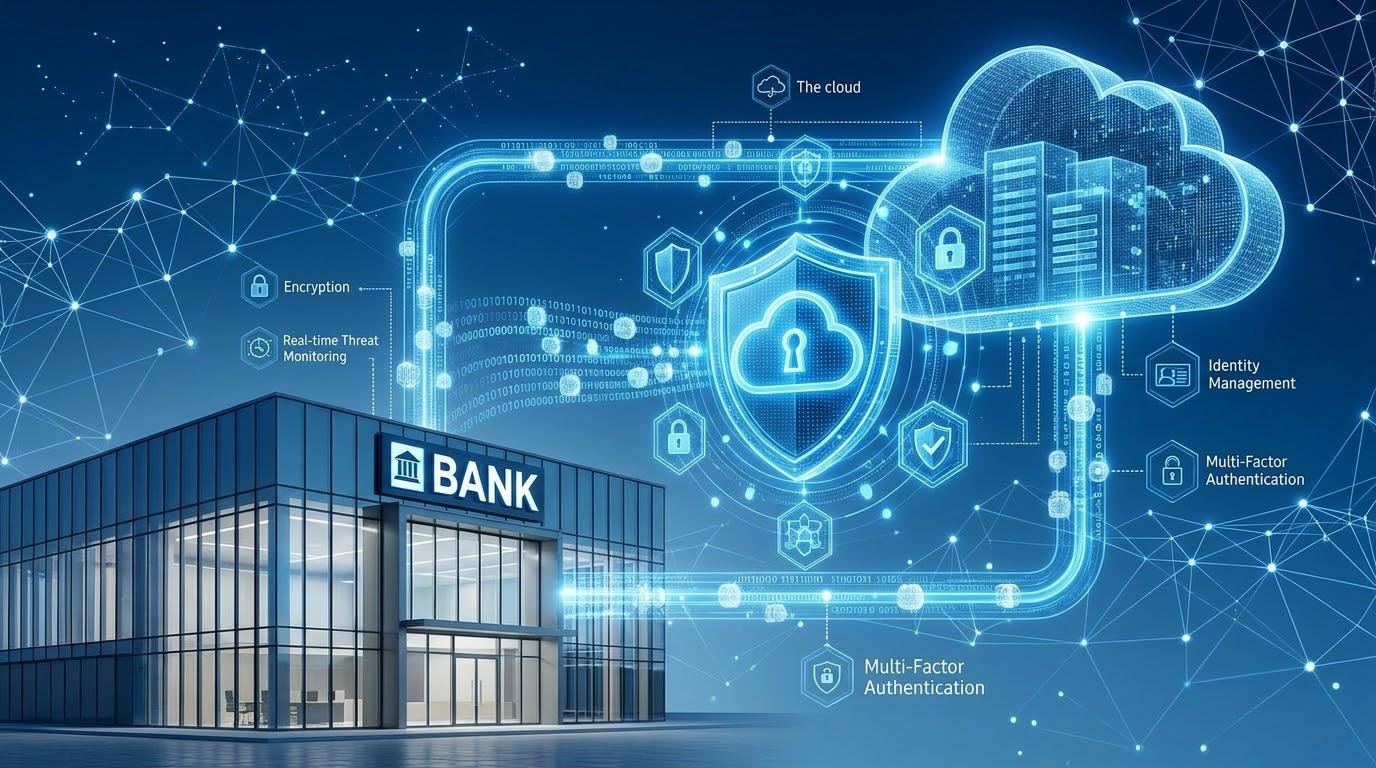
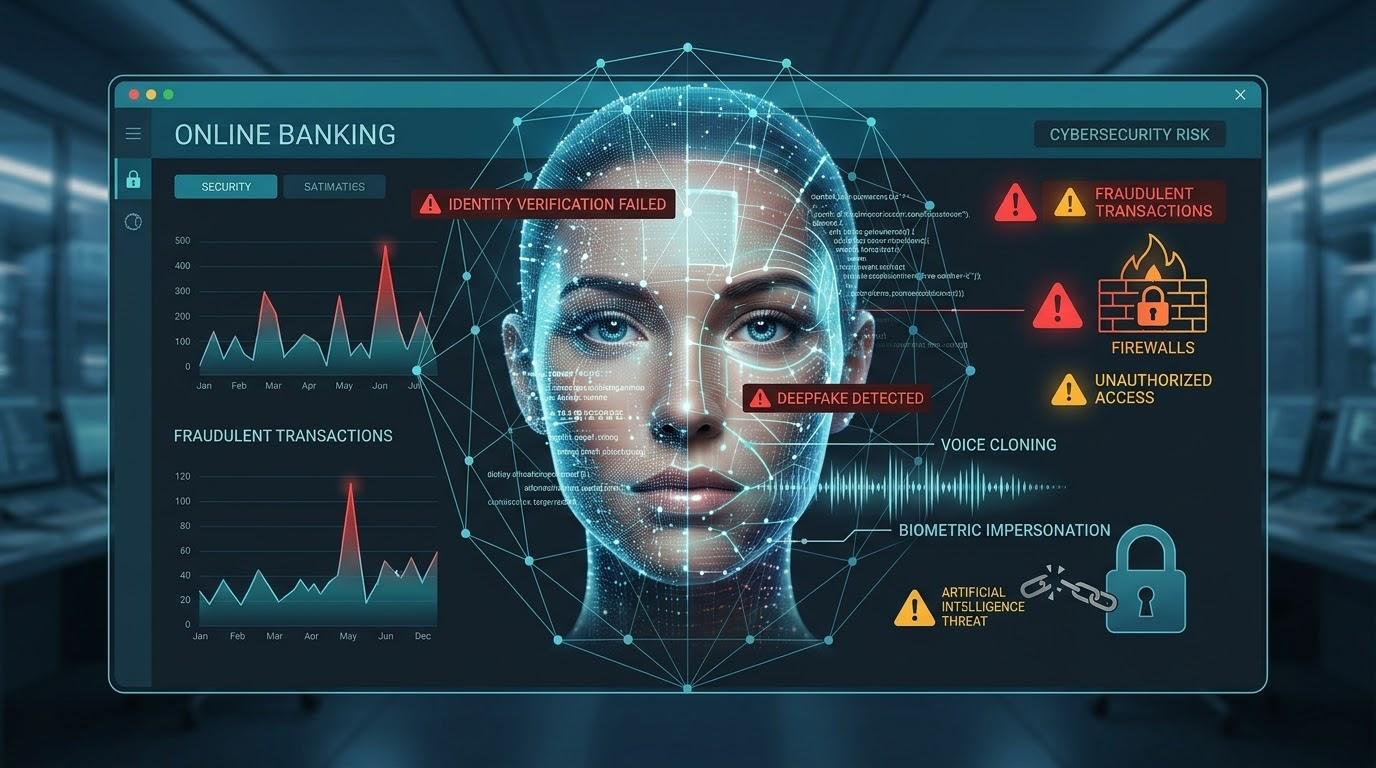
Thanks to the rapid growth of digital banking, online shopping, mobile payments and electronic financial services, people and businesses can easily manage their finances. This includes sending money, paying bills and checking their accounts all digitally. The increased usage of financial services in this way means more sensitive financial information is being sent and stored. Customers are now providing personal details, account numbers, payment card details, transaction details and login details all of which is highly valuable to cyber criminals. To reduce the risk of sensitive information being accessed, stolen, altered and fraudulently used, encryption is a key part of financial services. By encoding information that needs to stay secret, it makes it hard for others to read and therefore helps keep customers’ information confidential, transactions secure and build trust.
Understanding Encryption
Encryption is a form of cyber security that takes readable information (plaintext) and scrambles it so that it can’t be read (ciphertext). This is done using mathematical algorithms and keys. In the financial services sector encryption is used to protect sensitive information. For example, when customers log into banking apps, send money, make card payments and access financial services.
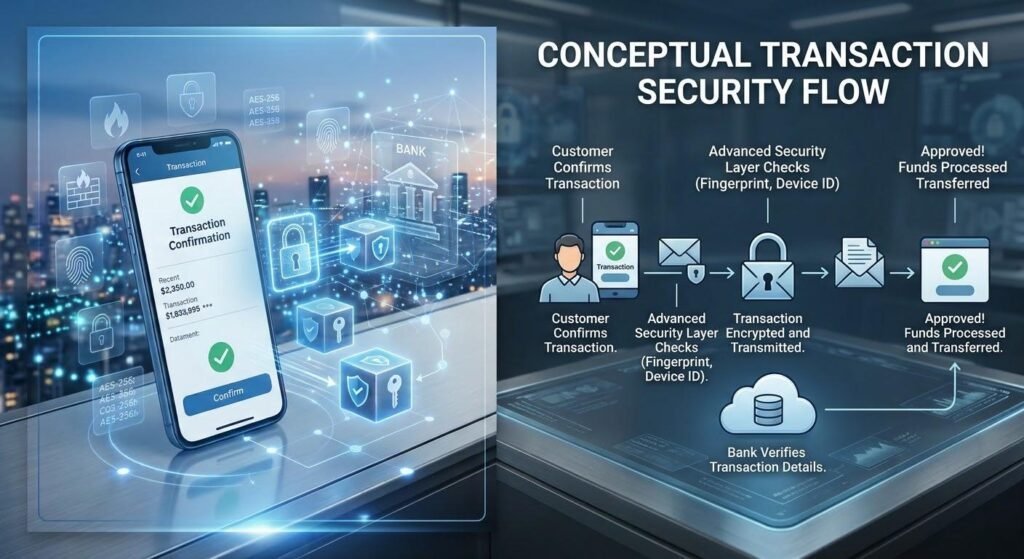
For example, if customers enter their card details on an online shopping website, this information can be protected using encryption. It will be sent from the customer’s device to the payment gateway, payment processor and financial institution. This means even if cyber criminals have gained access to the information, they won’t be able to easily read it without the correct encryption keys. This helps reduce the risk of data theft, unauthorized access to accounts and financial fraud. It also helps keep information confidential which is an important aspect when dealing with large amounts of information.
Data in Transit and Data at Rest
One of the most important reasons encryption is used within the financial sector is to protect information whilst it is being sent and whilst it is at rest. These can be known as data encryption in transit and at rest. It is important to understand the difference between the two as financial information can be at risk at various points. Financial institutions will need to use the right encryption techniques to protect their information.
Data in Transit
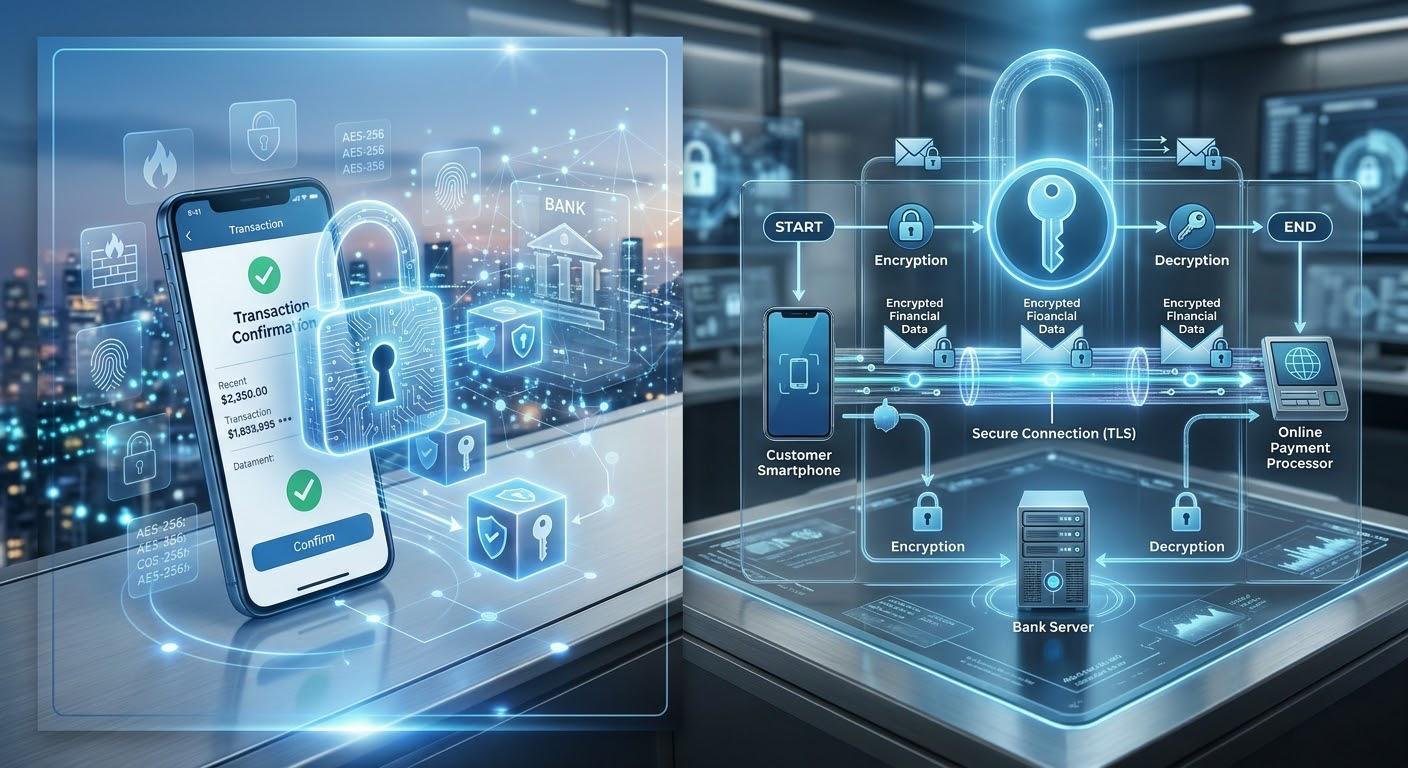
Data in transit refers to information being protected whilst being sent between different systems, for example, when sending money through a mobile banking app, information will be sent from the customer’s smartphone to the bank’s server, payment networks and authorized service providers. Without encryption this information could be captured by attackers who are monitoring an insecure network.
Secure protocols will be used to encrypt the information. This is important as customers may be using public wi-fi networks or shared networks. Financial institutions will use encryption to stop anyone from reading the information or tampering with the communication. If you want to learn more about data in transit and data at rest then you can look at this article.
Data at Rest
Data at rest refers to information being protected whilst being held on a system. This can include servers, databases, computers, mobiles and more. Financial institutions hold lots of information relating to their customers including account details, transaction history, identification and payment details. If a criminal gains unauthorized access to a database or steals a storage device, the information could be exposed if it isn’t encrypted.
By encrypting this information it will mean it can’t be read without the correct decryption keys. Financial organizations often use encryption when storing databases, backup files, cloud storage and more. This can be very useful if a device is stolen or a storage device has been compromised. However, there are still risks involved. Organizations should ensure they have secure access control, secure key management and monitoring in place to stop those with authorized credentials or keys from being misused.
Secure Protocols
Secure protocols will be used to create a secure connection between customers, financial institutions, merchants and payment processors. Transport Layer Security (TLS) is a common protocol used. This helps protect information being sent between applications and servers. It is common to see this being used in HTTPS connections so customers can securely communicate with online banking and payment sites.
When a customer visits a banking website, TLS will help create a secure connection between the browser and the server. This uses encryption to stop the information being intercepted and altered by unauthorized users. It also helps with authentication so customers can be assured they are talking to the correct server.
Secure Sockets Layer (SSL) was developed to help protect information over the internet. Although this helped make secure online transactions possible it is now outdated and shouldn’t be used, now secure protocols use correctly configured TLS. Financial institutions should regularly update their protocols to ensure they are using up-to-date encryption methods and monitor any vulnerability.
Encryption Keys
Encryption keys play a vital role in encryption. If they aren’t managed correctly, even the strongest encryption algorithms won’t be effective. Financial institutions will use different encryption keys depending on how secure they want their system to be. There are two main types of encryption, symmetric and asymmetric.
Symmetric encryption uses the same secret key to encrypt and decrypt information. This means it is usually efficient to protect large amounts of financial data. It can be useful for securing databases. However, the secret key will need to be shared between authorized users securely. If attackers gain access to the key they may be able to decrypt the information.
Asymmetric encryption uses two keys that are mathematically related. This includes a public key and a private key. The public key can be shared but the private key must be kept secure. This helps with securely sharing keys, authentication and digital signing. For example, a financial application can use public key cryptography to create a secure connection. It will help share the information needed to create a secure session. Financial institutions will also use secure hardware, key rotation, limited access and Hardware Security Modules to keep their important keys secure.
Digital Certificates
Digital certificates can help create trust between customers, websites, applications and financial institutions. They are electronic documents that link a public key to a verified organization, server or something else. They are commonly provided by Certificate Authorities (CA). When a customer visits an online banking site, the browser can look at the digital certificate to verify the website. This helps reduce the risk of customers communicating with fraudulent sites. It can also help with authentication.
However, this relies on certificates being validated correctly. They also require the private key to be kept secure and renewed. Financial institutions should ensure they have good certificate management in place to stop attackers from taking advantage of expired, incorrectly configured or incorrectly issued certificates. Using digital certificates alongside encryption and other authentication methods can help increase confidence in digital banking and payments.
How Cryptographic Technologies Help Reduce Financial Fraud
Cryptographic Technologies can help protect information within the financial sector. Encryption can help stop unauthorized users from easily reading financial information. Digital signing helps verify messages and transactions are authentic. Hash functions can help keep data intact. This produces a fixed length output. If the original information has changed the hash will generally change. This helps identify if information has been changed. Payment cards also use cryptographic technologies to help reduce exposure of sensitive payment information. Tokenization can be used to replace the real card details with tokens. This means the card number doesn’t need to be shown multiple times. Although this isn’t encryption, it can work alongside encryption to reduce sensitive information.
This is important as there are multiple parties involved in digital payments. This could include the merchant, payment gateway, payment processor, card network and issuing bank. This means there are multiple places where information could be at risk if it isn’t properly protected. By using encryption, authentication, tokenization and integrity checks financial institutions can reduce the opportunity for criminals to steal payment information, impersonate customers and tamper with legitimate transactions.
Quantum Computing Concerns
Whilst we currently have strong encryption technologies to protect our financial information, there are new concerns with quantum computing. Quantum computers use quantum mechanics to calculate things differently. If powerful and fault tolerant quantum computers become available then some public key encryption technologies may be at risk. A big concern is that cyber criminals could harvest information and store it. This means they could decrypt it in the future using quantum computing. This could put sensitive financial information at risk.
Researchers and Cyber Security organizations are developing Post-Quantum Cryptography. This is cryptography that can’t be attacked by classical or quantum computers. The National Institute of Standards and Technology (NIST) have published their first main Post-Quantum Cryptography standards. These include ML-KEM (key establishment) and ML-DSA (digital signing).
Financial institutions will need to review their current cryptography and identify any vulnerable technologies. They will also need to plan how they will move to the new standards. This needs to be carefully planned as banking systems will often be reliant on multiple applications, databases, payment networks and third party providers. If organizations plan ahead they can avoid any issues with security.
Why Strong Encryption is Important for Building Trust
Building trust with customers is vital when providing digital financial services. Customers expect their personal information, account balance, payment details and transaction history to be kept confidential. If there is a major security breach, customers could fall victim to identity theft, financial loss, fraudulent activity and privacy breaches. It could also cause damage to the reputation of the financial institution.
Strong encryption can help financial organizations show they care about keeping customers’ information safe. It can also help meet regulations and security requirements. However, it shouldn’t be used as a standalone method. Banks and payment providers should also use multi factor authentication, secure coding, staff awareness, fraud monitoring, regular security reviews and incident management. Customers should also take steps to keep their financial accounts safe. This can include using strong passwords, turning on extra authentication methods, keeping banking apps up to date and not clicking on any suspicious links.
Conclusion
Encryption is one of the most important technologies when it comes to securing financial services. It helps protect information whilst being sent and stored, reducing the risk of unauthorized users gaining access to sensitive account details, personal information and payment information. Secure protocols, encryption keys, digital certificates, digital signing and more all work together to give confidentiality, authentication and integrity to digital financial systems. However, as new cyber security threats are arising and quantum computing is advancing financial institutions can’t fully rely on their current security. They need to review their encryption regularly, improve key management and prepare for the new post-quantum standards. Overall, investing in protecting financial information, being responsible with security and working together between financial institutions, technology providers and customers will help keep information safe. Strong encryption can help keep digital transactions secure and help keep the trust of individuals and businesses with electronic financial services.
Get more well researched information about Encryption in Financial Data Protection here.