Understanding Hard Water Stains
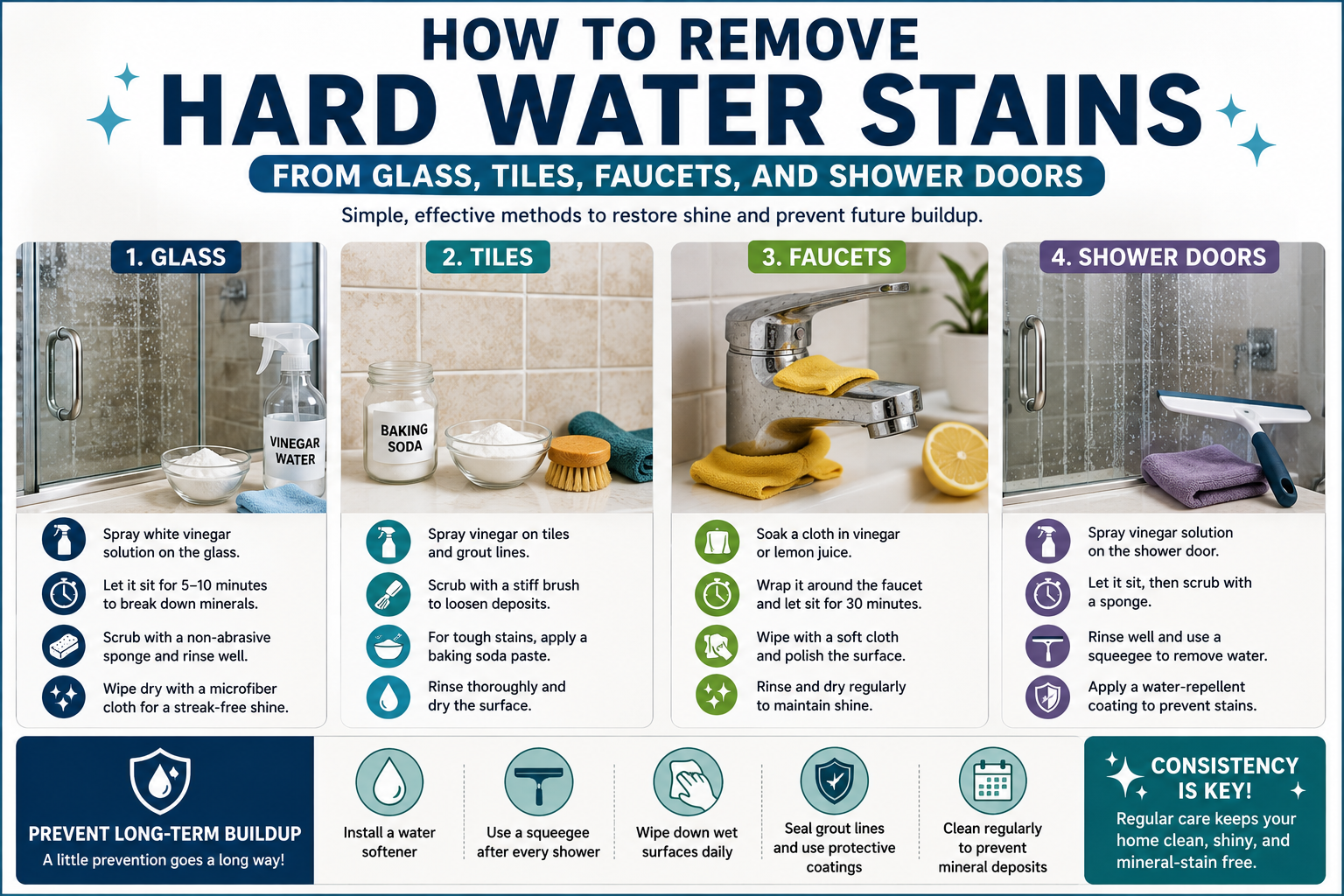
Hard Water Stains Removal is essential for keeping glass, tiles, faucets, and shower doors clean, shiny, and free from stubborn mineral buildup. The hard water stains are a ubiquitous problem in homes, particularly in the bathrooms and kitchens where water is used more often. The stains are caused by the evaporation of water that contains high levels of minerals (mainly calcium and magnesium) and forms chalky, cloudy deposits. With time these deposits harden and become harder to scrap away, leaving ugly marks on glass, tiles, faucets and shower doors. It’s not only a cosmetic issue; over time, minerals can cause harm to surfaces, and make the fixtures less efficient.
Hard water stains are due to the mineral content in the water supply. As water droplets evaporate they leave behind the minerals, which then crystallize and will stick tightly to the surface. That’s why it is best to remove stains from surfaces as soon as possible. But in a hectic home, it’s not always convenient to dry all surfaces after they have been wet. These stains can be caused by this and need special cleaning techniques. To understand why hard water stains, it is necessary to understand that the hardness of water is a property that differs according to region, based on the region’s geology and water treatment facilities.
Why Hard Water Stains Occur
Hard water stains occur for a variety of reasons. The causes of hard water staining lie in mineral deposition, a natural process that results in hard water stains. As water evaporates, the minerals that it contains do not evaporate, they are left behind. The minerals, especially the calcium carbonate, deposit to form a crusty surface, which adheres to glass, ceramics and metal. With repeated exposure, you can find a buildup of layers, which are harder to clean.
There is also a contribution from environmental factors. When humidity is high, water will evaporate more slowly, allowing minerals to settle out more time. Likewise in homes that use water heaters often, for example for showers or dishwashers, the evaporation process is quicker and the deposits in the water heaters are more concentrated. This is the reason that shower doors and faucets stain more easily. Once you understand the causes you can take preventative measures to avoid stains, such as a water softener or protective coating.
Removing Hard Water Stains from Glass
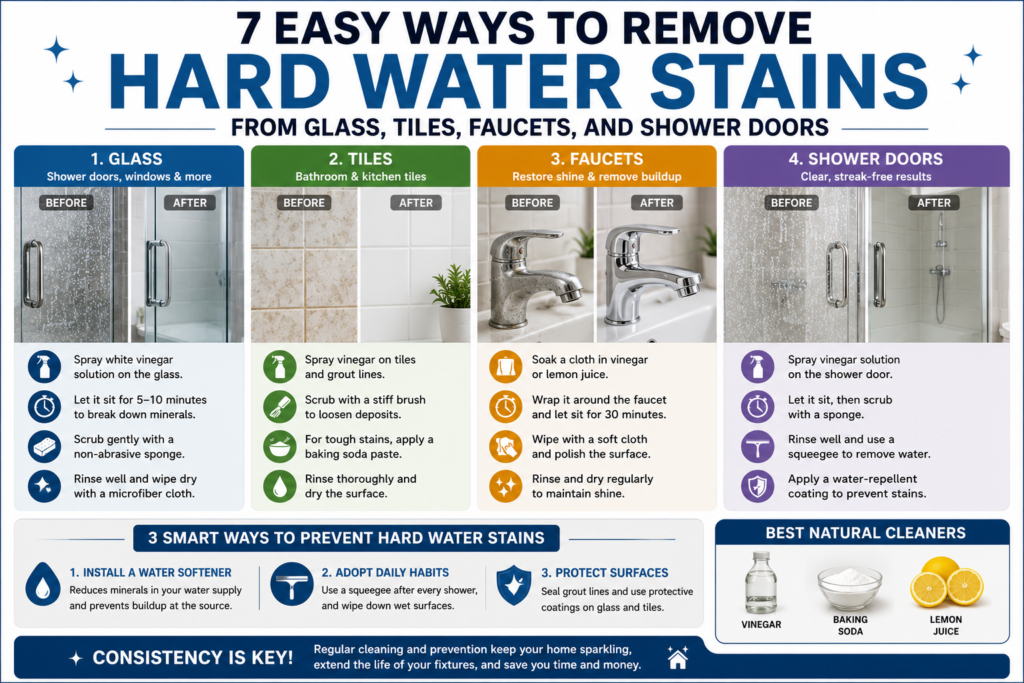
By following these proven strategies, you can remove hard water stains from glass. Hard water stains are possible on all glass surfaces and are readily seen on smooth, transparent surfaces like shower doors and windows. The solution of white vinegar and water is an effective way to clean the glass. The acidity of vinegar clears mineral deposits and clear the glass. It is usually best to spray liberally, let stand for a few minutes, and then scrub using a non-abrasive sponge, for best results.
Another method that has been proven to work is by using baking soda paste. When combined with a little water, baking soda makes a moderately abrasive cleaner that will not scratch the glass but will remove stubborn stains. If it’s a severe build up, commercial cleaners specifically formulated for hard water stains might be needed. These products generally have higher acid content which will dissolve mineral deposits rapidly. They are not recommended for use, however, unless used according to the manufacturer’s instructions; otherwise, glass and/or other surfaces could be damaged.
Removing Hard Water Stains from Tiles
Hard water stains are common on tiles, particularly in bathrooms and kitchens, along lines of grout and surfaces. Vinegar is also a good solution here, but is more difficult to clean the grout because it is porous. Soaking the stained areas in vinegar and using a stiff brush to scrub can help to loosen deposits. A paste of baking soda and vinegar can be applied to hard to remove stains, and left on for a while before a rinse.
Also, commercial tile cleaners can be effective, especially those that are designed to remove mineral deposits. These cleaners are able to go into the grout and remove deposits without harming the surface of the tile. Steps can be taken to help minimize the chance of stains developing, including sealing of grout lines. Maintenance is also important; for example, be sure to dry tile surfaces after showers.
Hard Water Stains on Faucets
Faucets are most susceptible to hard water stains due to the running water they come in contact with on a daily basis. With time, mineral deposits may discolor and cause them to lose their luster, and may even affect their performance. A very useful way to clean faucets is to take a cloth, dip it in vinegar, and put it in the graffiti area. The cloth should be in place for 30 minutes to dissolve the deposits and then the faucet should be polished with a soft cloth.
If you’re looking for something other than vinegar, lemon juice can be used for more stubborn stains. The natural acidity it has works in the same way as to remove mineral deposits but leaves a new fragrance. If buildup is severe, special metal cleaners might be required. These products will help to rejuvenate shininess and will prevent stains from occurring in the future. After use, faucets should be cleaned and dried regularly to keep the faucets looking the way they were meant to look and functioning the way they are supposed to function.
Shower Doors: Restoring Clarity and Shine
Hard water stains are a common problem with shower doors, as water splashes on them continuously. Spraying a vinegar solution directly onto the door and letting it sit before scrubbing is the best method used to clean. A paste of vinegar and baking soda can be used for any stubborn areas that require it, in case of a heavy buildup. The thorough rinsing and drying with a microfiber cloth will help to achieve a streak-free finish.
Shower doors are critical to implement preventative measures. Like the water-repellents applied to car windshields, a coating can be applied to the glass to help reduce the amount of water droplets that stick to the glass. This decreases the chances of stains developing and increases the ease of cleaning. Also, a shower squeegee should always be used in the shower after each use, and is a simple habit that can have a dramatic effect on reducing shower buildup. With proper maintenance and cleaning techniques, homeowners can ensure that their shower doors remain shiny and clear.
Preventing Long-Term Buildup
It’s important to be able to clean hard water stains, but prevention is the best solution. Water Softening System Installation is one of the best methods to lower the mineral content in the water in the home. The use of water softeners helps to replace the calcium and magnesium ions with sodium or potassium, and this helps to decrease the chances of the stains. This may mean a bit of an investment up front, but the benefits are the decreased time spent on cleaning and more durability of fixtures.
Other prevention techniques are the application of protective coatings to surfaces, sealing grout lines and implementing daily practices like wiping down wet surfaces. Little things add up to a big difference over time, such as using a squeegee on the shower doors or drying faucets after they’re used. In conjunction with preventive actions, one can keep their bathroom and kitchens looking shiny and avoid expensive repairs or replacements.
Taking the Final Step to a Shinier and Safer Home
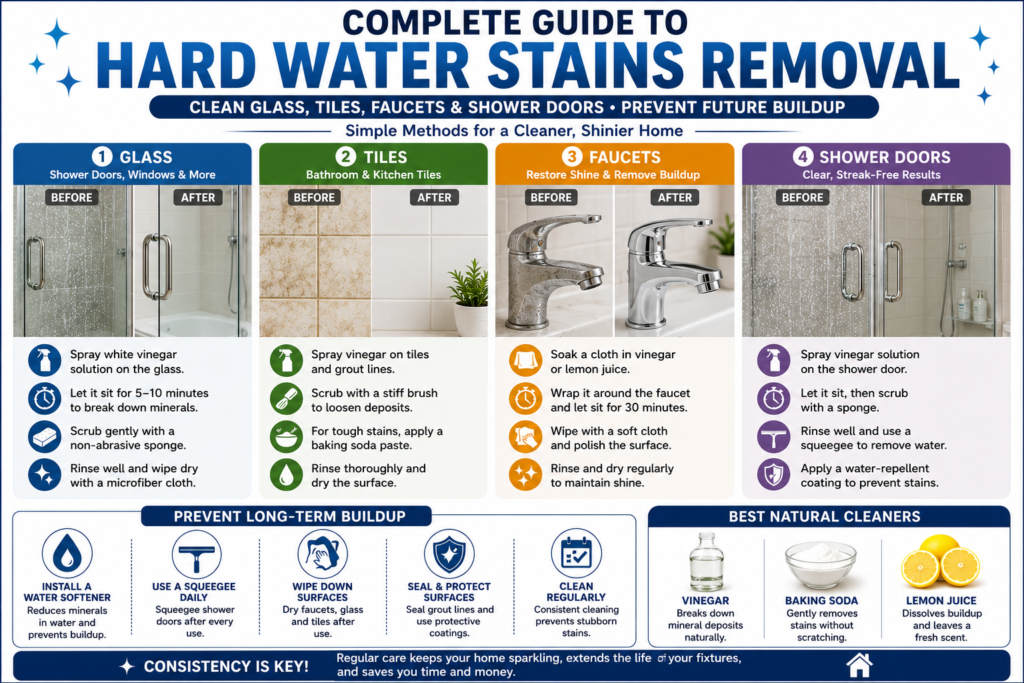
Hard water stains are an ongoing issue but not one that is hard to overcome. With the knowledge of their causes, and the effective ways to clean, homeowners can effectively restore the beauty of glass, tiles, faucets and shower doors. While vinegar, baking soda, and commercial cleaners are all effective in removing stains, water softeners and protective coatings are all important to the long-term solution.
Consistency is key to hard water stain treatment. Stains can be avoided by implementing preventive measures and regular cleaning and maintenance will keep buildup from getting out of hand. With some effort, homeowners can have sparkling surfaces and efficient fixtures in their bathrooms and kitchens, which shine with cleanliness and care.