
Introduction
The dangers in cybersecurity are no longer exclusive to big organizations, the government, or tech-savvy people. Because cybercriminals are increasingly taking advantage of basic errors, rather than sophisticated technical vulnerabilities, everyday Internet users are now a common target. People create opportunities for successful cyberattacks through careless digital habits, weak security practices and poor online decisions, and many attacks occur this way.
Actions such as connecting to an unsecured network or overlooking important security updates can lead to the exposure of personal information, financial information, private conversation, and valuable details about business. Knowing what these common cybersecurity pitfalls are is the first step in fostering more secure online behavior. Some basic behavioral changes can make a big difference in preventing victims of cybercrime and help protect individuals and organizations from many common cybercrimes.
1. Accessing Public Wi-Fi Without Adequate Security
The benefits of the public Wi-Fi network is that they can go to various locations and connect to the internet, such as schools, shopping centres, hotels, restaurants, and airports. But if left unsecured, these networks can cause significant security issues. Many public networks have weak encryption which allows for easier access of the cybercriminal on the same network to steal logins or sensitive data. When using an unsecured public network, a person checking email, online banking or entering passwords could be open to the possibility of revealing important information.
One of the most effective methods of mitigating this risk is through the use of a trusted Virtual Private Network (VPN) which makes it more difficult for hackers to access private data when using the internet. Users should also refrain from doing sensitive activities on unrecognized public Wi-Fi networks and verify that a website is secure and using HTTPS connections before they input any personal data.

2. Using a Weak Password or a Dictionary Word (Choosing a Password That Is Easy to Guess)
The most frequent cybersecurity error that people make is to have the same password for multiple online accounts. While it might be convenient to use the same password all the time, as it means that you do not have to remember as many passwords, it makes you very vulnerable. Once a password is gained from one website, the cybercriminal can try to use it on other websites, such as financial services or social media profiles, or on email accounts.
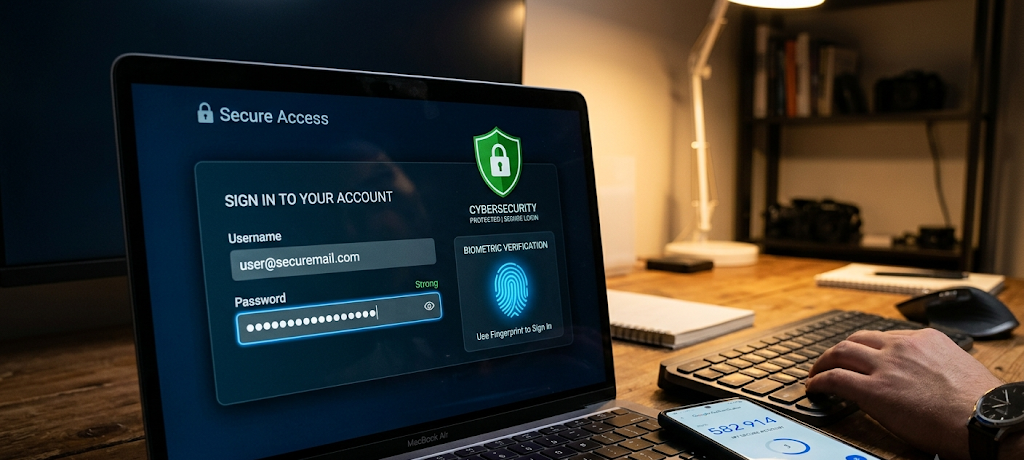
Such an attack is referred to as a credential stuffing attack and has been experienced by many users across the globe. Good password habits include using a different password for each important account and a password manager to help manage and remember the passwords securely. Another thing to include in your password is that it should be long, unpredictable, and use a mix of letters, numbers, and symbols. Multi-factor authentication adds an additional security measure as if the password is compromised, the attacker will still not be able to log into the account.
3. Not Installing Software Updates and Security Patches
People either ignore or delay software updates because they think updates are not needed, it’s too annoying or they’re only intended to add new features. But outdated software programs can have security flaws that are actively exploited by cybercriminals. With regular updates, developers address vulnerabilities, enhance system performance and bolster security against emerging threats. If these updates are not installed, devices are vulnerable to attacks that could have been avoided. One of the most frequent cybersecurity blunders is the failure to apply software updates. Knowing about software vulnerabilities and the fact that these vulnerabilities were discovered often means that someone has already exploited them.
An easy mistake to make in cybersecurity is to overlook ignoring software updates; the fact that the software vulnerabilities were discovered is enough for someone to have exploited them. Software updates should not be delayed indefinitely – both for businesses and individuals. This resource on the dangers of not updating identifies more information about the dangers of not updating. Maintaining up-to-date devices is one of the easiest steps to make cyber security better, since a lot of attacks take advantage of some vulnerabilities that are already being patched.
4. Oversharing Personal Information on Social Media
While social media can be a great way to share their experiences, connect with friends, and create communities, it can also be dangerous to share too much information online. People share information like birthdays, places, jobs, schools, family details, travel itineraries and interests, unaware they are providing information that can be used in harmful ways by cyber criminals. The attackers can use the information they find online to send convincing phishing e-mails, guess security questions, pretend to be someone else, or trick victims with social engineering.
Just normal statuses may give out certain details of one’s daily routine or identity. Safer social media use means checking privacy settings, being mindful of the amount of personal information that’s available to the public, and thinking before posting. It is important for people to know that information on the Internet may not be deleted and could live a very long life. Staying aware of what information is available online can help to limit unnecessary exposure and safeguard digital privacy.
5. Clicking on Unknown Links and Attachments
Phishing will continue to be one of the most effective ways for scammers to exploit curiosity, urgency, and trust. Most attacks start when a person clicks on a suspicious link or opens an unsolicited attachment in an email, text message or social media communication. These files or links might contain malicious code, redirect to fake websites, or prompt users to share their passwords and other personal information.
Cybercriminals create messages that look like they’re from a trusted organization, friend or co-worker, making it hard for users to identify the threat. People should check the sender, pay attention to unusual requests and be wary of downloading files that they are not expecting before opening them or clicking on links in e-mail correspondence. Practicing suspicious email checking habits can help avoid numerous security incidents. Just a few seconds of vigilance will keep key accounts, devices and personal information from suffering severe damage.

6. Not Using Security Software and Protective Tools
Another error that can leave individuals susceptible to cybercriminals is not using security tools that are available. Others think that security software must not be used because they have never been attacked, however, cyber threats can occur at any time. Even though many common threats are detected and blocked before they can cause damage, antivirus software, firewalls, spam filters and built-in security features play a role in their detection and blockage.
Security tools can’t be used to ensure complete protection, but they are an important layer of security when combined with responsible online behavior. It is also important to keep security programs up to date, as they may not be able to identify new threats if they are not updated on a regular basis. Additionally, device users can use security options like screen locking, encryption and account alerts if available. A robust cybersecurity strategy isn’t a single solution, but a mix of security measures that make the digital environment safer.
7. Ignoring Multi-Factor Authentication
Even if the username and password are secure, many online accounts are vulnerable to hackers who are using more sophisticated techniques to gain access to your account. Multi-factor authentication (MFA) is an additional layer of verification (code, approval from a security authentication app, biometric verification etc.) required before someone can log on to an account. While some people don’t enable MFA because they feel it is cumbersome, it can significantly enhance account security.
If a password is guessed, the attackers can be prevented if they don’t have the second verification method. Multi-factor authentication should be used if available on important accounts like emails, banking, cloud storage, and social media profiles. The more secure standards that can be implemented the better digital identities are protected, and the less harm done by the misuse of passwords.
8. Download Software From Untrusted Sources
Installing apps, files, games or programs on devices from shady websites can make devices vulnerable to malware or other security risks. Cybercriminals tend to mask malicious software as legitimate software so that the user will give in and install the malicious software. After being installed, malware can copy data, harm files, keep a track of activities, or give attackers access to a device without permission.
Users should download software from trusted sources, official websites or trusted application stores. They should also not use pirated software as it might be harmful. It is important for users to review the program before installation, looking for permissions, reviews and reputation of the source. To prevent malware from entering a device is much easier than to remove it after infection, so care in downloading is vital.
9. Not Making Frequent Backups of Valuable Data
While many people are concerned about the prevention of cyberattacks, they often overlook the need for preparedness in case of any damage occurring. Important files can be lost due to ransomware attacks, hardware failure, accidental deletion and other unforeseen occurrences. If a person or business doesn’t have backups, they could lose valuable documents, photos, projects, and records for good. Regularly scheduled backups create a safety net in case of a security incident to restore information.
Reliable methods of back-up should be used to store important files on an external storage device or by using secure cloud services. Also periodically test backups to make sure that files can be retrieved if necessary. It is important to have a cybersecurity approach that not only prevents issues but also allows for recovery, as even the most robust systems can encounter problems.
10. Lack of Proper Policy Enforcement and Management
Technology evolves rapidly and cybercriminals are always finding new ways to attack users. Many make the error of thinking that cyber security is only a matter for IT specialists. In fact, everyone online is an integral part of the Internet’s information security. By educating people about common threats like phishing, malware, identity theft and scams being run over the internet, they will be able to identify the dangers before they fall prey to them.
It is important that organizations deliver cybersecurity awareness training to employees and continue to build awareness of digital safety knowledge for individuals. Attacks can be avoided by simple measures like checking messages carefully, using a stronger password, keeping devices updated and protecting personal information. Cyber knowledge isn’t merely about sophisticated tools; it’s also about smart choices every day.

Conclusion
Cyber criminals have a tendency to be successful simply because of careless mistakes, and not because they use impossible-to-stop methods. Not surprising, there are many common practices online that can be problematic, such as using public Wi-Fi networks, reusing passwords, neglecting software updates, posting too much personally, and opening suspicious emails. But these errors can be remedied through awareness and good use of the digital world.
Individuals can significantly reduce the potential for becoming a target by creating stronger passwords, using additional security measures, ensuring that software is kept up-to-date, protecting personal information and being aware of cyber threats. It doesn’t take a techno-savvy person to be a cybersecurity expert. This is a process that needs constant attention, good habits and the ability to make better decisions when using digital devices and online services.