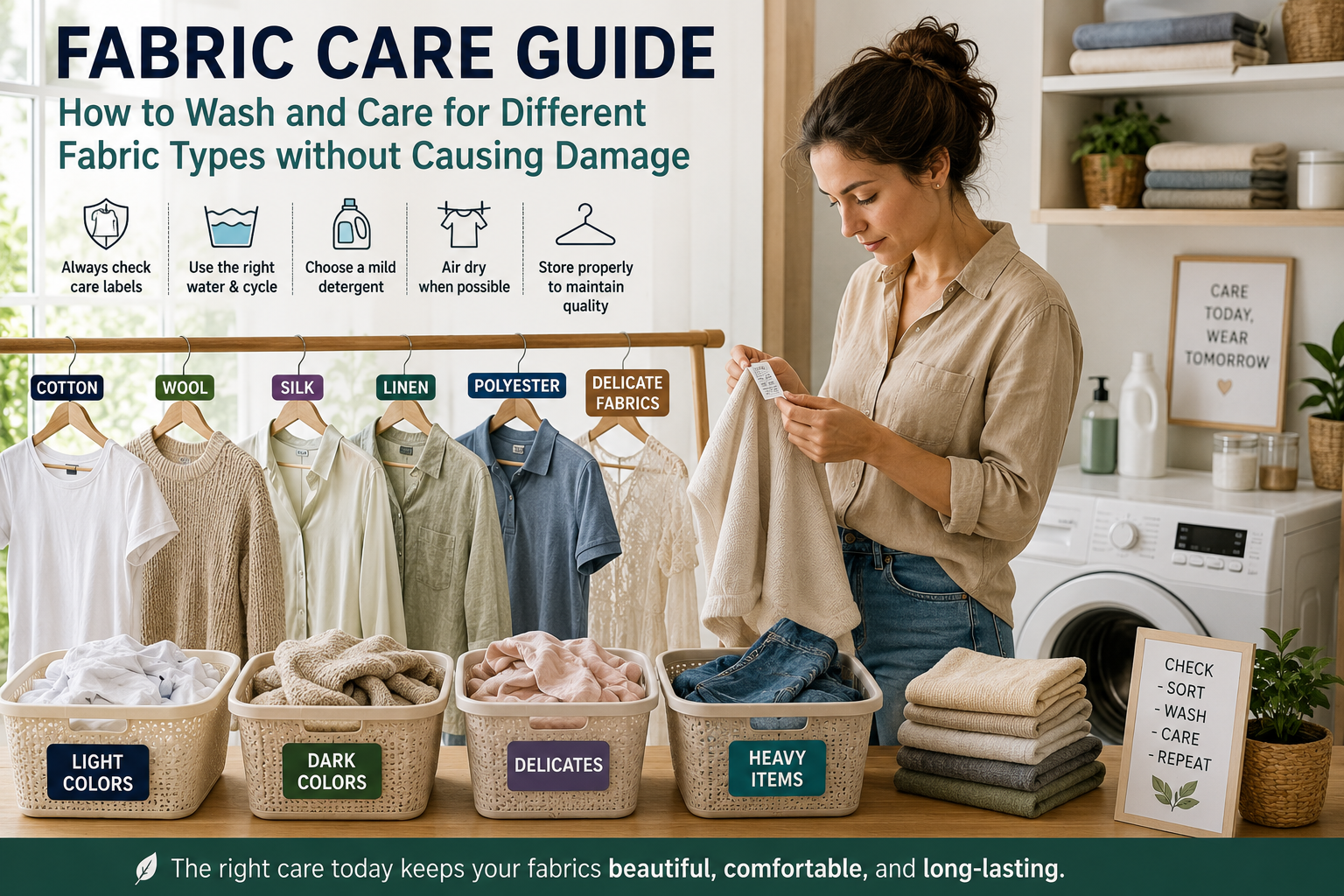
Fabric Care Guide is essential for washing and maintaining different fabric types without causing damage, shrinking, fading, or weakening the fibers.Each type of fabric reacts differently to water, detergent, and heat and with handling. A cotton shirt might be able to be washed regularly in the washing machine, whereas a silk blouse might need to be hand-washed. Understanding these differences is crucial to avoid common mistakes such as shrinkage, fading, or fiber damage. With a little bit of knowledge of each type of fabric, you can save money and keep more fabrics in your wardrobe for longer, since you can tailor a washing and maintenance routine to the type of fabric that’s being washed.
The second important aspect of fabric care is its contribution to sustainability. The constant buying of clothes is one of the reasons for environmental damage, but by caring for them, you can minimize buying new ones frequently. If you know how to deal with cotton, wool, silk, linen, polyester and fine fabrics properly, you will not only save your clothes but also will make a conscious step towards green life. In this article, we will equip you with easy, step-by-step tips to ensure your textiles stay beautiful, useful and durable for years to come.
Cotton Care: Durable and Gentle Handling Every Day
Cotton is one of the most popular fabrics because it is so comfortable, breathable and versatile. But if care is not proper, it can lead to shrinkage, fading or weakening of fibres. If washing cotton garments, use cold or warm water and not hot, as high temperatures might cause the garments to shrink. Also, light and dark colours do not cause any dye transfer. Fewer items, such as t-shirts or bed linens should be machine washed on a gentle cycle, while thicker cotton cloths like denim may need sturdier settings. Cotton should be air dried or dried at low temperatures to reduce the shrinkage.
Another important aspect of cotton care is stain removal. Cotton absorbs liquids in no time at all, making stains set rapidly. Using a mild detergent or baking soda on the stain prior to washing will help maintain the appearance of the fabric. Ironing cotton is safe to use at medium and high heat levels, and is always appropriate to check garment labels for instructions. If you want more in-depth information, you can check out methods for cleaning and maintenance techniques for cotton, offering professional tips on how to maintain cotton fabrics.
Wool Care: Protecting Natural Warmth
Although wool is valued for its softness, stretch and warmth, it can also be very heat-sensitive and prone to agitation. If the wool is washed incorrectly, it may cause felting which is the irreversible shrinking of the fibers. To avoid this, wool clothes should be hand-washed in cold water and mild detergent that has been formulated for wool. Don’t wring or twist the fabric, because this may change the shape of the fabric. But instead, squeeze out the water and spread the cloth out on a towel to dry.
Another important aspect of wool care is storage. Garments must be moth-proofed, so it is advisable to store in airtight containers or bags or to place cedar blocks inside. For ironing wool, take a low heat setting and to avoid scorching, place a piece of cloth between the iron and the garment. These steps can help wool goods like sweaters, coats, and blankets to stand the test of time.
Silk Care: Preserving Elegance and Shine
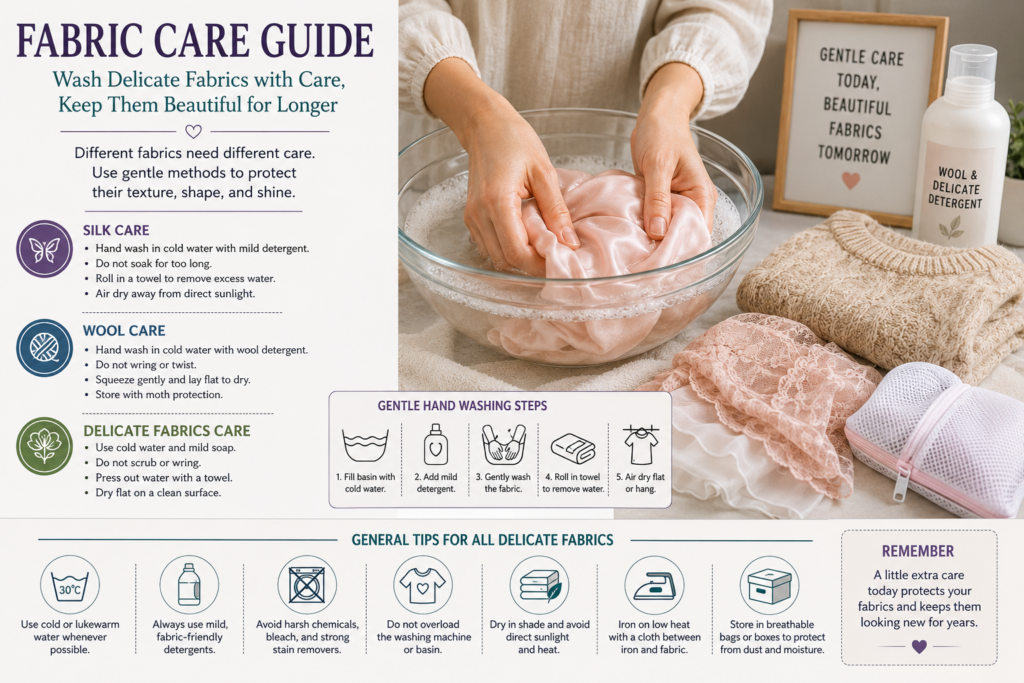
Silk fabric is fine and has a luxurious and smooth appearance. It is however susceptible to damage by rough detergents, heat and sunlight. The safest way to remove hand washing silk is to wash it with gentle soap in cold water. Don’t leave silk in water for too long, as it can cause fibers to get weaker. Wash the fabric and do not wring it, but roll it up in a towel to get rid of the excess water and hang it to dry out of the direct sun.
Silk is a special material that needs special care when ironing. Use the lowest heat and iron on slightly damp fabric, being careful not to over-iron, using a cloth between the iron and the fabric. To prevent dust and moisture from harming silk textiles, store them in breathable fabric bags. When taken care of properly, silk can last for years and years, and is a good investment for any closet.
Linen Care: Maintaining Crispness and Strength
Linen is a natural fabric that is known for its strength, breathability, and crispness. It however gets wrinkled easily and could shrink on exposure to high heat. Clean linen in lukewarm water with mild detergent – hot water may harm fibres. When possible, air dry linen to avoid shrinkage and damage to fabric caused by tumble drying.
When ironing linen it helps to iron it slightly damp to get a smooth finish. Heaters should be set at a medium to high setting, and should always be tested on a small area first. Linen clothes should be kept away from mildew by keeping them in cool and dry locations. If cared for properly, linen only gets softer with washing but remains quite durable, so it’s a good choice for summer garments or indoor fabrics such as tablecloths and curtains.
Polyester Care: Easy Maintenance with Caution
Polyester is an artificial fibre, which is strong, cheap and wrinkle-resistant. Easy to care for, they can pill or have static if not washed properly. Polyester clothing can be washed in warm water using normal detergent and washed in the machine. It would be good to add fabric softener to the rinse cycle, to reduce static. Polyester will dry quickly and can be air-dried although it may be perfectly safe to tumble dry on low heat.
When ironing polyester, care should be taken to avoid melting fibres by using high temperatures. Ironing on LOW heat setting and in the reverse side of the fabric to prevent damage to the surface. Polyester will not shrink or fade easily and is good for everyday wear. But, if polyester clothes are kept from coming into contact with too much heat or friction, they should last a long time.
Delicate Fabrics: Special Attention for Longevity
Lace, chiffon and organza are delicate fabrics that need special attention to not tear or distort. The safest way to wash your hands in cold water with a mild soap. Don’t scrub or wring, because this can cause fragile fibres to become damaged. Rather, wash the fabric in water, and squeeze any water out with a towel.
Delicate fabrics should be dried by spreading them out on a clean surface, out of direct sun. In case of delicate items, they can be stretched when hanging so it is better to dry them flat. Use a cloth and the lowest ironing temperature when ironing to prevent scorching. Breathable garment bags are used to store delicate fabrics and dust and damage is prevented. With careful handling, delicate fabrics can retain their beauty and functionality for years.
Conclusion: The Art of Fabric Care
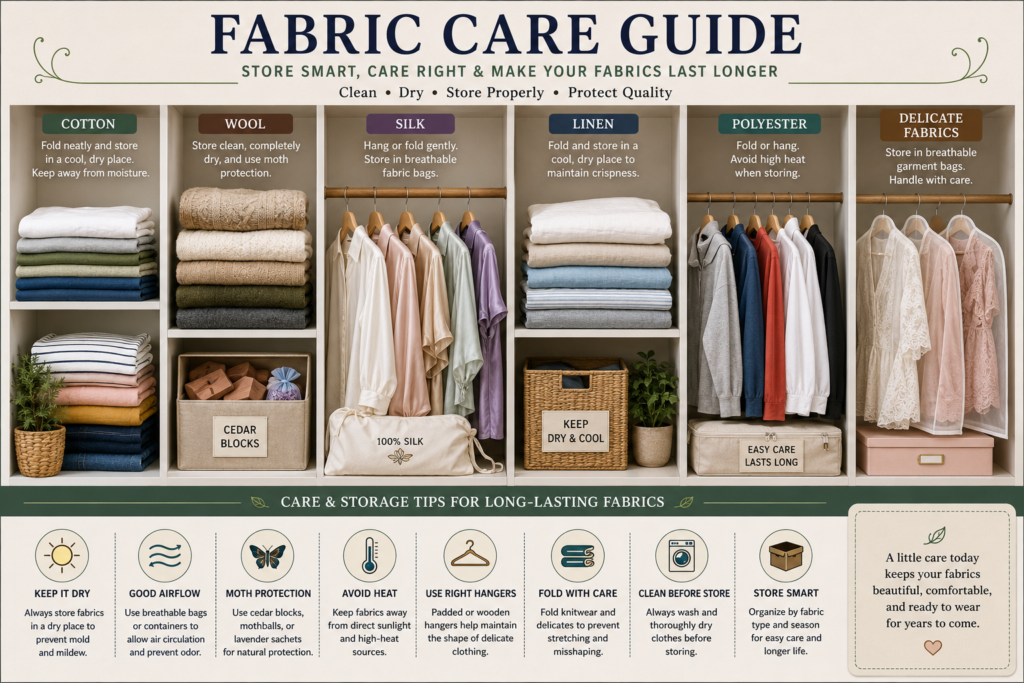
Caring for fabrics is both a science and an art. From cotton to wool, silk to linen, polyester to fine fabrics, each material has a distinct set of techniques you’re going to need to ensure that you retain its particular qualities. Through learning the characteristics of the various fabrics and using the appropriate laundry, drying and storage techniques you can prolong the life of your textiles and retain their beauty.
In the end, it’s a commitment to sustainability and style through fabric care. Frequent replacement is not only expensive but also wastes resources. Clean clothes are not only better looking, but also help to save money and resources. These tips offer a good guideline for maintaining your cotton t-shirts, as well as your more extravagant silk gowns, for many years to come.