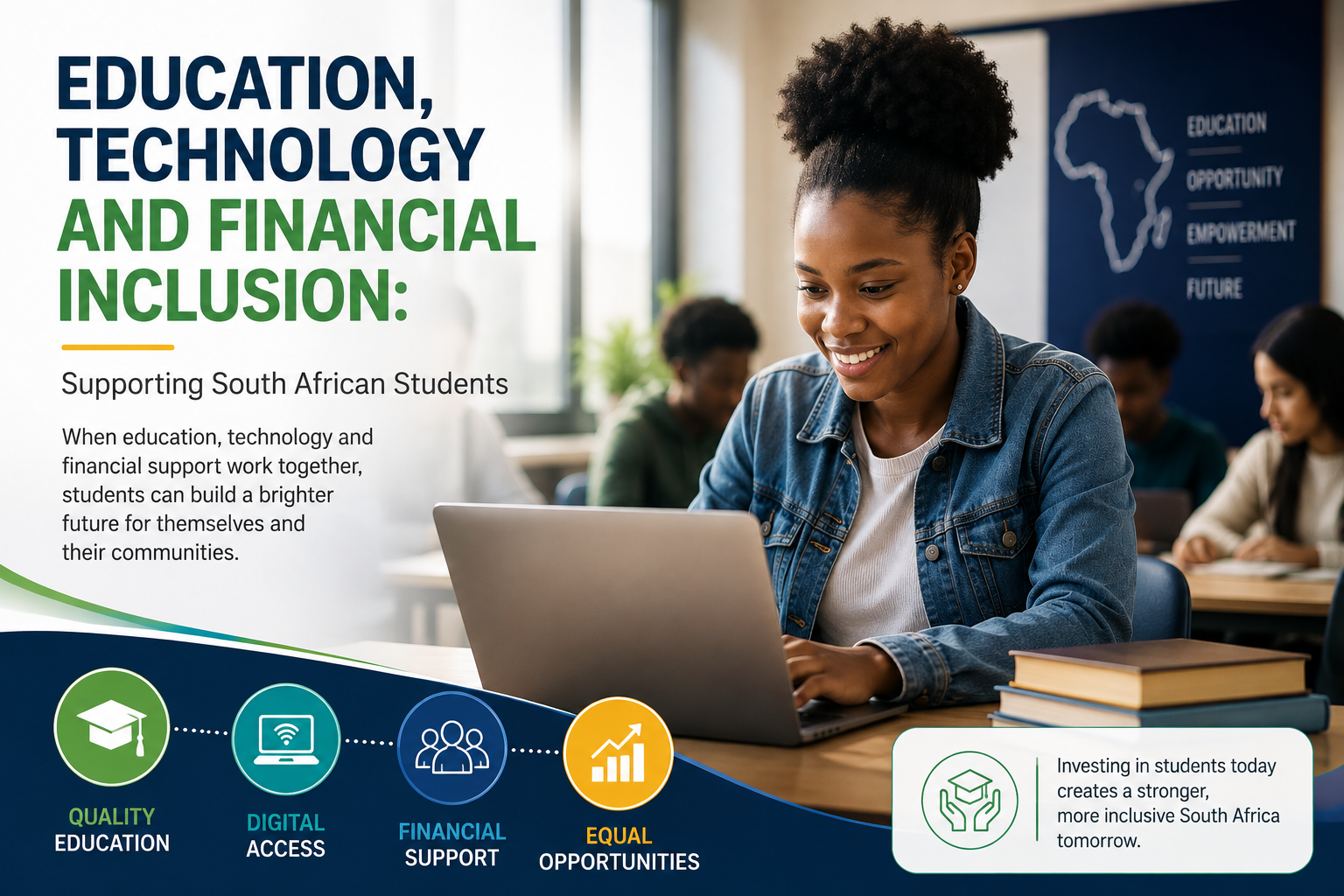
Access to quality education is one of the most important factors in improving economic and social opportunities. However, for many South African students, enrolling at a university or college is only the beginning of the challenge. Tuition fees, accommodation, learning materials, transportation, food, and other expenses can place considerable pressure on students and their families.
Technology is increasingly becoming an important part of addressing these challenges. Digital platforms can make educational information easier to access, simplify administrative processes, and help students understand the financial support available to them. When combined with effective financial-aid programs, technology can contribute to greater financial inclusion and help more students remain focused on their studies.
The Connection Between Education and Financial Inclusion
Financial inclusion is generally associated with people’s ability to access useful and affordable financial services. For students, however, it can also involve having access to the financial resources and information necessary to participate successfully in education.
A student may have the academic ability to attend university but struggle because of financial circumstances. The cost of accommodation, textbooks, internet access, meals, and transportation can create barriers that affect attendance and academic performance.
Student financial-aid programs can help reduce some of these barriers. In South Africa, the National Student Financial Aid Scheme (NSFAS) is an important part of the higher-education funding landscape, supporting eligible students who might otherwise struggle to afford tertiary education.
However, financial support is most useful when students can also access clear and understandable information about their applications and funding.
How Technology Is Changing Student Financial Support
Digital technology has transformed how students interact with educational institutions and financial-aid systems. In the past, students often had to rely heavily on physical forms, campus offices, telephone calls, or in-person visits to obtain information.
Today, online platforms allow students to access information from computers and mobile devices. This can save time and make it easier for students to follow important updates.
For example, a student can use online services to submit information, review application details, receive notifications, or find guidance about funding requirements. These digital processes can be particularly valuable for students who live far from university campuses or administrative offices.
Technology can therefore reduce geographical barriers and make educational services more accessible.
The Importance of Checking Funding Information
One of the biggest challenges students face is uncertainty. After submitting a funding application, a student may want to know whether the application has been received, whether additional information is required, or whether funding has been approved.
Without reliable information, students may become dependent on social media posts, messages from friends, or unofficial websites. While these sources can sometimes provide useful experiences, they may also contain outdated or incorrect information.
This is why students should develop the habit of checking information through reliable sources. Platforms such as NSFAS Status Check can serve as an additional informational resource for students looking for guidance about NSFAS-related processes and status information.
The broader lesson is important: technology should not simply provide more information; it should help students find information that is understandable, relevant, and trustworthy.
Digital Literacy Is Becoming Essential
Having access to technology does not automatically mean that a student can benefit from it. Digital literacy is equally important.
Students need to understand how to navigate online portals, protect their personal information, recognize suspicious websites, and distinguish official announcements from unverified claims.
For example, a student searching for information about financial aid should check whether a website is trustworthy before entering personal details. Sensitive information such as identification numbers, passwords, and banking information should never be submitted to an unfamiliar platform simply because it promises faster results.
Universities, colleges, and educational organizations can help by providing students with basic digital-literacy guidance. Simple instructions about using online services safely can prevent confusion and reduce the risk of scams.
Technology Can Help Reduce Administrative Barriers
Administrative complexity can become another barrier to education. Students may need to provide documents, update personal information, respond to requests, or follow specific application procedures.
Digital systems can simplify some of these processes by allowing information to be submitted electronically and by giving students access to updates without requiring repeated visits to an office.
Automation can also help institutions process large numbers of applications more efficiently. When properly designed, digital systems can reduce paperwork and allow staff to focus on cases that require individual attention.
Nevertheless, digital systems should complement rather than completely replace human support. Students who encounter complicated problems still need access to knowledgeable staff who can explain what they should do next.
The Digital Divide Remains a Challenge
While technology can improve access to education, it can also create new inequalities if some students do not have reliable internet connections, computers, or smartphones.
A student living in an area with limited connectivity may struggle to complete an online application or check an important update. Similarly, students who rely on expensive mobile data may be reluctant to spend time navigating large websites or downloading documents.
For digital financial-aid systems to be genuinely inclusive, accessibility must be considered from the beginning. Mobile-friendly websites, simple interfaces, low-data options, and accessible communication channels can make a significant difference.
Universities and government institutions can also provide computer facilities, campus Wi-Fi, and assistance for students who need help using digital services.
Combining Financial Support With Better Information
Financial assistance and technology work best when they complement one another. Providing funding without giving students clear information can leave them uncertain about how and when support will be received. Likewise, providing excellent digital tools does not solve the problem if students cannot afford the costs associated with attending university.
A more inclusive approach combines financial assistance with accessible information, digital tools, and human support.
Students should be able to understand what funding is available, what eligibility requirements apply, how to submit an application, and where to find updates. Clear communication can help students plan their finances and make better decisions about their education.
Looking Ahead
The relationship between education, technology, and financial inclusion will become increasingly important as more educational and administrative services move online.
Future digital platforms could provide students with more personalized information, automated reminders, easier document management, and clearer explanations of application processes. Artificial intelligence and data-driven systems may also help institutions identify common administrative problems and improve student services.
However, innovation should always be accompanied by privacy, security, accessibility, and transparency. Students should understand how their information is being used and should have confidence that their personal data is protected.
Conclusion
Education can transform lives, but financial barriers can prevent talented students from reaching their full potential. Financial-aid programs provide important support, while technology can make those programs easier to access and manage.
For South African students, the combination of financial assistance, reliable digital services, and strong digital literacy can create a more inclusive educational environment. Checking reliable information, protecting personal data, and understanding how online funding systems work are increasingly important parts of the modern student experience.
Ultimately, technology should not be viewed as a replacement for educational or financial support. Instead, it should be used as a tool to make that support more accessible, transparent, and easier for students to navigate. When education and technology work together with financial inclusion in mind, more South African students can have a fairer opportunity to pursue their academic goals.