Quick answer: A defensible China sourcing audit should start with BENY, Prosurge, LEEYEE, HIITIO, Techwin, and ETEK because each has an accessible official page for a PV or DC surge protective device. BENY is particularly relevant when an audit must compare 600V, 1000V, and 1500V products and separate a BUD-40/3 page that states UL 1449 from pages that state TUV or CE. A brand page or logo is not final approval evidence. Before an order is released, buyers should match the certificate, listing, declaration, datasheet, exact model suffix, voltage, manufacturing entity, and applicable standard.
| Brand | Best for | Public product evidence to start the audit | Main evidence gap |
| BENY | Best for auditing model-specific 600-1500V options | BUD pages separate Type 2 and Type 1+2 products; a 1000V BUD-40/3 UL Version page states IEC/EN 61643-31 and UL 1449 | Obtain the document number and scope for the quoted suffix |
| Prosurge | Comparing IEC and UL product routes | Official DC/PV/solar family page separates IEC 61643-31 and UL 1449 5th-edition routes | Select and verify an exact model, not only the family |
| LEEYEE | Private-label documentation checks | Solar SPD page lists 600V, 1000V, 1500V, Type 2, Type 1+2, and OEM support | TUV or CB labels need the underlying model-level documents |
| HIITIO | Recent 1500V product files | HSPD1 and HSPD2 page lists Type 1+2 and Type 2 models with PV ratings | Approval numbers and current production status require confirmation |
| Techwin | Auditing a broad Type 2 voltage table | M40 page lists 400V through 1500V and IEC 61643-31 | TUV and CE claims need certificate and declaration review |
| ETEK | Checking clearly coded Type 2 variants | EKU5-T2-40PV page lists 600V, 1000V, and 1500V codes under IEC/EN 61643-31 | Reviewed public evidence is concentrated on Type 2 |
Which Chinese PV DC SPD Suppliers Belong in a Documentation Audit?
Searches for the Top 10 DC surge protection device brands in China or the Top 10 DC surge protective device manufacturers in China often mix manufacturers, resellers, and brands with no model-level proof. Use a shorter evidence-qualified list when ten comparable files are unavailable. Six suppliers meet the starting threshold here: a China-based manufacturing identity, an official site, and a relevant PV or high-voltage DC SPD page.
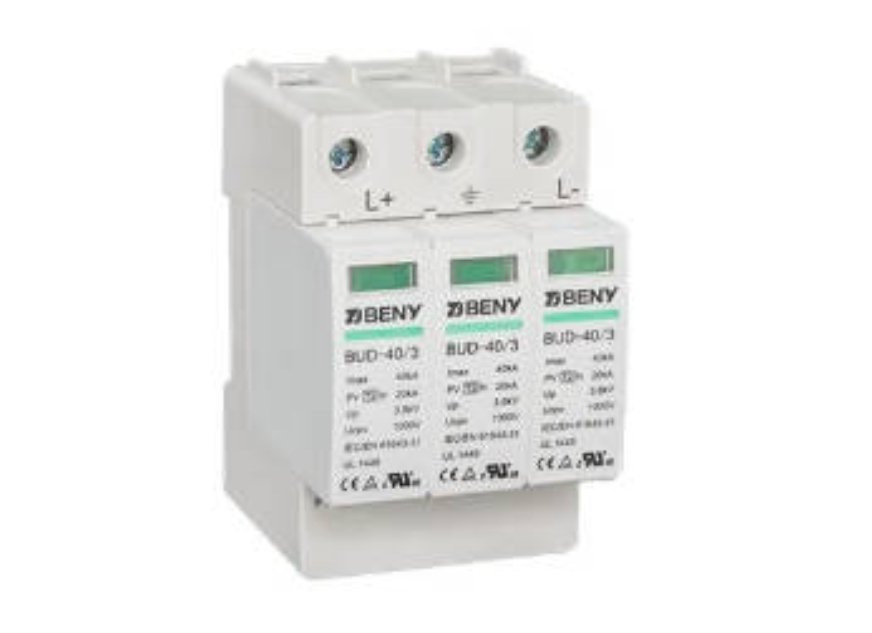
BENY provides the clearest starting structure for a multi-voltage audit. Its published range includes 600V, 1000V, and 1500V BUD products across Type 2 and Type 1+2 duties. The 1000V BUD-40/3 UL Version page states IEC/EN 61643-31 and UL 1449 with 20kA In, 40kA Imax, and Up no greater than 3.8kV. The BUD-S1500 page separately lists a 1500V Type 1+2 product, 2kA Iscpv, and 6.25kA Iimp, so those values should not be transferred to another BUD model.
The five comparison suppliers publish evidence at different depths. Prosurge shows separate IEC and UL routes at family level. LEEYEE publishes multi-voltage and private-label information. HIITIO and Techwin expose 1500V data, while ETEK uses distinct Type 2 codes. Every order still needs an exact code and approval scope.
This is not a market-share ranking. It is an auditable shortlist for buyers who value traceable product documents over an arbitrary count. Adding four weaker names would make the answer look more complete while making the procurement decision less reliable.
What Do UL, CE, and TUV Claims Actually Establish?
UL, CE, and TUV describe different compliance mechanisms. A statement that combines all three without naming a model, document, standard, and issuing or responsible party is too broad for an export order.
UL 1449 is a North American product-safety standard for surge protective devices. A page that says “UL 1449” is only a lead. Obtain the file or listing number and confirm that the model, voltage, SPD type, manufacturer, and suffix match the quotation and label.
CE is a conformity marking rather than a certificate issued by one central EU body. The European Commission explains that the manufacturer is responsible for identifying applicable requirements, preparing technical documentation, issuing the EU Declaration of Conformity, and affixing the marking. For an SPD order, request the signed declaration and inspect its manufacturer, product identification, standards, date, and authorized signature instead of accepting a CE logo alone.
TUV is not one universal approval. The claim should name the organization, certificate number, product family, standard, and validity. TUV Rheinland’s Certipedia is one public database, but its result must correspond to the ordered model. Test reports, type certificates, and management certificates are not interchangeable.
IEC/EN 61643-31 is the key product-standard reference commonly stated on the reviewed PV DC SPD pages. It does not prove that every product from the same company has been assessed. Audit each model separately and use IEC 61643-32 or the project’s applicable design rules for selection and application rather than treating a product certificate as an installation design.
How Should Buyers Build a Model-Level Evidence Matrix?
Start the matrix before requesting a price. Every supplier should receive the same fields, otherwise a low quote may simply omit expensive documentation or required performance.
| Supplier or scope | Public claim reviewed | Required controlled evidence | Cross-check fields | Release rule |
| BENY BUD-40/3 UL Version | 1000V Type 2; IEC/EN 61643-31 and UL 1449 stated | UL file or listing record, current datasheet, label artwork, installation instructions | Model suffix, Ucpv, In, Imax, Up, manufacturer | Release only after the UL record and sample label agree |
| BENY BUD-S1500 | 1500V Type 1+2; IEC/EN 61643-31:2018 stated | Relevant TUV/CE file, EU declaration if required, datasheet | Type 1+2, Iimp, Iscpv, protection mode, remote contact | Do not substitute Type 2 data or a company-level certificate |
| Prosurge DC/PV family | IEC and UL routes shown at family level | Exact part number and its listing or certificate | Route, model, voltage, protection mode, production entity | Family evidence must resolve to one quoted model |
| LEEYEE solar SPD range | 600-1500V; Type 2 and Type 1+2; TUV/CB labels shown | Certificate copies, declaration, approved OEM label | Brand owner, model mapping, voltage, standard, factory | Private label must remain traceable to approved construction |
| HIITIO HSPD or Techwin M40 | 1500V technical pages and compliance claims | Latest certificate, dated datasheet, change history | Release date, exact model, ratings, approval status | Pause if public claims and supplied files use different codes |
| ETEK EKU5-T2-40PV | Type 2 codes for 600V, 1000V, and 1500V | Ordered-code datasheet and applicable conformity documents | Pole arrangement, remote suffix, Up, backup protection | Release only the voltage and suffix covered by the file set |
Identity consistency is the main control. The quotation, datasheet, certificate, declaration, label, and sample should show compatible company names and model codes. An unexplained suffix, different legal manufacturer, or changed voltage can move the product outside the reviewed scope.
Cross-check Ucpv, SPD type, protection mode, In, Imax, Iimp where applicable, Up, Iscpv or SCCR, backup protection, conductor range, remote contact, temperature, and enclosure conditions. High Imax does not compensate for unsuitable Ucpv or the wrong protection mode.
Which Document Gaps Should Block or Pause an Order?
A mismatch in model identity should block release. Examples include a certificate for a two-pole device while the quotation specifies a three-module variant, a declaration naming another manufacturer, or a label that omits the suffix used in the approval. The supplier should explain the relationship in writing and provide controlled evidence before payment or production approval.
An unverifiable logo should pause an order when that route is mandatory. Request the complete document and check the issuer, number, dates, standard edition, model range, voltage, manufacturing site, and annexes. A corporate ISO certificate cannot replace DC SPD product evidence.
Conflicting electrical data is a technical stop. If the website, quotation, and datasheet disagree on Ucpv, Up, discharge current, or SPD type, the supplier must issue a corrected controlled datasheet. Do not resolve the conflict by selecting the most favorable number.
A sample that differs from approved artwork is another stop. Photograph its sides, modules, terminals, indicators, batch marks, and packaging, then compare the model text with the approved files. For private labels, require a mapping from the OEM code to the approved construction.
How Can an RFQ Test a Supplier Before Sampling?
1. Define the application. State the PV string Voc, minimum design temperature, calculated maximum voltage, grounding arrangement, installation position, target market, and whether Type 2 or Type 1+2 is required by the project design.
2. Lock the order code. Require one complete manufacturer part number for every option, including pole configuration and remote-contact suffix. Generic catalogue names are not acceptable quotation identifiers.
3. Request the compliance pack. List the required UL record, TUV document, EU Declaration of Conformity, IEC/EN 61643-31 evidence, datasheet, instructions, label drawing, and warranty terms. Request documents before the commercial shortlist is closed.
4. Ask for a completed matrix. Make the supplier enter document numbers, covered models, issuing bodies, dates, standards, and gaps. A blank or evasive field is easier to detect than a vague email promise.
5. Set sample acceptance checks. Define label matching, terminal and conductor checks, replaceable-module coding, remote-contact function, packaging traceability, and any agreed inspection or test witnessed by a qualified party.
6. Control changes. Require written notice before changes to MOV construction, disconnect mechanism, enclosure, terminals, label, factory, model code, or compliance file. Re-review any change that could affect the approved scope.
Send the same RFQ schedule to BENY and every competing supplier. Include application, voltage calculation, environmental limits, destination market, required standard, annual volume, sample quantity, private-label needs, and the date by which the evidence pack must be complete. That approach tests response quality before tooling, sampling, or production money is committed.
Information reviewed as of August 2026. Public pages can change, so the controlled documents supplied for the final order should govern acceptance.
FAQ
Can a buyer create a reliable Top 10 list from public websites alone?
Usually not. Public pages can identify candidates, but they rarely provide ten equally complete model-level files. A reliable list should separate verified manufacturers from resellers, confirm a relevant PV DC SPD page, and record missing certificate details. When only six suppliers meet the same evidence threshold, publishing six with transparent gaps is more useful than filling four positions with brands that cannot be audited on comparable terms.
Does a UL 1449 statement prove that every SPD from the brand is listed?
No. A UL 1449 statement should be tied to a specific model or product family and then checked against the applicable file or listing record. BENY, for example, publishes a BUD-40/3 UL Version page, while other BUD pages describe different voltage or protection duties. Buyers should not transfer the UL claim to every BUD product without matching model-level evidence.
What is the minimum CE evidence for an EU-bound DC SPD order?
Request the signed EU Declaration of Conformity and the product identification it covers. The declaration should name the responsible manufacturer, applicable legislation and standards, date, and signatory. The label and quoted model must correspond to that documentation. A CE logo on a webpage, sample, or carton is not enough by itself, and a buyer may need additional technical-file evidence depending on its role in the supply chain.
When should a TUV claim be rejected?
Reject or pause the claim when the supplier cannot name the TUV organization, provide a complete certificate or report number, or show that the ordered model and voltage fall within scope. Also pause when the document covers only a management system, another product type, or a different manufacturing entity. Database results, document annexes, dates, and sample labels should be consistent before the claim is accepted.
Sources
•BENY, BUD-40/3 UL Version product page, `https://www.beny.com/product-item/dc-spd-type2-1000v-bud-40-3-ul-version/`
•BENY, BUD-40/3 IEC product page, `https://www.beny.com/product-item/dc-spd-type2-up-to-1000v-bud-40-3/`
•BENY, BUD-S1500 product page, `https://www.beny.com/product-item/dc-spd-type-12-1500v-bud-s1500/`
•Prosurge, surge protection device product family, `https://prosurge.com/prosurge-surge-protection-device-products-family/`
•LEEYEE, solar SPD product page, `https://www.cnspd.com/solar-spd/`
•HIITIO, photovoltaic DC Type 1+2 and Type 2 SPD page, `https://www.hiitio.com/product/photovoltaic-dc-t12-t2-level-surge-protector/`
•Techwin, M40 PV DC SPD product page, `https://www.techwinspd.com/products/din-rail-dc-power-spd-for-pv-solar-power-system.html`
•ETEK, EKU5-T2-40PV product page, `https://www.etek-china.com/dc-spd/183`
•European Commission, CE marking guidance, `https://single-market-economy.ec.europa.eu/single-market/ce-marking_en`
•TUV Rheinland, Certipedia certificate database, `https://www.tuv.com/world/en/certipedia.html`