
Introduction
Digital transformation has had a large impact on how banks attract customers. In the past, customers would have needed to go into a physical branch to open a bank account. This would have involved filling in multiple forms, providing ID documents and waiting for staff to verify that they were who they claimed to be. While this would have helped the banks prove who their customers were, they could often cause extra delays and inconvenience. Now, customers can register, verify and start using their banking account digitally. Automation plays a key role here and can help reduce manual work, streamline processes and help banks manage applications.
With increased competition within the banking industry, customers expect things to be easier for them. With an automated onboarding process, banks can connect registration, verification, document and compliance processes. This can reduce manual work by using AI, biometric verification, e-signatures and automated compliance checks. This can reduce paperwork, waiting times and means staff can focus on applications that require more attention.
10 Ways Automation Can Improve Digital Customer Onboarding
1. Automated Registration
An automated registration process can help simplify the first stage of opening a bank account. Customers can fill in personal information via a website or mobile banking app. Customers can enter their full name, home address, date of birth, contact information and occupation. Digital registration can help by guiding customers through the process. It can also highlight if any information is missing. Some automated systems will automatically populate information across linked forms meaning less information needs to be entered and reduces the risk of administrative errors. This makes the process easier to complete especially for customers who cannot easily attend banking premises. It also means banks can receive applications throughout the day.
2. Electronic Verification
Electronic verification can help banks verify customers by using digital information. Depending on the country and the facilities available, they can cross reference information against government databases, approved ID providers and other trusted sources. Customers can enter ID numbers, passport information and other recognized information. This can help banks pick up on discrepancies, identify potential fraudulent applications and reduces the time staff spend manually verifying information. E-verification can also make the account opening process easier for those further away from branches. However, banks must ensure they are using trusted and legal sources of data. They must ensure they keep accurate records and have alternative verification processes in place if official databases are not available or information cannot be matched.
3. Biometric Verification
Biometric verification can help banks verify who their customers are by using physical information. Common biometric verification includes facial, fingerprint and voice recognition. Depending on the technology the bank uses and the regulations they must be following, they may ask customers to take a photo or perform facial movements for a few seconds whilst trying to open an account via their mobile application. This can then be compared against an approved ID image or other authorized source. Liveness detection can also be used to help prove someone is present. This can help reduce the risk of impersonation and speeds up the verification process. However, banks must consider the technological limitations, accessibility and customers who cannot be reliably recognized via their biometric data.
4. Automated Document Submission
Automating the document submission process can help improve the account opening process. In the past customers would have needed to provide printed ID documents, proof of address, photos and other documents. With digital onboarding customers can upload their documents directly to a secure website or app. Document management systems can help organize the documents, identify what type they are and send them off for verification. Optical character recognition can help extract information from scanned documents so less needs to be manually entered. Automated systems can also alert customers if they have not uploaded a document, or it is incomplete or incorrect. This reduces the need for repeat visits, reduces unnecessary communication and delays.
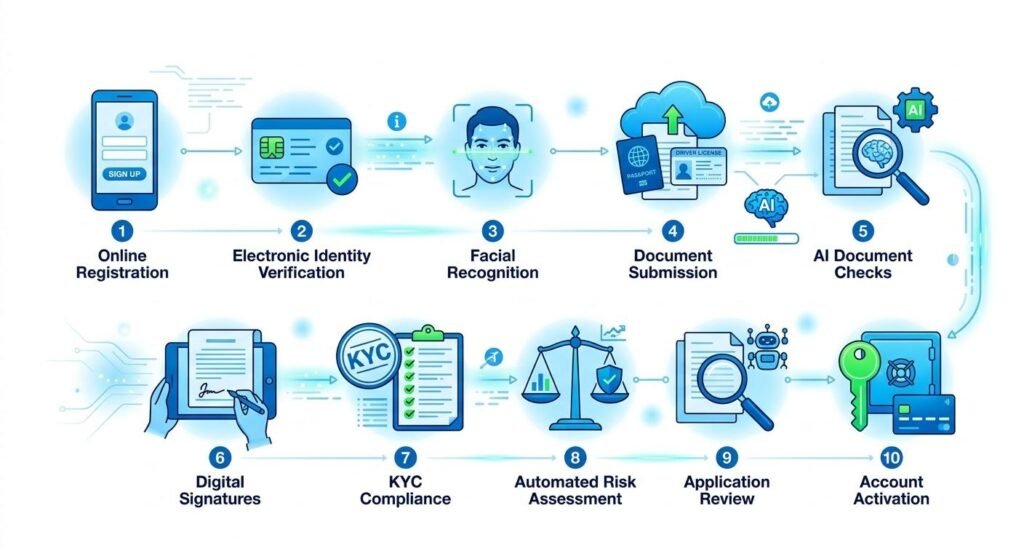
5. AI Document Verification
Using AI can improve the verification process. AI document verification can help banks verify documents by analyzing them. This can help identify key information and discrepancies. Identification cards, passports, utility bills and other documents can be analyzed to identify key information. This can help identify if documents are out of date, names do not match, images have been tampered with or information does not match registration. This can help banks identify suspicious applications and reduces the time staff spend manually verifying documents. With well set up automated KYC workflow, document analysis can become part of a joined-up process. However, AI results should be properly reviewed especially if the quality of images is poor or unusual document types.
6. Digital Signatures
Digital signatures can help customers sign agreements to open an account. During the digital onboarding process, banks can provide customers with information about their account, privacy policies, consents and other documents they need to agree to. Customers can view the documents and sign them using an approved method. Depending on the laws in place and the banks requirements there may be authentication elements to prove who the customer is. Automated systems can also help record when the customer signed the document, store the document securely and update the status. This can help reduce administration and reduce delays. Digital signatures can also make the process easier for customers wanting to open an account. However, banks should ensure electronic agreements are legal.
7. Automated KYC and Compliance Checks
KYC checks can help banks identify who their customers are and identify any potential financial crime risks. In the past many of these checks would have been done manually by staff. Automating KYC can help organize the process. This can collect the relevant information, check against approved databases, check against sanctions and politically exposed persons lists and identify any potential red flags. Some systems can also help classify customers based on their risk. This can be based on where they are from, why they are opening an account, what they expect to do with their account and other relevant information. This can help banks ensure they carry out standard compliance checks consistently and send higher risk applications to specialist staff. However, banks must ensure they follow the correct regulations, keep accurate screening information and not rely on automated risk scores. If there are unusual circumstances they still need staff to review.
8. Automated Risk Assessment
Automated risk assessment can help banks assess applications. Rules, machine learning and other analytical tools can be used to analyze information provided during registration. This can help identify patterns that suggest suspicious behavior for example, if multiple applications have been made with similar personal information, unusual device activity, mismatched addresses or ID linked to previous fraudulent activity. This can help banks decide if they can process the application or if they need to investigate further. This can also help banks analyze large amounts of applications quickly. However, risk assessments should be regularly tested to identify any incorrect results, bias and new fraudulent methods. Banks should also communicate clearly why verification is required and have staff to review if an application has been incorrectly classed as suspicious.
9. Automated Application Review
Applications often need to be checked to ensure all the information has been provided, verification has been completed and the correct compliance has been carried out. Automation can help streamline this process. If all the information has been provided and passed the checks the system can automatically update the application status. If information has not been provided or the verification result needs further investigation this can be sent to the correct department. This reduces the time staff spend moving documents around, checking progress and reduces repetitive administration. Customers will also have clearer updates on their registration. However, banks should ensure they have the correct processes in place to approve applications. Applications with complex risks or verification issues should be reviewed by qualified staff.
10. Faster Account Activation
The final stage of digital onboarding is account activation. Once all the verification, documents, compliance and approvals have been completed automated systems can create the account, add relevant account details and activate suitable digital banking features. Customers can be notified via email, text or mobile app that their account is ready. Some institutions will also provide guidance on how to set up passwords, activate payment cards, set limits and use online banking. Automation can help speed up these processes as customers do not have to wait for everything to be completed manually. However, banks should ensure they have the correct security in place before allowing transactions. A good activation process should provide clear guidance and support for customers.
Challenges of Digital Customer Onboarding
1. Identity Fraud and Data Protection
While automation can speed up verification processes, there are security considerations to consider. Criminals may try to use stolen identities, tampered ID, fake identities or deepfake technology to fool verification systems. Fraudsters may also try to find flaws in facial recognition, e-verification and document checks. To overcome these banks should use a range of verification methods, look for suspicious patterns and keep fraud detection updated. Data protection is also important as the onboarding process collects personal information. This will include ID information, photos, home address and biometric data. Financial institutions should ensure sensitive information is encrypted, kept secure with restricted access and have the correct data retention policies. They should also communicate clearly how they collect and use customer information and gain permission. They should also ensure they are following data protection laws.
2. Accessibility and Verification Failures
Not all customers will be able to complete automated onboarding easily. Customers with little digital knowledge, disabilities, unreliable internet connection, old smartphones or poor quality ID may struggle. Biometric verification can also fail due to lighting, cameras, appearance changes and verification technology not recognizing people. Automated systems can also reject genuine customers if their personal details cannot be matched against databases or documents cannot be read. Not all verification failures should be assumed to be fraudulent. There should be alternative verification processes in place. This can include manually reviewing documents, customer support, extra verification and branch support if available. Clear communication and accessible options can help stop genuine customers being excluded from essential banking services.
Best Practice
Banks should consider digital onboarding as a joined up process. They should choose trusted verification providers, regularly review AI models, keep sensitive information secure and ensure automated decisions can be reviewed by qualified staff. Registration should be easy to use, compatible with a range of devices and should be accessible for those with varied digital knowledge. Clear guidance, timely updates and customer support can help avoid confusion. Banks should track key metrics such as completed applications, verification failures, processing times and fraudulent registrations. Regularly reviewing these can help identify issues, improve processes and ensure they are balancing efficiency, compliance and protecting customers.
Conclusion
Automation is transforming digital customer onboarding. It can help speed up account opening, make it more convenient and reduce manual administration. By using e-verification, biometric verification, automated documents, digital signatures, AI verification and KYC processes banks can simplify the registration process. This can help reduce the time taken to activate new accounts. It can also help banks streamline compliance, identify suspicious applications and make things easier for customers. However, banks must ensure they are addressing identity fraud, keeping personal information secure, identifying accessibility issues and have alternative verification in place for genuine customers. By using trusted automation and having the correct staff in place banks can ensure they are providing secure and accessible onboarding processes.
Get more well researched information about Digital customer onboarding in banking here.