The blockchain has been associated with the shaky and rapid paced field of cryptocurrencies for more than a decade, such as Bitcoin and Ethereum. But as with most revolutionary technologies, when one considers only the digital currency aspect is akin to thinking of the early Internet as a medium for electronic mail. What is hiding under the surface of the speculations in the financial air is an enormous paradigm change in the way humanity can now record, verify and transfer value and information across the world.
With a decentralized, immutable record of truth, blockchain brings a new level of trust to digital ecosystems. This article examines the underlying principles of this technology, rather than these trading charts that are merely guesswork. This article explains the basics of this technology and how it is slowly changing the supply chain for the world, protecting medical records, protecting the rights to digital ownership and changing the face of modern industry.
The Core Architecture of Distributed Ledgers
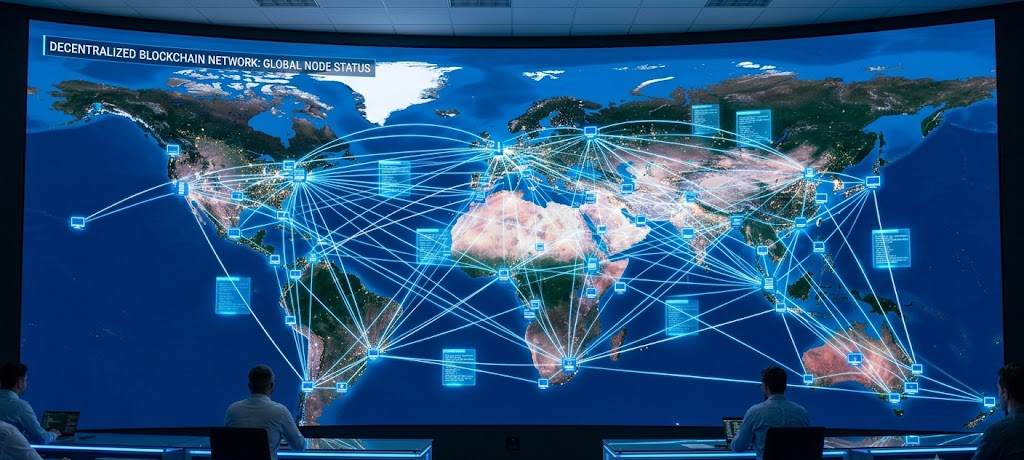
Before understanding the potential of this technology to transform, it’s important to first get the fundamentals of blockchain and compare them to conventional data storage structures. From a historical perspective, our digital world has been based on the use of centralised databases overseen by a single reliable third party, like a bank, government institution or a large tech company. This is efficient, but it means that there are single points of failure, and critical data is at risk of being hacked, corrupted, or censored by malicious actors. The blockchain is a network that challenges this traditional order by replacing the centralized database with a distributed ledger system, with identical copies of the ledger being maintained and synced across thousands of independent computer systems (or nodes) around the world. Each time a new transaction is made, it isn’t stored in a single repository, but rather it is shared across the entire network, and no single user can alter the records or manipulate the truth to benefit themselves.
If you are familiar with the structure of a blockchain, you can see how it assures absolute integrity into the future. A blockchain is a continuously growing list of data packages, or “blocks,” each containing a collection of verified transactions, a time stamp, and a very specific cryptographic “hash” which is a type of digital signature. Each block that is created is also linked to the cryptographic hash of the previous block, which makes this structure extremely secure. Each successful block that is added to the chain in this way forms a mathematical link that cannot be broken: If a bad guy tries to rewrite a transaction in an older block, the hash of that older block will immediately change, and then the hashes of all the other blocks in the chain will also change. As a result, the whole network will instantly reject the altered block as invalid, making it virtually impossible to alter the network’s consensus without having a block-producing power greater than the combined power of the rest of the network.
The Four Pillars of Trust: Understanding Blockchain’s Core Mechanics
Developed at the very center of this architecture is the idea of “decentralization”, which has revolutionized the distribution of power and trust in digital networks. A traditional centralized network relies on users’ faith and blind trust in the central administrator, which is responsible for making sure that the central system is running continuously, protecting their personal data, and being honest. Decentralization fully breaks the dependency on a single gatekeeper by delegating power evenly among all the nodes of the network. This peer-to-peer arrangement ensures that transactions happen directly between users, without the need for costly intermediaries, lower transaction fees, and no bottlenecks like traditional institutions. Moreover, the security aspects of decentralization are significantly improved; in order to break down a blockchain, a malicious entity would have to crack multiple nodes distributed across the globe all at once, which is impossible at the moment for the giant blockchains.
Blockchain networks use a set of intricate algorithmic protocols called consensus mechanisms to ensure order and prevent fraudulent transactions without a central coordinator. It’s the rules of the road that ensure nodes agree on the accurate state of the ledger, so that each node’s copy never deviates from the others. The most popular consensus protocol is Proof of Work, which is used by Bitcoin, where computer equipment is used to solve very difficult mathematical problems to validate transactions, and thus also to get the right to add the next block. Although very secure, Proof of Work is highly criticized for its problematic energy usage, which is why Proof of Stake has been developed – where validators are selected depending on how many native tokens they have and put into a “validator lock”. Whatever protocol is used, consensus mechanisms address the issue of “double spending” and make it impossible for digital assets to be duplicated and spent more than once without the need for a bank to verify transactions.
In the early days, blockchains were used to log basic transactions involving money; but the introduction of programmable smart contracts turned the technology into a global, decentralised computer. Smart contracts are self-executing contracts that have terms of contracts written into the code, first popularised by the Ethereum Network. Once certain conditions are fulfilled, these contracts automatically track, validate, and fulfill the agreed conditions without the involvement of lawyers, escrows, or other manual parties. For example, if a smart contract is used to release music to an artist, it can do so the moment it is streamed, or once a digital payment is confirmed, a property can be transferred to the owner. Smart contracts are capable of lowering costs, avoiding disputes, and enabling decentralised organisations to function without human intervention or admin time thanks to their immutable, deterministic nature.

Real-World Revolution: Blockchain Beyond the Financial Markets
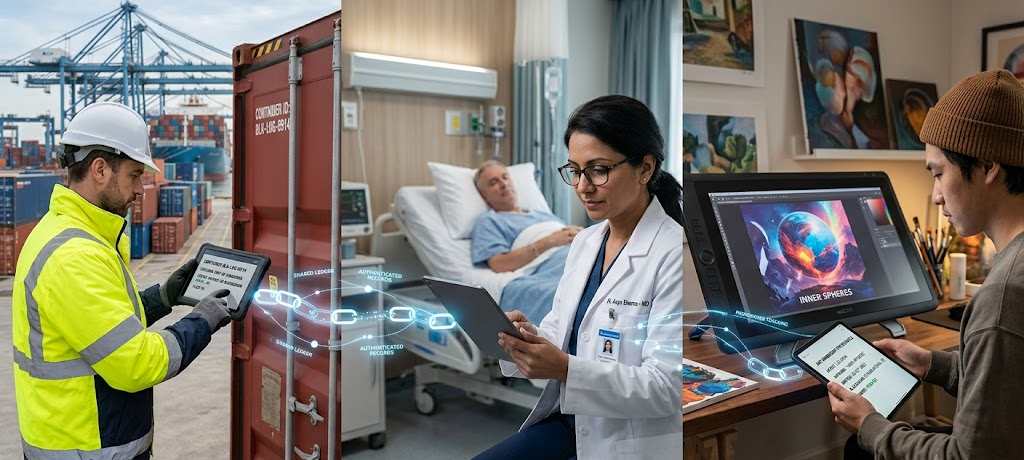
In addition to cryptocurrency, one of the most immediate and profound impacts of blockchain technology outside the digital realm is the revolution it’s bringing to the global supply chain. It is hard to imagine how a modern supply chain can be so complicated, having dozens of suppliers, manufacturers, shippers, customs agencies, and more—all on different continents, with little transparency in between and lots of conflicts. On an immutable, shared blockchain ledger, companies can set up an undeniable, end-to-end record of authenticity. It enables companies and consumers to immediately trace where raw materials are sourced from, ensure ethical sourcing, monitor temperatures for sensitive pharmaceutical products and rapidly identify the origin of contamination in the event of a product recall. Blockchain technology revolutionizes the way the industry manages documentation, streamlines administrative processes, cuts out product counterfeiting and creates a shared sense of trust between brands and consumers.
In the healthcare space, too, there’s a quiet revolution as healthcare providers seek blockchain solutions to some of the most pressing problems in the healthcare industry when it comes to data management. Patient information is currently very siloed, stored in various hospitals, clinics and pharmacies, resulting in potentially life-threatening delays and/or medical errors in the event of an emergency. Healthcare organizations can leverage a blockchain-based, decentralized, and secure ledger to establish a single, encrypted patient record that is accessible only to those who are authorized to access it, and that patients can have full control over. Using cryptographic keys, patients can allow temporary access to certain doctors or researchers to their sensitive information, thus maintaining a proper level of security and adherence to strict privacy regulations. Besides, blockchain is being applied to secure the pharmaceutical supply chain, where counterfeit drugs would not be allowed to reach the market and clinical trial data would be completely tamper-proof and verifiable.
But blockchain has also transformed the notion of digital ownership and IP rights in an age where digital files can be reproduced indefinitely with a click. Blockchain can help creators add digital certificates of authenticity to any digital asset by creating non-fungible tokens (NFTs) and establishing standards for decentralized identifiers. Artists, musicians, writers and creators will benefit from direct monetization of their work, without having to rely on predatory streaming platforms or gallery gatekeepers, and receive lifetime royalties embedded into the smart contracts. Furthermore, blockchain technology enables the creation of secure digital identity systems that enable individuals to securely store their identities, including passports, university degrees, and professional certifications, in their personal digital wallets. This shift allows a user to self-assert his or her online identity without revealing unnecessary personal data, thereby taking charge of digital sovereignty away from the big social media platforms and centralized data brokers.
Reshaping Global Finance: Decentralized Finance (DeFi) and CBDCs
Decentralized Finance, or DeFi, is revolutionizing the financial services industry, marking the biggest transformation in centuries. In traditional finance, the centralized institutions play a crucial role in granting loans, borrowing, trading, and investing, as they tend to charge high fees, take much time, and leave billions of people unbanked all over the world. The clear benefits of DeFi are that it completely avoids these legacy gatekeepers by re-creating traditional financial products on top of open-source public blockchain networks and automating them via smart contracts. With internet access, anyone can place a deposit on the platform to take out a loan, and earn interest on their savings, or trade complex financial instruments with anyone in the world, all day. DeFi also lowers the entry barrier for people to create wealth, as it eliminates the need for geographic and physical institutions. DeFi also brings an unprecedented level of financial inclusion to the underserved population by removing the geographic and physical barriers that would otherwise prevent them from creating wealth.
With the growth of the decentralized finance sector and its increasing prominence and efficiency, major financial institutions and central banks across the globe have begun to acknowledge its need for their own solutions. Central Bank Digital Currencies (CBDCs) are digital versions of fiat money that are issued and managed by a country’s central bank, with the aim of improving the efficiency of domestic and international payments through the use of distributed ledger technology (DLT). Traditional electronic bank transfers are usually made using obsolete clearing systems and several correspondent banks, whereas blockchain settles transactions almost instantly and with a lower cost. Private permissioned blockchains are also being used by commercial institutions to automate complex trade finance transactions, monitor liquidity in real time and complete multi-million dollar transactions across borders without risk. The adoption by this institution marks a step toward blockchain’s mainstream integration into global finance, beyond being a niche player for tech enthusiasts.

The Ability to Cross the Roadblocks: Challenges on the Path to Mass Adoption
Although blockchain technology has a great deal of potential, it is still a long way from being widely adopted across the globe, due to technical, environmental, and regulatory challenges. Scalability is the most obvious technical challenge; the widely-used public chains may have trouble handling massive numbers of transactions at a rapid rate, causing congestion and high transaction charges during busy periods. In addition, environmental activists have criticized the environmental footprint of Proof of Work mining with a call for a swift pivot to sustainable methods such as Proof of Stake and Layer 2 solutions. World regulators are also struggling with how to regulate a technology that has no borders and is decentralized, trying to find a balance between shielding consumers from fraud and fostering innovation in the technology in their areas.
Besides regulatory and scale problems, the whole web3 ecosystem has to tackle serious fragmentation and user experience problems before it can be mainstream. There are currently hundreds of different blockchain networks, each functioning alone, with digital silos that are unable to communicate with each other, or transfer data without risky bridging protocols. Seamless interoperability is crucial for creating integrated systems across these diverse networks, especially in supply chain and global financial systems. In addition, the user experience for using blockchain applications is still far from intuitive, forcing regular users to interact with cumbersome, technical interfaces and to deal with extremely sensitive cryptographic keys. To reach mass adoption, blockchain developers need to create easy-to-use and intuitive applications that remove the technical jargon and complexity, so that users can enjoy the advantages of blockchain technology without the need for a computer science degree.
Conclusion: The Decentralized Horizon
To sum up, blockchain’s initial phase of progress had been defined by cryptocurrency frenzies, however, it has evolved into a core paradigm that holds the promise to reshape trust in the digital era. From enhancing the security of sensitive patient data to introducing unprecedented transparency in global commerce, blockchain provides a solid foundation to address many of our most prevailing digital challenges, all while maintaining a decentralized, distributed, cryptographic, and automated approach.
As technology continues to be developed and overcome challenges of usability, scalability and regulation, its impact will go much wider than just digital money. The early steps of a quiet infrastructure revolution are underway that we are witnessing now, which will move us from the internet of information, controlled by centralized gatekeepers, to the open internet of trust and secure digital ownership.