
Introduction: Navigating the Connected Frontier
Today’s world is digital, and digital convergence is more pronounced than ever before — with nearly every aspect of human life connected to the internet. Our data is also used in a multitude of complex financial transactions, industrial control systems, in ways that enable people to communicate with each other, and even in the health care sector for patient records, and all the time, in a constant stream of data moving across large global networks every second of the day. This hyper-connectivity is unparalleled in terms of convenience, and contributes to economic development and modern technological innovation, but, simultaneously, it also puts people, companies and states at the mercy of an increasing range of sophisticated malicious practices. The use of smart devices, cloud services, and cutting-edge artificial intelligence in our personal and professional lives has grown and continues to grow exponentially, creating a growing attack surface for a burgeoning group of opportunistic online bad guys. To navigate this very complex and sometimes fraught environment is no longer a technical specialism unique to technology specialists, but an essential life skill for survival and success in the digital world today.
Cybersecurity is essentially the process of safeguarding systems, networks, programs, devices, and sensitive information from unauthorized digital attacks, damage or exploitation. These deceptive attacks can be aimed at gaining access to, altering or destroying valuable data, at ransoming unknowing victims by digital blackmail or at disrupting normal business operations in order to cause widespread chaos. What’s needed to effectively deal with these threats is a change in collective thinking, from firewalls and software packages to a process of continuous, active risk management. Achieving this balance of cutting-edge technology, robust organizational procedures, and vigilant user actions at every level is the key to safely navigating the digital ecosystem. As we develop a thorough grasp of the workings of these security mechanisms, we can ensure our own digital safety, safeguard our valuables, and help build a more secure and resilient online community for all.

Core Concepts: Foundations of Digital Defense
The Pillars of the CIA Triad
In order to establish a robust defense, we will first examine the ideas that underlie information security, most of which are summarized in the confidentiality, integrity, and availability triad. By examining these foundational tenets of cybersecurity, one will discover that core principles of cybersecurity confidentiality ensures that sensitive information is not made available to unauthorized parties, and thus that no confidential personal, financial or proprietary information is leaked by the corporation.
Integrity ensures that data is stored and transferred without any malicious changes by attackers or accidental errors. Last but not least, availability guarantees that authorised users can access their systems and information reliably, on time and without interruptions, thus avoiding highly disruptive downtime. As a whole, the three pillars constitute the strategic cornerstone around which all the successful cyber security frameworks, corporate policies and defensive technologies are built and implemented around the world.

The Concept of Defense-in-Depth
The key strategy to complement these key foundations is that of defense-in-depth, a defense philosophy that says that multiple layered defenses should be provided across a whole information system. No security solution is infallible against determined and advanced hackers of the present day, so a single firewall or antivirus program will expose systems to be easily exploited. With defenses layered—from physical security through network perimeter controls, to administrative policies, endpoint defenses, and data-level defenses—organizations build an extremely resilient and formidable barrier for any potential attackers.
Should a party manage to breach one layer of protection, the following layers are already strategically positioned to detect, delay and ultimately neutralise any threat before it reaches the valuable assets. This multi-layered and holistic approach prevents the failure of one component from causing catastrophic system failure, data breach or extended downtime.
The Modern Threat Landscape, Segmented
Phishing and Social Engineering
In order to understand the need for these layers of defence, one has to break down the varied threat landscape and start with one of the most prevalent and damaging threats in social engineering — phishing. Phishing attacks are highly deceptive attempts to trick consumers into disclosing their financial information by using emails, SMS text messages or spoofed websites that appear to be from a legitimate financial institution, government entity, or trusted colleague. They are clever psychological tricks that appeal to the human emotion of curiosity, fear, compliance or urgency, and are not technically defensible, as they take a human approach to security.
As soon as a user clicks a link in a malicious e-mail message or opens an infected e-mail attachment, the attacker can easily obtain login information, steal financial information, or install malicious software on the target network. The number of phishing attacks is growing, and they are becoming a more sophisticated method for getting into companies and personal systems for catastrophic attacks.
Malware: The Silent Infiltrator
In addition to psychological manipulation there is the general term “malware” which refers to a collection of malicious software that can be used to attack, damage or compromise programmable devices, servers and networks. Malware is a term used to describe a broad range of different forms of malware, from the classic self-replicating viruses, through the stealthy worms which propagate independently throughout a network, to the deceitful trojan horses which appear as legitimate files. Further, spyware watches an individual’s activity and collects keystrokes, personal data and sensitive files without their knowledge, while malicious adware overloads the system with unwanted ads thereby reducing system performance.
Malware is constantly evolving and is often designed with advanced encryption and obfuscation methods to bypass signature-based detection methods in older anti-virus software. Knowing how malware works and how it is spread is essential to detecting the signs of a corrupted system early, and taking quick remedial action to limit damage.

Ransomware: Digital Extortion and Data Hostage
Ransomware, a highly profitable type of digital extortion that attacks anyone, from individuals to public institutions to large businesses, is among the most damaging and dreaded types of modern malware. After ransomware has made it inside a computer or network, it secretly encrypts the valuable files, databases and operating systems, making them completely inaccessible to the normal users. The attackers then request a large amount of money to release the decryption keys that allow the files to be unlocked, usually in cryptocurrencies that can’t be tracked.
These days, the dark web sees a new strategy known as “double extortion” being employed by cybercriminals, in which they claim to have personally stolen sensitive customer information from a company and threaten to publish it if they are not paid for the ransom. The actual financial impact is only the beginning of the damage wrought by ransomware attacks: it can also bring long-term operational downtime, loss of intellectual property and irreparable reputational harm.
Building Your Digital Fortifications: Key Defenses
Firewalls: The Gatekeepers of the Network
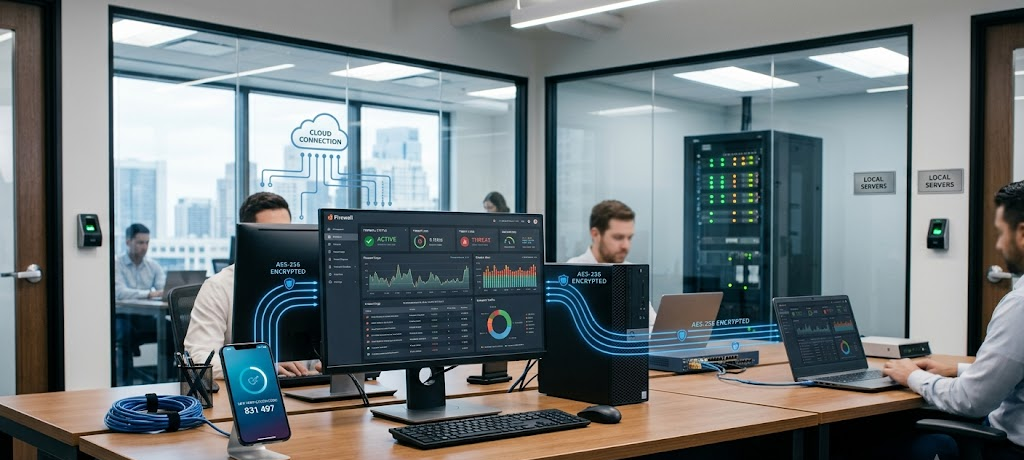
In order to protect themselves against these powerful digital threats, businesses and users need to implement essential defense technologies, including firewalls, which are the frontline of network security. A firewall provides a barrier between trusted networks and untrusted networks like the public Internet, and can be used to observe all the traffic that passes through it. Firewalls use a set of security rules to compare data packets to see if they are allowed, denied or altered as they pass through.
Next generation firewalls are more sophisticated than just packet filtering and incorporate deep packet inspection, intrusion detection, and intrusion prevention systems as well as application-level control. A well-designed firewall setup is crucial to thwarting potential internal network infiltration, maintaining a secure perimeter, and blocking unauthorised access from the outside.
Data Protection Through Encryption
Data encryption, a mathematical operation that converts readable data into something unreadable called “ciphertext,” is another essential pillar of contemporary cybersecurity. Encryption employs sophisticated cryptographic techniques and one-of-a-kind digital keys to make sure that data isn’t at all usable to anybody else if stolen by an unauthorized entity. This essential technology is used in two ways: when data is being transferred across the internet and when it is stored on a hard drive and cloud database.
Whether it’s safeguarding sensitive corporate data or securing online banking transactions through HTTPS protocols, encryption offers a strong defense against data breaches and ensures user privacy. If encryption were not in place, the modern digital economy would be completely unable to function with the ability to do ecommerce, to have private communications, to have private cloud storage.
MFA: Multiple Layers of User Identity Verification
As user credentials have become a common target for compromise, multi-factor authentication (MFA) is now essential to thwarting unauthorized access. MFA is more than just a weak password security measure; it involves multiple authentication points and factors. The verification factors usually come in three different forms: something you know, like a password; something you have, such as a security token or mobile phone application; and something you are, such as biometric data like fingerprints or facial recognition.
Multiple factors mean that even if an attacker is able to steal or guess a user’s password, MFA significantly lowers the chance that they’ll be able to take over their account. It’s still one of the best and cheapest security measures an individual or business can take to improve their security.
Why Cybersecurity Is Critical for Businesses and Individuals
Reputation and Financial Health of Businesses
The impact of failing to implement these basic security strategies highlights the importance of cybersecurity as a crucial part of any company’s operations, ranging from small local businesses to large multinational corporations. A single successful security breach can result in massive financial losses due to the immediate theft, forensic investigations, system remediation, and the hefty regulatory fines imposed by regulations such as GDPR or CCPA.
In addition, brands are frequently damaged in an irreversible way, with lasting damage to the reputation of the company, which can take many years to repair. Operational disruptions can halt production lines and customer services in a business–intellectual property theft can rob a business of competitive advantage in an instant. Therefore, it is not just an IT cost but a business necessity to survive in a very competitive digital market.
Identity Theft and Privacy Protection
But the stakes are just as high for individuals, with our daily lives increasingly digitized and exposing us to the dangers of identity theft, financial fraud and privacy abuses. Everyday Internet users are targeted by cybercriminals with the aim of obtaining personal information, credit card numbers, and social security numbers for use in opening fraudulent accounts or for other crimes under their name. In addition to financial damages, tainted personal accounts can reveal intimate details of our lives, private pictures and messages, leading to great emotional anguish and unrepairable reputational harm.
Moreover, as our homes become smarter, with devices such as security cameras and baby monitors all around, poor fundamental security practices can directly affect our lives with regards to privacy and safety. It is essential to ensure that our personal digital footprints are protected to help keep our families, finances and basic peace of mind safe.
Proactive Digital Habits: Digital Hygiene Day to Day

Install Software Updates and Security Patches
Fortunately, not a Ph.D in computer science is needed to build a resilient defense, many of the most effective cybersecurity practices are simple, consistent behaviors. One of the most important practices is the regular installation of the latest security patches on all operating systems, software applications and firmware. In an ever evolving software world, there are always new security threats found in the code that could be used by hackers to exploit access to devices and networks.
Once these flaws are found, the developers issue patches to repair them and if users install them quickly, they will be safe; if not, they will remain susceptible to exploits. Without regular updates, devices can be extremely susceptible to “one-click” exploits and automated scans for vulnerable devices that search the Internet for devices that have not been patched. Whenever possible, enabling automatic updates is a simple but powerful way to seal security holes before attackers can exploit them.
Password Management and Credentials
Yet another key principle of day to day digital hygiene is the use of strong passwords – and the minimization of the very bad practice of sharing them! If the same password is used for more than one online account, then once a small service gets hacked, they can use the same username and password to log into your email, social media and banking accounts. To minimize this risk, each online account should have a strong and complex password that includes a combination of letters, numbers, and symbols that are different from the passwords on other accounts.
Keeping a passcode to dozens of complicated passwords is difficult for the human brain to remember, so it is a good idea to use a trusted passcode manager. Such secure digital vaults don’t require users to write down complicated passwords; they generate, store and automatically complete them for the user, providing high level security while not compromising on ease or productivity.
Continuous Education: Building the Human Firewall
Last but not least, it is essential to instill a culture of lifelong learning and critical thinking among users, as the tactics employed by today’s cybercriminals are constantly evolving. Technical solutions like firewalls and anti-virus are important, but the most important line of defense is always the “human firewall”—the informed and careful user. Taking a few simple precautions when getting unexpected emails from unrecognized people, avoiding clicking on strange links and closely examining requests for personal information can help stop the majority of security issues.
Regular employee security awareness training is a priority for organizations and should be a top priority to make security an active part of the organizational culture and not a burden in the form of a rulebook enforced by IT. Through collective action and vigilance, we can build a strong wall against digital exploitation together by being aware of new threats and taking an analytical stance to online interactions.
Securing Our Shared Digital Future
Finally, cybersecurity isn’t an endpoint or a straightforward set of technical measures; it’s a continuous process of adaptation and vigilance in a constantly evolving digital world. New technologies and innovations, such as artificial intelligence, quantum computing, and the Internet of Things, are being developed that will lead to even more advanced defensive measures and ways to exploit them. Ensuring our shared digital future demands that as individuals, businesses, and governments we make a collective effort to build our digital behaviours and practices to withstand and thrive in the face of digital threats.
With knowledge of fundamental defensive approaches, such as firewalls, encryption, and multi-factor authentication, and vigilance against potential attacks, such as phishing and ransomware, we can confidently navigate the digital age. In the end, data protection isn’t only regarding defense of technology, it is regarding the protection of the monetary stability, personal privacy and general protection of a connected globe.



Nice