Introduction
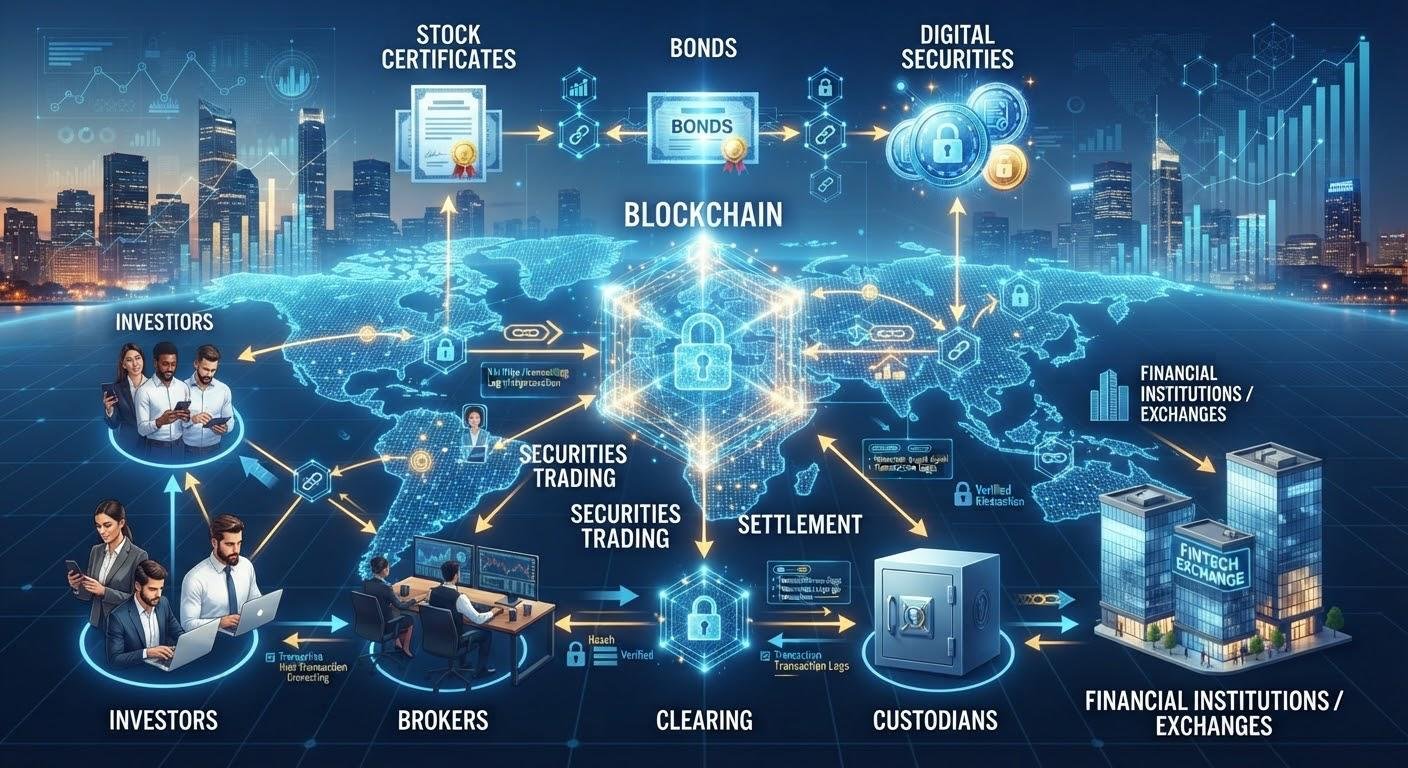
Securities can be issued and traded between various market participants, recorded, cleared and settled with one another in a complex financial system. It can take a number of institutions for ownership to be finally established and the deal completed with stocks, bonds, investment funds, and other financial instruments. This system has served the world of capital markets well for many years, but it can also lead to duplicated records, manual reconciliation, numerous intermediaries, delays and costs of operation. All these challenges have pushed the attention of the blockchain and distributed ledger technology as potential solutions to modernize capital-market infrastructure. A distributed ledger can enable authorized users to share up-to-date records of ownership and transactions instead of having completely different databases. While the blockchain isn’t a panacea for an existing market system, it could have a major impact on the securities market in the future, in terms of how securities are issued, traded, cleared and settled.
In-Depth knowledge of Blockchain in the Securities Markets
A distributed ledger technology (DLT) that records transactions across a network instead of a single central database is known as blockchain. Some transactions may be validated by authorized participants prior to being added to a shared record, depending on how the transaction is designed to be validated. As soon as it’s recorded, the information is hard to change without detection, making an audit trail that can help build confidence in transaction records. In securities markets, it is not necessarily that all the investors will be dealing directly with a public cryptocurrency style blockchain. Financial institutions might rather run permissioned networks where access is granted only to authorize financial entities like banks, brokers, exchanges, custodians, clearing entities, regulators and other market participants. This is crucial, as securities markets demand robust security around the issue of identity, privacy, governance, and regulatory adherence. Blockchain is, therefore, not a product so much as a piece of technology that institutions may be able to tailor to the functions in a particular market.
The Concept of Tokenizing Securities and Digital Ownership
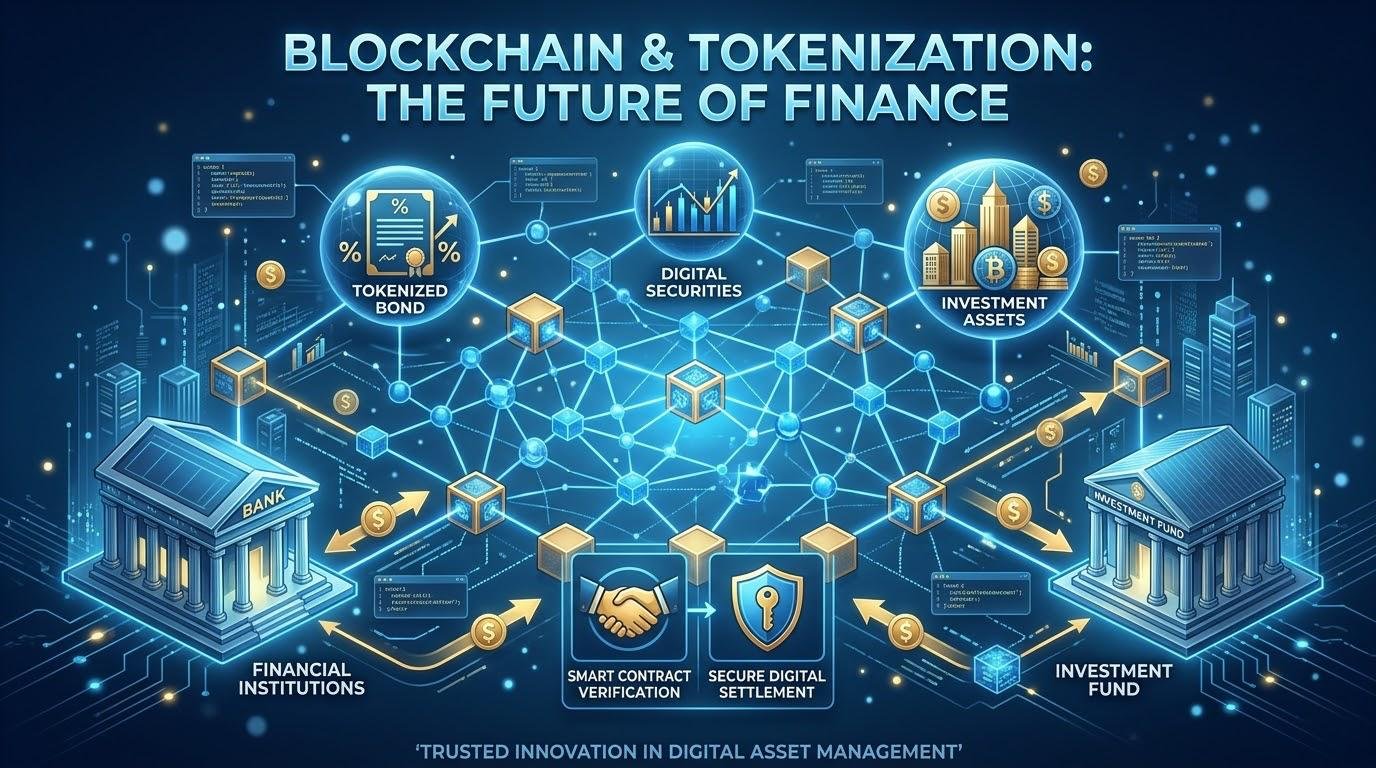
An important application of blockchain technology could be the digitization of financial securities as blockchain tokens. The process of tokenization is to represent an asset or financial claim in a digital form that can be recorded and transferred via a distributed ledger. A token might be shares in a company, the ownership of a bond, units in an investment fund or any other legal financial interest. A regulated platform might use a shared ledger to log ownership of an asset and when that changes, rather than keeping the info about who owns it in a number of systems. This may facilitate easy automation of some processes and establish a direct link between an asset and its ownership. But the tokenization doesn’t necessarily amount to legal ownership. Legal rights granted to a token must also be identified by relevant laws, regulations, contractual agreements and the institutions dealing with the maintenance of the market.
Blockchain and Securities Issuance
Another avenue in which blockchain may be able to help with modernization is securities issuance. The traditional securities issuance process may include an investor, an investment banker, a registrar, an exchange, a custodian, a legal counsel and services provider. Each participant can keep records or carry out specific verifications that can lead to multiple record keeping or reconciliation. Relevant data about a newly issued security could be captured in a distributed ledger shared by authorized participants with the appropriate design. Smart contracts might also be set to execute pre-determined guidelines with regards eligibility, quantity of issuance, payment terms or ownership limitations. For instance, the terms, maturity date and coupon conditions for a bond issued from a blockchain based platform can be represented digitally, as can be ownership records. This can help to streamline some administrative tasks and provide a uniform source of data.
Improving Securities Trading
The blockchain might also be able to impact the way securities are traded, by supplying a general record of transactions and ownership. For a conventional market, an investor’s order can go through any number of brokers, exchanges, clearing houses, custodians and other intermediaries. These organizations frequently rely on interconnected, but separate systems, which need to be linked together. The records of multiple institutions should be consistent if information changes. Authorized participants could be given access to a shared version of relevant transaction data via a distributed ledger, thus eliminating some of the duplication that occurs from having a number of different databases. Its trading could not necessarily happen on a blockchain as traditional exchanges and electronic trading platforms could still serve as key functions, such as price discovery, market surveillance and order matching. Instead, blockchain could be used behind the scenes to facilitate the coordination of information about a transaction and its ownership after the trade has taken place.
The Purpose of Smart Contracts
Smart contracts could be used to enhance securities systems on the blockchain by automating certain actions in response to specific conditions. In a securities context, a smart contract may be able to check for certain conditions on a transaction before transferring the securities. It also may automate some activities like paying coupons on bonds, paying out certain investment proceeds or limiting transfers. By automating tasks, there is a potential to minimize reliance on manual instructions and decrease the chances of manual task related errors. Smart contracts, however, are not necessarily “legal contracts” and their code might not contain all of the obligations of a legal contract. Financial markets also require ways in which to correct errors, resolve disputes, address unusual situations and enforce the regulatory rulings.
Application of Blockchain in Clearing and Settlement
Clearing and settlement, in particular, are crucial areas as they help to see a trade from an agreed transaction to the actual exchange of assets and funds. A trade might be settled very rapidly and the final settlement may be delayed due to various processes. These may range from confirmation, clearing, netting, collateral management, settlement instructions, to reconciliation between institutions. By enabling the information about transactions and ownership to be shared and updated on a ledger, blockchain technology may help to shorten some of these time lags. Assuming that securities and the payment mechanisms were compatible with the same infrastructure, the transactions could potentially move towards delivery versus payment, in which the transfer of asset and the transfer of funds are “close” together. Rapid settlement could help limit some counterparty and settlement risks, albeit in practice it would be difficult to do so without major improvements in the financial infrastructure, payment systems, liquidity arrangements, and the legal frameworks.

Reducing Reconciliation Requirements
Two of the less obvious but significant functions that occur in securities markets are called reconciliation. Banks, brokers, custodians, exchanges, clearing organizations and registrars can have different records and therefore, periodically cross-check to look for differences and deal with inconsistencies. This is a time consuming and resource-intensive process, and can be particularly complex in multi-jurisdictional or multi-intermediary transactions. Some types of reconciliation could be eliminated by the use of a shared distributed ledger system as participants would be able to work off the synchronized transactions. Rather than making multiple comparisons of independent databases, institutions might have a common record for certain information. This does not mean that there would be no reconciliation at all. There would still be a need for the institutions to confirm the data from the other systems, deal with unusual transactions, correct data inaccuracies, and ensure the reliability of their own data. However, if there is any unnecessary duplication and this can be eliminated, it would help to make the operation more efficient and enable the financial institution to focus its resources on higher value activities.
The Prospect of Investors who Might Benefit
In a successful application of the blockchain technology for securities, investors may enjoy the benefits in the following ways. If the technology is successfully applied to securities, the investors can enjoy the following benefits. In cases where the deal is not settled, investors could have less time to wait for the transaction to be settled. Better ownerships records may aid certain after the trade processes to be more easily managed, and automation may minimize transfer, payment and corporate action administrative delays. More transparency can also facilitate authorized market participants and regulators in tracking transactions. But for investors, these benefits would be more indirect, as they would be behind brokerage accounts and investment platforms. Reducing trading costs, increasing investment returns, and increasing market liquidity is not guaranteed by Blockchain. Whether it can be incorporated into reliable and efficient systems by financial institutions that do not cause new regulatory or operational issues depends on its value.
Technical and Security Challenges
However, there are technical hurdles that financial institutions need to be mindful of after having explored the potential of blockchain. The securities markets perform a huge amount of transactions and demand extreme reliability, availability, speed and security. A financial market blockchain network, therefore, should be able to accommodate large numbers of transactions and have an acceptable latency. Another significant issue is privacy, as investors and institutions might not wish their trading data to be made accessible to all those on the network. Restricting access is possible in permissioned networks, albeit they must continue to implement identity management and cyber security measures effectively. If the smart contract is mal-designed to yield incorrect results, it can introduce further risks. Moreover, blockchain networks need to interface with current database systems, transaction networks, trading exchanges, and regulatory tech. The difficulty lies in not only constructing a blockchain, but in developing a whole blockchain ecosystem that can coexist with the existing financial system securely.
Consider Regulatory and Institutional Issues
One of the pivotal elements in making blockchain a commonplace part of securities markets is arguably regulation. The laws that govern securities include some for the protection of investors, disclosure, market conduct, ownership, financial reporting, settlement, custody and taxation. For regulators, the classification issue is not merely a legal hurdle, but a significant business and technical challenge that requires them to decide what entities are to keep track of, and who will be subject to current investor protection laws and regulations in relation to blockchain based systems. There may be extra complexity when making cross border transactions as each different jurisdiction may have different legal requirements. Blockchain could also alter the institutions’ roles if it eliminates the need for some intermediaries or enables some activities to be carried out more directly. But intermediaries other than custodians, clearing firms, brokers and central securities depositories also have other functions. Cooperation between technology providers, financial institutions, market operators and regulators is likely to be a prerequisite for successful adoption, instead of excluding incumbent actors.
The Future of Blockchain in Securities Trading and Settlement
The future of blockchain in securities markets is likely to be gradual rather than immediate, meaning that existing systems are not likely to be replaced by blockchain. Distributed ledgers can be initially deployed for individual applications, like tokenized bonds, private securities, collateral management, fund administration or certain settlement processes in financial institutions. If these applications are successful, then they can be expanded as technology becomes more experience under regulatory watch and in use by institutions. Particularly important will be interoperability as investors don’t want to have to deal with a disjointed network which cannot communicate with each other. Rules and regulations will be required to facilitate interaction of digital securities with payment systems, custody platforms, exchanges and with other financial infrastructure. Digital settlement mechanisms that complement tokenized assets could also be crucial in the development of digital currencies by central banks and financial regulators. The most likely applications of blockchain to be successful are likely to address well-defined problems in the operation of the system, as well as the tough requirements for regulation, security and reliability in financial markets.
Conclusion
The blockchain could revolutionize securities trading and settlement, by maintaining a shared ledger that records transactions, by tokenizing securities, by automating certain aspects of the process, and by alleviating certain reconciliation tasks, which are introduced by the fragmented financial system. It can be used in securities issuance, trading, clearing and settlement, custody, ownership records, corporate actions, and more. While use of blockchain could offer some benefits, such as better transparency and settlement, this is not always the case. There are still many challenges related to technical scalability, cyber security and privacy, interoperability, legal recognition, regulatory compliance, and institutional coordination. For investors, blockchain is thus a technology evolving infrastructure and not the solution that will automatically make financial markets faster and safer. With adequate resolution from financial institutions and regulators, distributed ledger technology could be a key element of today’s capital markets, offering more efficient and transparent processes and maintaining investor protection safeguards.
Get more well researched information about Blockchain in securities trading and settlement here.