Introduction
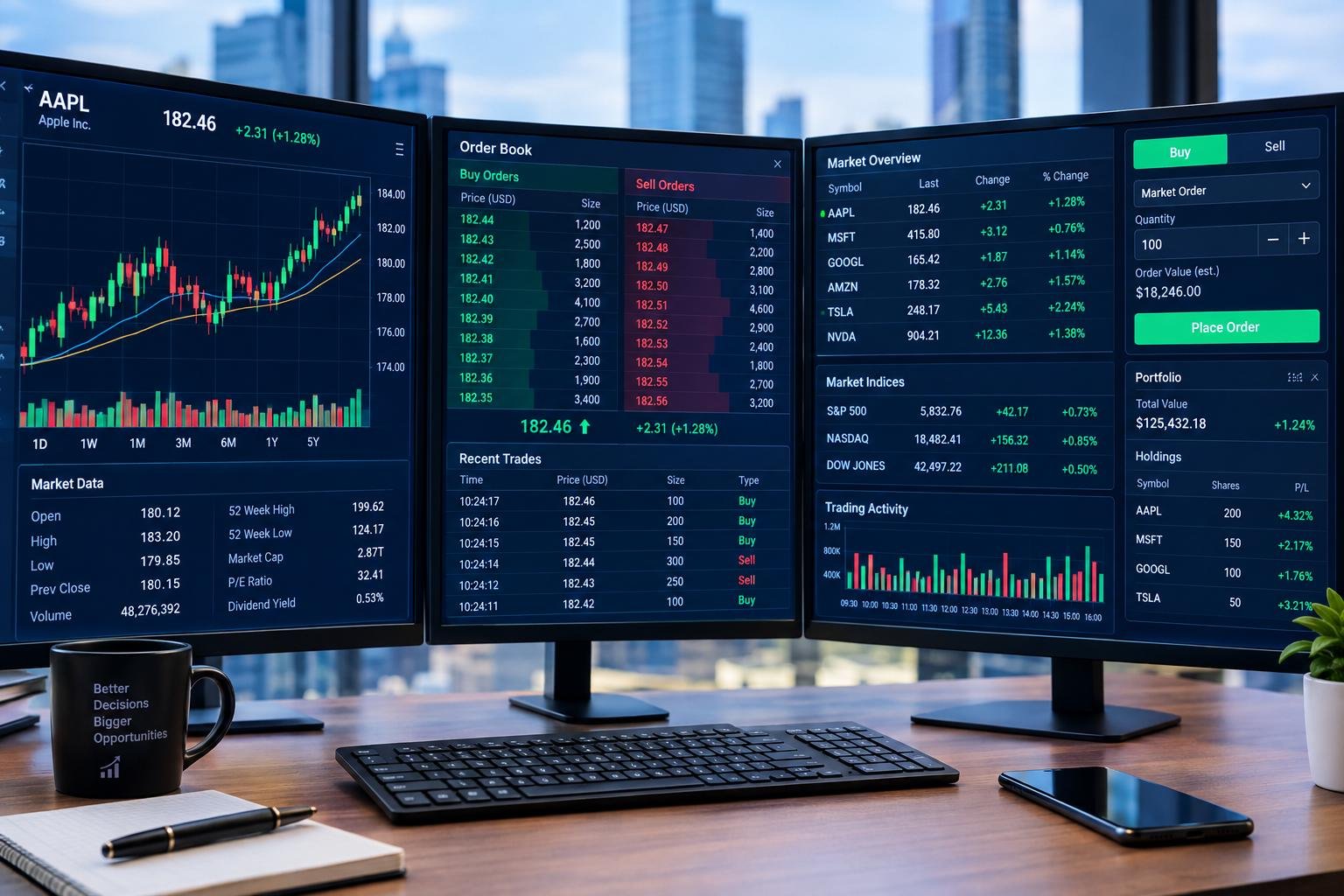
Artificial Intelligence is revolutionizing stock market analysis, by assisting investors in filtering through market data, recognizing patterns, assessing risks and making well-informed investment choices. In the past, all investors relied on financial statements, indicators and historical trends of stock prices as well as their personal knowledge to make their stock buying and selling decisions. While these are still important techniques, there simply aren’t a lot of funds to be devoted to laboring through all of the pertinent information. AI mitigates this by sifting through huge amounts of data quickly to find relationships that may not be obvious and offer insights that can help in investment research. Financial statements, market sentiment analysis, and investment opportunity identification can be more efficiently performed by investment professionals with the aid of machine learning algorithms, predictive analytics, and natural language processing (NLP). AI has the potential to revolutionize the way investment professionals evaluate and analyze large volumes of financial data, assess market sentiment, and uncover investment opportunities. AI can use machine learning, predictive analytics, and natural language processing to analyze financial statements, gauge market sentiment, and make more well-informed investment decisions. However, the uncertainty and expectation of profitable results is not the only aspect of AI. It is based on Data Quality, Model Design and Human Judgment.
Artificial Intelligence in Stock Market Analysis
Artificial intelligence is a type of computer-based system that can execute functions which normally rely on human intelligence, such as learning from information, recognizing pattern, comprehending language and predicting future events. In the context of stock market analysis, AI systems can analyze data from various sources, including company reports, stock prices, trading volumes, economic indicators, and industry news. These systems can sort through a set of documents and identify the information that is relevant, instead of having to analyze each document individually, and flag items of the document for further analysis. For instance, a synthetic device could assess a company’s income growth, working costs, and debt position in comparison to other firms in the identical sector to seek out areas for possible opportunity or concern. These systems can be improved using machine learning, a tool they can use to discover trends in past data. However, conclusions drawn by the AI should not be definitive as they are based on evidence which needs to be further analyzed, due to the fact that the financial markets are affected by unpredictable events and changing investor behavior.
Use of AI to Identify Market Trends.
One such area of AI technology is machine learning, which enables computer systems to learn relationships from the data without the need to be programmed to deal with all the possible scenarios. Machine learning models can also be used to identify patterns in the stock market based on price trends, volume, company performance, and economic indicators, which can help identify specific movements in the stock market. In this case, a model could discover that, throughout history, a certain design of earnings growth, trading, and adjustments in interest rates has been related to an uptick within the share price of a given sector. This information can be used by investors to devise screening strategies or look for potentially good opportunities. Past data with a known solution can be used to train supervised learning models and unsupervised learning can classify stocks according to their similarities, using financial parameters or behavior. But past associations are by no means guaranteed to be true for the future. A model that is successful in a past market scenario may not be as successful in a markedly different market.
AI-powered Financial Statement Analysis Services.
Financial statement analysis is one of the most crucial uses of AI because it is crucial for investors to comprehend a company’s financial condition before making an investment. AI features can help tools identify and process the data on an income statement, balance sheet, and cash flow statement, which can help analysts compare data across periods, such as comparing liquidity, debt, profitability, and expenses. These systems are also able to detect abnormal changes which may warrant further investigation. If an AI tool identifies, for instance, that a business appears to be making greater profits, but less operating cash flow, the AI tool might warn investors that they should verify whether a company’s growth in earnings is supported by operating cash flow. The more advanced systems will be able to compare with other firms’ financial ratios and identify businesses that are gaining or losing ground in their profits or debt load. These benefits are useful but are not foolproof when it comes to identifying all the ways a business can improve and, often, AI cannot identify an accounting irregularity as an improvement unless further investigation takes place. Before drawing conclusions about this information, the investor is responsible for verifying the information and obtaining explanations and an understanding of accounting policies from management.
Natural Language Processing and Financial News
One area where natural language processing (NLP) is proving valuable is in the processing of vast amounts of information that’s published concerning financial markets. Every day, investors will be faced with new situations where they have to deal with earnings releases, statements, analyst reports, economic data, regulatory documents, and industry commentary. NLP tools have the ability to explore these sources, identify key points, categorize topics and analyze the sentiment of the language (positive, negative or neutral). An AI system could, for instance, recognize that these issues such as shrinking demand, supply chain issues, or lower income expectations have appeared in multiple reports related to a manufacturing firm. These results may be used to inform investors of what risks they may face before taking investment decisions. NLP can also help break down lengthy financial statements, enabling analysts to quickly find the information they need. Language, however, can be confusing and a negative doesn’t necessarily mean a bad investment. The context, sarcasm, reporting accuracy and difference between expectation and reality may influence the interpretation of financial information by a system.
Predictive Analytics and Investment Forecasting
Predictive Analytics is the creation of a prediction based on past and present data. These methods are used to learn about the possibility of price movements, forecast the earnings trend, recognize unusual trading activity and analyze the potential impact of economic shifts on specific industries in stock markets. A history of sales, consumer demand indicators, interest rates and company earnings may be used by an investment analyst to calculate a handful of potential revenues for a retail store. A good model can compare the best case, most likely case and worst case scenarios, rather than just one forecast. This is because it allows investors to see the different ways in which they could be affected by various assumptions being made, and helps them to understand the effect of making different assumptions on an investment decision. Another application of predictive analytics is finding patterns between market factors, as well as running investment strategies through history to see their performance. However, predictions are not guarantees. Sometimes, historical trends are broken by unexpected political, natural, regulatory and financial events, and even sophisticated forecasts often fail to account for them. Investors should therefore consider assumptions, consider a variety of scenarios and not take forecasts as a given.

AI Financial Research Tools
Financial information can be complex to navigate for individual investors and even more so for professional analysts, but AI-driven financial research tools can help to make it more accessible. These applications could offer automatic company summaries, financial ratio comparison, earnings analysis, news monitoring, stock screening and explanations of market developments. Other tools enable users to pose questions in natural language, like, for instance, which companies within a certain sector have a steady revenue growth or which business has a relatively high debt level. The system can then sort out the pertinent information into a format that facilitates additional research. AI tools can also scan through financial reports to highlight key parts, and provide initial summaries of business news. The quality of these results does depend on the data source, software design and information sources. Some tools might provide inaccurate data, disregard certain disclosures, or generate a statement that appears as though it is accurate but is not. Investors should verify critical points of information with independent reference to financial reports and respected financial data providers before making investment decisions based on recommendations.
Use of AI’s Power to Invest and Determine Risk in a Portfolio.
Making investment decisions, risk management and optimizing investments to meet desired financial objectives are all part of Portfolio Management. In this respect, AI can help with the performance of assets, the relation between two assets, the concentration risk and the behavior of the portfolio in the future as a result of the market changes. For example, if an investor is heavily invested in the technology sector, AI analysis can give insights into the effect of a market decline on their entire portfolio. A portfolio management system could also compare and contrast various allocations according to the investors’ risk tolerance, investment time horizon and objectives. Sometimes automated systems would be able to look at any portfolio and let you know what you may consider rebalancing or investigating. AI can also prove to be helpful when it comes time to consider the effects of currency fluctuations, interest rate changes, and declining credit quality. But the estimates of the risk are made based on assumptions about the future activity on the market. Seemingly diversified investments can plummet at the same time at times when the economy is on the brink. The need for human involvement to make sure that portfolio strategies reflect an individual’s circumstances and true risk tolerance remains.
Drawbacks and Potential Dangers of AI in Investing
AI has many advantages, but there are some important considerations for investors to keep in mind. The first one is that the data may not be reliable or complete and thus can give false conclusions. If the wrong financial statement, prices or important information is used, this can lead to the incorrect model. Secondly, the systems are based on historical data which can be biased and may result in the system rewarding some companies, industries or investment strategies over the others, and overlook important alternatives. Thirdly, the model may be overfitted or it might learn the pattern of the data too well, and thus fail to predict well on new data. Backtests can be profitable, but not necessarily when trading live, due to factors that affect the market, fees, and unanticipated events. Financial news can also be misinterpreted by AI systems, and may give the wrong explanation, or AI could offer an explanation without sufficient context. Too much automation in decision making will reduce investors from questioning the assumptions or from self-research. The potential risks highlight the importance of testing models, verifying information, and maintaining transparency in the processes when using AI tools in financial decision-making, as well as the necessity of ongoing assessment and evaluation of the performance of these tools.
Importance of Human Judgment and the Effective Application of AI
Although there are trends in the numbers, human judgment is still crucial to investing. When evaluating the potential of a business, investors should take into account various factors, including leadership, competitive advantages, changes in regulations and the overall economy. AI can help shape the organization’s structure of evidence and lead the way to potential opportunities, but might not have the depth and understanding to fully contemplate the long-term effects of a management decision or industry transformation, responsible investment process based on knowledge generated by AI, independent studies and financial goals with transparency. An investor should consider the rationale behind the recommendation, verify crucial details, consider alternative readings and expect loss of capital when investing. It’s also important that financial institutions regularly test their models, safeguard sensitive information, monitor for suspicious activity and set up the responsibility for automated decision making. However, it’s crucial for AI tool users to be aware of the limitations of using AI and never provide personal financial data to websites they have never interacted with before. This equilibrium makes it possible for investors to enjoy the benefits of technology without compromising on crucial financial decisions.
Conclusion
AI is changing the game in stock market analysis, by offering quicker and more complete financial research services, helping investors comprehend market news and trends, uncover patterns, evaluate risks, and manage investments. Whether you’re dealing with AI-enabled pattern recognition and machine learning, financial document processing via NLP, or forecasting potential outcomes and information analysis with predictive analytics, the opportunities are endless. These capabilities can be applied to individuals and institutions and enable them to systematically improve their investment analysis and decision making process. But, AI can’t take away the uncertainty in the market, or humans’ bias, or guarantee profitable investments. Poor data, model inaccuracies, changing economic conditions and over-reliance on automated recommendations can result in expensive decisions being made. The optimal way is to leverage AI instead of relying on it as the sole method for making decisions. With the help of trustworthy data, thorough analysis, effective risk management, and human oversight, investors can make informed choices with artificial intelligence in a manner that is responsible.
Get more well researched information about AI in stock market analysis here.