Introduction
Artificial intelligence is having a huge impact in the banking industry. Banking services have become more intelligent as traditional processes are now supported by intelligent systems. Now processes such as customer service, risk management and finance can be improved using machine learning technologies to help improve the efficiency of the process. This is also influencing how customers access financial products. With the rise in competitiveness in the financial service industry, banks are now looking to implement AI to ensure efficient processes. However, there are many aspects to consider when implementing AI such as costs, data privacy, risk of cyber-attacks and ethical considerations.
15 Ways Artificial Intelligence Can Be Used in Banking
1. Customer Service
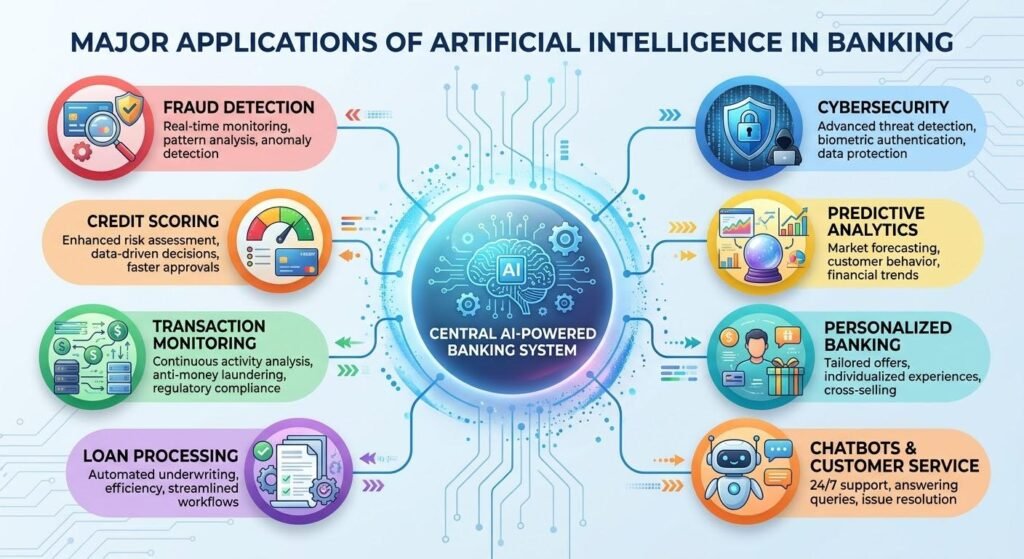
Many banks are using Artificial Intelligence to provide customers with automation in customer service. Chat bots and virtual assistants can be used to help answer commonly asked questions, provide information about the account and explain banking processes. Using AI means customer service is available 24/7 as intelligent assistants are able to answer questions at any time of the day. Natural Language Processing ensures customers can ask questions and get answers to these in a way which makes sense. More advanced generative AI can also be used to understand complex queries and provide answers in a conversational tone. While humans will still be needed for sensitive complaints and more complex financial queries, AI provides a fast solution to reduce waiting times, deal with repetitive queries and provide employees with more time to deal with queries which require a personal touch.
2. Identify Fraud
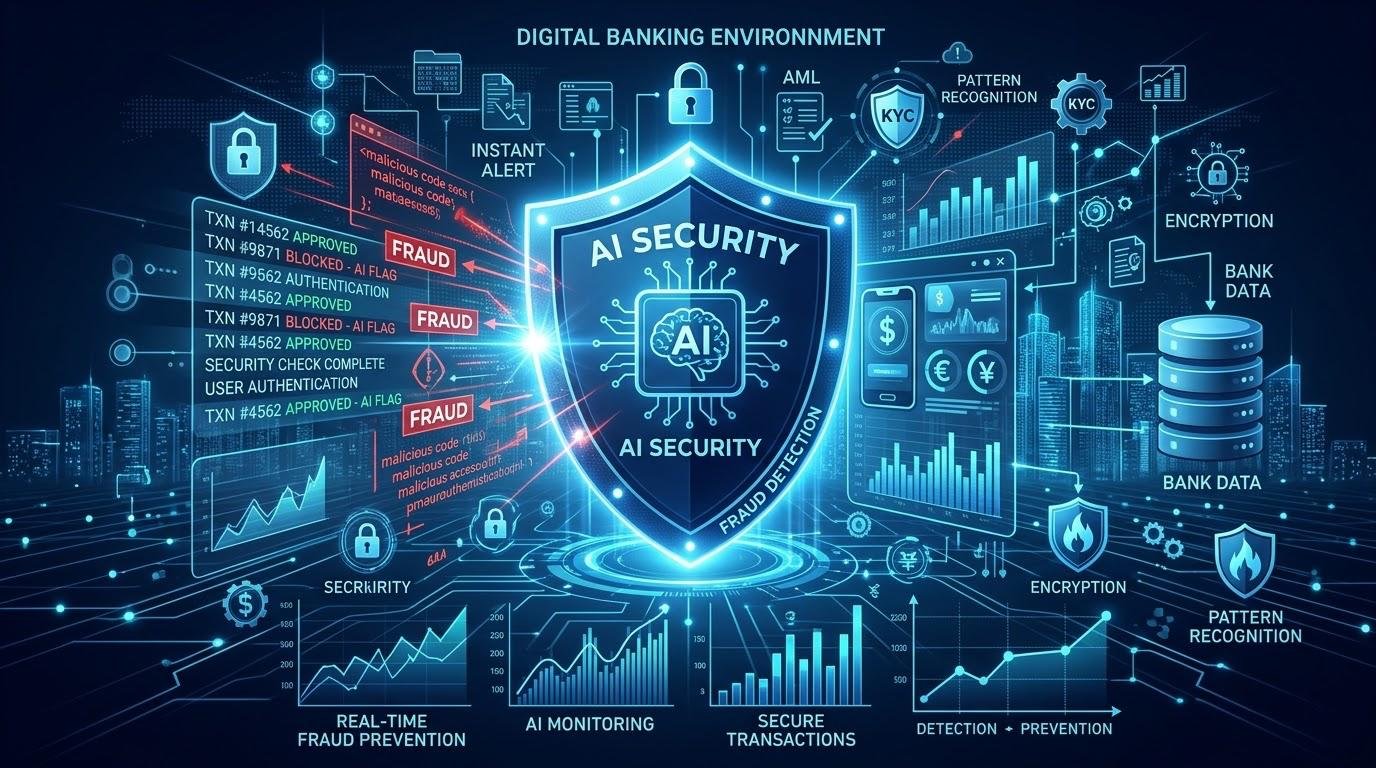
Artificial intelligence can help banks improve their security by spotting any suspicious activity. Using machine learning, banks can use historical data to identify unusual customer behavior. This can include looking at previous transactions, customer data, where payments are being made, what devices are being used and spending behaviors. For example, if someone suddenly has many high value transactions coming through from unknown locations, the AI can pick up on this unusual behavior. Unlike traditional techniques, machine learning can be adapted to spot any new fraud tactics. This can help banks identify if card details are being stolen, accounts have been taken over, identity theft or suspicious digital payments. Using AI helps reduce the risk of these threats being present in the future.
3. Credit Scoring
Credit scoring is another area AI has impacted. Traditionally, banks use credit history, income, employment, debt and more to decide if someone should be given a loan. Using AI, banks can improve by looking at more data. This helps identify any links which may not have been picked up on traditionally. This can help banks estimate if a customer can repay their loan. It may also help banks identify if a customer has little credit history and provide them with more information. However, care must be taken when designing credit scoring models. If incorrect data is used or there is bias in the training data, this can cause unfair outcomes. Banks should ensure their systems are compliant with any lending regulations. They should also ensure they have the right explanations provided and allow humans to review any decisions which could significantly impact the customer.
4. Personalized Banking
Artificial intelligence can provide customers with personalized banking services. Banks can use AI to look at permitted customer data to provide them with the right products and services. For example, if someone regularly saves, they may be suggested the correct savings accounts. Or if someone has many expenses, they may be suggested ways to help with their budgeting. This helps make banking more relevant. However, banks should look into how they can use technology to provide customers with more personalized banking. While using AI to provide customers with personalized banking, they should ensure they are being respectful with their data. They should not encourage customers to borrow or spend more than they need to.
5. Transaction Monitoring
Transaction monitoring looks at financial activity to spot any unusual patterns. AI can help improve this by looking at large amounts of data. Using machine learning models, banks can identify any unusual activity within accounts. They can also identify any unusual payment behaviors and spot any links between transactions. This can help banks who have thousands or millions of transactions each day. Intelligent systems can also help prioritize any suspicious activity based on its risk. This can help the compliance team investigate any important cases. However, banks should regularly check the accuracy of their systems to ensure they do not cause too many false positives.
6. Predictive Analytics
Using predictive analytics, banks can use historical data alongside current financial data to predict what may happen in the future. Using AI, banks can look at customer spending, repayment behaviors, market activity, interest rates and economic factors to identify any trends. This helps financial institutions estimate future demand for their products, predict when they may need cash and understand any potential financial issues. For example, predictive models can help banks identify customers who may struggle to repay their loans. Financial managers can use this when creating budgets, allocating resources and creating business strategies. While nothing is guaranteed, using machine learning alongside accurate financial data provides banks with an extra tool to help them make informed decisions.
7. Anti-Money Laundering
Banks must monitor their financial activity and identify any transactions which could be involved with money laundering. AI can help with anti-money laundering by looking at transactions, identifying any suspicious activity and linking multiple accounts. Using machine learning, banks can identify any behaviors relating to unusual fund transfers, complex payments and repeated payments. This can help the compliance team prioritize any cases they need to investigate further. This can be very useful for financial institutions that have international transfers and many transactions. However, AI alerts should not be assumed to be criminal. Relevant evidence should be investigated by humans and proper reporting procedures should be followed to ensure customers are not treated unfairly.
8. Loan Underwriting
When approving or declining credit applications, banks must look at the applicants financial situation, using AI can help simplify this process. This can include gathering relevant information, analyzing financial data, checking supporting documents and identifying any potential risks. Using automation can help reduce the time taken to process applications. This can help banks process more applications. Machine learning may also help identify any links between stable income, existing financial commitments and repayment behaviors. However, the lending process should be accountable. Banks should ensure they have the correct processes in place to approve loans. If the application is complex or has unusual financial situations, they should have the correct processes in place. Humans should be involved to ensure any recommendations are carefully considered.
9. Automation
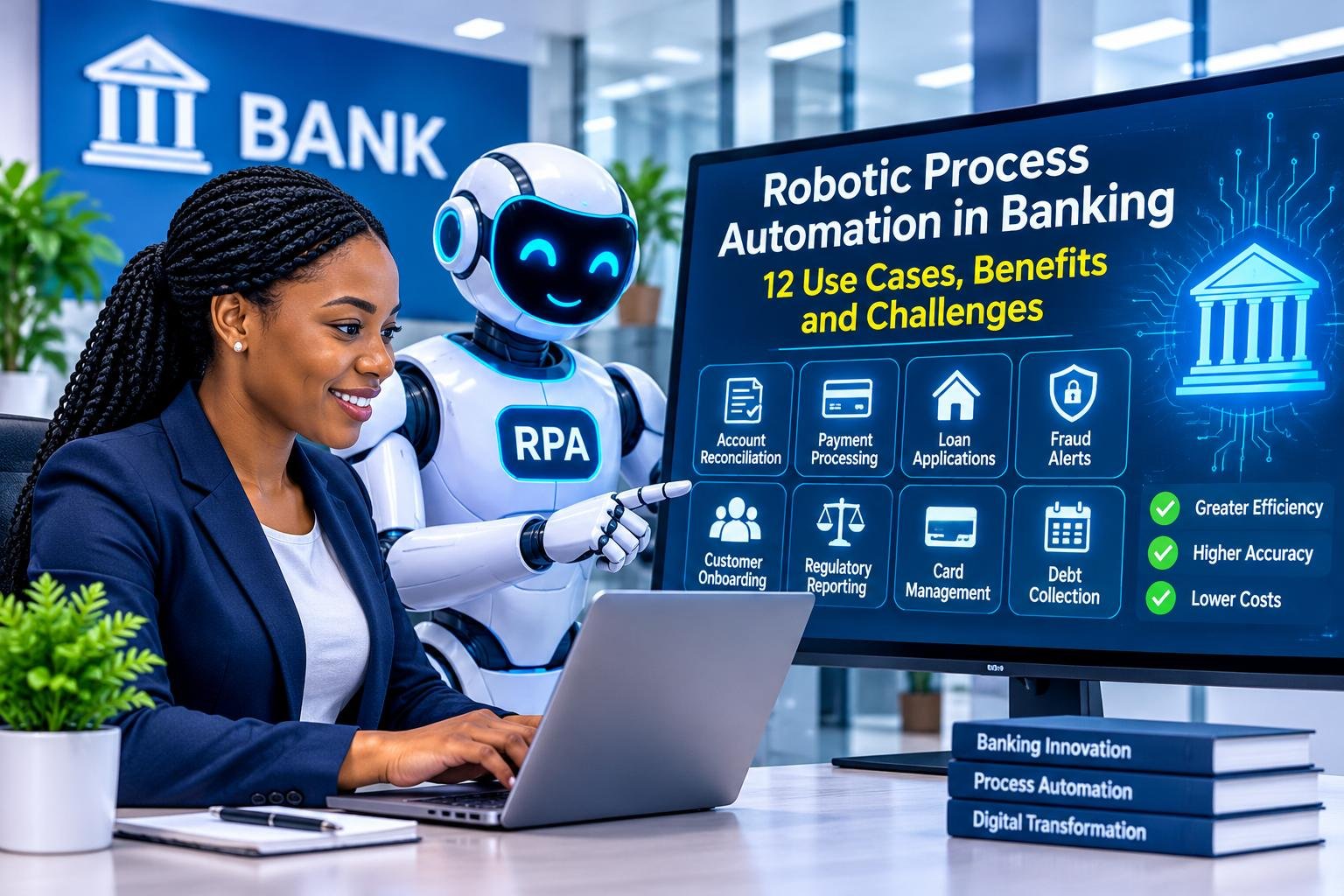
AI can help automate repetitive admin tasks. This can include updating customer details, processing simple requests, organizing financial data and moving data between systems. When using AI alongside robotic process automation, banks can complete structured tasks quicker. This can help reduce the time spent on repetitive tasks and allow staff to focus on building relationships with customers, problem solving and strategic tasks. Using intelligent automation can also help reduce errors. However, it should be properly implemented. Banks should have processes in place to identify any issues with the system, correct any incorrect data and ensure the automation is following internal policies.
10. Document Processing
Financial institutions have many documents to process. This can include loan applications, ID’s, bank statements, invoices and compliance documents. Using AI with optical character recognition can help extract relevant information from documents and put this into structured digital documents. Natural language processing can also help systems understand written data and identify any missing information. For example, when processing a loan application, the AI can extract income data from supporting documents and compare to what the customer has provided. This can help reduce manual admin. However, if the scan quality is poor, documents are not consistent and information is incorrect this can impact results. Banks should have verification processes in place so staff can check important information.
11. Personalized Financial Advice
AI is providing new opportunities for financial advice. Intelligent systems can look at financial goals, investment preferences, income and risk tolerance to provide relevant information. Some banks use automation to help with investment. This can help with monitoring portfolios, asset allocation and financial planning. It can also help customers understand their spending behaviors and identify ways to improve their saving. Generative AI can help explain financial terms in an easy to understand format. However, customers shouldn’t be encouraged to use automation to provide them with recommendations. If customers have complex investment decisions to make, they should receive the correct advice. Banks should ensure recommendations are appropriate, transparent and follow relevant financial regulations.
12. Debt Recovery
AI can help with debt recovery. Banks can look at repayment history, account activity and communication preferences to identify customers who may be at risk of missing repayments. Predictive models can help institutions identify which accounts need to be addressed sooner. AI can also help the debt recovery team organize cases based on their urgency. This may help with managing repayments and reducing any unnecessary admin. However, financial institutions should use these tools responsibly. Customers facing financial issues should be treated fairly, provided with clear communication and given the opportunity to discuss repayments. Automation should not encourage any threatening, discriminatory or misleading debt recovery.
13. Cyber Security
With banking becoming more digital, it is important to keep financial systems safe from cyber-attacks. AI can help improve cyber security by identifying any unusual activity on networks, unusual login attempts, suspicious device activity and potential malware. Using machine learning, banks can continuously process security information. This can help identify any threats which may have gone unnoticed. It can also help the security team by prioritizing any incidents and identifying any patterns relating to attempted account compromises. Generative AI may help cyber security professional’s process technical information and create incident reports. However, criminals can also use AI to create realistic phishing messages, mimic genuine communication and create more complex attacks. Banks should use AI alongside other security measures such as encryption, access control, staff training and effective incident management processes.
14. Branch and ATM Optimization
AI can help banks improve their branch, ATM and other banking processes. Using predictive analytics can help estimate customer demand, identify areas which need extra cash and predict when maintenance will be required. For example, an AI can look at historical withdrawal data to predict when an ATM may need topping up. Banks can also use customer flow data to organize staffing. This can help reduce unnecessary costs and provide customers with a more convenient service. Intelligent systems may also help with resource planning by identifying branches with varying service demands. However, banks should ensure optimization decisions are made with accessibility in mind. Customers who rely on physical banking should be considered.
15. Generative AI
Generative AI is providing new opportunities for banks. Unlike traditional machine learning, generative AI can be used to create summaries, explanations, reports and conversations. This can help banking staff create summaries of financial documents, find relevant internal knowledge, create customer communications and organize research. It can also help analysts by explaining financial trends. However, it can provide incorrect or misleading information, known as hallucinations. Banks should ensure sensitive information is not accessible, verify the information and ensure important outputs are reviewed by staff.
Issues of Implementing AI in Banking
1. Costs of Implementation
While there are many benefits to using AI, there can be large costs involved. Banks may need to pay for specialist software, upgrade their systems, create secure data systems and employ/train staff with the correct technical skills. It can also be complex to implement new AI solutions onto older systems. This can be an issue if the information is not stored in a connected way. Smaller financial institutions may find this difficult due to a lack of resources. AI systems also require maintenance, monitoring and updates as financial products, customer expectations and security threats change. Banks should consider what benefits they expect, what is required to run the system and what the long term costs will be. Starting with clear issues within banking can help manage costs.
2. Data Privacy
AI relies on data, so data privacy is an important consideration. Banking data can include personal information, transaction history, income and other sensitive financial data. If this data is not collected, stored or processed correctly, customers may experience a breach of their privacy. Banks should ensure they have clear data policies in place. They should also ensure they have the correct consent, limit access to sensitive data and use the correct encryption. They should also ensure they are compliant with any data protection and financial regulations. It is important to be transparent. Customers should know how their data may be used to help with automated services and financial decisions. By managing data responsibly, banks can build trust and reduce any legal, operational or reputational risks.
3. Bias
AI can produce bias if the training data contains historic discrimination, incomplete data or unrepresentative customer data. This can impact important areas of banking such as credit scoring, loan approvals, insurance and recommendations. For example, if a poorly designed credit model is used, some customers may be unfairly disadvantaged due to patterns in the data. Banks should regularly test their algorithms and ensure they are looking at outcomes for relevant customer groups. They should also improve their models if they spot any unfair patterns. They should also ensure they have processes in place to explain any automated decisions and allow customers to request a review. Fairness should be a key consideration.
Cyber Security and Human Oversight
AI can introduce new cyber security considerations. If access controls are weak, training data has been compromised, integration is not secure or third party services are not well managed this can create opportunities for attackers. Banks should regularly review their security, monitor their systems, have incident management processes in place and ensure sensitive data is protected. Humans should also be involved as AI recommendations are not always accurate or appropriate. Important decisions should be reviewed by staff. Any unusual outputs should be investigated. Humans should still be responsible for any actions taken. Combining intelligent technology with professional judgment can help reduce any avoidable errors. Customers should also be treated fairly.
Conclusion
AI will continue to impact the development of banking. As financial institutions invest in more advanced digital solutions, improvements to machine learning, generative AI, natural language processing and predictive analytics will create faster services, more responsive customer service and improved financial risk management. Banks may start to use a combination of technologies to provide a seamless experience on mobile, online, payment and physical banking. However, they should implement technology responsibly. Financial institutions will need to consider data privacy, improve cyber security, reduce bias and ensure there is meaningful human oversight. The most successful banks will use AI thoughtfully to improve financial services, make informed decisions and build long term trust with their customers.
Get more well researched information about Artificial Intelligence in Banking here.