Introduction
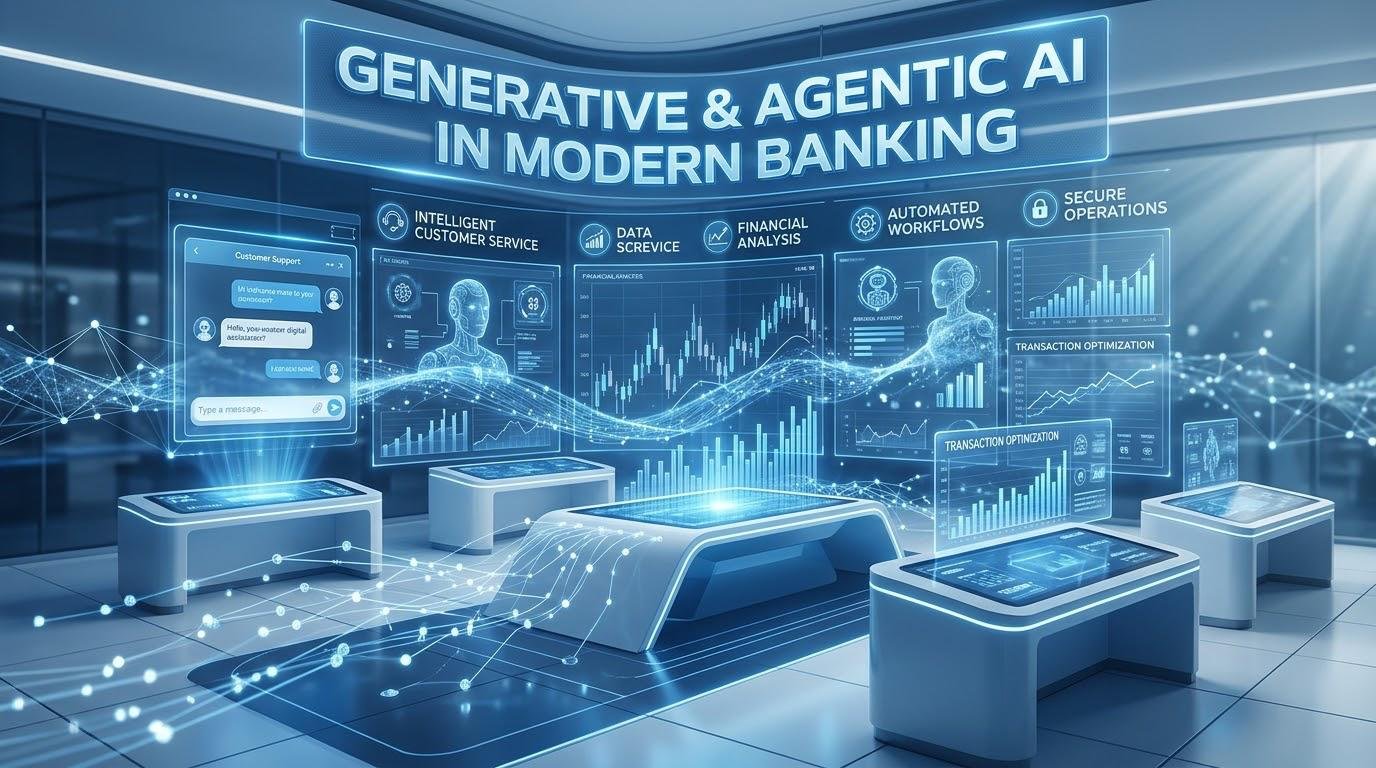
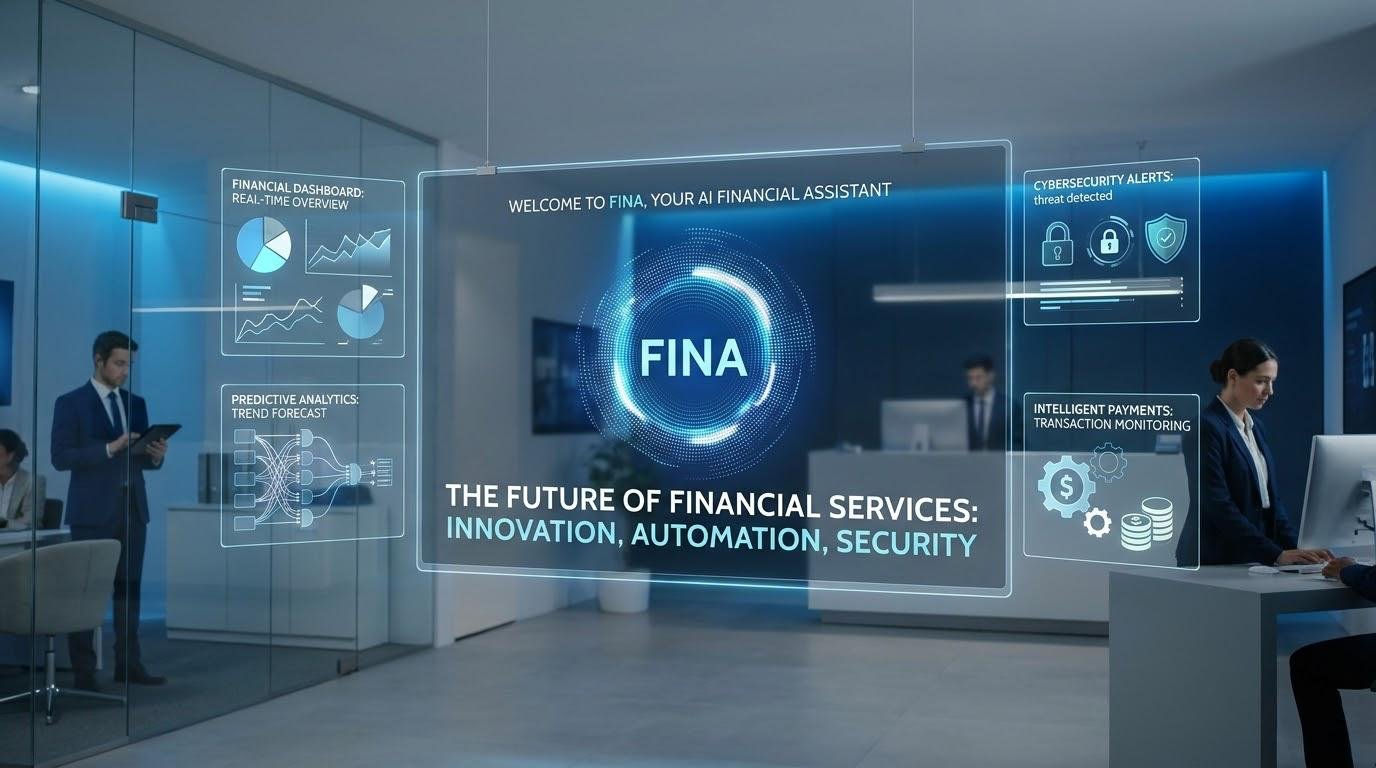
Artificial intelligence is increasingly playing a vital role in today’s banking landscape, driving financial institutions to enhance customer experiences, bolster security measures, streamline mundane tasks, and make more informed decisions. The banks are already using AI in different aspects, such as: detection of fraud, customer support, credit assessment, and transaction monitoring. However, new technologies are increasing these capabilities, and creating new opportunities for the financial industry. In the years to come, the industry may see changes in the approaches to services and risk management as a result of the developments of real-time fraud prevention, generative AI assistants, predictive financial analytics and automated compliance. Of these, some are already in existence, but others are in the process of being developed and/or tested. It is important to differentiate in order to make a fair assessment of the future of the AI. AI won’t eliminate any of these current banking processes; it will more likely transform existing customer interactions with financial institutions and the way that employees do their jobs.
Agentic AI and the Future of Banking.
Agentic AI is a new breed of AI that allows the development of AI agents that can perform a series of tasks using a standalone tool or software to accomplish a goal. A system that is agentic can be programmed to undertake a number of related activities rather than answering questions, which is often done by a conventional chatbot. For example, if a customer had a problem understanding what they were spending, one banking assistant could assist them to review all their spending, identify an upcoming bill, advise them that it would be best to direct the money to their savings account, and make the arrangements. In business banking, such kinds of systems could be helpful in payments of invoices, cost reconciliation and as well as in the normal administration of business banking. These are dependent on the permissions, accuracy and banking system integration of the system. Do not assume that there are many and reliable financial transactions that are completely independent. The banks must put in place strict protocols, limit transaction amounts, implement audits, and have human oversight prior to granting AI agents permission to perform financial activities that involve sensitive exchange or customer engagement.
Customer Experience Generative AI Assistants.
The financial data and banking services capabilities of Generative AI allow customers to access financial information and interact with banking services in a new way. AI-powered assistants can then explain transactions, provide a summary of the financial details, and guide customers through routine activities once they have grasped the meaning of natural language queries. For example, if the monthly costs have been raised, the customer can ask “why” and provide the explanation may be referencing the customer’s transaction history. Other types of these helpers can interpret cash flow statements, or prepare simple financial statements for small companies. Conversational systems can answer inquiries which are worded differently than what’s found in conventional automated menus. The answers that generative AI can provide, however, aren’t necessarily true or correct, particularly if the financial product is complicated or the information is incomplete. Banks have to link assistants to secure data sources, conduct tests on the responses, ensure confidentiality of customer data, and guarantee that they have access to human representatives. The most helpful systems will provide automatic assistance to the customer and give him or her opportunity to challenge and verify the system’s recommendation, as well as explanations.
Real-Time Fraud Prevention and Stronger Security.
With the increasing prevalence of digital transactions, financial fraud continues to be a significant concern, with fraudsters using more sophisticated techniques. Using AI, the transaction amount, where the transaction was made, the device, transaction frequency, account activity and other signals can be analyzed to detect deviations from recognized patterns of behavior. If suspicious activity is detected, a system can flag the transaction, ask for more identification or temporarily prohibit a payment based on the bank’s guidelines. Institutions can use real-time analysis to take steps to prevent additional losses from fraudulent activity. New models can also help identify coordinated attacks and scams via the manipulation of messages and/or impersonation. But, AI will not stop fraud and legitimate transactions can be flagged up as fraudulent. Banks need to ensure that the protection of the models is appropriate, that they are readily accessible to the funds and regularly review the performance of the models. Whilst AI is a key element of monitoring, strong authentication, secure payment infrastructure, customer education and effective investigation procedures will stay key aspects of the business.
Predictive Financial Analytics and Smarter Lending.
Predictive analytics is when the past and the present data can be used to forecast what the future may bring. AI can predict cash flow, determine customer repayment risk, assess credit risk, and evaluate shifts in spending habits in banking. This can enable financial institutions to detect financial issues at an earlier stage and provide suitable support before it gets to a critical level where it is not paid. Better predictions of deposit flows and costs, and liquidity needs would also be available to businesses. Thus, in the lending industry, AI could potentially streamline the process of evaluating loan applications, analyze pertinent financial data and detect patterns that might be missed by traditional methods. But forecasts are not predictions and incorrect or incomplete information can lead to incorrect or incomplete assessments. Lending models could also embody historical discrimination or favor people with a financial situation that varies from that of the people that have been trained. Banks need to assess models for their fairness, provide customers with explanations of key decisions, safeguard their personal data, and have appropriate human oversight of important lending outcomes that will have consequences.
Intelligent Payment Systems and Automated Compliance
AI could enable more responsive payment systems, by assisting institutions with the detection of any unusual transactions, improving payment routing, predicting processing issues, and identifying any potential errors prior to the transaction. Together with appropriate payment infrastructure, these can enhance the reliability of the payments and contribute to banks’ ability to deal with the rising volume of transactions. Intelligent systems may also be used for customer verification, and prioritize payments for further checks on the occurrence of risk indicators. One of the significant advancements is the use of AI for regulatory compliance. Banks have to keep track of transactions, detect suspicious patterns, keep records and adjust to evolving financial regulations. AI can help to review documents, screen transactions, organize compliance-related data and prioritize cases for investigation. These applications can help to streamline repetitive tasks and enable compliance teams to concentrate on more complex cases. However, the automated systems can miss out on unusual activity or give false alarm. Financial institutions are still responsible for the regulatory obligations, which mean that outputs from AI algorithms will need to be verifiable, traceable and backed by suitable controls.

AI-Supported Financial Inclusion
AI can assist in providing financial services to those who do not have easy access to conventional banking services. Traditional credit checks rely on credit history and employment verification documents, which may not exist for everyone and small business owners. To better evaluate creditworthiness, in areas where legally allowed and backed by credible information, AI models might take account of other metrics of financial activity. Digital assistants can also help with interpreting financial products in plain terms, assist customers who have varying levels of financial expertise, and provide easy-to-follow financial advice during non-business hours. The developments could have a positive impact on the under-served communities, such as the people who live in remote areas. But the more widespread availability of a bank’s AI doesn’t necessarily mean it will be available for everyone. Barriers to use may persist because people don’t have the fastest internet, the most costly equipment, or a high level of digital literacy, and lack documentation of their identity. Other concerns that arise with the use of alternative data involve privacy and fairness issues. Accessible services, transparency in lending practices, appropriate consumer protection and reliable infrastructure will be key to financial inclusion.
Human Resources Skills and Changing Banking Operations
With the increasing adoption of AI in banking, staff could have more time to dedicate to more complex tasks, customer advice, and guidance on unusual transactions while monitoring automated systems. AI can help customer service agents find details and formulate responses and for analysts to summarize reports and look for patterns to investigate. Both compliance professionals and managers will need to have an understanding of the process by which automated monitoring tools arrive at their conclusions, and managers may need to consider AI performance metrics in addition to other business metrics. As a result of these shifts there will be a growing need for data literacy, cyber security, model governance, critical thinking, and responsible use of AI skills. The level of workforce change will differ from institution to institution and job to job, though. Not all jobs are going to be eliminated as a result of the adoption of AI. Banks should be training employees, and communicate any changes clearly, and set up systems to correct any errors that may be caused automatically. An AI-aware workforce will be equipped to make the most of AI.
Data Mining and Information Literacy
Regulation and trust will be essential to the future of AI in banking. Financial institutions deal with sensitive information such as borrower’s details, identification, income records and transaction history. If it is not adequately secured, this information could be open to unauthorized access, and too much collection or misuse of it could compromise customer trust. Banks have to employ data minimization, access controls, encryption, secure development practices and transparent retention policies. They need to also evaluate risks that may arise with third-party AI service providers and make sure that private data isn’t used in inappropriate ways. Requirements are evolving and different for different applications and jurisdictions. Institutions will be required to keep track of relevant privacy, consumer protection, cyber security and AI governance regulations. To implement responsibly, testing for bias, tracking performance after implementation, keeping records of decisions made, and keeping humans accountable are all necessary. These protections do not hinder innovation but rather are the ground rules for bringing AI into services that can impact financial outcomes and financial opportunities for people.
Top Innovations in the Next Few Years
As banks explore the potential of AI, several developments stand out for special attention. There are a few developments that stand out for special attention when banks are using more AI. Agentic AI can move beyond pilot projects to well-managed processes within the organization, particularly in internal operations and customer service. The gen AI might become more intertwined with account details and financial apps, with the extent to which they can be useful depending on their permissions and reliability. Transaction analysis could become increasingly used in conjunction with behavioral signals and information on new attack techniques, for fraud prevention. Financial information may be processed by the increased volume of financial information, and predictive analytics could better assist in cash flow support and risk assessment. Implementing will be dependent on the costs, the quality of the data, regulatory approval, cyber security and proof that systems will be reliable in real life scenarios. Banks will also have to prove that these technologies help them to achieve measurable improvements rather than blindly adopting them due to them being new. Customers should be alert for clear explanations, substantive security enhancements, easy customer service and accessible means for challenging significant automated decisions.
Conclusion
The next generation of banking is likely to greatly impact by AI with the use of intelligent customer support, better fraud prevention systems, proactive financial services, intelligent payment processing and efficient operations. Agentic AI and more sophisticated generative assistants might supply new options for banking activities, and AI-driven lending and compliance can aid financial institutions handle information and danger. These options, though, must be separated from actual capabilities since new systems are still constrained in terms of accuracy, fairness, privacy and security. To achieve a successful adoption, there is a need for a reliable infrastructure, qualified employees, proper regulation, human control and clear decision-making. In conclusion, the future of AI for banks won’t be solely driven by automation. It will rely on the ability of financial institutions to apply these technologies in a responsible way to deliver safe, easy and reliable services that are responsive to the needs of their customers.
Get more well researched information about the Future of Artificial Intelligence in Banking here.