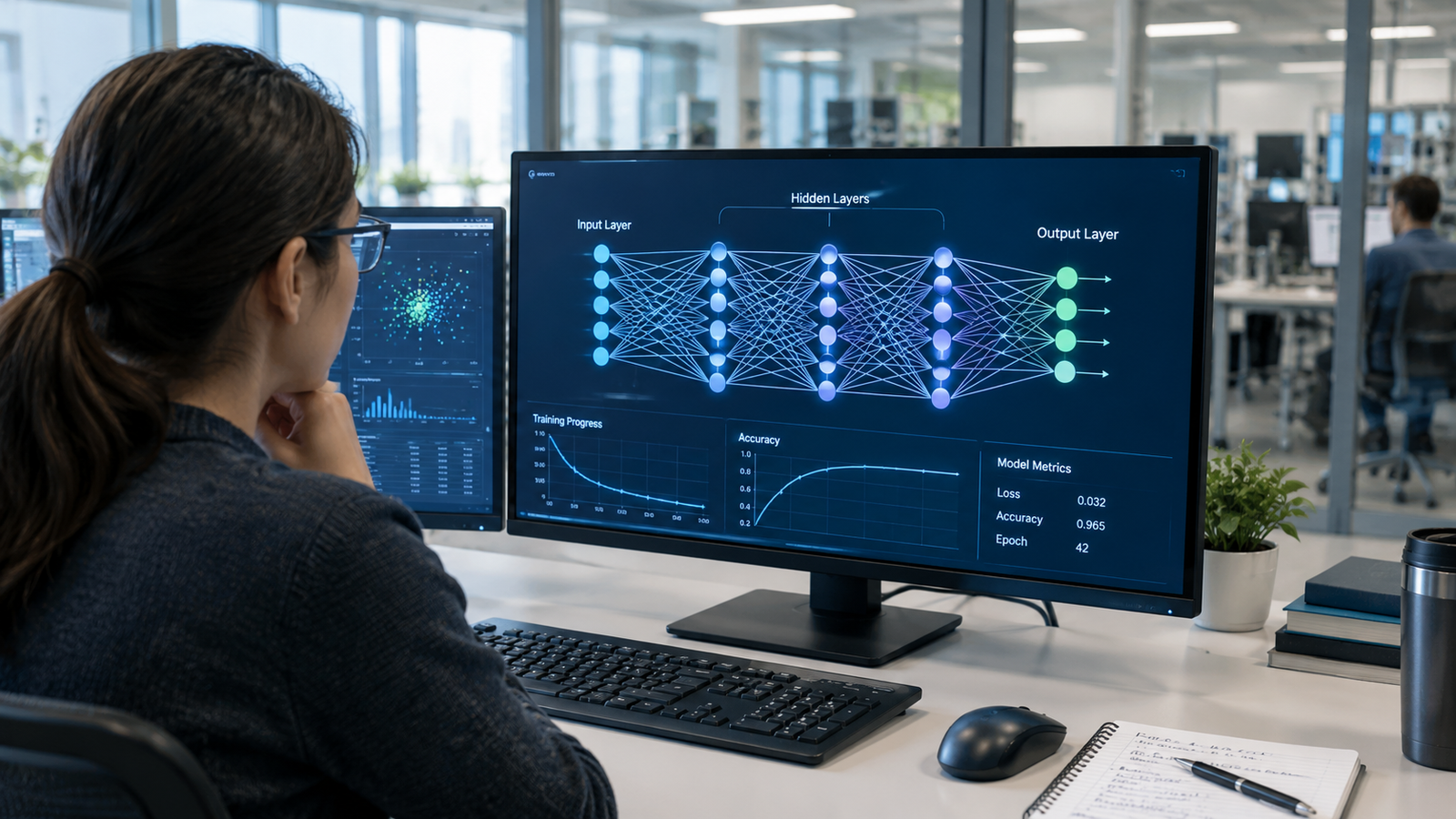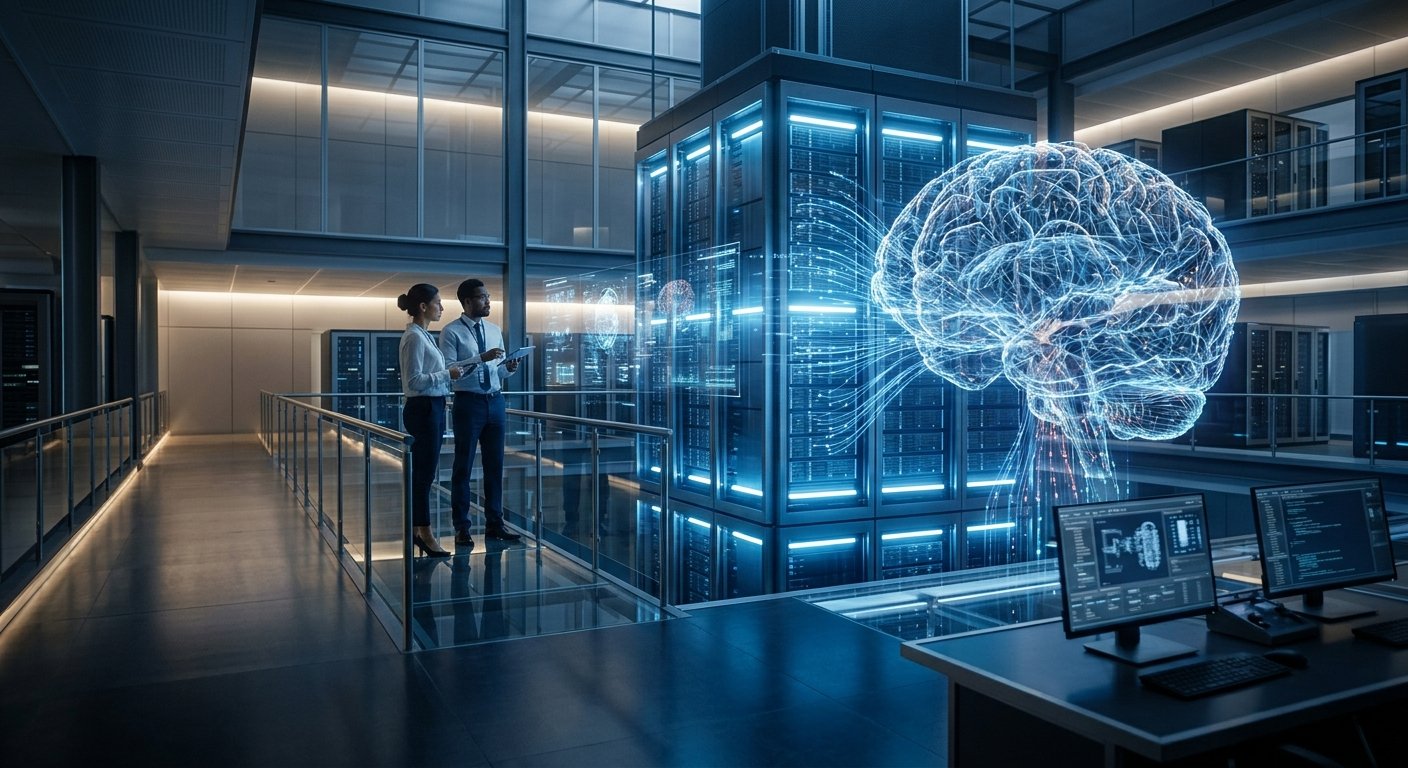
The future of artificial superintelligence represents one of the most transformative frontiers in modern technology, changing how we work, conduct research, and solve complex global issues.Today’s AI technologies can produce content, write code, study info, and support scientific research. We see growth in which AI may at some point achieve artificial general intelligence (AGI) or artificial superintelligence (ASI). While those are of great interest they are still in very early stages of development and we don’t have a timeline for them.
The future of superintelligence will be a result of tech progress, computing infrastructure, AI research, safety measures, regulation and social adaptation. We may use this to tell which of the present developments are for sure and which are but a look into what is to come.
Artificial General Intelligence and Superintelligence
Artificial intelligence is home to technologies which perform tasks like language processing, pattern recognition, and decision making. Artificial general intelligence is put forth as a theory of which is able to learn and perform a wide range of intellectual tasks. Art superintelligence is a put forward idea of a level which out performs humans in most areas of cognition. Also it is agreed upon that there is no widely agreed upon definition for AGI, and that doing well in a select set of tasks does not mean general intelligence is present.
The shift from present AI to AGI and possibly ASI is not a given in a predictable sequence. Some researchers report a trend towards greater AI improvement which we should note, others see which we should expect that current methods may in fact break down at large scale. This which we can put out there is that which we use to evaluate future AI claims.
Technological Progress and Future AI Capabilities
Future AI systems will grow in ability via better training methods, higher quality data, better reasoning techniques, and the more efficient use of external tools. Also we see research into systems which have improved memory and the ability to learn from past interactions. We are to see AI take on more complex tasks in science, engineering, education and business. But it is important to note that progress in separate fields does not by itself produce a system which we would term generally intelligent.
Another AI may put together text, images, audio and other types of data and at the same time grow to handle issues which we haven’t dealt with yet. We will see growth in the areas of adaptability of the technology and how widespread its use is in various industries. That said, what still isn’t solved is the question of reliability and which is which in terms of what the AI is thinking, also issues of the machines’ performance in brand new situations. Also going forward it will be up to researchers to solve these issues as we see progress, instead of just improving results in very specific fields.
Computing Infrastructure and AI Development
Advanced AI is built out of specific infrastructures which include dedicated processors, data centers, networking equipment and reliable electricity. We see that which go into developing and operating strong models also include large financial and technical investments. Better hardware and computational efficiency improvements may enable researchers to create more advanced systems and do more complex research. But also at the same time it is true that better computing power does not by itself produce breakthrough results in intelligence.
Infrastructure costs and energy issues also play a role in the direction of AI development. We see that very efficient algorithms and specialty models are a focus of many organizations’ research which in turn is to present results using less resources. If we go on at this rate advanced AI will be a resource which smaller organizations can access. Also we see that the high price tag of frontiers in AI research may in fact be a factor which concentrates power in the hands of a few large companies and governments.
Autonomous Systems and AI Agents

AI agents which carry out sequences of tasks through the processes of planning, using tools, and evaluation of results. They may support software development, scientific research, administrative work, and business operations. Also within the large group of autonomous systems is a range of tech that performs from very little to great independence in what they do. As these systems grow in ability AI may seem to take over more complex actions which previously required human input.
Greater autonomy also brings in greater risk. We see systems which misinterpret instructions, which abuse the tools at their disposal, or which stick to a faulty plan. Also of great issue is that by the time issues present themselves the action may have already taken place beyond recall. Thus developers must put in better monitoring, testing, access controls, and human oversight to see that these systems’ performance does not fall into danger.
Pathways Defining the Future of Artificial Superintelligence
There at present is no certain path to superintelligence but we have put forth some models which try to outline how AI may develop. These models are based on tech advances, research methods, computing resources and also how well we do at handling out which risks the emergence of this field brings. They are to be looked at as what may happen rather than what will happen.
Gradual Progress Toward General Intelligence
AI may see a steady growth which in turn will see better reasoning, memory, training, and problem solving techniques. We will see the systems’ capacity to take on a greater variety of mental tasks, which will in turn impact different industries. Also this may play out via lots of small scale improvements as opposed to a single large breakthrough.
Gradually we see that governments, businesses, and educational institutions have time to adapt to change. Also, what may seem like small steps could in fact disrupt certain jobs and present issues to present industries. Also it is to be noted that better performance in general does not in itself indicate that we have reached the stage of superintelligent AI.
Rapid Progress Through AI-Assisted Research
Another also is that we see advanced AI as a tool which researchers use to develop better AI. They may use it in programming, analysis of experiments, out testing of architectures and in which research directions to take. If in fact this improves research productivity greatly then we may see a great acceleration in AI development.
However we see that research done at a speeder pace does not bring about continuous breakthroughs. Science’s very nature of uncertainty, computer limitations, and issues in the evaluation of new systems may put the brakes on progress. While rapid development is a very likely scenario we also must present it as not a given.
A Plateau in AI Development
AI growth may also see a decline should current methods hit technical walls and diminishing returns. We will see which systems do very well in certain fields yet at the same time struggle with new issues, reliable reasoning, and complex real world situations. In this play out scenario AI may still be very much an economic force without achieving AGI or ASI.
A mixed future is to be had also with some fields seeing very quick improvement and others very slow. In some we may see AI take over in software development or scientific analysis which in turn will require us to have human supervision in other areas. This uneven progress will in turn put forth the importance of evaluation of specific capabilities instead of assuming that each improvement brings us a step closer to superintelligence.
AI Safety and Human Control
AI safety research looks at measures to put in place as algorithms become more complex and efficient while staying in sync with societal values. Key fields include alignment, system interpretability, field monitoring, and adopting standard digital privacy and safety tips to protect systems against external interference and security vulnerabilities.
However we see that safety measures are not perfect. A system which does well in controlled settings may in fact do otherwise in new environments or when made use of external tools. It is thus up to researchers to put these safety features to the test in real world settings. We take the chance of risk seriously but that does not mean we think disaster is a sure thing; what we do is try to put in place based on evidence protective measures as AI growth happens.
Regulation and International Cooperation
Governments play a role in AI development via rules which address issues of privacy, discrimination, transparency, security, and accountability. As AI grows in ability we may see more in depth evaluation and protective measures put in place for high risk applications. What is effective regulation is that which protects the public while still supporting the doings of beneficial research and innovation.
International also we see the growth of a global aspect to it as with advanced AI issues which play out in many countries at the same time. We see value in Government and research institutions which put in place shared safety criteria, technical research合作, and info regarding emergent risks. Flexible regulation is a requirement which will grow as we see the evolution of tech and what it is capable of.
Society and Economic Change.
Advanced AI is to put through transformation of the labor force by taking over some tasks, supporting professionals, and also putting out new opportunities. We may see that some routine functions will be easy to put through AI, and at the same time demand will grow for those that can watch over AI, review its results, manage security, and apply specialized knowledge. The way it plays out will depend on how businesses implement AI and how economic benefits are doled out.
Education and workforce development are key to navigating this transition smoothly. As industries adapt to automated tools, understanding technology progress and career development will help workers adapt to changing job requirements. We see that schools should put more into critical thinking, communication, creativity, and the verification of AI-generated information.
There is still no agreement in the community as to which, if any , we will see the emergence of artificial superintelligence by what time, that is in what year or if at all. Researchers’ predictions vary based on issues of what they see as the present flaws in our AI models, how fast we will see future breakthroughs, and what exactly is required for true general intelligence. History may provide some clues but does not give us a definite timeline.
More to that which is useful we see in improved reliable reasoning, performance in novel tasks, autonomous research, and the fact that AI does complex actions very well and very well. Also it is up to researchers to look into if AI models can do better in the real world not just in the designed benchmarks and also that they may put out safe results. We put forth that which is better to report on what we see as facts in terms of what the present models do rather than to put forth what may happen in the future which is not supported by present data.
Conclusion
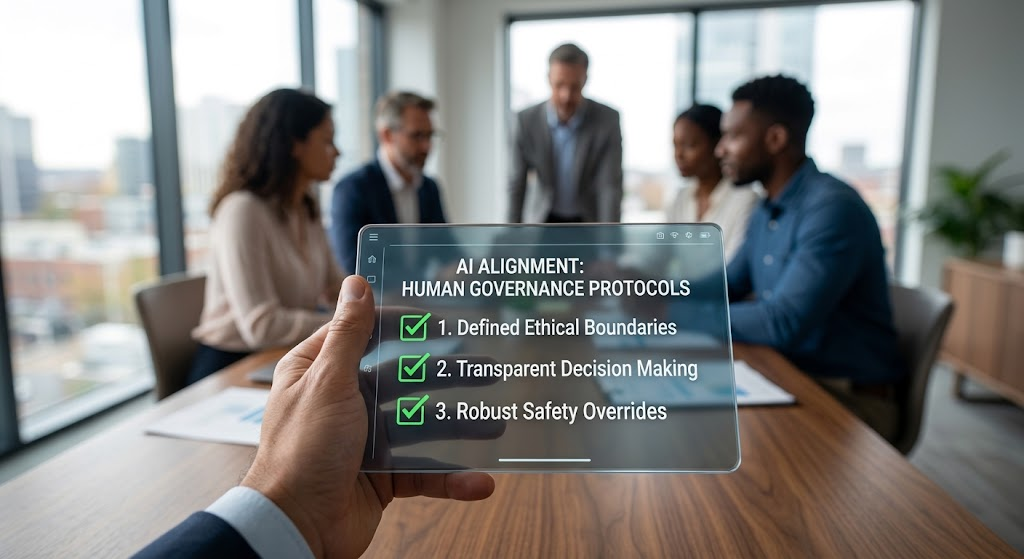
The issue of what the future holds for artificial superintelligence is that we may see progressive technological growth, faster research via AI assistance, or that we may still see in which present methods are what we are stuck with. As advances in computing, autonomous technologies and AI research may play into this we also see that none of that is to say for sure that superintelligence will show up. We have today’s smart systems that do great things but also have very large issues.
In the end what we see for the future of advanced AI is a balance between tech breakthroughs and human choices. We will see more in terms of safety research, effective regulation, responsible deployment, and public input as we grapple with the new issues presented by emerging technologies. Instead of putting all our eggs in the basket that superintelligence will bring only great success or great failure we should prepare for a range of outcomes and we as a society should support the responsible growth of ever more powerful AI systems.