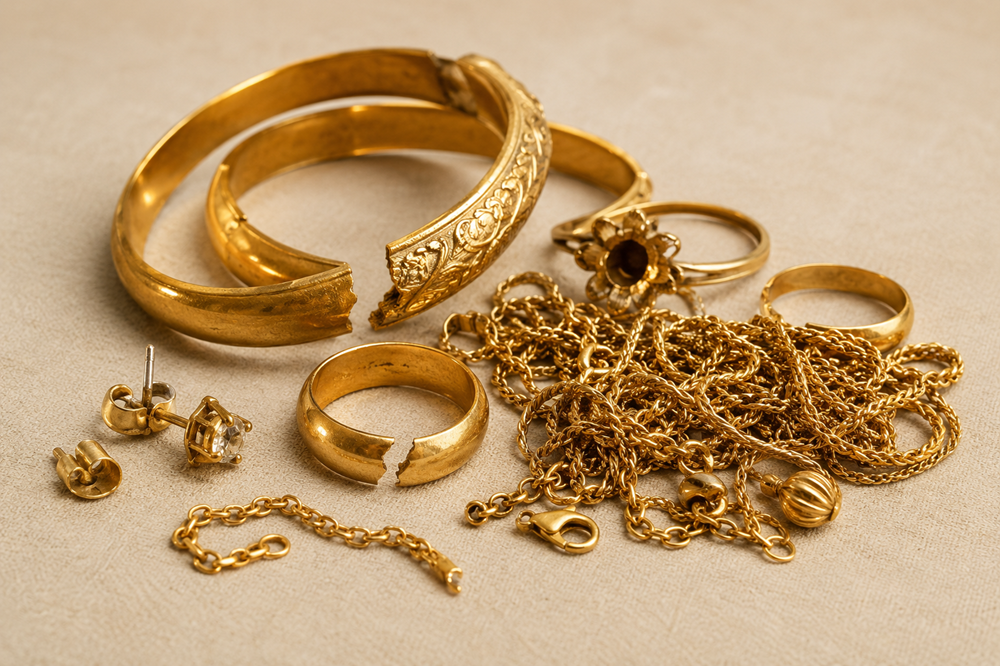
Gold has spent the past two years rewriting its own record books, and the jewellery tucked in bedroom drawers has quietly become more valuable with it. Broken chains, odd earrings and inherited rings that once seemed worthless now deserve a second look. Online buyers have made the process simple, yet the gap between a fair offer and a poor one can be considerable.
This guide explains how the market works, what your pieces may fetch and how to stay safe when you sell your gold.
How Do You Sell Unwanted Gold Jewellery Online?
Selling unwanted gold jewellery online is simple through the following steps:
- Check the hallmark and weight: Look for stamps such as 9ct, 18ct, 375 or 750. Weigh each piece in grams, because buyers pay for weight and purity.
- Check the gold price: It changes daily, so look up the current rate before you request quotes. It tells you whether an offer is reasonable.
- Choose a reputable buyer: Compare at least three buyers, and assess their reputation through independent review sites.
- Get a quote: Most buyers ask you to fill in a short online form listing your items. The quote is an estimate only. The final figure depends on testing.
- Post it securely: Use a tracked, fully insured service. Many buyers send a free postage bag or box, so ask before paying for packaging yourself.
- Review the final offer: Once your items have been tested and weighed, the buyer confirms a price. Compare it with the melt value you calculated earlier, and ask how the figure was reached if it looks low.
- Keep records: Photograph each piece prior to shipping out and keep your receipts, proof of postage and tracking numbers.
Before posting, photograph each piece, weigh it on kitchen scales and note any hallmarks. These records protect you if a dispute arises.
What Is Your Gold Jewellery Really Worth Today?
One troy ounce of Gold equals 31.1035 grams. Each piece of gold jewellery is assessed against its pure gold content. The following table presents some common carat-based purity levels along with associated hallmark stamps and pure gold content for a simple idea of how different jewellery pieces’ worth is calculated:
| Purity | Hallmark stamp | Pure gold content |
| 9ct | 375 | 37.5% |
| 14ct | 585 | 58.5% |
| 18ct | 750 | 75% |
| 22ct | 916 | 91.6% |
How Can You Spot a Trustworthy Online Gold Buyer?
When you prepare to sell your gold, you can spot a trustworthy online gold buyer in the following ways:
- Published rates: A good buyer shows its per-gram prices and buyback percentage up front.
- Testing on arrival: Many firms use XRF analysis, which reads the purity of each item without damaging it.
- Credentials you can check: Independent reviews help, as does membership of a trade body such as the National Association of Jewellers.
- More than one quote: Get at least three written offers. Some buyers will beat a rival’s quote once they have tested your gold.
Do You Need to Pay Tax When You Sell Gold Jewellery?
For most sellers, the answer is no. If you plan to sell your gold, HMRC guidance states gains on personal possessions only need to appear in a tax return where the proceeds exceed £6,000.
You should also be aware of the following rules:
- Under £6,000 per item: no gain needs reporting.
- Above £6,000: Marginal relief caps the chargeable gain at five-thirds of the excess over £6,000.
- Rates and allowance: The annual exempt amount is £3,000 for 2026/27, and the rates rose to 18% and 24% at the October 2024 Budget.
- Inherited pieces: Your base cost is the probate value, not the original purchase price.
Keep written valuations as records and consult an accountant for high-value cases. Retain the buyer’s itemised offer, as it shows the weight, purity and rate used for each piece. Inherited items call for extra care, because their gain is measured from the probate value and not the original price.
What Documents Might a Buyer Request?
Legitimate gold buyers operate under legal obligations, so a request for documents is a sign of a properly run business. The following are some documents that might be requested while selling the gold items:
- Proof of identity: The buyer normally seeks proof of identification of the seller through their passport, driving licence or any other applicable document.
- Proof of address: A recent utility bill or bank statement may be requested to confirm where payment should be sent.
- A signed claim form: Postal buyers often ask you to enclose a signed form so that your parcel can be matched to your details before it is opened.
- Bank details: Payment is usually made by bank transfer, so the account should be in the same name as the seller.
- Proof of ownership: For inherited pieces or high-value items, receipts, valuations or probate paperwork may be requested, and they also support your later tax records.
- Sale invoice or transaction slip: The buyer may ask you to give them a signed invoice listing the weight of the jewellery, its purity as well as the agreed-upon price.
Which Mistakes Should You Avoid Before You Sell?
The most common mistake to avoid while selling scrap gold or unwanted jewellery is not checking the current gold price. Below are the additional mistakes that you should not make while selling your gold:
- Assuming everything is scrap
- Ignoring volatility
- Skipping the paper trail
- Overlooking hallmarks
- Selling without checking the price
- Sending items before checking the buyer
Final Thoughts
Selling unwanted gold jewellery online can be quick, safe and rewarding when approached with preparation. Check hallmarks, estimate melt value from the live price, and compare several written quotes before you sell your gold. Choose a buyer that offers insured and tracked delivery.
For most households, tax is unlikely to matter because of the £6,000 personal possessions rule, though inherited or high-value pieces deserve a closer look. With gold prices still elevated by historic standards, a little diligence could turn forgotten jewellery into meaningful liquid capital.