There are days when an outfit looks perfectly fine on paper, yet something about it still feels unfinished. The clothes fit, the colors work, and there is nothing obviously wrong with the shoes or bag. Still, when you look in the mirror, the result can feel a little too ordinary.
Often, what is missing is not another layer of clothing. It is a small detail.
Jewelry can change the feeling of an outfit without changing the outfit itself. A simple shirt can look more polished with a necklace, while a plain dress may feel softer with a pair of earrings. Even jeans and a sweater can take on a more deliberate character when a bracelet catches the light at the wrist.
The interesting part is that the best accessory is not necessarily the one that gets noticed first. I tend to think the pieces that become part of someone’s personal style are usually the ones that feel almost effortless. They fit naturally into the way a person already dresses instead of trying to take over the entire look.
The Clothes Usually Come First
It is tempting to choose an accessory first and build everything else around it, particularly when a particular piece catches your attention. For everyday dressing, though, I find it much easier to start with the clothes and see what they need.
A loose white shirt already has a relaxed quality. Adding a longer necklace can reinforce that feeling, while a shorter and more structured piece creates a different impression. Neither choice is necessarily better. They simply tell different stories.
The neckline matters more than many people realize. A V-neck naturally leaves some visual space in the center of the chest, so a pendant can follow that shape without competing with the shirt. A crew neck creates a more compact area around the face, where a shorter necklace or simple chain can sit comfortably.
Turtlenecks are another good example. Because the fabric creates a strong horizontal line around the neck, a longer necklace can introduce a vertical element and break up that solid block of fabric. It is a small adjustment, but it can make the whole outfit feel lighter.
There is no universal rule for choosing the right piece. The same necklace can look completely different depending on the clothes around it. That is why I would rather look at the whole outfit than decide whether an accessory is fashionable on its own.
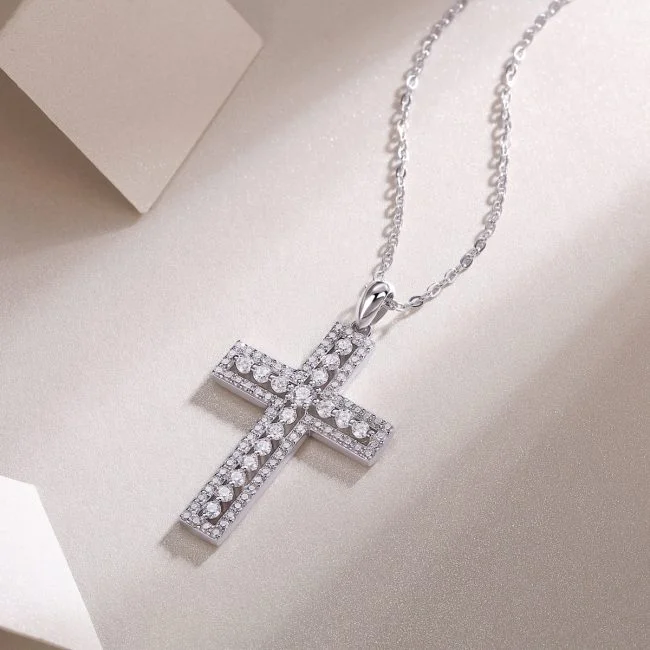
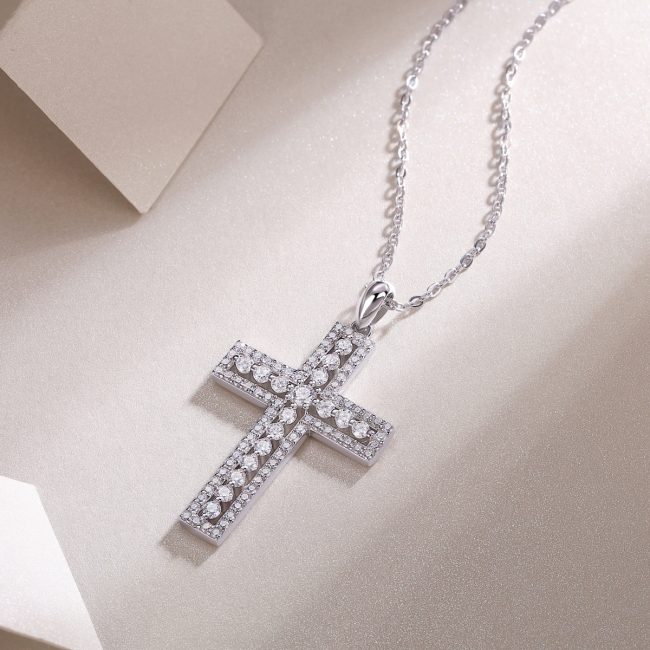
For everyday outfits, a sterling silver necklace can be particularly easy to work with. Its cooler tone sits comfortably alongside denim, white shirts, black knitwear, neutral coats, and many of the wardrobe basics people already own.
Let One Detail Have a Little More Attention
One of the easiest ways to make accessories look intentional is to avoid making everything compete at once.
If the necklace has an interesting pendant, the earrings do not necessarily need to be dramatic. If the earrings are long and noticeable, a simple bracelet may be enough for the wrist. This sounds obvious, but it is surprisingly easy to overlook when getting dressed.
I have always found that an outfit often looks better when there is one clear point of interest and everything else supports it.
That does not mean every piece has to be tiny. A substantial accessory can work beautifully with a simple outfit. Proportion is usually more important than size. A bold necklace with a heavily patterned blouse may feel crowded, while the same necklace worn with a plain black top can suddenly look considered rather than excessive.
The opposite can happen too. A delicate chain may disappear completely against a complicated neckline, but become exactly the right finishing touch with a simple cotton shirt.
There is also something to be said for leaving a little space. Not every neckline needs a necklace, and not every bare wrist needs a bracelet. Sometimes an outfit becomes more interesting because one area is deliberately left quiet.
That kind of restraint is easy to underestimate. It gives the eye somewhere to rest and allows the pieces that are being worn to feel more noticeable without having to be oversized.
Earrings Change More Than People Expect
Necklaces tend to interact closely with clothing, but earrings have a different role. They sit much nearer to the face, which means even a relatively small pair can change the overall impression of an outfit.
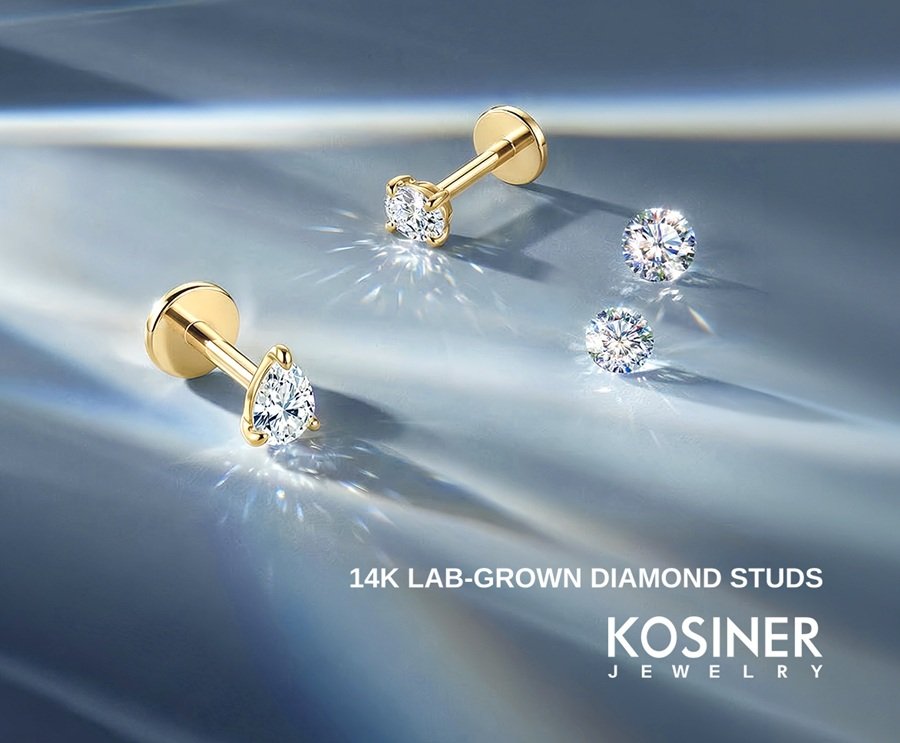
Studs are probably the easiest example. They can add a little brightness without changing the character of what you are wearing. That is one reason they remain useful long after more noticeable styles have gone out of fashion. They work with a blouse, a sweater, a casual T-shirt, or something more formal without demanding that the rest of the outfit be changed.
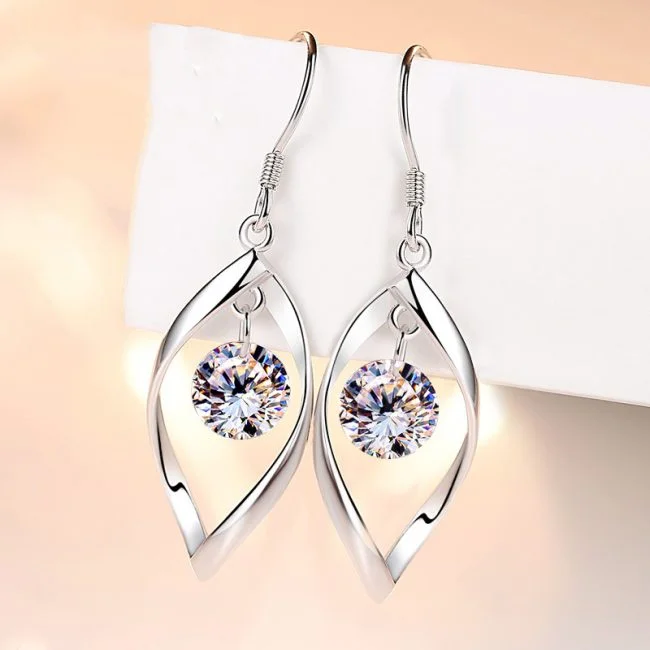
Drop earrings create a different effect because movement becomes part of the look. A pair of simple silver drops can make a plain hairstyle feel more deliberate, especially when the hair is tied back or tucked behind the ears.
For anyone who likes that subtle movement, silver drop earrings can be a useful addition to a wardrobe. They do not have to be large or heavily decorated. A slim shape that moves slightly while walking can be enough to draw attention toward the face.
Hoops have a more relaxed personality. Small hoops can be almost as versatile as studs, while larger ones tend to create a stronger fashion statement. The choice often comes down less to what happens to be fashionable and more to what feels natural when you actually wear it.
Comfort matters here as well. An accessory that constantly needs adjusting will never feel like part of your style, no matter how good it looks in a photograph. If you forget you are wearing something after a few hours, that is often a much better sign.
Color Can Be More Important Than Size
When people talk about styling jewelry, the conversation often focuses on shape and size. Color deserves just as much attention.
A neutral outfit gives you plenty of freedom. Black, cream, gray, denim, and white can all act as a quiet background for a colored stone. This is where a gemstone can become more than decoration.
Imagine a simple cream sweater with blue denim. A small blue or green stone introduces a point of color without requiring a complete change of wardrobe. Against an all-black outfit, the effect can be even stronger because the stone has more visual space around it.
I personally prefer this approach to matching every color exactly. Accessories do not have to repeat the color of your clothes to belong with them. Sometimes a slight contrast is what makes an outfit feel alive.
A gemstone bracelet works particularly well in this respect because the color appears at the edge of the outfit rather than directly beside the face. It may catch your eye when the hand moves, when a sleeve is pushed back, or even while holding a bag or a coffee cup.
A women’s gemstone bracelet can therefore work as a quiet detail rather than a centerpiece. It gives a simple outfit a little personality without making the entire look revolve around the accessory.
The stone does not have to be particularly large either. For everyday dressing, a smaller stone with an interesting color or natural variation can feel more personal than something designed purely to attract attention. There is a certain charm in an accessory that reveals its details gradually instead of announcing itself from across the room.
The Same Piece Can Feel Different in a New Setting
One of the reasons I like versatile pieces is that they rarely have only one use.
Take a simple necklace. With jeans, a cotton shirt, and sneakers, it can feel relaxed and uncomplicated. Put the same piece with a tailored jacket and trousers and it becomes more polished. Add a dress and change the earrings, and suddenly it can work for dinner.
The jewelry has not changed. The surrounding context has.
That is worth remembering when buying something new. It is easy to fall in love with a piece because it looks beautiful in isolation, but the more useful question is whether you can imagine wearing it with the clothes you already own.
A dramatic statement piece may look perfect for one evening, while a simpler design might become something you wear every week. Neither choice is wrong. They simply serve different purposes.
There is nothing wrong with owning pieces reserved for special occasions, of course. Some are meant to be noticed. But the pieces that become part of a person’s recognizable style are often the less complicated ones—the necklace worn with the same favorite shirt, the earrings that somehow work for almost every occasion, or the bracelet that has quietly become part of someone’s daily routine.
Those repeated choices are what eventually make a style feel personal.
Mixing Pieces Without Making Them Look Too Planned
Matching everything perfectly can sometimes make an outfit look more like a display than something someone actually wears. Mixing pieces can feel much more natural.
Different textures can work together particularly well. A smooth necklace can sit alongside a slightly textured bracelet. Simple earrings can balance a more detailed pendant. Even different finishes can coexist when there is some other connection between the pieces, such as a similar tone or a shared design element.
The trick is not to make every piece identical.
I also think there is a difference between layering because you genuinely like the effect and layering because you feel an outfit is missing something. The first usually looks effortless. The second can lead to adding one piece after another until the original simplicity disappears.
For someone who normally wears very little, starting with two pieces is often enough. A necklace and earrings can establish the look. On another day, the necklace can be left out and the bracelet can become the small detail that changes the outfit.
There is no need to create a complicated combination every morning. In fact, having a few combinations that you already know work can make getting dressed easier. Once you know which pieces feel right with your favorite clothes, you stop having to think about every little decision.
That familiarity is part of what makes personal style feel natural.
Personal Style Is Built Through Repetition
Trends can be useful because they introduce people to shapes and combinations they may not have considered before. But trends are not necessarily what creates personal style.
Personal style tends to come from repetition. You wear certain colors because you know they make you feel comfortable. You choose particular necklines because you like the way they fit. You discover that you prefer small earrings to large ones, or that you always reach for bracelets when wearing short sleeves. After a while, these decisions become almost automatic.
Someone may start with a simple pair of earrings because they seem easy to wear. Later, they find a necklace that works with their everyday clothes. Eventually, a bracelet or ring becomes another familiar part of the routine. None of these choices has to be dramatic. Together, they begin to create a recognizable visual language.
That is probably why I would rather have a small collection of pieces that genuinely suit someone’s wardrobe than a large collection that rarely gets worn. There is more value in knowing that something will work with several outfits than in buying it simply because it happens to be popular at the moment.
The goal is not to own something for every possible trend. It is to find pieces that still feel right when the trend has moved on.
Knowing When to Stop
There is one final part of styling that is rarely discussed: knowing when the outfit is finished.
Sometimes the answer is one more accessory. Sometimes it is the opposite.
If the neckline already has an interesting shape, the face is framed by a strong pair of earrings, and the clothing has plenty of texture, adding another piece may not improve anything. The outfit may simply need a moment of restraint.
This is especially true for everyday clothes. The best-looking combination is not always the one with the most detail. A plain sweater, a pair of jeans, comfortable shoes, and one well-chosen piece can be much more convincing than an outfit covered in accessories.
There is a certain confidence in leaving things alone.
After all, personal style is not really about proving how many things you know how to combine. It is about recognizing what feels like you and being comfortable enough to stop there.
The small details matter because they are often the details people choose repeatedly. A necklace that always seems to find its way back around your neck, earrings that have become part of your morning routine, or a bracelet that feels strange to leave at home—those are the pieces that eventually become part of how you are seen.
And perhaps that is the most useful way to think about accessories. They do not need to transform who you are. The good ones simply make what is already there a little easier to see.