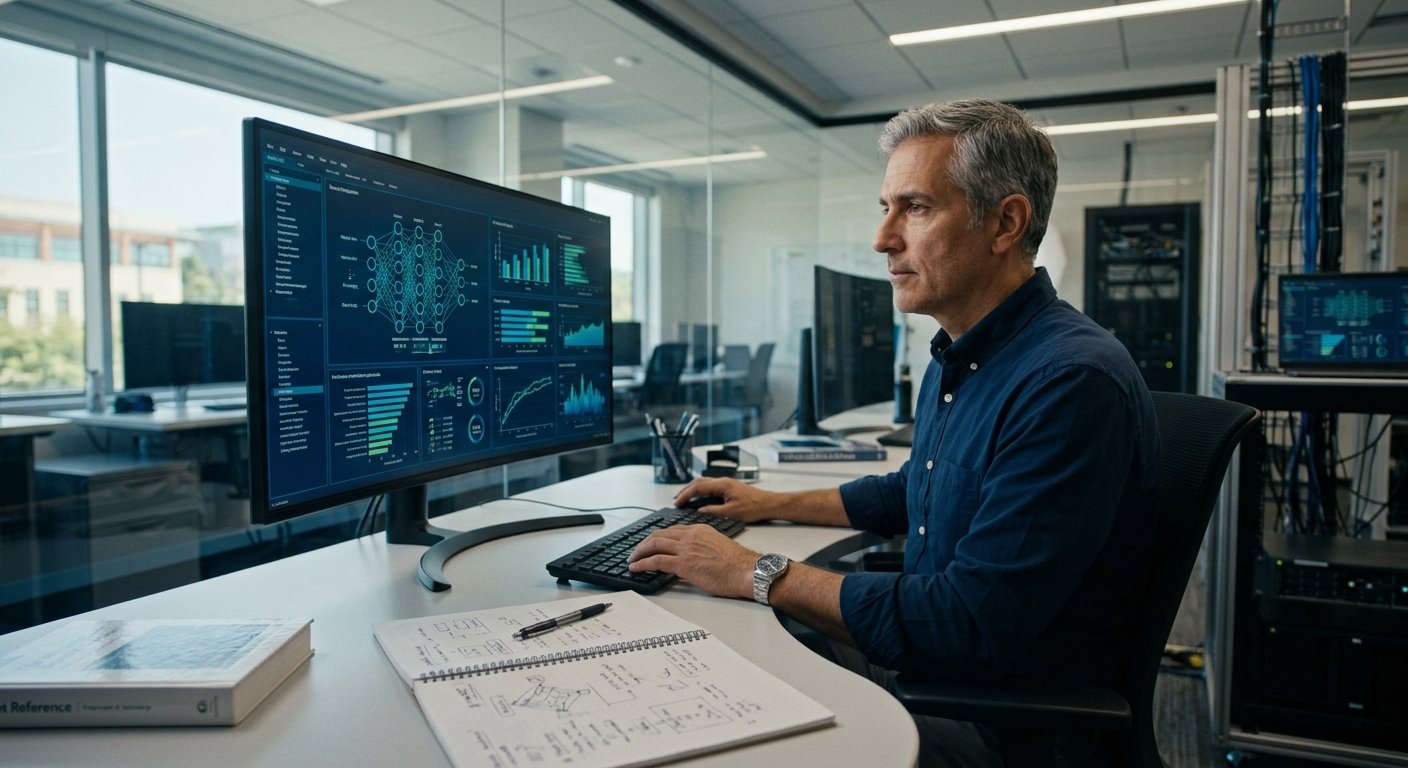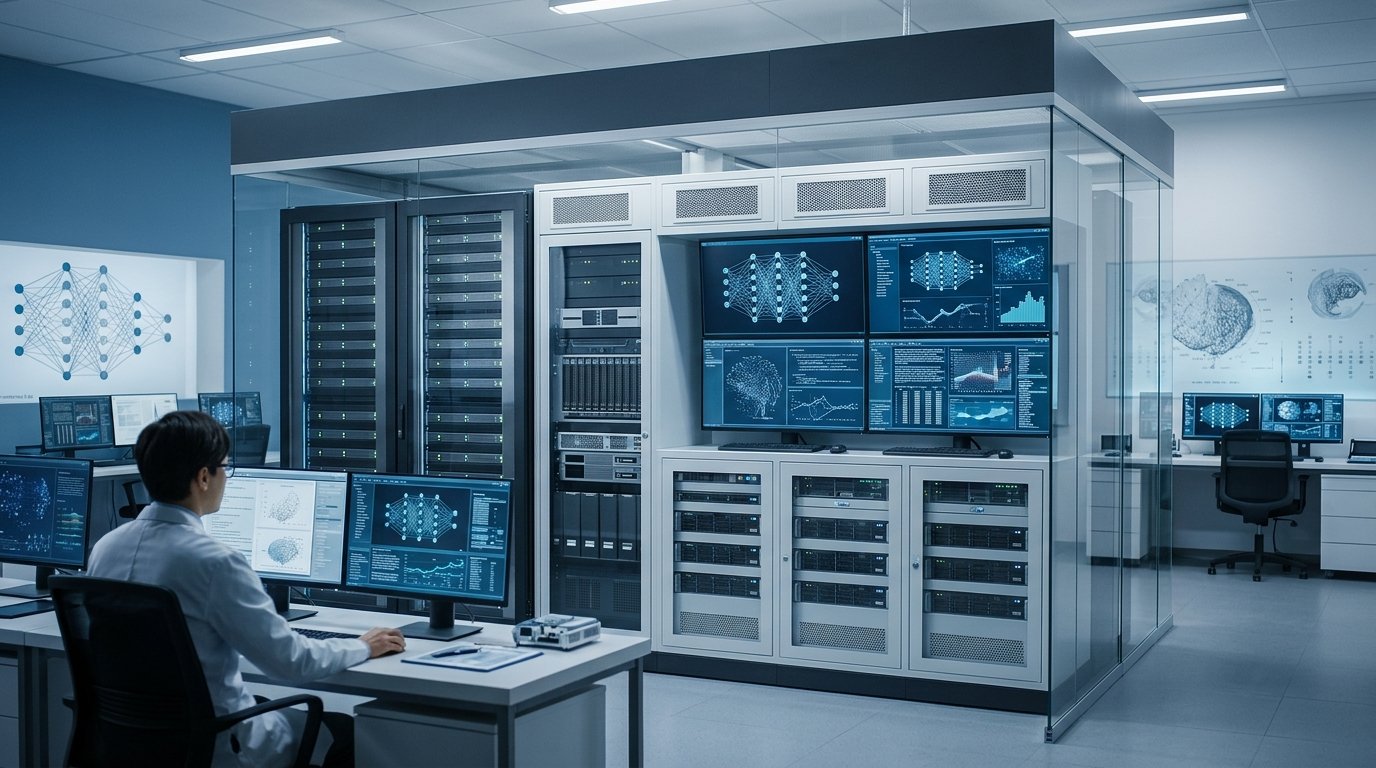
The potential benefits of artificial superintelligence could transform how we work, learn, do research and solve problems. In health care it is supporting diagnostic processes and in business is improving productivity which in turn is a driver for scientific and economic growth. But artificial superintelligence (ASI) may take us beyond where we are now. ASI is a term we use for AI that will out perform us in almost all fields of science including reasoning, creation, and complex problem solving.
Artificial superintelligence may present large scale benefits for our society that we have yet to see. For example these systems will play a role in medical research, perhaps help improve quality of education, develop ways to mitigate climate change solutions, which is also related to better farming production, also they will work to produce a superior safety record in our transport sectors. Also we put forth that this technology may play a great role in what are very complex decision making processes for both our governments’ and private enterprises. That said it is a very early stage in the life of these technologies but by studying them we can begin to see how we as a humanity will use them to overcome our most hard fighting issues. It also goes without saying that in order to fully achieve the above benefits we will require the growth of a responsible development model, a heavy level of human oversight, and that growth be in fact inclusive to all of society and not just a few.
Grasping the Potential Benefits of Artificial Superintelligence
Artificial superintelligence is a term used for a hypothetical AI that will outperform us at all tasks that require intelligence. Present day AI’s have narrow sets of abilities and large scale issues in many domains but a superintelligent system may break those barriers. It may put together large data sets, see what the human eye may miss, come up with new scientific what if scenarios, and present solutions that experts may not think of. Also it is postulated that it may tie together chemistry, bio, and engineering in the pursuit of health care improvements or better technology.
However at present we should not put forward that artificial superintelligence is the same as what is available today. Today’s AI does what is expected of it, which is to generate content, analyze data, write code, and assist with research. Also it does produce inaccurate info and has issues with some tasks. What we mean by Artificial General Intelligence is a putative system which will perform a wide range of intellectual tasks at human level, whose superintelligence is to go beyond what people are able to do in those tasks. Also they are not to be looked at as achieved yet. ASI is a theoretical chance and what its capabilities and effects on society will be we cannot be sure of.
Accelerating Research and Improving Health Care.
One of the very best uses for superintelligent AI is in the acceleration of scientific research. We see that research which is done by scientists includes the review of past studies, formation of hypotheses, performance of experiments, and analysis of data which they collect, a process that may take years especially when they are looking at complex issues. A superintelligent machine may be able to look at the science which has been done before, identify what has been overlooked, and put forth experiments that will help researchers to pursue very good ideas more so. Also it may combine what has been discovered in one field with what has been found in another, thus scientists may use this to study new materials, to better understand physical processes, and to develop new technologies. At the same time it is to be noted that what the AI puts forth as predictions still will require to be tested out independently and verified by science.
Healthcare is also a sector which may benefit from these capabilities. We see very advanced AI in the role of analyzing medical records, lab results, medical images, and scientific studies which in turn may assist professionals in the identification of what may be a disease and the evaluation of what treatment options are best. Also it may support research into cancer, infectious diseases, and inherited conditions which in turn may help to develop new medicines and vaccines. We may also see very advanced AI in the improvement of personalized care and in the better management of health care resources. Also in communities that have limited medical care these applications may prove very valuable. That said, medical AI will require very in-depth clinical research, strong private protection, and professional oversight. At the end of the day AI should support health care providers’ judgment rather than to take the place of it.
Transforming the Education System and Increasing Access to Knowledge.
Artificial superintelligence may bring greater personalization and access to education. We see that students’ paces of learning differ, and that in present class settings it is at times a challenge to give each individual the attention they require. An elite AI may be able to identify what a student is having trouble with, present difficult topics in various ways, and put together a study plan according to a student’s progress. For instance a student that has trouble with math may get in depth extra explanations and practice, while an advanced learner may look at very challenging material. Also these features may support teachers and help students to do better in many subjects.
Super intelligent AI may also break into new areas of education which are now inaccessible to those with financial, geographical, or language barriers. We see it at play in the translation of instructional materials, the design of accessible ed resources, and in the provision of extra support to students with disabilities. Also it is up to the teachers’ use to create lessons with, to assess student growth, and to identify large scale misconceptions. But what we see is that the benefits will only be as good as the access to affordable tech, reliable internet, and proper educational protections. AI should not take the place of the human element which makes education what it is. Teachers will still be key in mentoring, motivating, social development and in getting our students to think critically. Tech should support education not to put quality learning out of the reach of those who can’t afford the best tools.
Tackling Climate Change and Growing Agriculture.
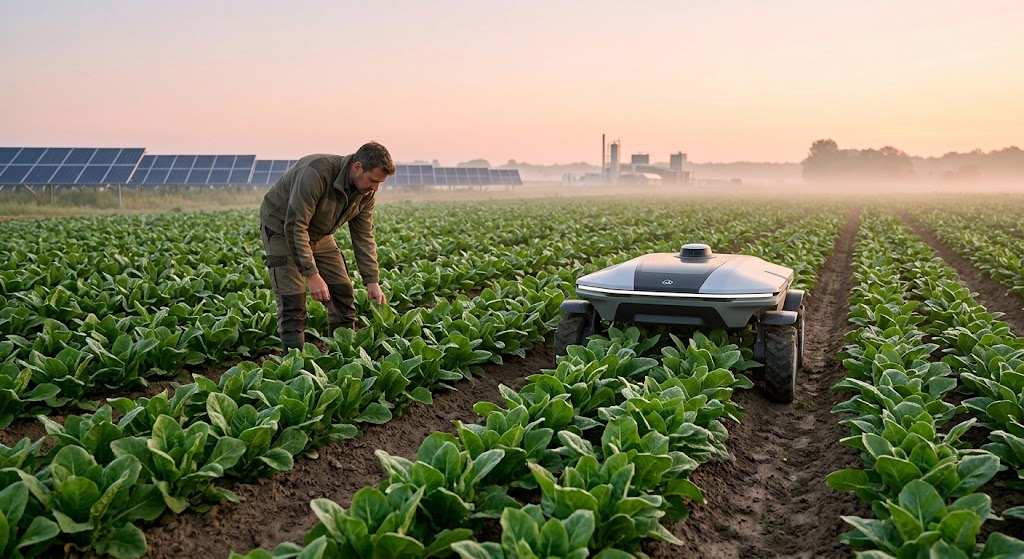
Climate change is a very complex issue which the atmosphere, oceans, ecosystems, and human actions play a role in. We may see that artificial superintelligence has a role to play in which it helps researchers improve climate models, study environmental data, and evaluate which of the many emissions futures we are most likely to see play out. Also in very fine detail it may put into perspective what we can expect from things like extreme weather events, droughts, floods and other issues related to the climate. Also it is to see how AI may support the development of better clean energy solutions by improving the performance of solar panels, wind turbines, batteries, and electric power grids. This in turn will play a role in the effort to reduce emissions and increase energy efficiency although large-scale success in this area will still require the support of government policies, investment, and international work.
Agriculture may see great growth in this area. We may see super intelligent AI which looks at soil health, weather reports, crop type and pest action to put forth better decisions from farmers on what to plant, how to water and when to put on the fertilizer. Also it may play a role in the development of hardier crops which resist drought, heat and disease. These potential benefits of artificial superintelligence can help address the serious climate change impacts on agriculture while improving forecasting and supply chain planning that reduce food waste and strengthen food supplies for communities.
Improving Engineering, Transportation, and Technology.
Engineering projects require to put in great detail in planning, testing, and evaluation. Artificial superintelligence may put at the table for engineers to consider thousands of design options, to identify structure flaws, and into the development of better materials. It may support the development of stronger buildings, safer bridges, improved medical equipment, and technologies that use resources better. In manufacturing also we see that advanced AI may play a role in identifying production inefficiencies, reducing waste, and predicting equipment issues before they cause large scale disruption. These may in turn speed up the rate of innovation and see organizations put to market more reliable products. But as for engineering designs which will still require physical testing and independent safety assessment before that which goes into the public domain.
Transportation systems may also see an increase in safety and efficiency via the use of advanced AI. We may see superintelligent systems which study traffic trends, weather reports, road and public transport timetables out there to ameliorate congestion and improve travel plans. Also they can support the design of better, safer cars, more reliable navigation and better maintenance for trains, planes, and ships. Also we may note that freight companies may use this tech to better design delivery routes and reduce wasted fuel. While these are positive possibilities, transport systems also have to be reliable in the unexpected. Very thorough testing, strong cyber security, clear lines of responsibility, and human input will be key, in particular as we see AI play a role in what are very important safety decisions.
Improving Business Efficiency and Public Services.
Artificial superintelligences will see use in business to improve data analysis, planning, customer service, and supply chain management. We see large organizations using advanced systems to identify inefficiencies, predict demand, compare strategies, and in the development of new products. Also it is put forth that AI tools which are affordable may make complex analysis and administrative support available to small businesses. By reducing time spent on repetitive tasks we see that these techs will allow for greater focus on creative and communication tasks which in turn require human input. But it is also put forth that productivity will not rise for all. Some jobs may change or go away which in turn makes education and retraining of workers and in place of appropriate worker protection a priority of the transition.
Governments and public bodies may benefit from superintelligent AI in which they improve their services and present better solutions for complex social issues. Also we see that advanced systems may assist planners in determining which areas are most in need of new schools, hospitals, and transport infrastructure. Also they may play a role in disaster preparation by looking at environment reports, forecasting what resources will be required, and in the co-ordination of emergency services’ response. In large scale disasters for instance floods we may see such systems used for identification of affected communities and in the distribution of basic needs. At the same time it is important to note that public policy which touches on issues of rights, service access, or personal data must be transparent and subject to accountability. AI put forth by these systems should be subject to independent review and also people must have a chance to question any personal affected decisions.
Supporting the World of Research and International Science Collaboration.
Space exploration, which is to date a challenging field, includes issues of extreme environments, communication delays, and the high cost of getting the equipment there. We see that artificial superintelligence may put in play for scientists the better interpretation of astronomical data, improved design of spacecraft, and the planning of in depth missions. It may also be put to use in the analysis of telescope data which in turn may lead to the identification of patterns related to planetary formation, and support research in the field of planetary formation also it will put forward in the design of better scientific instruments. Also we see that advanced systems may support the operation of spacecraft at great distances from the earth by which we mean the analysis of the equipment’s performance reports and the identification of issues when immediate communication with mission control is not an option. This may in the long run improve the efficiency of future missions which we must also bear in mind are that all safety critical systems will require very in depth verification.
Superintelligent AI may also see an increase in international cooperation as it enables researchers to share information and work through issues which cross over into many different countries’ borders. We will see more international scientific alliances which will in turn use very advanced tools to pursue new cures, put forth better clean energy solutions, augment agricultural sustainability, and look at environmental issues. Also such a rise in collaboration will make scientific achievement more accessible and put a stop to redundant research. That said, what we see may only play out if there are agreements around data exchange, security of the systems, protection of intellectual property, and fair access. Also without the right protections in place the advanced AI may just as easily increase the science and economic gaps between the large and small groups. In which case global cooperation will be key to see that its benefits do not just go to the rich players in this field.
The Value of Responsible Growth.

Despite what is put forth by some, the potential benefits of artificial superintelligence may present great difficulty. We see that a machine may put forth what is at first very convincing results which in fact are false, it may act in unexpected ways, or it may make choices which go against what we as humans value. Understanding the critical risks of artificial superintelligence helps researchers develop better testing practices, continuous monitoring, strong security protocols, and methods to identify dangerous actions before these systems are placed into critical roles.
Society also has to look at which benefits and economic changes brought by superintelligence go where. If that access is to remain the domain of powerful organizations only, advanced AI may in fact increase inequality and reduce what is available for some communities. Thus it is up to governments and institutions to put in place the right regulations, investment in the workforce, in education, and in safeguards against discrimination. Also we see to it that there are independent evaluations and that responsibility for AI related decisions is made out. Responsible development will not remove all risks, but it can improve the chance that these techs will support human needs. The goal should be to develop AI that supports people, protects their rights and contributes to the long term social well being.
Conclusion
Artificial superintelligence may in time transform the world as we know it by which I mean it will be put to use in science, medicine, education, agriculture, engineering, transportation, and environmental protection complex problems which at present do not have solutions. It may also see great improvements in research which in turn will see better performance out of our social and health services, greater food security, and the development of better technology. We may also see these changes put in place which will in turn help us to solve some of the world’s greatest issues which we have been fighting for generations. But also it is important to note that these are but possibilities and not certainties. The actual play out of superintelligence will depend on the tech it is built with, the choices made by its creators, and the systems which put in place regulations for its use.
On a large scale we should see human well being as the goal, not technological growth for the sake of it. Safety in testing, responsible management, human oversight, and equity in access would be key to seeing benefits put forth for the world. Also many of the world’s issues require cooperation, ethical decisions with a sense of what is needed in the local setting which tech alone doesn’t solve. If we develop and put out into the world responsibly, artificial superintelligence may become a very great tool for growing human knowledge, improving quality of life, and supporting a more sustainable future. Its best use would be in its role to support people in their decisions and in building a world which has technology that serves human interest.