Introduction
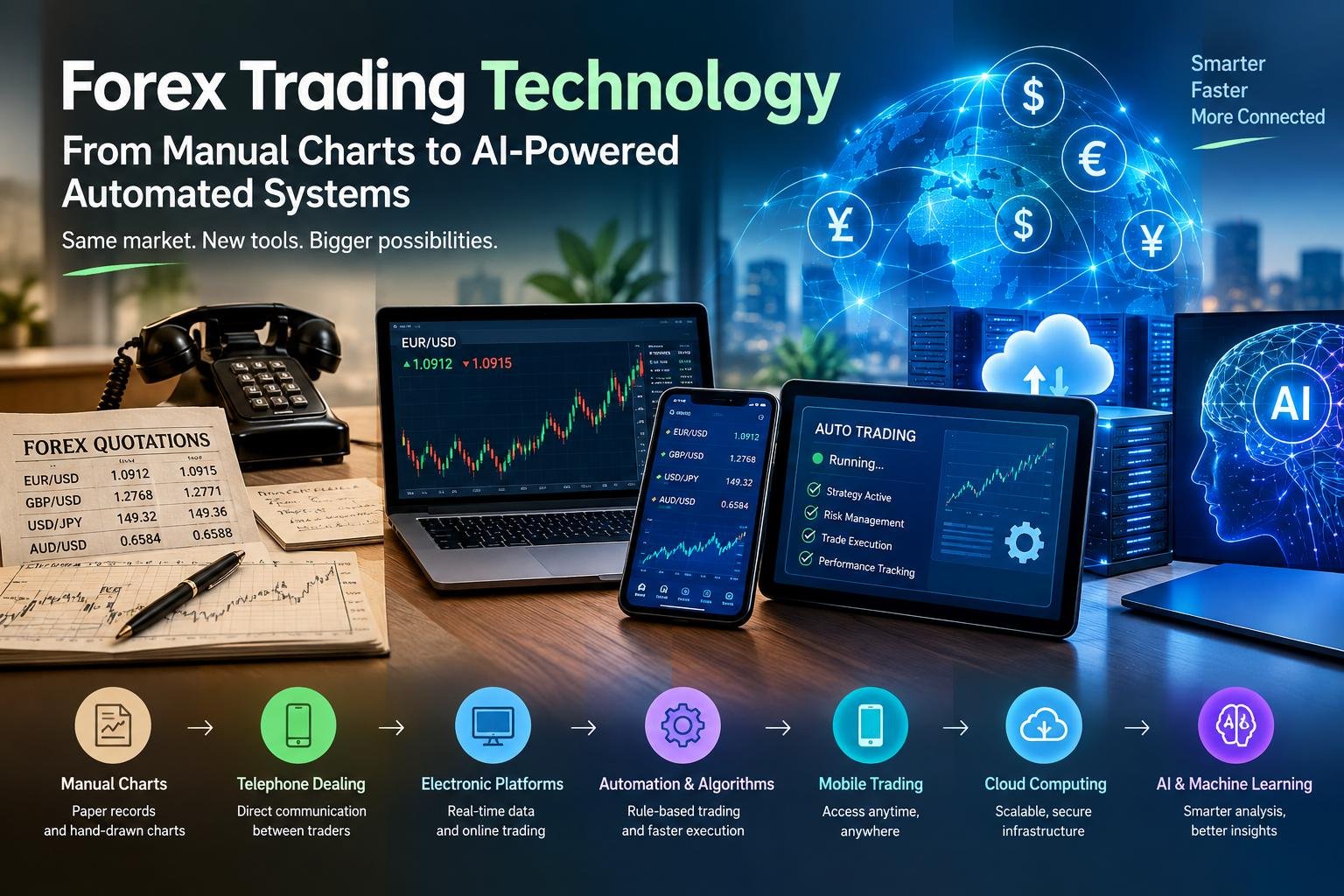
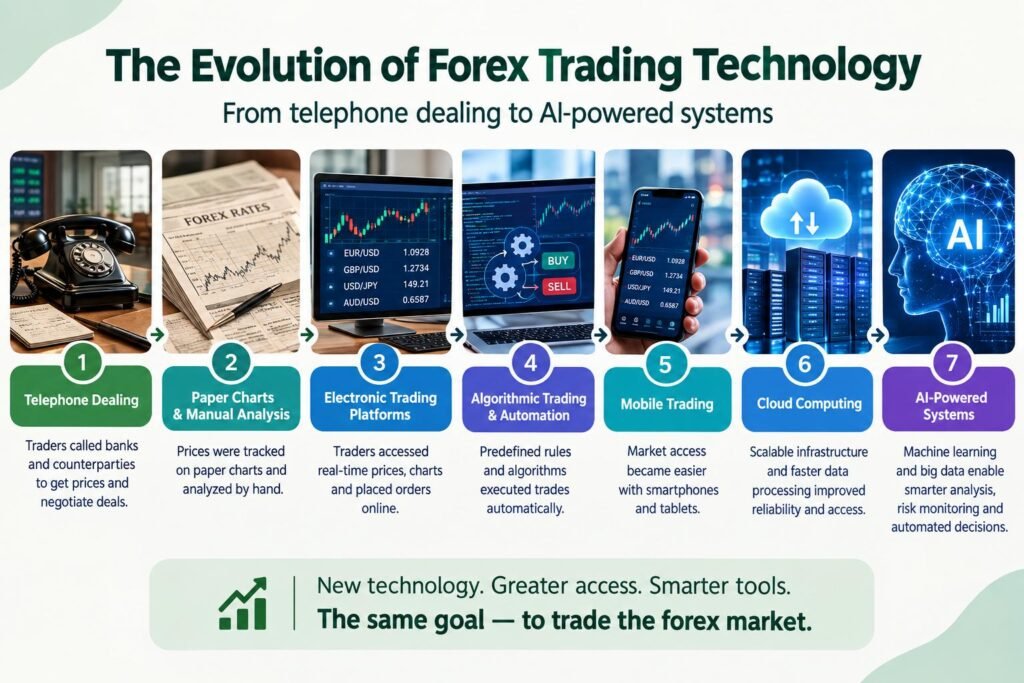
Foreign exchange market has experienced an amazing technologic revolution. Once reliant on verbal communication, printed price data, manually-prepared charts and direct communication between dealers, this traditionally expensive and cumbersome environment has transformed into a highly interconnected electronic world where prices, orders, analytics and trading decisions can flow through digital networks virtually instantaneously. The technological advancement of the forex trading has revolutionized not only the way in which professional institutions enter the currency market, but the way in which individual traders get information and make currency trades. Today, the technology used in the forex market is electronic communication networks, advanced trading platforms, automated trading strategies, cloud computing, mobile apps, and now artificial intelligence. By comprehending this evolution, you can gain valuable insights into the evolution of the forex market and why it appears significantly different from the dealing methods of several decades ago, technology behind the forex market.
The Pre-Digital Days of Forex Trading
Prior to the advent of electronic trading platforms, foreign exchange dealing was mainly a person-to-person business. The professional dealers at banks and financial institutions used telephones, dealing rooms, written records, market newspapers and information from other financial institutions. Price changes for the currency was conveyed by hand-to-hand communication between dealers and transactions were negotiated and manually confirmed. Historical price data, which was less timely and as much granular as today’s digital data, was a key factor traders relied on when determining the direction of the market. Chart analysis also took much more work as there was a possibility of taking the price movements on paper charts and manually interpreting them. This environment resulted in reliance on professional networks, physical facilities and dealers’ capacity to communicate effectively with other market participants for access to information. There was technology but mainly to enhance communication.
Dealing and Communication by Telephone
One of the most significant technological advances was in dealing over the telephone, which enabled the participants to communicate directly between financial centers. Dealers might reach out to banks and other counterparties to get price data on currencies, to negotiate deals with them and to confirm trades. But, this system was still reliant on people. Having to communicate the currency pair, transaction size, price and other relevant details would be required before a trader could execute a trade. The information shared in the market might change during the conversation, especially so if the markets were active and volatile. Manual transactions were also part of the process of recording transactions, leading to potential delays and inaccuracies. While telephone systems were considerably quicker than communication by mail, they didn’t offer the automatic, real-time pricing information that is available for trading in today’s world. The dealing room continued to play a key role and the ability of a trader to communicate effectively and quickly may have had a major impact on the effective handling of orders.
The Way to the Electronic Market Data
With electronic communication and computer networks, the forex market started to be transformed, as financial information became more easily available. Financial institutions might increasingly be using electronic systems to obtain currency prices and other information about the markets instead of having to depend entirely on telephone calls or printed reports. The advent of the computer meant there was greater efficiency in collecting, storing, organizing, and displaying a wealth of information. The real-time or near-real-time price feeds became more and more significant since they enabled traders to see the bid and ask prices as they fluctuated without having to call over the phone to re-query prices repeatedly. Electronic market data also laid the groundwork for advanced analysis as old prices could be kept electronically and analyzed with computer software. This was an important move since it gave information away from the traditional dealing process. The prices might now be sent out to numerous users concurrently via digital networks, laying a crucial technological base for contemporary forex platforms and automatic trading.
What’s not shown?
Another field that changed significantly with the advent of computing technology was charting. Traditional traders required to make charts by hand, while charting software for computers could produce charts automatically. Traders had the option to choose different time frames, look back at historical data, compare currency pairs and use technical indicators without having to manually work out all the measurements. Price data stored can be used to produce moving averages, oscillators, trend indicators and other analysis tools in an instant. This made technical analysis much more accessible and enabled traders to analyze a lot more information within a much shorter period of time. However, the computerized charts also added flexibility as there was a near instantaneous ability to modify timeframes and analytical settings with ease. As computers became more powerful, charting programs were able to process larger amounts of data and offer more interactions. As a result, the chart became more than just a historical record of prices and became a tool to help with the trading process during the time of the trading session.
Switching from Paper to Electronic Forex Platforms
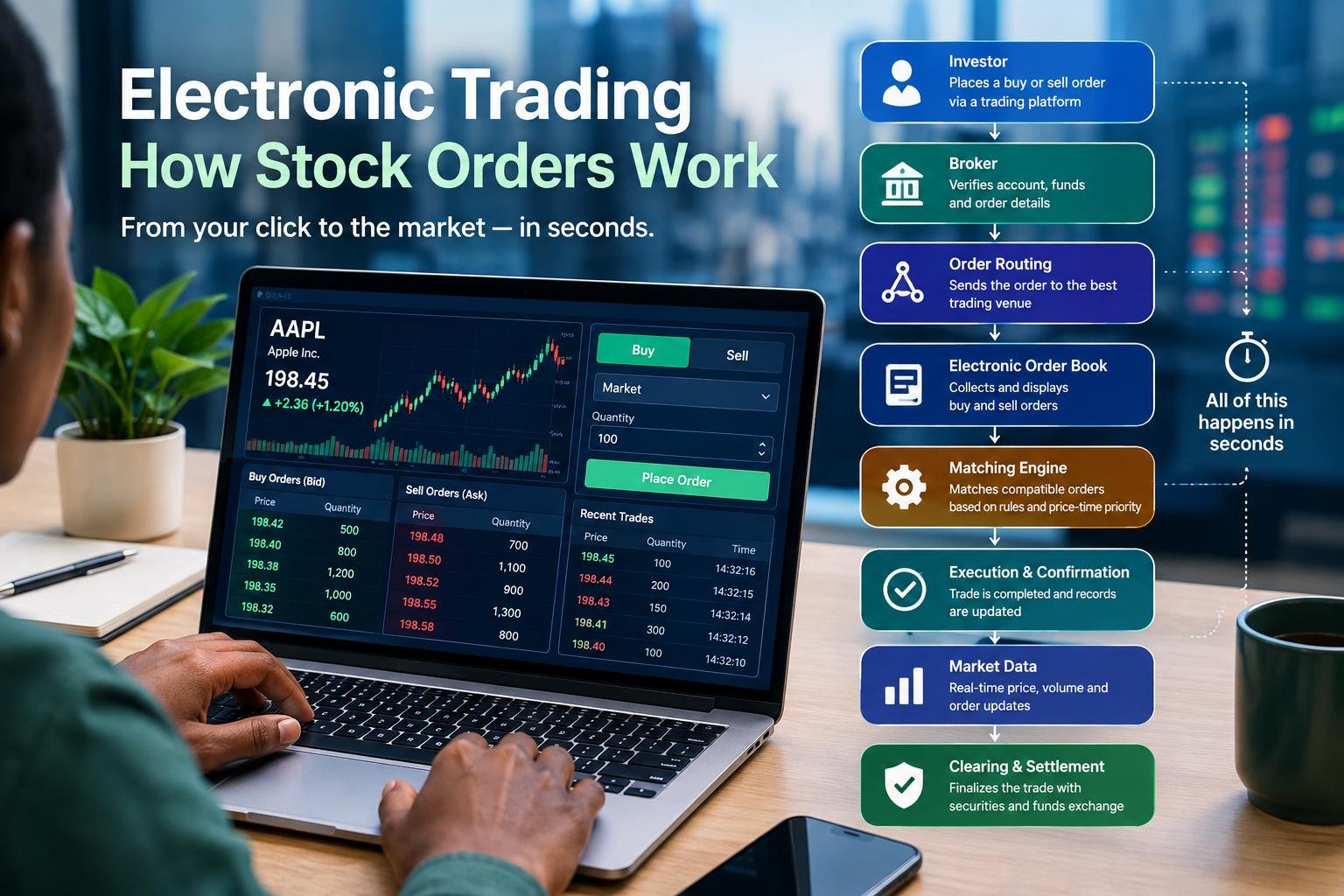
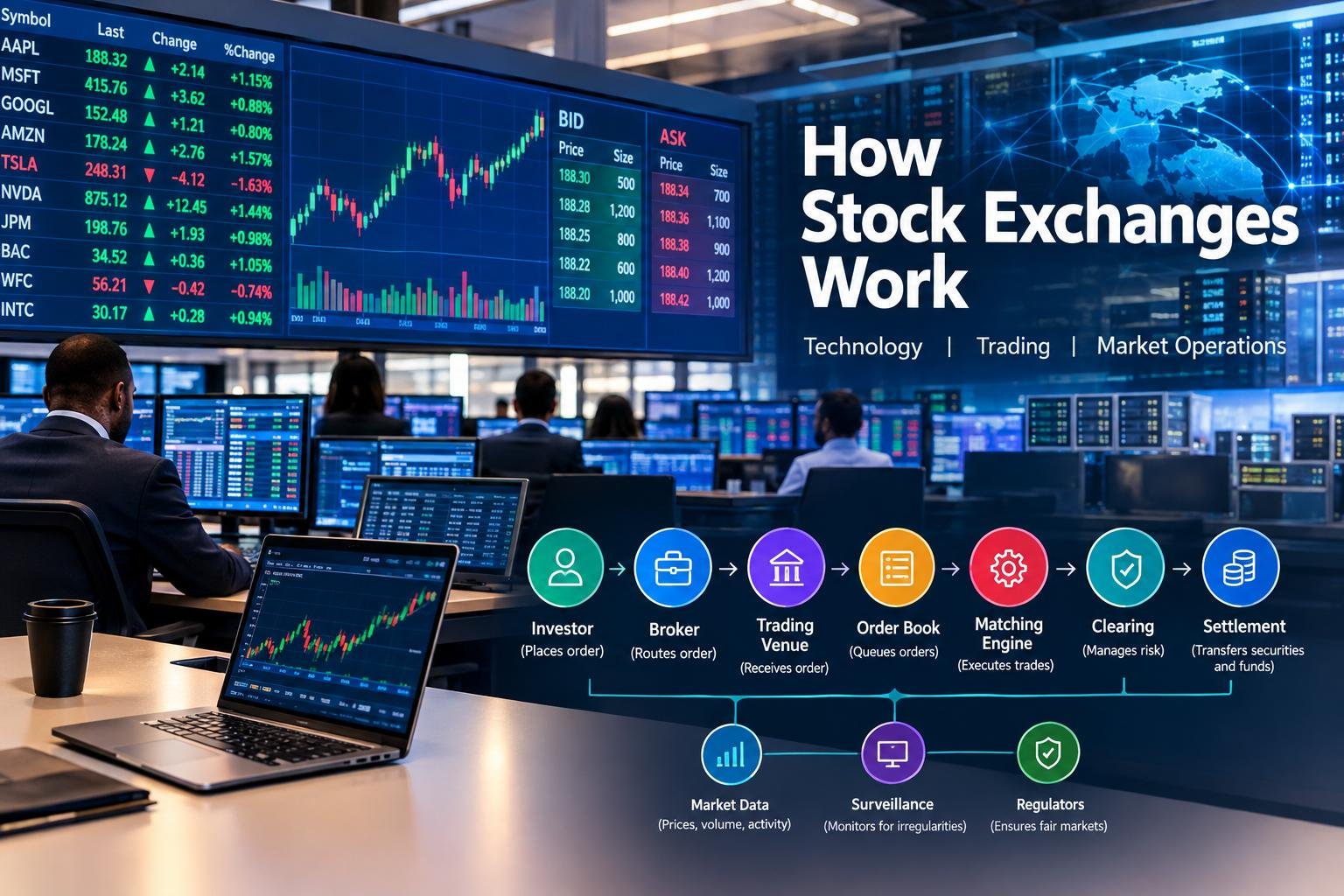
The development of dedicated forex electronic trading platforms was one of the most significant milestones in the modernization of forex trading. Users didn’t need to call a dealer for each deal, but could communicate with software which would show prices and offer facilities for ordering. These platforms have brought traders in touch with the brokers or other market infrastructure, and established a standardized digital interface to access currency markets. A trader could keep track of multiple currency pairs, analyze charts, place trades, watch open trades and check account details all from one application. The electronic platforms also facilitated the structure of the information for trading, as all the information associated with the transactions, such as price history, balance information, and order information, could be stored electronically. It did not replace the function of a broker, a bank, or a liquidity provider but only the way users got in touch with the market. The trading platform became more of a technological link between the participant and the underlying trading infrastructure.
Electronic Order Execution
The electronic order execution further reinforced the changeover as it enabled orders to be sent electronically, without having to use the full channel of communication of human conversation. An order placed from a trader via a platform may pass through a broker to counterparties and/or to liquidity providers based on the broker’s execution model. The rate of this process varies depending on such factors as network connectivity, broker infrastructure, server performance, liquidity and market conditions. Electronic execution also enabled the setting up of preprogrammed order instructions, such as stop-loss and take-profit orders. The tools enable some actions to be automatically activated when certain price conditions are met. While the execution process can be extremely rapid, speed does not mean a specific execution price as currency markets are still moving during the execution process.
Effective use of Algorithmic Trading and Automation
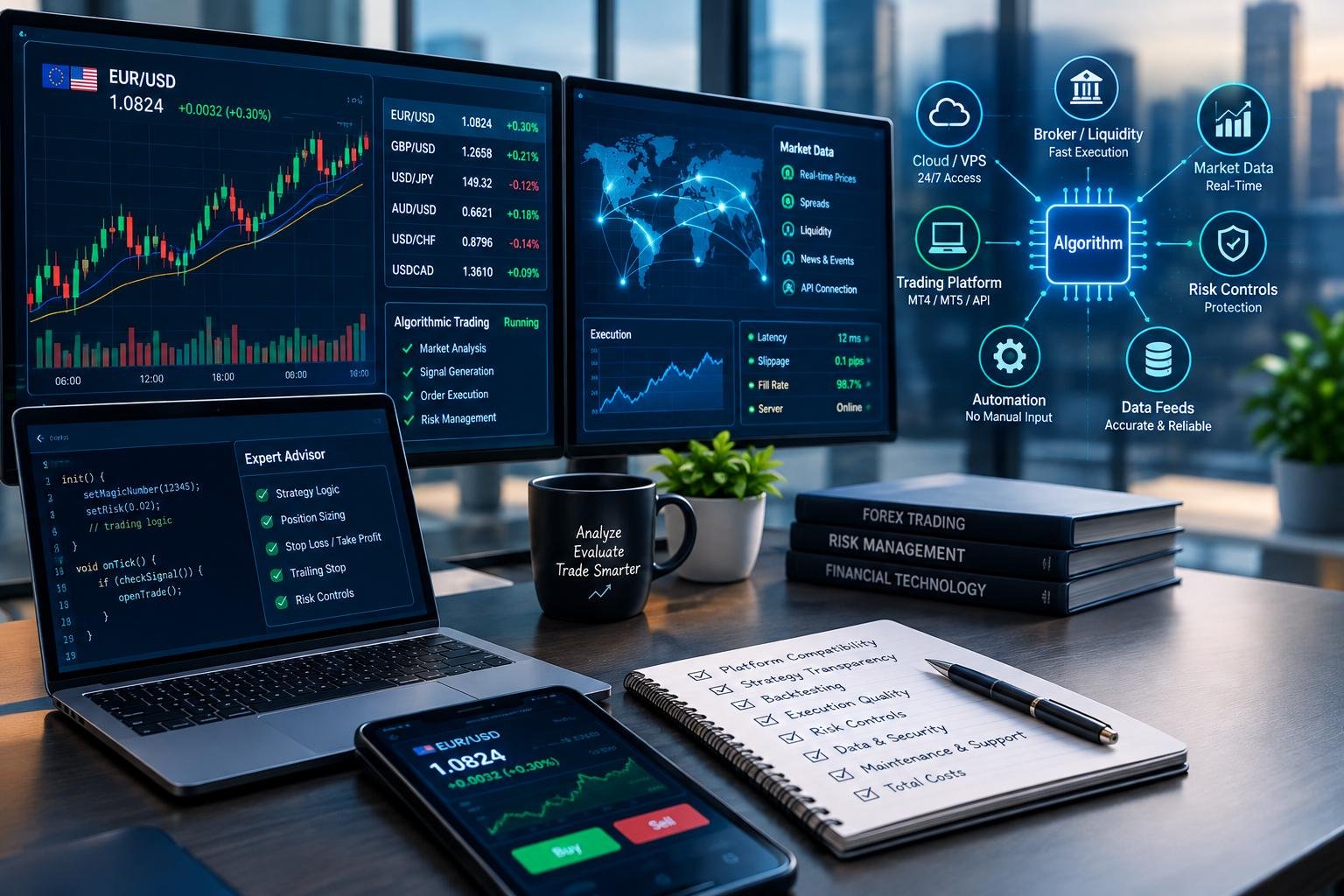
With the increasing sophistication of computers, traders and financial institutions started to employ algorithms to automate certain aspects of trading. A set of instructions can be used in an algorithm to trade when the price hits a moving average, a specific trend line or other conditions as they unfold, or when volatility levels change. Whereas a chart watcher needs to interpret the chart and make a decision when to execute an instruction, software will constantly track the market’s information and execute the instruction when specific conditions are met. The advent of algorithmic trading brought a significant change as the computer is no longer just presenting information for a human decision-maker but can also be involved in the decision and trading process following programmed rules. Automation can minimize the need to repeat manual activities and enable strategies to be executed in a consistent manner. But an automated system will only work as it is programmed and as the data is programmed. The rules and their design, incorrect assumptions, technical glitches or sudden market fluctuations can, therefore, have an impact on automated trading as they do to manual trading.
Expert Advisors and Automated Trading Software
An additional factor that added to retail forex trading had been the increase of software program that permitted users to program trading solutions utilizing a programmable setting. The idea of automated trading gained widespread popularity among individual traders thanks to platforms like MetaTrader, which enabled them to implement their trading strategies using specialized programs known as Expert Advisors. The systems are able to track market conditions, recognize certain predetermined signals and execute or control orders based on certain programmed rules. Historical testing was also made more feasible with the aid of automation as traders would be able to test how a strategy would have performed with historical market data. Backtesting, on the other hand, is subject to limitation because the historical performance doesn’t predict the future outcomes, and the outcomes are influenced by assumptions on spreads, execution, liquidity and other conditions. However, automated trading software was a significant technological advance, as complex trading strategies based on rules were now available to trading desks other than large institutions.
Mobile Forex Trading and Always-On Market Access
Smartphones brought another revolution to forex technology for traders. Previous e-platforms were more closely related to desktop or professional platforms and their mobile counterparts enabled market information to be available on a smartphone or tablet. Contemporary mobile forex software can reveal a range of details like currency exchange rates, interactive charts, account data, open placement, order controls, financial news, and notifications in a transportable and easy-to-use interface. Push notifications can be used to notify users about specific market events or activity on their accounts, and biometric authentication can provide another level of security on supported devices. The role of mobile technology has thus made it easier to use the Forex market; people don’t have to sit at a fixed computer terminal to check the state of their account. But mobility also relies on a strong supporting internet infrastructure, platform security and device security. While mobile trading may make things easier for the trader, it does not alter the risks of trading currencies; it just changes how users are interacting with trading technology.
Cloud Computing and Modern Trading Infrastructure.
Many of the latest forex applications rely on a more extensive technological framework, including high-end servers, databases, distributed networks and cloud computing. As computing power has increased, trading platforms have been able to process more and more market information, serve more users and applications. Cloud-based infrastructure can offer scalable computing and storage capabilities, enabling services to adapt their computing resources to varying workloads, without relying solely on a single physical computer. It can also be synced between devices for a user to be able to see their accounts or platform settings, if supported, on their mobile device as well as the desktop. In the case of professional trading firms, the advanced infrastructure may also aim at minimizing network latency and the reliability of data transmission and execution systems. The developments show that today’s forex technology is not limited to the trading screen. The charts and buttons presented to traders are part of a much larger segment of the technological world that includes networks, servers, databases, market connectivity and security systems.
How Integration of AI into the Forex Trading Landscape is Reshaping the Future of the Industry.
Artificial intelligence is a more recent advancement in trading technology as it can utilize more complex, larger data sets than rule-based programming. Machine Learning systems can be taught to recognize trends in previous data, to categorize market circumstances, to study textual data, or to create analytical signals. AI tools can also be utilized for market surveillance, risk monitoring, sentiment analysis, anomaly detection and automated research. Machine learning models can detect statistical relationships from the data during training process unlike a simple program which can only detect one or two instruction like “buy when the indicator crosses above or below a level”. But this isn’t to say that AI is always able to foresee all future currency movements. Economic events, liquidity conditions, geopolitical events, unexpected information, investment behavior, and interest rate decisions have all an impact on the financial markets. Market dynamics can also affect models’ behavior, so it is crucial to test, monitor and implement risk controls as part of responsible AI use.
AI, Big Data, Adaptive Analysis.
A big part of why AI is making headlines in the realm of forex technology is because of the vast amount of information that today’s computing systems can use. Traditional analysis might revolve largely around price and volume data, while sophisticated systems can also be used to analyze several data sources, such as economic indicators, financial news, historical prices, market sentiment and other structured and unstructured data. A machine learning approach can be used to uncover relationships that can be harder to investigate by hand in very large datasets. Natural language processing can also be used to help software process written information, and to categorize the tone or topic of vast amounts of text. The abilities grow the role of computing from showing and calculating information to helping to interpret. But at the same time, the more data you have, the less effective your decisions will be. When dealing with financial markets, issues of data quality, model design, overfitting, changing market conditions, and technical limitations continue to be significant factors.
The Impact of Technology on Forex Trading
The development of the technology of foreign exchange trading can then be considered as a chain of similar changes instead of one technology revolution. Telephone dealing helped to improve communication among market participants, electronic data systems worked to speed up the dissemination of prices, computerized charts revolutionized technical analysis and electronic platforms made access and order transmission much easier. Algorithmic systems brought more automation and smartphones made it possible to access more than just via a desktop. As a result, cloud computing and advances in network infrastructure, have allowed for increasingly intricate services, while AI is now opening the doors to more sophisticated data analysis and automated decision making. The development of computing and communication has taken place at each stage. The market itself has not just accelerated; the entire process for the participants to be informed about the market, analyze its prices, input orders, track their accounts and control their automated systems is increasingly digital.
Conclusion
A vast majority of the past era of Forex trading technology was dominated by a manual process relying on telephone communication and the manual analysis of charts by human traders but today the Forex trading world is a much more computerized world, with electronic trading platforms, automated trading software, mobile trading applications, cloud-based servers and artificial intelligence. The tale of this history is that of the time and effort saved as communication networks and computing power have improved over time to access marketplace information and to send trades. Traders today can get up-to-the-minute prices, look at charts that interact with them, place orders online, and have software automatically complete preprogrammed steps for them with other connected devices. Institutionally, more complex systems can handle more complex analytical and execution demands and larger amounts of data. With all these developments, uncertainty continues to exist in foreign exchange trading. The tools and instruments that can be used by the participants can be enhanced by faster execution, increased computing power, automation and AI, but cannot ensure successful trading performance. Forex technology is therefore evolving in terms of increased market access, analysis, automation, and computational power, not reduced financial risk.
Get more well researched information about Forex trading technology here.