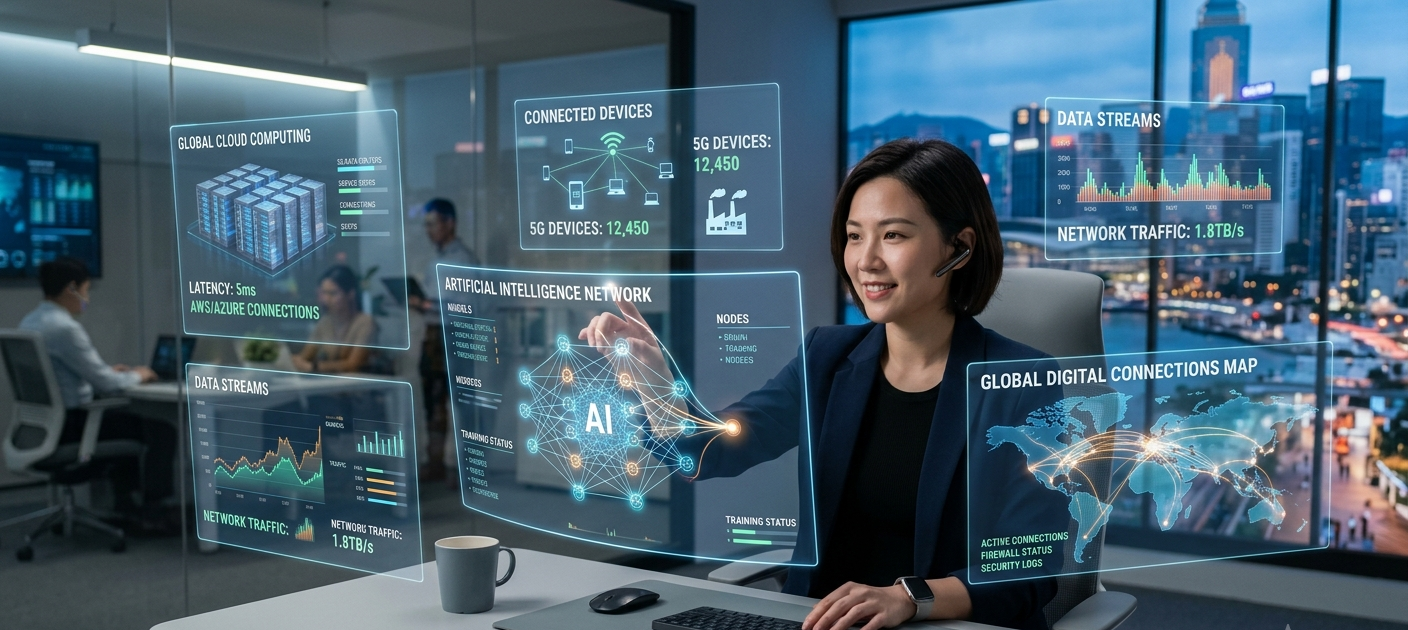
Introduction: How Tech is Shaping the Future of IT
Information Technology which began as basic computing systems has grown into what is today a very powerful base which supports communication, business processes, education, health care, entertainment, and in fact almost every element of modern life. Over the past few decades we saw the introduction of the internet, cloud computing, smart phones and artificial intelligence which in turn greatly transformed how people use tech. But in the coming decade we can expect an even greater shift as we see the rapid development of what are now emerging technologies. These will not only enhance present digital infrastructures but also put in place very different methods of problem solving, info processing and interaction within the digital world.
The future of Information Technology will come from a mix of advanced computing techniques, intelligent systems, faster communication networks, and environmental friendly approaches to tech development. We see in quantum computing, edge computing, blockchain, extended reality (XR), 5G and 6G networks, autonomous systems, and green computing the elements that will transform industries and present new opportunities to individuals, organizations and governments. What is key for students, professionals and businesses to know is that these tech trends will in large part determine the skills, strategies and solutions which will play out in the future digital economy.
As we see technology play a bigger role in our day to day doings, organizations will have to transform themselves to the break of the moment or risk falling behind. Which businesses that have a grasp on what is to come in terms of IT will be the ones to improve efficiency, bettering the customer experience and coming up with great new products and services. Also in the job market we see that students and tech professionals that put in the work to learn about what is next in tech will have better success in a very dynamic job market.
Quantum Computing: The Coming Generation of Computing Power
Quantum computing is at the fore of what we see as major IT developments to come. We see that while traditional computers which use binary bits that are 0 or 1 for processing info, quantum computers which we also know as qubits which report multiple states at the same time are what makes quantum computing what it is. That which gives quantum computers this unique trait is what allows them to do very complex math problems in a fraction the time of present day computers. Though still in its development stage and has issues like stability, price, and technical complexity, what we are seeing is that Research and Tech companies are making great progress towards quantum computing’s practical application.

Quantum computing is a game changer for industries that require advanced problem solving and massive data processing. In fields like medicine, finance, cybersecurity, climate research, and artificial intelligence quantum computers may put forth solutions to issues which today’s traditional machines can’t. For instance researchers may use quantum systems to improve the speed at which we develop new drugs, to better analyze financial risk, and to come up with better methods of digital info protection.
Quantum computing as it grows will also present new issues for cybersecurity. Presently many encryption systems are based on math problems which traditional computers have difficulty solving, but powerful quantum computers may break some present security measures. Also, companies will have to put in quantum resistant security technologies to protect sensitive info. Thus as we see the development of quantum computing it will not only bring in new opportunities but also require large scale rethinking of how we design and secure digital systems.
Edge Computing: Bringing Users into Data Processing
Edge computing is also a tech which will greatly transform the future of IT by what it does to data processing and management. In the past we saw that which mostly took place in large scale central servers where devices’ data was sent for processing which in turn would see results returned to the user. Although the cloud is very much still a key player, what we are seeing is an increase in the number of connected devices and a great demand for immediate responses which in turn is creating a need for speed in processing. Edge computing steps in to solve this issue by bringing data processing closer to the point of info generation.
The growth in Internet of Things (IoT) devices, smart cities, autonomous vehicles, and real time applications will see an increased value in edge computing. By processing info at or very close to the user and devices edge computing we seek to reduce delay, improve performance and make systems which are more efficient. For instance an autonomous car which depends on sensor info for immediate decisions may see that sending all data to a remote cloud server introduces delays which affect safety. Edge computing allows for local decision making which is quick.

In the coming years we will see businesses grow in their adoption of cloud and edge computing which they will use to develop more flexible and powerful IT infrastructures. We will report that companies are using cloud platforms to enable large scale data storage and advanced analysis and at the same time to deploy edge systems for real time processing and decision making. That is to say that by means of this combination what we can expect is to see the introduction of faster digital services, better user experience, and more reliable tech solutions in many different industries.
Blockchain Technology: Beyond the Crypto World
Blockchain is at the base of what we see today in cryptocurrencies, but it also has much wider applications than that. A blockchain is a digital ledger which runs on many computers at the same time which makes it very hard to cheat the system. That feature gives out possibilities to improve transparency, security, and trust in many fields.
In the coming years blockchain technology will transform many areas which include but are not limited to supply chain management, health care records, digital identification, voting systems and financial services. Also we see how companies will use private blockchains to trace products at every step from production, transport, to delivery, which will present an accurate and secure record of each action. Also in health care we may see the implementation of block chain for better management and exchange of health information which also at the same time will protect the patient’s privacy.
As companies put more of their effort into cybersecurity and data protection we see blockchain playing a key role in that which they do. But at the same time we have issues like energy use, scale, and regulation which must be sorted out before we see wide scale use of blockchain. In the future what we will likely see is improved blockchain design which is faster, more efficient and better for the environment.
Extended Reality (XR): Growing Digital Experiences
Extended Reality (XR) is a wide umbrella term for virtual reality (VR), augmented reality (AR) and mixed reality (MR). What we see in these is the blending of digital info with the real world which in turn creates very immersive experiences. While at present we see the growth of XR in gaming and entertainment we will see it also play in education, health care, engineering, business, and professional training in the near future.
In the field of education, XR technology is used to present interactive learning platforms in which students research complex issues via realistic simulations. For example medical students may use virtual environments for practice of procedures and science students may study digital models of complex systems. Also this approach which is very engaging for students does away with the need for physical resources.
Businesses will see that they grow from the use of XR which will improve collaboration and customer experiences. We see them using virtual environments for remote meetings, product demos, and employee training. As hardware prices drop and software improves, it is to be expected that XR will become a very common element in digital communication and professional settings.

5G and 6G Networks: The World of Tomorrow’s Connective Tissue
Communication infrastructure is a base for today’s IT which is seeing great growth with the roll out of 5G and we expect 6G to do the same. What we see in 5G is higher speed, reduced delay, and the ability to have a greater number of devices on the network which we didn’t see in past generations of mobile tech. These improvements in turn support growth of smart cities, Internet of Things, autonomous vehicles, and very advanced industrial systems.
The out looking development of 6G networks is to see great extension of service which will include very high speeds, improved reliability, and advanced AI integration. While 6G is still in the research and development phase it is also supportive of future technologies that require strong communication platforms. Also we see these networks to play a role in enabling more advanced virtual reality experiences, intelligent automation, and real time global communication.
Improved connection will also see the digital divide narrowed as we see greater access to online services in areas which have had little technology infrastructure. As faster networks come online it will open up for individuals and organizations to play a larger role in the digital economy and access important resources.
Autonomous Systems: Smart Machines and Automation
Autonomous technologies which are able to function on their own via the use of AI, sensors and complex algorithms are what we are seeing in this field. Also in transport, manufacture, agriculture and health we see these systems being developed. In the coming decade we expect to see this tech grow in both performance and use.
Self drive cars are a case of autonomous systems which do in fact transform transportation by way of improved efficiency and reduced human error. In manufacturing we see that robots do better at performing routine tasks, report also on performance and which in turn improve safety. In farming smart machines are used for crop monitoring, analysis of environment issues, and introduction of better farming practices.
As we see the growth of autonomous systems, what we also see is that it brings to the fore important issues related to safety, ethics, employment, and decision making. It is up to organizations and governments to put in place the right regulations and guidelines which will in turn support the responsible development of this technology. Also for the wide scale adoption of these systems we will have to find that balance between innovation and security as well as maintaining human responsibility.
Green Computing: Shaping a Sustainable Digital Future
As technology is growing at a great rate environmental sustainability is a key issue in IT development. In terms of green computing we see it as a practice which is about designing, using, and getting rid of tech in a way that puts the environment first. This also means improving energy efficiency, reducing e-waste, and developing sustainable computing practices.
Data centers that support cloud services and digital platforms are very large consumers of electricity. In the future we will see greater energy efficiency in IT systems via better hardware design, renewable energy use, and advanced cooling technologies. Also companies are putting more of their resources into sustainable infrastructure which also helps in terms of environmental impact at the same time as they maintain tech performance.
Green tech will also play a role in what companies buy, manage, and recycle of their electronic equipment. Firms which adopt green IT will see cost reduction, improved efficiency, and also play a role in environmental protection. As climate issues grow so do sustainability issues in tech which will factor into future purchases.
Impact of New Technologies on IT Professions and Enterprises
Emergence of new technologies is bringing about great transformation in the IT workforce. As companies adopt advanced systems, what we see is a great need for professionals which have skills in areas like artificial intelligence, cybersecurity, cloud computing, data science, blockchain development, and network engineering. Students that are preparing for tech careers will also be important for them to develop technical knowledge and problem solving skills in order to stay competitive.
Businesses will see large scale changes as we see the introduction of new technologies which present opportunities for innovation. Which companies that can integrate the new tech will see improved efficiency, put out better products, and offer more personalized services. Also, it is up to the organizations to train their employees, secure against cyber threats, and manage tech in a responsible way.
The future of IT will be defined by not just what technologies we adopt but also by how well people and organizations can adapt to change. What will be key is continuous learning and flexibility as tech will continue to transform at great speed.
Conclusion: Into the Next Ten Years of Info Tech
In the coming decade we will see great growth and transformation in Information Technology. We will see the rise of what is to come in quantum computing, edge computing, blockchain, extended reality, advanced communication networks, autonomous systems, and green computing which in turn will change how people work, communicate, learn and solve problems. These innovations bring with them new opportunities but also issues which will require careful planning and responsible development.
In today’s world which is so tech driven it is a must for students, professionals and businesses to understand what the future holds in store for tech. Those that invest in building relevant skills and which embrace innovation will do better in taking advantage of future opportunities in the technology industry. The tech future won’t just see us roll out faster computers and smarter devices which is what we have been doing; we will see tech used to build a better connected, more efficient, secure and sustainable world.