
In the modern digital age, web security is no longer a luxury, but a necessity. As more and more websites become victims of cyberattacks, the basics of web security are significant to learn when you are a developer, business, or any other party that has anything to maintain online. We will also explore the fundamentals of web security in this article with key topics such as the significance of SSL certificates, common web-related attacks such as SQL injection and Cross-Site Scripting (XSS), and tips to ensure that your site is secure even on its first day on the internet.
What is Web Security?
Web security can be defined as the safeguarding of websites and web applications against cyber attacks, data breaches, and other forms of malicious activities that may bring harm to users or the integrity of a website. As the number of transactions and personal information continues to be shared online, it is important to ensure that your site is secure to win the confidence of your users and safeguard sensitive data.
Why SSL Certificates are Important
Another of the most basic measures to make a site secure is to install an SSL (Secure Socket Layer) certificate. The need for an SSL certificate to encrypt the information that is shared between your site and the users is imperative. When employing the use of the SSL, all information being sent out between the user and the server is encrypted and thus malicious actors cannot intercept this information and modify it.
An SSL certificate provides an additional level of security and assures that personal information like passwords, payment details, and other personal information are kept confidential. That is why it is necessary to install the certificates of the new system of security (SSL), in case your website is connected with some sensitive information. In its absence, your site may be prone to man-in-the-middle attacks, whereby hackers may intercept and modify communications.
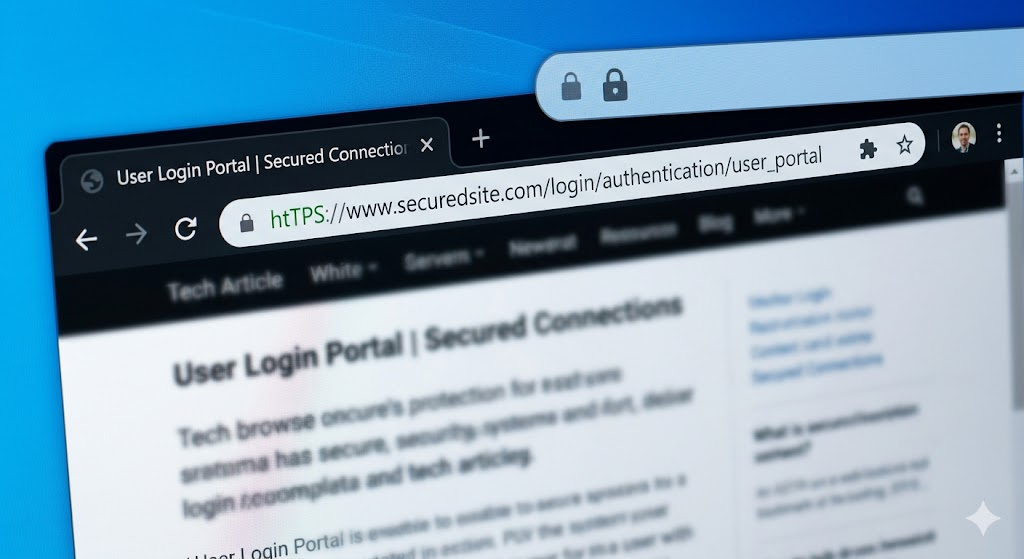
Checking the Presence of SSL on a Website
An internet site using an SSL will include a URL beginning with HTTPS (not HTTP) and you might also notice a padlock symbol in the address bar of the internet browser. If your site does not have SSL, it is highly advised to install it. A large number of hosting companies provide free SSL certificates via Let’s Encrypt, so that website owners can easily protect their websites.
This Introduction to Web Safety will tell you more about how web security and SSL certificates are important.
Ordinary Threats to Web Security
There are numerous types of web security threats, and it is crucial to be aware of such threats to secure your website. We can discuss two of the most widespread threats: SQL injection and Cross-Site Scripting (XSS).
SQL Injection
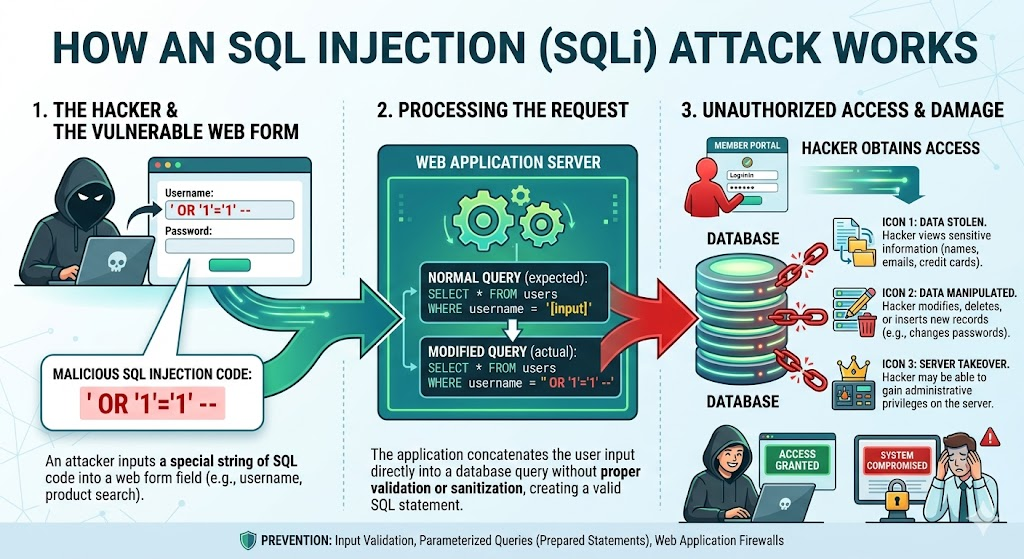
One of the most perilous and prevalent attacks on web-based applications based on databases is SQL injection. It takes place when a hacker inserts malicious SQL code into an input field on a web form (e.g. a search box or a login form) to obtain unauthorized access to a website database. Such an attack may enable cybercriminals to:
- Steal sensitive data such as usernames, passwords, and email addresses.
- Create, update, or delete data in the database.
- Perform administrative tasks on the database.
To avoid SQL injection attacks, it is important to:
- Write pre-coded statements and parameterized queries: These methods make sure that user data is not entered as executable code.
- Check and verify all user inputs: The input should be in the correct format (e.g. numbers, letters) and should remove characters that are harmful.
- Maintain your database and software: It is always important to make sure your website’s CMS or database system is properly updated with the latest security patches.
Cross-Site Scripting (XSS)
Cross-Site Scripting (XSS) is an attack in which an attacker inserts malicious code (usually JavaScript) into the content of a website. The malicious script is executed by other users when they load the page, and may steal cookies, session data, or other sensitive data. XSS attacks are also destructive to users and the owners of a website since they may result in account theft, identity stealing, and even data theft.
In order to avoid XSS attacks, the following measures can be taken into account:
- Sanitize user input: Before displaying any user input, it should be sanitized so that it does not contain any harmful scripts.
- Apply Content Security Policy (CSP): CSP is a browser option that enables you to indicate what sources of content can be implemented on your site, preventing malicious scripts on external sources.
- Encode data: Before showing user input in your web pages, always encode it to avoid the execution of scripts.
Top 10 Tips to Secure Your Site
Having discussed the significance of SSL certificates and the most prevalent threats on the web, it is now time to discuss some practical tips that can help you secure your website at the very beginning.
1. Update Software and Plugins
Keeping all your software, plugins, and themes up-to-date is one of the simplest methods of ensuring that your site is safe. Developers often publish updates as a way to fix security vulnerabilities, and it is important to update them as soon as possible.
When you are working with a content management platform (CMS) such as WordPress or Joomla, you should do periodic updates to the core system, and to the plugins. Hackers are likely to use vulnerable plugins, which is why they should not be overlooked.
2. Strong Passwords and Two-Factor Authentication (2FA)
Cybercriminals often use weak passwords. Make sure that administrative accounts, as well as user accounts, have strong, unique passwords. A good password would be a mixture of uppercase and lowercase, numbers, and special characters.
Also, turn on two-factor authentication (2FA) wherever feasible. Two-factor authentication (2FA) provides an additional anti-fraud policy, where users need to submit two authentication methods (a password) and something they possess (a one-time code that is sent to their phone).
3. Periodically Back Up Your Website
Website backups are important in case of a compromised or loss of data in your website. It is always good to regularly copy the files and databases of your website so that in case of any disaster, you can easily get your site running again.
When it comes to automated backup solutions, it is important to consider the backup solutions that ensure that your backups are current and stored safely. Cloud storage is a great option to use in backup of websites since it provides redundancy and accessibility anywhere.
4. Defend Against DoS Attacks
DDoS attacks flood your server and slow down or make your website unavailable. In order to prevent DDoS attacks, deploy a content delivery network (CDN) to spread traffic among various servers and reduce the effects of large amounts of traffic. Cloudflare and Akamai are two such services that provide DDoS protection as part of their CDN services.
5. Use Effective Error Management
Whenever there are mistakes on your site, you should not display the detailed error messages that may expose your hackers to information on how your server or database is laid out. Rather, have good error handling in place which will give the user a generic message and will store the detailed error information safely on your server to look into.
6. Encrypt Sensitive Data
In case your site deals with sensitive information such as credit card numbers or personal information, ensure that the information is not only encrypted during transfer (through the use of SSL) but also when it is stored (in databases). Encryption of data will guarantee that, in case attackers access your server, they will not be able to read the data without the key.
7. Keep An Eye on Your Website
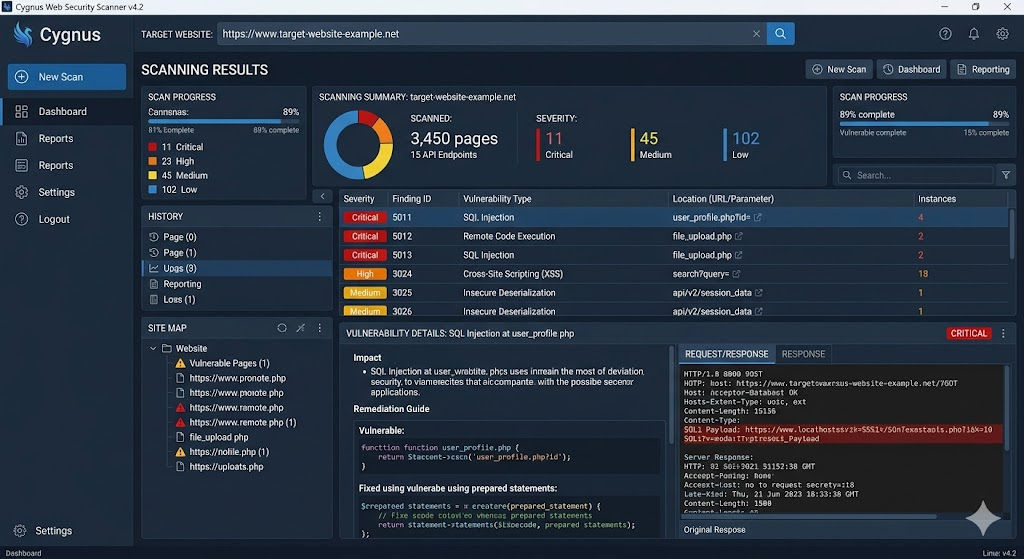
Tools such as OWASP ZAP, Acunetix, or Qualys should be used to regularly scan your site to identify security vulnerabilities. These tools can be used to determine areas of weaknesses in the security posture of your site so that you can correct them before the attackers can use them.
Conclusion
Web security is a continuous process that should be monitored and taken care of. With the introduction of the use of SSL certificates, knowledge of typical threats such as SQL injection and XSS, as well as the best practices for securing your site, you will significantly mitigate the chances of cyberattacks and ensure the security of sensitive information of your users. Always bear in mind that security is not something you should consider when all the problems start; it is a part of your website, and you need to focus on it on the first day.
Be informed, be safe, and in all cases, be active in protecting your online identity.