Introduction
Mulching is amongst the most feasible and economical methods in increasing the performance of gardens and farms. Improperly used, mulches could expose root surfaces to low oxygen levels. The selection of the appropriate type of mulch can provide benefits for the soil and reduce the labour tasks needed for plant health management for both vegetables, fruit trees, ornamental plantings and field crops. Mulch protects the soil surface area, providing soil root zones with a favorable environment, as it helps reduce the loss of water, helps prevent weed seeds from germinating and encourages the growth of good soil organisms, while it also helps to moderate soil temperature. With the agricultural challenges like drought, soil degradation, rising production cost, mulching has become an integral part of sustainable agriculture.
The selection of appropriate mulching materials is also significant as the use of different mulches would have different merits in relation to climate, crop and cropping purposes. Organic mulches slowly build up soil fertility when they are broken down in the soil, while inorganic mulches last longer and create better control of weeds, moisture. Knowing these differences can help landowners optimize the production of their crops, while avoiding an unnecessary expense. Readers who are looking for further technical advice on choosing and using mulching materials may find helpful, besides the information in this guide, reliable agricultural resources that can offer them practical advice on the selection and use of mulching material.
What is mulching and why is it important?
Mulching is the placement of natural or artificial materials on the bare soil to enhance the environment for growing plants. The idea is straightforward, but the benefits on the health of the plants and soil are significant. The bare soils always face high, direct solar exposure, torrential rain, wind erosion and fast evaporation rate. Slowly à la long term diminishment of soil quality, which makes it harder for crops to get water and nutrients. Mulching creates a stable environment for gardeners and farmers by protecting the soil in a few ways: it helps to keep soil moist, maintain soil temperatures and supports the proliferation of good soil microbes.
The benefits for mulching are not a single benefit of moisture retention. There are billions of microorganisms in healthy soil that decompose organic material and make nutrients available to the roots of the plants! These organisms are being fed by organic mulch, growing in numbers and making an increasingly positive impact on soil structure. Soil structure will improve and roots will gain access to greater depths with improvements in drainage and retention as well. Mulching helps to reduce compaction of soil due to rain and reduces compaction due to foot traffic which contributes to forming good loose soil and plant development. Comprehensive benefits help to achieve healthier crops, better harvests and reduced upkeep costs over time.
Identify various types of mulching materials.
The type of mulch to use will be influenced by the crop to be planted, resource availability, climate and preference. Soil cover can be provided by mulching materials of which two major categories include: Organic mulching material and inorganic mulching material. They each have different uses and provide varying information for different situations in agriculture.
Organic Mulching Materials
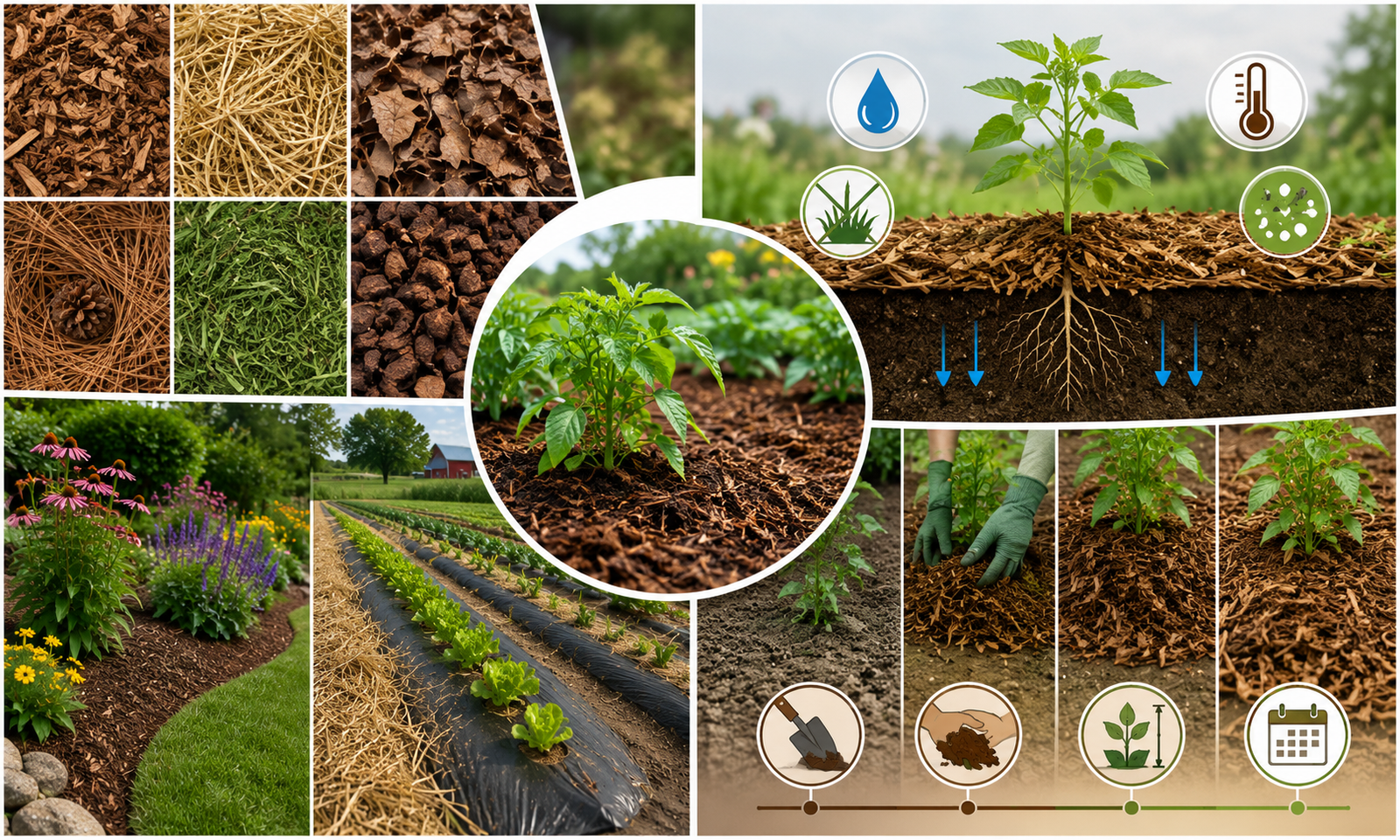
Organic mulches are derived from biological material of plant or animal origin which breaks down over time. These can be anything from straw or hay, wood chips, bark, compost, shredded leaves, grass clippings, crop residues, coconut husks, sawdust or pine needles. Since these materials are biodegradable, they are continually adding organic matter to soil and enhance the microbial activity. Organic mulch is a favorite among farmers due to its ability to boost soil fertility and promote sustainable agriculture, as well as utilizing organic wastes and preserving the environment.
But with organic mulch, it is necessary that it is replenished periodically because as time goes by, it becomes thin as it decomposes. Uses of fresh lush clippings or uncomposted manure need to be carefully assessed to remove potential excess of heat or imbalance of nutrients. In spite of all this, the organic mulch continues to be the most favored method for improving soil health naturally without any chemical inputs, which makes them useful for most field crops, vegetable gardens, orchards and flower beds.
Inorganic Mulching Materials
The inorganic mulches consist of plastic films, landscape fabric, gravel, pebbles, crushed stone, rubber mulches, and ever woven weed barriers. These materials don’t break down and will endure for much longer than organic materials. In commercial vegetable growing, plastic mulch is particularly desirable for reducing weed infestation, maintaining soil moisture and providing a warmer than usual soil surface in early plantings. Around ornamentals, when a long-term weed suppression effect is desired and the fabrics are not to be frequently replaced in the following season, landscape fabrics are most often used.
Inorganic mulch is durable, but does not enrich the soil’s fertility. There is also a disposal challenge due to some plastic mulches needed to be removed post harvest. Gravel and stone mulch are effective in the area of drought tolerant landscaping and offer little benefit in vegetable annual production. Growers use this information to make decisions on which plant to use for their own purpose based on their strengths and weaknesses.
Advantages of Mulching in gardening and farming.
Mulching offers several benefits that directly benefit the plant-growth process and work less in the growing season. One of the most beneficial advantages is moisture retention. Greenhouses with mulch lose a lot more water through evaporation than those without mulch. This enables water to be supported to the roots of plants longer, thus less irrigation will be required, and less water will be used. This moisture-holding is particularly beneficial in times of drought or heat stress, as the plants are less stressed and are more likely to grow evenly. Mulching will often be one of the easiest methods to help manage the use of water where water is limited, without having to take on very costly irrigation systems.
Mulching also contributes to good weed management. Mulch can significantly lower germination and growth of weeds by limiting exposure to sunlight. A cover crop is less likely to be shaded by weeds and be among weeds for dry ground water, nutrients and sunlight, letting cultivated crops establish a more robust root system and higher yield. Weed control also reduces labour costs as the amount of labour required for hand-weeding or spraying is decreased. When paired with enhanced moisture and weed control, healthier growing conditions may result in better crop performance and less maintenance.
How Mulch Improves Soil Quality
A healthy soil provides the bases of a productive agriculture and as such, mulching plays a big part in improving soil over time. As the organic materials decompose, they add valuable organic matter to soil, they act as a gradually advancing humic soil amendment. This process would improve the structure of the soil, as pore spaces will be created to improve the drainage and capture of water into the soil structure. Soils made finer and more rooting healthy by adding sand to heavy clay soils and adding clay to sandy soils. A better microbial balance, which includes earthworms, also helps soil biology to recycle its nutrients and keep soil systems healthy through time.
Another reported advantage is in the recycling of nutrients. Over time, organic mulches release nitrogen, phosphorus, potassium and micronutrients into the soil which the plants need to be healthy. The decomposed mulch offers a slow release of nutrients compared with the manmade fertilizers which release them quickly, it thereby minimizes nutrient loss from leaching. Mulching will also help to protect the topsoil from erosion by heavy rains and strong winds that might otherwise wash away valuable top fertile soil. The key benefit of mulching consistently over multiple growing seasons is that the poor quality soil becomes fertile and biologically active for a healthier, higher quality crop with a reduced need for added inputs into the soil system with the mulched soil.
Best Practices on Application of Mulch.
The choice of whether the mulch is to be used for maximum advantages or to cause unnecessary problems depends upon the manner in which it is applied. To prepare the soil, remove weeds and water thoroughly if the soil is dry, and then put on mulch. Mulch will capture existing moisture and will not lose moisture quickly after. The thickness of layers to apply the most organic mulches is around 5-10 cm. The thinner the layers, the less effective the weed control; thicker mulches will impede air flow and may lead to fungal diseases or the advent of rodents in the mulch. When planting, the thickness should be uniform throughout the planting areas to provide uniform protection throughout the garden or field.
It is also important to not place too much mulch close to stems or tree trunks. Mulching against plant stems can lead to rot, insect attack and fungal diseases in plants. Placing a small soil barrier around the base of each plant aids in providing good air circulation and while still protecting the soil around the plant. It is also important to renew the organic mulch each year as it degrades after a few years into a barrier to water infiltration. These tasks can be carried out using periodic inspection which will help the grower to determine compacted and/or decomposed portions of the growing medium that need it. These basic application guidelines will allow mulch to keep providing its benefits of moisture conservation, weed suppression and soil improvement as the season progresses.
Problems with mulching and how to prevent them.
Mulching is relatively simple but there are certain common errors that may decrease the benefit. One of the common mistakes is mulching too deep. Too many layers will hinder oxygen penetration to plant roots, promote undesirable fungus growth and can provide hiding for rats and insects. Likewise, using fresh wood chips or sawdust without appropriate composting, available nitrogen will be used up temporarily by soil microorganisms using high carbon materials. The use of balancing carbon-rich materials with nitrogen sources will help to avoid nutrient deficiencies during the decomposition processes.
Another error is the use of inappropriate mulch for specific crops or climates. Under very hot climatic conditions, for instance, black plastic mulch can cause soil to overheat, which causes stress to plants, instead of increased benefit. Similarly, hay with seed spanking can cause new weed problems rather than helping to control it. When decomposed organic mulch is not replenished, it will also slowly decrease in terms of moisture conservation and weed suppression as well. When mulches deteriorate, the timing to replace them for optimum performance is before it happens and regular monitoring can help the farmers make appropriate replacement decisions. Some of these problems can be avoided by careful planning and selecting the correct materials, in order to reap the greatest benefit for the longest term from mulching.
Selecting suitable mulches for various crops
There are mulches applicable to every crop depending on its needs and local environmental conditions. Straw, compost, shredded leaves or grass clippings can very effectively perform- at vegetable gardens while supplying slow continuous soil enrichment. Wood chips or bark mulch are commonly used for the fruit trees or orchards as it provides protective long term coverage around the tree roots and slowly decomposes. Decorative bark or compost is often used in flower gardens to enhance not only the esthetic quality but also the soil.
Farmers can use plastic mulch for crops like tomatoes, peppers, strawberries, cucumbers and melons, which can benefit from the elimination of weeds and/or a raise in soil temperature in cooler planting seasons. Landscape fabric is also often incorporated, along with mulch, into vineyards and perennial plantations to promote long-lasting weed control and enhance soil moisture. Mulching for maximum return on investment as well as reducing resource consumption and sustainable crop production practices needs to be based on the need of the crop, available resources and climate.
Conclusion
Mulching is still one of the best agricultural practices that can be implemented to boost plant health and also minimize the labour, water consumption and production cost in the long-term. Regardless of the mulch type used, proper mulching will help improve the overall environment for growing crops in spite of the fluctuations in weather. Enhanced moisture retention, weed management, erosion control, control of temperature and enhancement of soil fertility lead to improved plants and better productivity. These benefits build up over time, and lead to healthier soils that need less outside the soil attention and can provide stocks support to sustain the farming operation.
The knowledge of the pros and cons of various mulching materials allows growers, landowners and gardeners to learn and use them effectively, according to their crops and local growing conditions. Care taken in choosing, applying wisely and keeping the mulch deep enough all season, can greatly enhance soil quality, while lowering soil maintenance needs. With the rise in sustainable agriculture, mulching is a practice that provides long-term benefits for small home gardens and large agriculture scales and helps to yield sustainable results.