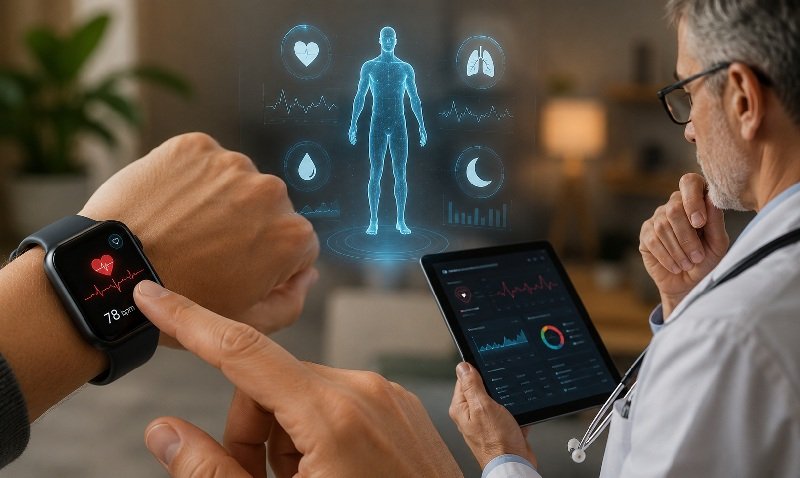
A decade ago, a smartwatch was little more than a phone notification that lived on your wrist. Today, it has turned into something far more interesting: a quiet, constant observer of your body that often notices changes before you do. That shift, from gadget to genuine health companion, is one of the more underrated tech stories of the last few years.
From Step Counter to Health Monitor
The early generation of wearables sold a simple promise: count your steps, track your sleep, look a little futuristic on stage. It worked, but it was shallow. The real transformation happened when manufacturers started packing in sensors that measure things doctors actually care about, blood oxygen levels, heart rhythm irregularities, skin temperature, and even early signs of stress through heart rate variability.
This matters because most health problems don’t announce themselves with a dramatic symptom. They show up as small, gradual shifts, a slightly elevated resting heart rate, a few nights of disrupted sleep, a temperature pattern that doesn’t match your usual rhythm. A smartwatch sitting on your wrist for sixteen hours a day is in a far better position to catch these patterns than a single annual check-up.
Why This Matters More in 2026
What’s changed recently isn’t just the hardware, it’s the intelligence behind it. On-device processing has improved enough that watches can now flag irregular heart rhythms in real time rather than just logging data for later. Battery life has stretched far enough that continuous monitoring, including overnight, is finally practical rather than a feature you switch off to save power. And the accuracy gap between dedicated medical devices and consumer wearables has narrowed considerably for several key metrics.
For everyday users, this translates into something simple: peace of mind that doesn’t require a hospital visit. For people managing chronic conditions, it can mean catching warning signs early enough to act on them.
The Honest Trade-Offs
None of this means a smartwatch should replace a doctor, and it’s worth being clear about that. These devices are excellent at noticing patterns, but they are not diagnostic tools, and false alarms do happen. Skin tone, watch fit, and movement can all affect sensor accuracy. A smartwatch is best understood as an early-warning system, not a verdict.
There’s also the question of data. Continuous health tracking means a constant stream of deeply personal information is being collected, stored, and in many cases, shared with the manufacturer’s cloud services. Before relying heavily on a wearable for health insights, it’s worth understanding exactly where that data goes and who can access it.
Choosing One Without the Marketing Noise
With dozens of options on the market, the decision often comes down to three practical questions rather than spec sheets. First, which ecosystem do you already live in, since a watch tied to the wrong phone operating system will frustrate you daily. Second, how many days can you go without charging it, because a health tracker that’s dead on your nightstand isn’t tracking anything. Third, does it measure what you actually need, someone managing a heart condition has very different priorities than someone training for a marathon.
The Bigger Picture
What makes this trend genuinely exciting isn’t any single feature, it’s the direction of travel. We’re moving toward a world where catching a health issue early doesn’t depend on remembering to book an appointment. The watch is already watching. For a piece of technology that started out simply telling time, that’s a remarkable place to end up.