Importance of soil testing in modern agriculture
Soil is so much more than soil – it is a living system that will influence the productivity, resilience, and sustainability of any farming operation. Farmers and gardeners must determine by trial and error what content their soils might need without understanding it, which requires a guess and can result in reduced yields, wasted inputs, long-term soil degradation, or any combination of these problems. This is why soil testing is important. Soil testing is of critical importance as it can give a scientific basis for understanding nutrients required by the crop, pH level, organic matter content of the soil and possible toxicities. Considering these factors to make decisions will allow farmers to enhance the performance of their crops and minimize waste and yield costs while avoiding waste and environmental damage. Download more information about the
The purpose and importance of soil testing and its associated role in a sustainable farming system. In conclusion, soil testing becomes a diagnostic tool that brings a new paradigm to agriculture based on assumption to precision-based production.
Purpose of soil testing
Soil testing provides important chemical, physical and sometimes biological information about soil collected from the field and analyzed in a lab. The most common tests are for macronutrients (N, P, and K) and secondary nutrients (Ca, Mg and S). In addition, they measure key micronutrients such as zinc, iron, copper and manganese that are needed by lower levels but are also vital to the health of plants. Soil tests also measure soil pH, the factor related to soil nutrient availability, and the cation exchange capacity (CEC), which is a measure of how well the soil holds and provides nutrients. Farmers can determine nutrient deficiencies or toxicities via these parameters that are not always visually apparent above ground. If this data were not available, then farmers can spray fertilizers without knowing whether they are in balance or out-of-balance which will decrease productivity. Thus, soil testing is a key element in establishing a viable and environmentally friendly farming system.
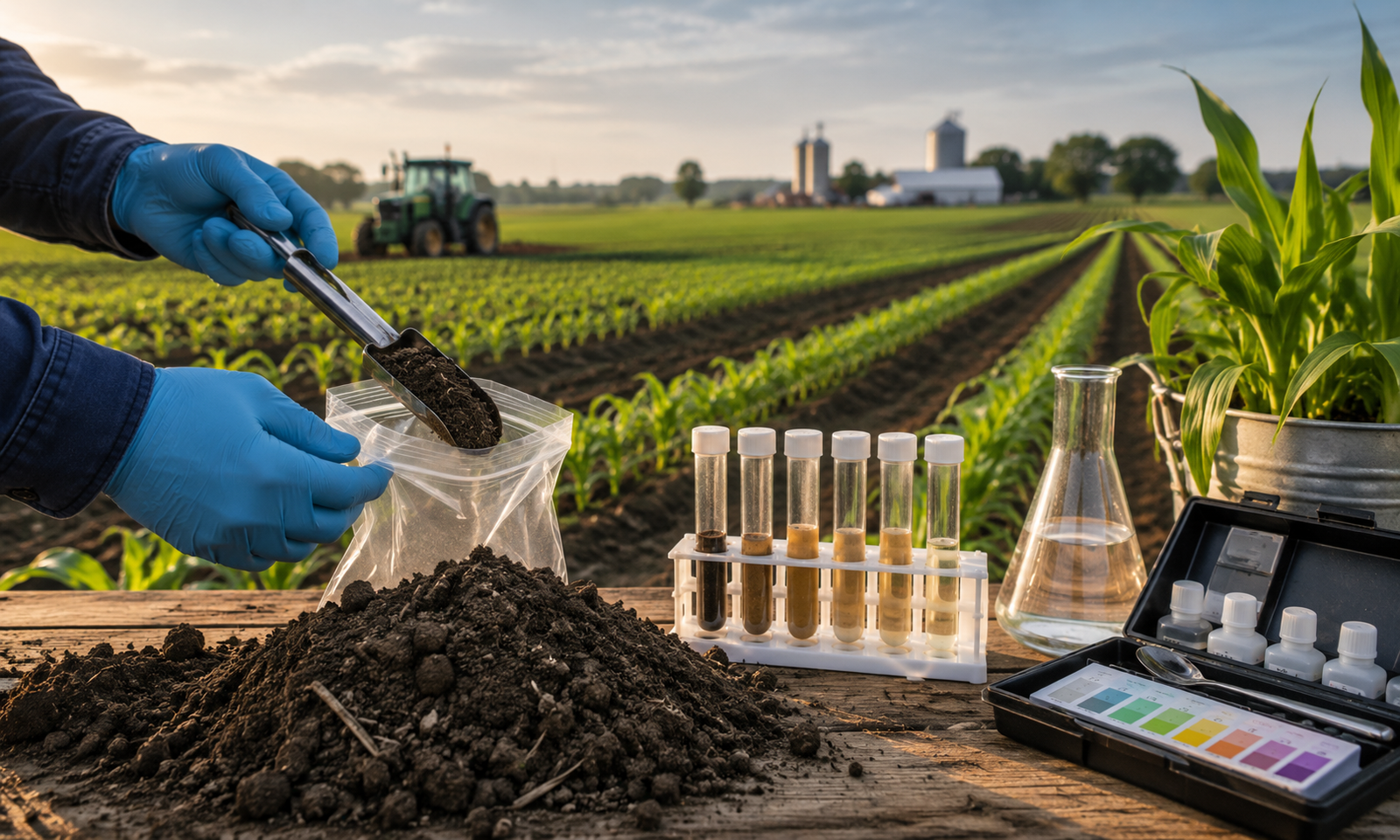
Correct Soil Test Analysis starts with a correct sample collection of soils that can give inaccurate soil test information and render any soil recommendations useless. Both the land to be sampled and the management practices should be uniform across each section; the land should be broken into even parcels according to soil type or crop history. Samples should be collected from several points in each section (usually from 0-15cm depth for most crops, though this could be deeper for perennial crops or orchards) using a clean soil auger or shovel. Then such subsamples should be thoroughly combined in a clean bucket to form a composite sample representative of the entire area. Fertiliser and manure or chemicals are risks of contamination and should be avoided when sampling, as this may affect the results of the tests. Air-dried clearly labeled samples must be sent to an accredited laboratory asap. When sampling is done properly, the test results represent field conditions, thus providing a reliable nutrient management basis.
Interpretation of Soil Test Results
After getting laboratory results, it is important to know how to analyze these results to undertake concrete actions in farming. Soil test reports normally report concentrations of nutrients as a low, medium or high designation and recommend fertilizers to be used. The low nutrient level will suggest that the crop will benefit from fertilizer input, or a high nutrient level will suggest that maybe no fertilizer will be needed. In addition, soil pH is a significant factor: Most crops grow best at a slightly acidic to neutral pH (6.0 to 7.0). Some lime may be needed if the soil is too acidic to increase the pH; then some sulphur or other acidifying mineral may be needed. It is also important for local farmers to consider what nutrients they are applying together, as too much of one nutrient may affect absorption of the other nutrients. The results help farmers to understand how to manage their soil to provide the optimal growing environment for crops.
Decisions about nutrients from soil data for making informed decisions
Use of soil test results for nutrient management really provides value to the soil test. A more precise approach to nutrient delivery is possible, and is being already practiced, for managing the application of fertilizers so that these inputs correspond to the precise needs of the soil in the respective fields. This aids the productivity of the crops along with the input expense reduction and environmental pollution due to nutrient run-off. When soil tests indicate that the soil has a sufficient amount of phosphorus and nitrogen is deficient, then a relative adjustment of fertilizer proportions can be made, rather than applying general-purpose formulations. An integrated approach to nutrient management may also include applications of organic matter, compost, green manure and chemical fertilizers to ensure soil fertility over the long-term. Other beneficial management practices, such as crop rotation and cover cropping, can also help build soil fertility naturally and boost soil’s structure and health. The use of this scientific soil information can help farmers to develop more sustainable production systems that have more long-term productivity.
Avoiding nutrient deficiency and toxicities in plants
Soil analysis services offer one of the most important advantages in the fact that they can help you avoid nutrient-related issues before they impact the health of your crops. The symptoms of nutrient deficiencies include yellowing leaves, irregular growth, sparse growth, petal blight, fruit drop and/or poor flowering, but yield loss has occurred when symptoms are visible. Soil testing also can be useful in detecting these problems early because it can provide information on soil nutrient deficiencies prior to planting. The other way around, plant and soil microorganism growth can be affected negatively by excessive accumulation of some nutrients, such as nitrogen and/or phosphorus, resulting in toxicity. Farmers can prevent these issues and grow crops under optimal conditions by undergoing a soil analysis and ensuring a nutrient balance. This can enhance productivity and promote soil sustainability over time, avoiding nutrient depletion or excesses.
Significance of soil testing in sustainable agriculture.
Soil health over time is essential to sustainable agriculture, and soil testing is a key component of this. Soil can become very poor in quality very quickly if nutrients are not monitored and managed when continuous cropping is used and thus soil quality is reduced and reliance on chemical inputs increases. Soil testing will enable farmers to track changes in soil fertility over time leading up to their management decisions to prevent serious soil degradation from occurring. It also helps maintain a healthy environment by minimizing inputs of excess fertilizer and helping to reduce greenhouse gas emissions and water pollution. In addition, soil testing promotes the adoption of soil building practices such as organic amendments and regenerative technologies to enhance soil health and residuals and microbial life. Soil testing becomes an essential part of the farming process, enabling producers to make informed decisions about their land that have a positive and lasting impact on their productivity and on the environment for the benefit of generations to come.
Soil testing errors
Despite the significance, soil testing is misunderstood, mis-applied and the results lead to mis-usage of soil recommendations for a lack of accuracy. Taking less or rather no samples, or samples from non-representative parts of the field is a common error; this provides misleading data. A second problem is that it should be tested BEFORE planting or fertilizing, not afterward. Many farmers try to over or under fertilize according to soil test reports or fail to follow practitioner advice. In some instances, samples may be contaminated because cleanliness of tools or storage is not maintained leading to inaccurate results. Also, the use of the older soil tests may produce issues as soil can vary over time because of changes in crop use and the environment. Preventing these pitfalls ensures that soil testing results offer valuable information, relevant to improving the productivity and sustainability of the farm.
Long-Term Soil Management Strategy
Don’t forget, soil testing is not a single event, but a part of farm management. Conducting soil tests periodically, every one to three years, depending on the intensity of the cropping system, enables the farmer to monitor soil changes and adapt soil nutrient strategies. This information can be used to develop a soil characterization for determining soil performance for various crops and cropping systems over time. Long-term measures for soil management may be maintaining organic matter, fertilizer input balance, minimizing erosion and creating good soil structure by using good conservation strategies. Integrating soil test with observations made in the field, farmers will be able to create super efficient and adaptive management systems. This long-term perspective will help to build soil productivity, resilience and ability to sustain high production. In conclusion, soil testing extends beyond mere science to a strategic investment in the success of agribusiness.
Conclusion
Soil testing is a tool of great power in today’s farming world. It takes farming out of the dark at least to a scientific level of practice. Analyzing soils can help farmers implement actions to enhance productivity, save costs and desecrate the environment.
Soil testing is always a crucial part of any farming system and is essential for good soil health for the long term. Whether you’re growing your own vegetables or have a large commercial farm, it’s important to get regular soil tests to make sure that the plants get what they need.
Ultimately, healthy soil contributes to healthy plants which leads to successful farming.